

HTML SitemapExplore

Percé Rock photographed from different angles 🇨🇦

😍😍At the easternmost tip of Quebec's Gaspé Peninsula, rising from the sea, stands Percé Rock. It resembles a fragment thrust upward from the depths of the earth by the ocean—lonely yet solemn, enduring the Atlantic tides day and night, and receiving the gaze and wonder of travelers from afar.👀 The town where Percé Rock is located is called Percé, a key gateway from Quebec to the Atlantic Ocean. A seven-hundred-kilometer drive🚘🚘 east from Quebec City, following the Gulf of St. Lawrence, brings travelers to the mist-shrouded coastline, where they finally encounter this colossal stone shadow unexpectedly. Approximately 433 meters long, 88 meters high, and 90 meters wide, it rises from the sea, just a hundred meters from the shore. Its most striking feature is a natural archway piercing through the rock—seemingly swallowed by the sea🏖️🏖️ at high tide, yet revealing its grand outline at low tide, like a gap left by time within its body. The history of this rock dates back to the Devonian period, about 375 million years ago, when it was layers of limestone and shale accumulating on the seabed. 🌁🌁 As tectonic movements lifted it to land, wind and waves carved away at it over millennia, gradually separating it from the mainland, until it took its current form, standing alone in the sea. It once had two arches, but one collapsed in 1845, leaving only this single door standing in the wind, facing the sea, endless storms, and sunsets.☀️☀️ Percé Rock is not static; it is slowly disappearing. In the moist air and strong currents, its daily and shrinks yearly. Scientists predict it may fully collapse and be swallowed by the sea within centuries. But precisely because of this fate, its existence feels solemn. 🌯🌯 People often say landscapes 🗾🗾are eternal, but that is not true. The most moving scenery is precisely those things we know we will eventually lose. Beyond its geological significance, Percé Rock is part of the natural ecosystem. The Gulf of St. Lawrence where it lies is one of the North Atlantic's vital marine ecosystems. 🙊 👀Nearby Bonaventure Island is one of the world's largest northern gannet habitats. Seabirds, seals, and whales thrive in these waters, creating a picture where life coexists with silence. 👍 At low tide, visitors can walk close to the rock, even touching its rough surface; at high tide, it is slowly surrounded by water, like an ancient relic fading into a dream.🌙🌙 Percé Rock is not a landscape—it is the manifestation of existence itself. It may eventually collapse, but in the days it still stands, it has already become the most sincere meeting point between humans and nature,🌳🌳 time and landforms. It speaks in silence: not all great things the world with sound. Sometimes, just "being there" is enough.🎉🎉 #Quebec#CrossCanada
Related posts
Percé Rock photographed from different angles 🇨🇦We in Canada have our own "end of the world."
Alice Walin
Alice Walin
5 months ago
Alice Walin
Alice Walin
5 months ago
no-comment

No one has commented yet...

Percé Rock photographed from different angles 🇨🇦

😍😍At the easternmost tip of Quebec's Gaspé Peninsula, rising from the sea, stands Percé Rock. It resembles a fragment thrust upward from the depths of the earth by the ocean—lonely yet solemn, enduring the Atlantic tides day and night, and receiving the gaze and wonder of travelers from afar.👀 The town where Percé Rock is located is called Percé, a key gateway from Quebec to the Atlantic Ocean. A seven-hundred-kilometer drive🚘🚘 east from Quebec City, following the Gulf of St. Lawrence, brings travelers to the mist-shrouded coastline, where they finally encounter this colossal stone shadow unexpectedly. Approximately 433 meters long, 88 meters high, and 90 meters wide, it rises from the sea, just a hundred meters from the shore. Its most striking feature is a natural archway piercing through the rock—seemingly swallowed by the sea🏖️🏖️ at high tide, yet revealing its grand outline at low tide, like a gap left by time within its body. The history of this rock dates back to the Devonian period, about 375 million years ago, when it was layers of limestone and shale accumulating on the seabed. 🌁🌁 As tectonic movements lifted it to land, wind and waves carved away at it over millennia, gradually separating it from the mainland, until it took its current form, standing alone in the sea. It once had two arches, but one collapsed in 1845, leaving only this single door standing in the wind, facing the sea, endless storms, and sunsets.☀️☀️ Percé Rock is not static; it is slowly disappearing. In the moist air and strong currents, its daily and shrinks yearly. Scientists predict it may fully collapse and be swallowed by the sea within centuries. But precisely because of this fate, its existence feels solemn. 🌯🌯 People often say landscapes 🗾🗾are eternal, but that is not true. The most moving scenery is precisely those things we know we will eventually lose. Beyond its geological significance, Percé Rock is part of the natural ecosystem. The Gulf of St. Lawrence where it lies is one of the North Atlantic's vital marine ecosystems. 🙊 👀Nearby Bonaventure Island is one of the world's largest northern gannet habitats. Seabirds, seals, and whales thrive in these waters, creating a picture where life coexists with silence. 👍 At low tide, visitors can walk close to the rock, even touching its rough surface; at high tide, it is slowly surrounded by water, like an ancient relic fading into a dream.🌙🌙 Percé Rock is not a landscape—it is the manifestation of existence itself. It may eventually collapse, but in the days it still stands, it has already become the most sincere meeting point between humans and nature,🌳🌳 time and landforms. It speaks in silence: not all great things the world with sound. Sometimes, just "being there" is enough.🎉🎉 #Quebec#CrossCanada

Percé
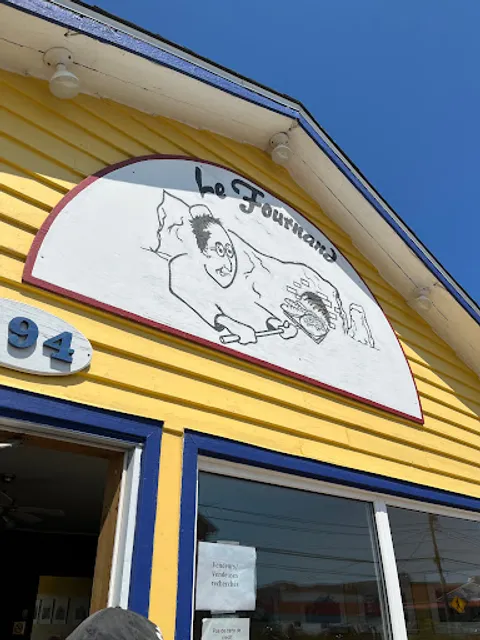
Boulangerie le Fournand Inc
Boulangerie le Fournand IncBoulangerie le Fournand Inc