

HTML SitemapExplore

Philadelphia: A Historic City Tour

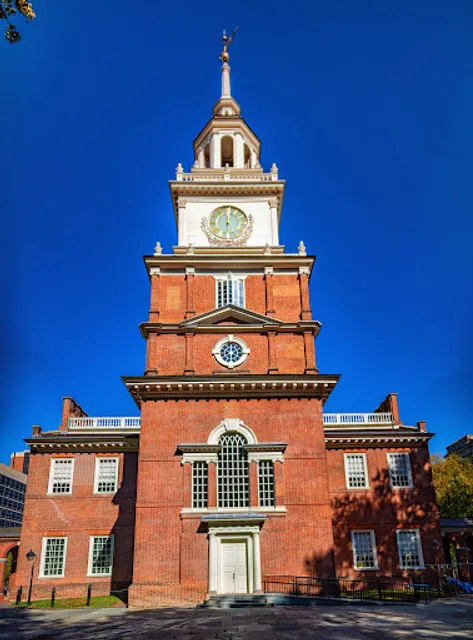
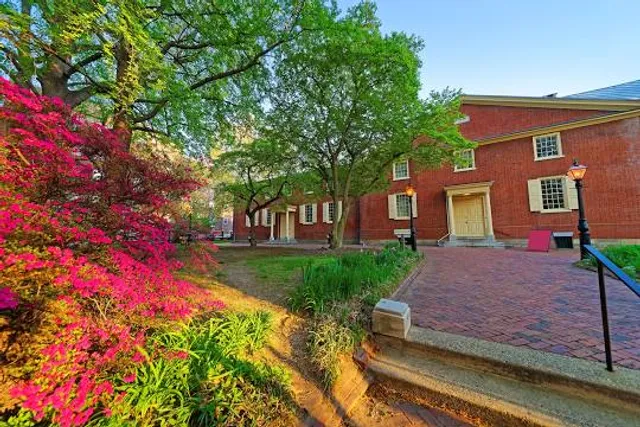
Last week in Boston, everything felt so "un-American"—but this week in Philly, it’s giving authentic U.S. vibes: vibrant Black communities, a mix of "free-spirited shabbiness," and gritty punk energy… I’ve seen so many cars with totally crumpled hoods zooming down the street like nothing’s wrong 😂. This is the first city I’ve visited where museums are closed both Tuesday and Wednesday (some even shut on Thursday too)! So instead, I focused on immersive history learning. Here’s my route: 📍 Arch Street Meeting House Philadelphia’s early history is inseparable from the Quakers (the Religious Society of Friends). Quakers believe in the "Inner Light"—that everyone can connect directly with God, without relying on churches or other authorities. They practice "silent worship": people sit in quiet reflection, and only stand to speak if they feel a spiritual calling. Their gathering spaces are called "Meeting Houses," not "churches," and they welcome people of all races and genders 👥. Fun fact: William Penn’s father lent about £16,000 to King Charles II of England (the same king who had Penn’s father executed after clashing with Parliament). To repay the debt, the king gave the Penn family a colonial land grant—just a few blocks (around 1 square mile) in what’s now Old City. That’s how Pennsylvania was born! As a Quaker, William Penn used this site as a cemetery and meeting place. In the 18th century, the area was densely populated (30,000 people lived here), and a yellow fever outbreak killed 10% of the population in just 90 days. Many people dumped bodies here—the small hills on the lawn are said to be from piles of corpses 😢. The walls were later raised to stop this, and they’ve stayed that way ever since. 📍 Benjamin Franklin Statue ("Keys to Community") This statue honors Benjamin Franklin, made with over 1,000 keys and coins donated by kids 🗝️. As Philly’s "soul," Franklin pioneered so much: he helped found America’s first hospital, first bank, first zoo, first public library, and even the U.S. postal system. A true Renaissance man! 🧠 📍 Betsy Ross House Every American kid learns that Betsy Ross made the first U.S. flag—though the truth is debated. What is widely accepted? She changed the original design from six-pointed stars to five-pointed ones (a simpler, more iconic look) 🇺🇸. 📍 Elfreth’s Alley America’s oldest continuously inhabited street! It’s lined with well-preserved 18th-century homes—walking here feels like stepping into a time capsule 🕰️. 📍 Christ Church This church took 25 years to build. Its steeple was once the tallest structure in 18th-century North America (200 feet tall)—Philly’s first "skyline" 🏙️. Its most legendary feat? It’s held weekly services nonstop since 1695—through the American Revolution, Civil War, both World Wars, and even the COVID-19 pandemic. That’s over 328 years of unbroken tradition! ⛪️ 📍 Carpenters’ Hall Think of this as the "cradle of American independence." It’s where early colonial leaders met to discuss ideas that would eventually lead to the Revolution—history in every beam and brick 🧱. 📍 Independence Hall The iconic steeple and clock tower we see today were added in the early 19th century, when the building was renovated to welcome the famous French general Marquis de Lafayette (a key ally during the American Revolution) 🎖️. Later, I walked along the Schuylkill River as the sun set—so many cozy, everyday scenes: people walking dogs, families having picnics, friends chatting. It was the perfect way to end a day of history 📸. #Philadelphia
Related posts
🇺🇸 Philadelphia Isn't a Tourist City—But It's Perfect for StrollingPhiladelphia | J'aime's Napoleon Cake!Enjoying Coffee, Cheese, and Gelato at an Italian Restaurant Philadelphia Food & Fun: A Lazy Summer Diary 🌴 💧🇺🇸 Philadelphia Travel Guide: All Must-See Attractions in One Post! Great Variety, Friendly Staff
Velda Dale
Velda Dale
4 months ago
Velda Dale
Velda Dale
4 months ago
no-comment

No one has commented yet...

Philadelphia: A Historic City Tour

Last week in Boston, everything felt so "un-American"—but this week in Philly, it’s giving authentic U.S. vibes: vibrant Black communities, a mix of "free-spirited shabbiness," and gritty punk energy… I’ve seen so many cars with totally crumpled hoods zooming down the street like nothing’s wrong 😂. This is the first city I’ve visited where museums are closed both Tuesday and Wednesday (some even shut on Thursday too)! So instead, I focused on immersive history learning. Here’s my route: 📍 Arch Street Meeting House Philadelphia’s early history is inseparable from the Quakers (the Religious Society of Friends). Quakers believe in the "Inner Light"—that everyone can connect directly with God, without relying on churches or other authorities. They practice "silent worship": people sit in quiet reflection, and only stand to speak if they feel a spiritual calling. Their gathering spaces are called "Meeting Houses," not "churches," and they welcome people of all races and genders 👥. Fun fact: William Penn’s father lent about £16,000 to King Charles II of England (the same king who had Penn’s father executed after clashing with Parliament). To repay the debt, the king gave the Penn family a colonial land grant—just a few blocks (around 1 square mile) in what’s now Old City. That’s how Pennsylvania was born! As a Quaker, William Penn used this site as a cemetery and meeting place. In the 18th century, the area was densely populated (30,000 people lived here), and a yellow fever outbreak killed 10% of the population in just 90 days. Many people dumped bodies here—the small hills on the lawn are said to be from piles of corpses 😢. The walls were later raised to stop this, and they’ve stayed that way ever since. 📍 Benjamin Franklin Statue ("Keys to Community") This statue honors Benjamin Franklin, made with over 1,000 keys and coins donated by kids 🗝️. As Philly’s "soul," Franklin pioneered so much: he helped found America’s first hospital, first bank, first zoo, first public library, and even the U.S. postal system. A true Renaissance man! 🧠 📍 Betsy Ross House Every American kid learns that Betsy Ross made the first U.S. flag—though the truth is debated. What is widely accepted? She changed the original design from six-pointed stars to five-pointed ones (a simpler, more iconic look) 🇺🇸. 📍 Elfreth’s Alley America’s oldest continuously inhabited street! It’s lined with well-preserved 18th-century homes—walking here feels like stepping into a time capsule 🕰️. 📍 Christ Church This church took 25 years to build. Its steeple was once the tallest structure in 18th-century North America (200 feet tall)—Philly’s first "skyline" 🏙️. Its most legendary feat? It’s held weekly services nonstop since 1695—through the American Revolution, Civil War, both World Wars, and even the COVID-19 pandemic. That’s over 328 years of unbroken tradition! ⛪️ 📍 Carpenters’ Hall Think of this as the "cradle of American independence." It’s where early colonial leaders met to discuss ideas that would eventually lead to the Revolution—history in every beam and brick 🧱. 📍 Independence Hall The iconic steeple and clock tower we see today were added in the early 19th century, when the building was renovated to welcome the famous French general Marquis de Lafayette (a key ally during the American Revolution) 🎖️. Later, I walked along the Schuylkill River as the sun set—so many cozy, everyday scenes: people walking dogs, families having picnics, friends chatting. It was the perfect way to end a day of history 📸. #Philadelphia

Philadelphia
Independence Hall
Arch Street Meeting House
Independence HallIndependence HallArch Street Meeting HouseArch Street Meeting House