

HTML SitemapExplore
logo
Find Things to DoFind The Best Restaurants

Seattle’s Japanese Garden - Kubota Garden✨

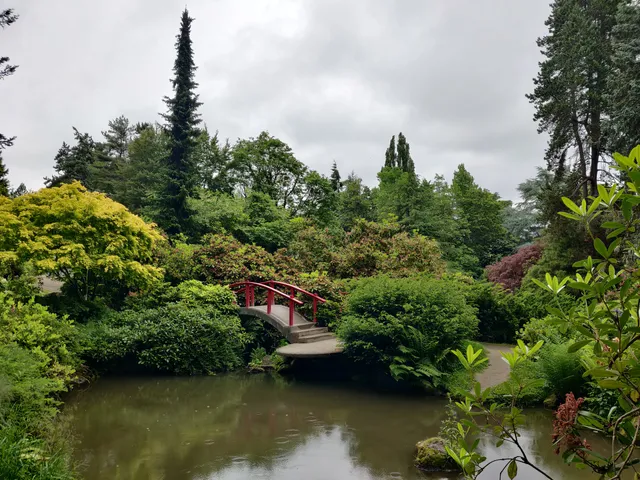
In 1893, at the World’s Columbian Exposition in Chicago, the traditional Japanese garden exhibit caused a sensation, leading many American cities to emulate the construction of Japanese-style gardens. Early Japanese immigrants, primarily laborers and gardeners, arrived in North America, especially along the American West Coast (California, Washington State) and British Columbia, Canada. Some of them built Japanese gardens in the estates of nobles or wealthy merchants. 🌿 Features of Japanese Gardens: ☀️Borrowed Scenery: Using distant hills, trees, or the sky as a backdrop to enrich the layers of the landscape. ☀️Dry Landscape Garden (Karesansui): Simulating water flow with white sand and stones, symbolizing the tranquility of Zen. ☀️Water and Ponds: Symbolizing the flow of life, with waterfalls, streams, and heart-shaped ponds becoming more lively in spring. ☀️Meandering Paths: Twisting walkways that reveal new scenery at every turn. ☀️Bridges and Stone Lanterns: Red arch bridges, wooden bridges, and traditional Japanese stone lanterns add a serene Eastern charm to the garden. After the Pearl Harbor attack, hostility towards Japanese immigrants in the U.S. and Canada led to the forced relocation of many Japanese residents to internment camps. The founder of Seattle’s Kubota Garden, Fujitaro Kubota, was sent to an American internment camp during WWII, and the garden fell into disrepair due to lack of management. In 1981, the Seattle city government officially acquired Kubota Garden and designated it as a historic preservation site, opening it to the public. It has now become one of the most intact Japanese immigrant family gardens in North America. 🌿 The Japanese gardens in North America are not only a display of landscape art; they carry the history of Japanese immigrants’ struggles, the hardships of WWII, and the symbol of post-war cultural exchange. From the initial immigrant craftsmanship, through the destruction of the war, to the post-war revival and cultural heritage, these gardens now offer a serene and beautiful oasis for visitors from all over the world. 🌿 #JapaneseGarden #KubotaGarden #Seattle
Related posts
Seattle Woodland Park Zoo🎶 50% OFF! Dive into Seattle’s MoPOP 🎮🎬🌅 Half-Day Trip to Bainbridge Island: 3 Types of Healing Views 🌿🏭🎡 Gas Works Park: Seattle’s Steampunk Gem! 🌆🔭Turkish Cuisine That’s Generous with SpicesCozy Cabins Near Seattle You Can’t Miss This Fall & Winter
Saga Edwards
Saga Edwards
8 months ago
Saga Edwards
Saga Edwards
8 months ago
no-comment

No one has commented yet...

Seattle’s Japanese Garden - Kubota Garden✨

In 1893, at the World’s Columbian Exposition in Chicago, the traditional Japanese garden exhibit caused a sensation, leading many American cities to emulate the construction of Japanese-style gardens. Early Japanese immigrants, primarily laborers and gardeners, arrived in North America, especially along the American West Coast (California, Washington State) and British Columbia, Canada. Some of them built Japanese gardens in the estates of nobles or wealthy merchants. 🌿 Features of Japanese Gardens: ☀️Borrowed Scenery: Using distant hills, trees, or the sky as a backdrop to enrich the layers of the landscape. ☀️Dry Landscape Garden (Karesansui): Simulating water flow with white sand and stones, symbolizing the tranquility of Zen. ☀️Water and Ponds: Symbolizing the flow of life, with waterfalls, streams, and heart-shaped ponds becoming more lively in spring. ☀️Meandering Paths: Twisting walkways that reveal new scenery at every turn. ☀️Bridges and Stone Lanterns: Red arch bridges, wooden bridges, and traditional Japanese stone lanterns add a serene Eastern charm to the garden. After the Pearl Harbor attack, hostility towards Japanese immigrants in the U.S. and Canada led to the forced relocation of many Japanese residents to internment camps. The founder of Seattle’s Kubota Garden, Fujitaro Kubota, was sent to an American internment camp during WWII, and the garden fell into disrepair due to lack of management. In 1981, the Seattle city government officially acquired Kubota Garden and designated it as a historic preservation site, opening it to the public. It has now become one of the most intact Japanese immigrant family gardens in North America. 🌿 The Japanese gardens in North America are not only a display of landscape art; they carry the history of Japanese immigrants’ struggles, the hardships of WWII, and the symbol of post-war cultural exchange. From the initial immigrant craftsmanship, through the destruction of the war, to the post-war revival and cultural heritage, these gardens now offer a serene and beautiful oasis for visitors from all over the world. 🌿 #JapaneseGarden #KubotaGarden #Seattle

Seattle
Kubota Garden
Kubota GardenKubota Garden