

HTML SitemapExplore
logo
Find Things to DoFind The Best Restaurants

The dividing line from the age of ignorance to modern civilization.

Florence is the cradle of the Renaissance, the described by Xu Zhimo, and the dividing line between the age of ignorance and modern civilization in Europe.馃樆馃樆馃樆 My understanding of Florence began with the book "Leonardo da Vinci." In 1464, the 12-year-old genius Leonardo arrived in Florence from Vinci and stayed for 18 years. This coincided with the reign of Lorenzo de' Medici, who is considered one of the most important figures in the Medici family and the greatest patron of the arts. The Medici family, the rulers of Florence at the time, produced two popes and were the world's wealthiest bankers. They sponsored a wide range of sculptures, paintings, and architecture. Thus, during the Italian Renaissance, figures like Leonardo da Vinci, Michelangelo, and Raphael emerged as the three great masters, all nurtured by the fertile soil of Florence.馃槏馃槏馃槏 Eternity in classical art is defined as existence outside of time, something invisible and intangible. But in the art of sculpture, is eternity captured? In 1520, Michelangelo began the project of creating the Medici family tombs. The Medicis, who already possessed high status and immense wealth, sought the one thing they could not have: eternity. Michelangelo designed four sets of figures representing the natural states of "Day, Night, Dawn, and Dusk" to successfully remove the sword of "time" that always hangs over humanity's head, vividly and artistically presenting "eternity" to the world.鉂わ笍鉂わ笍鉂わ笍 Piazza della Signoria - The heart of Florence, this L-shaped square is not large but is home to numerous exquisite sculptures. Here, you can admire marble sculptures from different eras, including the famous David and the Gates of Paradise.馃榾馃榾馃榾 Florence Cathedral - The red-brown dome has become a landmark of Florence and is one of the world's five great cathedrals. Even the Pope marveled at it as "mythical." A musician even composed a concerto in its honor. Later, Michelangelo designed St. Peter's Basilica in Vatican City, inspired by it, but he lamented, "It can be built larger, but not more beautiful." Piazza Santa Croce - Named after the famous cross on the square, which is also the origin of the name of the entire district, this cross is a classic example of Sevillian metal forging craftsmanship, with delicate Baroque-style decorations.馃榿馃榿馃榿 Giotto's Bell Tower - A 270-foot (82-meter) tall, square-shaped tower that harmoniously combines three colors in a geometric palette, complementing the cathedral perfectly. #Italy #Florence #LeonardoDaVinci #MediciFamily #Michelangelo #EternityOfTime #EuropeanStyleOctober #AutumnInEurope #ItalyTravel
Related posts
Hidden Gem Restaurants in FlorenceNUGOLOFlorence Michelin-recommended savory popcornA Hidden Caf茅 馃嵉 in an Art Gallery in Florence's City CenterThe huge steak astonishes all tourists!Buca Mario, which has been in business since 1886
Juno Cobb
Juno Cobb
6 months ago
Juno Cobb
Juno Cobb
6 months ago
no-comment

No one has commented yet...

The dividing line from the age of ignorance to modern civilization.

Florence is the cradle of the Renaissance, the described by Xu Zhimo, and the dividing line between the age of ignorance and modern civilization in Europe.馃樆馃樆馃樆 My understanding of Florence began with the book "Leonardo da Vinci." In 1464, the 12-year-old genius Leonardo arrived in Florence from Vinci and stayed for 18 years. This coincided with the reign of Lorenzo de' Medici, who is considered one of the most important figures in the Medici family and the greatest patron of the arts. The Medici family, the rulers of Florence at the time, produced two popes and were the world's wealthiest bankers. They sponsored a wide range of sculptures, paintings, and architecture. Thus, during the Italian Renaissance, figures like Leonardo da Vinci, Michelangelo, and Raphael emerged as the three great masters, all nurtured by the fertile soil of Florence.馃槏馃槏馃槏 Eternity in classical art is defined as existence outside of time, something invisible and intangible. But in the art of sculpture, is eternity captured? In 1520, Michelangelo began the project of creating the Medici family tombs. The Medicis, who already possessed high status and immense wealth, sought the one thing they could not have: eternity. Michelangelo designed four sets of figures representing the natural states of "Day, Night, Dawn, and Dusk" to successfully remove the sword of "time" that always hangs over humanity's head, vividly and artistically presenting "eternity" to the world.鉂わ笍鉂わ笍鉂わ笍 Piazza della Signoria - The heart of Florence, this L-shaped square is not large but is home to numerous exquisite sculptures. Here, you can admire marble sculptures from different eras, including the famous David and the Gates of Paradise.馃榾馃榾馃榾 Florence Cathedral - The red-brown dome has become a landmark of Florence and is one of the world's five great cathedrals. Even the Pope marveled at it as "mythical." A musician even composed a concerto in its honor. Later, Michelangelo designed St. Peter's Basilica in Vatican City, inspired by it, but he lamented, "It can be built larger, but not more beautiful." Piazza Santa Croce - Named after the famous cross on the square, which is also the origin of the name of the entire district, this cross is a classic example of Sevillian metal forging craftsmanship, with delicate Baroque-style decorations.馃榿馃榿馃榿 Giotto's Bell Tower - A 270-foot (82-meter) tall, square-shaped tower that harmoniously combines three colors in a geometric palette, complementing the cathedral perfectly. #Italy #Florence #LeonardoDaVinci #MediciFamily #Michelangelo #EternityOfTime #EuropeanStyleOctober #AutumnInEurope #ItalyTravel

Florence
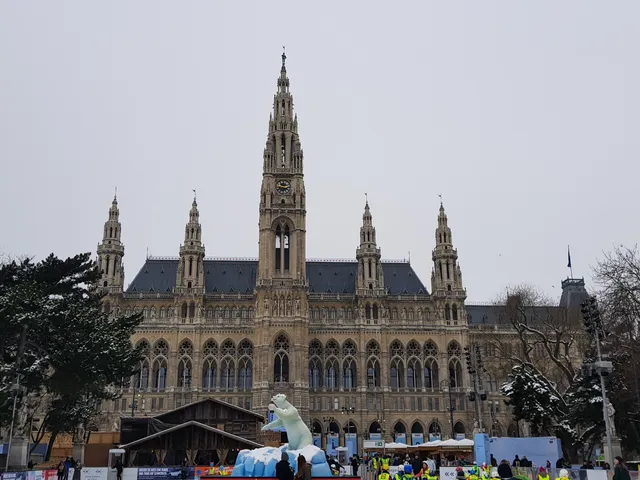
Rathausplatz
RathausplatzRathausplatz