

HTML SitemapExplore
logo
Find Things to DoFind The Best Restaurants

The gathering place of the Renaissance luminaries

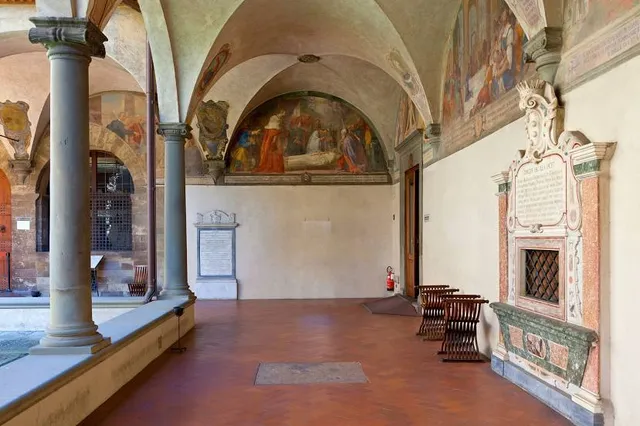
The San Marco Monastery in Florence is a religious complex in Florence, Italy, consisting of a church and a former Dominican convent, which is now a museum. In the 15th century, two famous Dominican friars lived in this convent: the painter Fra Angelico and the preacher Girolamo Savonarola. The complex also includes a library built by Michelozzo, which houses very rare manuscripts.😀😀😀 The convent has existed since the 12th century. It was originally inhabited by the Benedictines. In 1435, it was handed over to the Dominicans from Fiesole. Two years later, they asked Cosimo de' Medici, who lived in the nearby Medici Riccardi Palace, to sponsor the renovation of the entire complex. Michelozzo was commissioned to manage the project. Fra Angelico, with the help of others such as Benozzo Gozzoli, painted frescoes in each room. The Medici also had a private cell within the convent.đŸ˜»đŸ˜»đŸ˜» The church was consecrated in 1443, with Pope Eugene IV attending the ceremony. It has a single nave, with side chapels designed by Giambologna in the 16th century, which contain frescoes from the 16th and 17th centuries. The pulpit and ceiling decorations were completed in the late 17th century. The church was renovated again in 1678. The neoclassical facade was built between 1777 and 1778, designed by Fra' Giovan Battista Paladini.đŸ—œđŸ—œđŸ—œ The oldest artwork in the church is a 14th-century crucifix hanging on the back wall. The crucifix on the high altar is by Fra Angelico. The first altar on the right is by Santi di Tito, dating from 1593, and the second is by Fra Bartolomeo.💕💕💕 In May 1859, Giambologna completed the Chapel of St. Anthony. Notable people buried in the church include Pico della Mirandola and the poet Politian. Many of the most important representatives of 15th-century spirituality and culture lived and worked here: Cosimo the Elder, St. Antoninus, Fra Angelico, Ambrogio Traversari, Fra Bartolomeo, Tommaso Caccini (famous for prosecuting Galileo Galilei), and especially Girolamo Savonarola, who preached against moral corruption and was eventually hanged and burned at the stake in Piazza della Signoria in 1498. Since 1934, Florence Mayor Giorgio La Pira also resided there and was later buried in the church. #Italy #NeoclassicalArchitecture #Florence #Renaissance #Church #MediciFamily #ArchitecturalPhotography #TiltShiftPhotography #Canon5D3 #CanonTS
Related posts
Hidden Gem Restaurants in FlorenceNUGOLOFlorence Michelin-recommended savory popcornA Hidden CafĂ© đŸ” in an Art Gallery in Florence's City CenterThe huge steak astonishes all tourists!Buca Mario, which has been in business since 1886
Elowen Perry
Elowen Perry
6 months ago
Elowen Perry
Elowen Perry
6 months ago
no-comment

No one has commented yet...

The gathering place of the Renaissance luminaries

The San Marco Monastery in Florence is a religious complex in Florence, Italy, consisting of a church and a former Dominican convent, which is now a museum. In the 15th century, two famous Dominican friars lived in this convent: the painter Fra Angelico and the preacher Girolamo Savonarola. The complex also includes a library built by Michelozzo, which houses very rare manuscripts.😀😀😀 The convent has existed since the 12th century. It was originally inhabited by the Benedictines. In 1435, it was handed over to the Dominicans from Fiesole. Two years later, they asked Cosimo de' Medici, who lived in the nearby Medici Riccardi Palace, to sponsor the renovation of the entire complex. Michelozzo was commissioned to manage the project. Fra Angelico, with the help of others such as Benozzo Gozzoli, painted frescoes in each room. The Medici also had a private cell within the convent.đŸ˜»đŸ˜»đŸ˜» The church was consecrated in 1443, with Pope Eugene IV attending the ceremony. It has a single nave, with side chapels designed by Giambologna in the 16th century, which contain frescoes from the 16th and 17th centuries. The pulpit and ceiling decorations were completed in the late 17th century. The church was renovated again in 1678. The neoclassical facade was built between 1777 and 1778, designed by Fra' Giovan Battista Paladini.đŸ—œđŸ—œđŸ—œ The oldest artwork in the church is a 14th-century crucifix hanging on the back wall. The crucifix on the high altar is by Fra Angelico. The first altar on the right is by Santi di Tito, dating from 1593, and the second is by Fra Bartolomeo.💕💕💕 In May 1859, Giambologna completed the Chapel of St. Anthony. Notable people buried in the church include Pico della Mirandola and the poet Politian. Many of the most important representatives of 15th-century spirituality and culture lived and worked here: Cosimo the Elder, St. Antoninus, Fra Angelico, Ambrogio Traversari, Fra Bartolomeo, Tommaso Caccini (famous for prosecuting Galileo Galilei), and especially Girolamo Savonarola, who preached against moral corruption and was eventually hanged and burned at the stake in Piazza della Signoria in 1498. Since 1934, Florence Mayor Giorgio La Pira also resided there and was later buried in the church. #Italy #NeoclassicalArchitecture #Florence #Renaissance #Church #MediciFamily #ArchitecturalPhotography #TiltShiftPhotography #Canon5D3 #CanonTS

Florence
San Marco Museum
San Marco MuseumSan Marco Museum