

HTML SitemapExplore
logo
Find Things to DoFind The Best Restaurants

The Tree of Life in the Florence Monk's Refectory

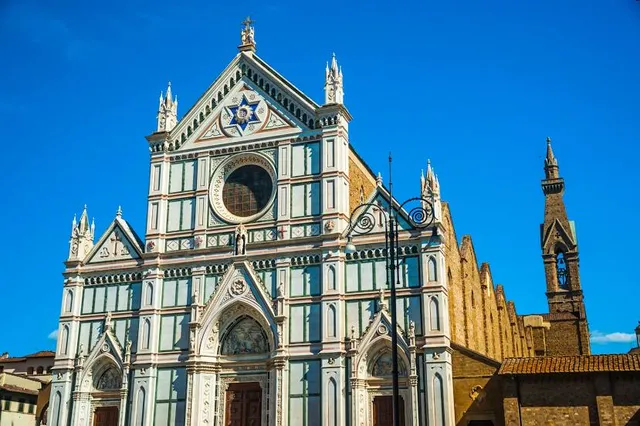
The Basilica of Santa Croce in Florence, known as the Pantheon of the Italian Glories, has an intriguing spot at its exit: the former refectory of the monks, which is a hidden gem.😍😍😍 The walls are adorned with numerous frescoes created by Taddeo Gaddi, a student of Giotto. It's easy to overlook, but it's truly a fascinating place. The central motif is the classic Tree of Life paradigm. In 1260, Friar St. Bonaventure of the Franciscan Order wrote "Lignum Vitae" (The Tree of Life), in which he proposed that the life of the Son of God represents the journey of all life. He envisioned this journey in the shape of a tree, with the bottom four branches representing the birth and life, the middle four representing the Passion, and the top four representing the glory. On either side of the three sections of branches are four leaves, each bearing a fruit, resulting in 12 branches, 48 leaves, 12 fruits, and two flowers.😻😻😻 😁Additionally, a legend that was gaining popularity at the time is recorded in the "Golden Legend." It states that after Adam and Eve were expelled from the Garden of Eden, Adam's son Seth received a gift from the angel guarding the garden: a branch from the Tree of Knowledge of Good and Evil. The angel instructed Seth to tell Adam, who was on his deathbed, that when the branch bore fruit, all sins would be forgiven. The branch was planted on Adam's grave, grew into a towering tree, and eventually became the cross on which the Son of God was crucified. Thus, this imaginative concept of the tree quickly found its way into artistic practice. Many religious orders created a series of didactic images where the twelve branches of the Tree of Life were inscribed with episodes from the life of Christ, and these were combined with the image of the cross. The Son of God is depicted hanging on the tree, symbolizing the greatest fruit the tree has borne. A new Adam dies and is resurrected, offering humanity the possibility of redemption.😀😀😀 At the bottom of the image, St. Francis is shown embracing the cross, with the patron of the fresco (likely a woman, Vaggia Manfredi, a member of the Franciscan Order) kneeling beside him. After the 1966 Florence flood, this massive fresco had to be dismantled for restoration. In December 1968, the fresco was returned to its original location.❤️❤️❤️ #Italy #WesternArtHistory #Florence #BasilicaOfSantaCroce #Museum #Art #Fresco
Related posts
Hidden Gem Restaurants in FlorenceNUGOLOFlorence Michelin-recommended savory popcornA Hidden Café 🍵 in an Art Gallery in Florence's City CenterThe huge steak astonishes all tourists!Buca Mario, which has been in business since 1886
Elowen Perry
Elowen Perry
6 months ago
Elowen Perry
Elowen Perry
6 months ago
no-comment

No one has commented yet...

The Tree of Life in the Florence Monk's Refectory

The Basilica of Santa Croce in Florence, known as the Pantheon of the Italian Glories, has an intriguing spot at its exit: the former refectory of the monks, which is a hidden gem.😍😍😍 The walls are adorned with numerous frescoes created by Taddeo Gaddi, a student of Giotto. It's easy to overlook, but it's truly a fascinating place. The central motif is the classic Tree of Life paradigm. In 1260, Friar St. Bonaventure of the Franciscan Order wrote "Lignum Vitae" (The Tree of Life), in which he proposed that the life of the Son of God represents the journey of all life. He envisioned this journey in the shape of a tree, with the bottom four branches representing the birth and life, the middle four representing the Passion, and the top four representing the glory. On either side of the three sections of branches are four leaves, each bearing a fruit, resulting in 12 branches, 48 leaves, 12 fruits, and two flowers.😻😻😻 😁Additionally, a legend that was gaining popularity at the time is recorded in the "Golden Legend." It states that after Adam and Eve were expelled from the Garden of Eden, Adam's son Seth received a gift from the angel guarding the garden: a branch from the Tree of Knowledge of Good and Evil. The angel instructed Seth to tell Adam, who was on his deathbed, that when the branch bore fruit, all sins would be forgiven. The branch was planted on Adam's grave, grew into a towering tree, and eventually became the cross on which the Son of God was crucified. Thus, this imaginative concept of the tree quickly found its way into artistic practice. Many religious orders created a series of didactic images where the twelve branches of the Tree of Life were inscribed with episodes from the life of Christ, and these were combined with the image of the cross. The Son of God is depicted hanging on the tree, symbolizing the greatest fruit the tree has borne. A new Adam dies and is resurrected, offering humanity the possibility of redemption.😀😀😀 At the bottom of the image, St. Francis is shown embracing the cross, with the patron of the fresco (likely a woman, Vaggia Manfredi, a member of the Franciscan Order) kneeling beside him. After the 1966 Florence flood, this massive fresco had to be dismantled for restoration. In December 1968, the fresco was returned to its original location.❤️❤️❤️ #Italy #WesternArtHistory #Florence #BasilicaOfSantaCroce #Museum #Art #Fresco

Florence
Basilica of Santa Croce in Florence
Basilica of Santa Croce in FlorenceBasilica of Santa Croce in Florence