
The Wonderful Bond Between Impressionism and Ukiyo-e 🎨
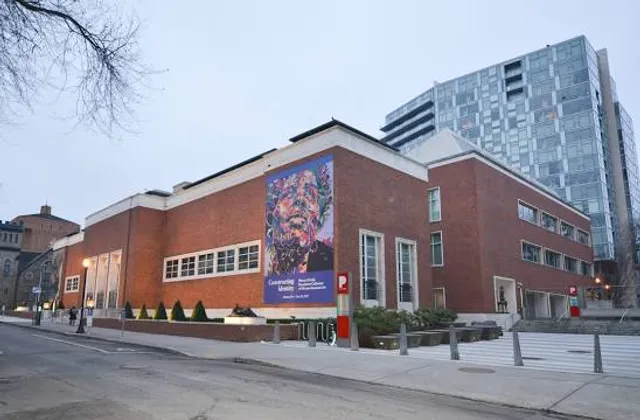
During my recent visit to the Portland Art Museum, in addition to its treasure piece—Monet’s Water Lilies—the museum also exhibited works by Impressionist painters of the same period alongside Japanese ukiyo-e. It was then that I learned about the connection between Impressionism and ukiyo-e 🤝. In the 1850s, the United States pressured Japan to open its trade borders, leading to a large number of Japanese prints flowing into the U.S. and Europe 🚢. Though Monet never visited Japan, his room was filled with Japanese paintings, and his later artistic style was influenced by ukiyo-e 🖼️. At first glance, Impressionism and ukiyo-e seem vastly different, yet they share a similar core ❤️. Ukiyo-e focuses on depicting fleeting light and shadow, as well as flowers, birds, insects, and fish in nature at the very moment they are seen—using objects to convey emotions. This is precisely the origin of Impressionism’s shift from realistic to expressive themes 🌅. Technically, Impressionism also borrowed ukiyo-e’s compositional ideas: flattening three-dimensional scenes, simplifying three-dimensional shapes, and not being bound to reproducing figures with precise 1:1 accuracy. Instead, it uses simple brushstrokes to depict imagery ✏️. The museum’s introduction also mentioned that Impressionism learned ukiyo-e’s technique of leaving blank spaces. Seeing this, I couldn’t help but think—aren’t these all characteristics of Chinese ink wash painting? Unfortunately, Monet never encountered Chinese ink wash painting back then. He learned from the "disciple" (ukiyo-e) rather than the "master" (Chinese ink wash), grasping only the surface without understanding the essence. Otherwise, what would be exhibited alongside Water Lilies in the museum today might be Chinese ink wash paintings 🖌️. Another noteworthy part of this exhibition is the Water Lilies restoration project sponsored by BoA 🏦. Although Monet once emphasized that his works should not have a protective layer, later generations still applied an acrylic resin coating to this Water Lilies. This not only went against Monet’s original intention but also altered the painting’s style. The restoration project uses a solution to slowly remove the coating from the painting’s surface, revealing its original matte texture ✨. The before-and-after comparison displayed by the museum is striking: after the coating was removed, the color saturation decreased—especially the deep blue turning into a macaron blue—allowing the Water Lilies to regain its original chalky tones, gently floating in soft light and shadow 🌸. #PortlandTravel #PortlandMuseum