
HTML SitemapExplore
logo
Find Things to DoFind The Best Restaurants

These Purple Trees Blooming In L.A. Came All The Way From South America — Brought By A Visionary Woman

[Spring](https://secretlosangeles.com/best-things-to-do-in-la-spring/) and [summer](https://secretlosangeles.com/summer-bucket-list-los-angeles/) are definitely the **best seasons of the year for nature lovers** who enjoy spotting baby animals in the wild, soaking up longer days of sunshine, and, most of all, watching flowers take over the horizon. More specifically, the adorable and vibrant **purple-colored blooms of the always lively and beautiful jacarandas.** Although they’re a signature feature of Los Angeles, these trees that have made their home here actually **come from very distant lands,** just like many other things that make L.A. what it is... More precisely, they originate from South America. Brazil and Argentina are by far the countries with the largest jacaranda populations, with **Buenos Aires and its iconic Avenida 9 de Julio** at the heart of literally miles of purple flowers each spring. In this part of the world, between September and November. But how did these lilac beauties decorating our streets make their way from such faraway places? While it’s believed that **Brazilian travelers first introduced jacaranda seed** in the region, there’s one woman credited with making these trees popular. **Kate Sessions was born in San Francisco** during the Barbary Coast era and grew up near Lake Merritt, America’s first official wildlife refuge. She was among the early women to attend U.C. Berkeley, earning a degree in natural science in 1881. In 1892, Kate Sessions leased a scrub-covered mesa owned by the city of San Diego. In exchange for planting 100 trees annually in the park, she was granted 32 acres to operate her commercial nursery full of **exotic species, from Europe, [Mexico,](https://secretlosangeles.com/mexican-restaurants-la/) and South America.** Among the many plants she promoted was the jacaranda, whose striking blossoms quickly made it popular. These trees gained widespread **popularity in Los Angeles during the 1920s and 1930s,** as noted by the [L.A. Public Library.](https://www.lapl.org/collections-resources/blogs/lapl/purple-splendor) Jacaranda trees are **especially suited for urban planting** because their roots don’t lift sidewalks like other species, and once established, they need relatively little water. Their **vibrant blue blossoms are quite rare** in nature, as fewer than 10 percent of the world’s 280,000 species of flowering plants produce blue flowers. Source: [https://secretlosangeles.com/how-jacaranda-trees-came-to-la/](https://secretlosangeles.com/how-jacaranda-trees-came-to-la/)

Related posts
Los Angeles | Super Chill Flower-Filled Bistro 🌺🍺LA Metro Celebrates New Biking Path With Free Community Ride – Here's How To Join​​🌟 Holbox - LA’s Most Affordable Michelin Star (And It Slaps!)​​ 🦐✨🌴 8 SoCal Beaches to Hit This Weekend! 🏖️Korean Restaurant with Amazing Side Dishes (Menu Included)🍳 This LA Brunch Spot is So Delicious! 🍞
secret guides LA
secret guides LA
6 months ago
secret guides LA
secret guides LA
6 months ago

These Purple Trees Blooming In L.A. Came All The Way From South America — Brought By A Visionary Woman

Spring and summer are definitely the best seasons of the year for nature lovers who enjoy spotting baby animals in the wild, soaking up longer days of sunshine, and, most of all, watching flowers take over the horizon. More specifically, the adorable and vibrant purple-colored blooms of the always lively and beautiful jacarandas. Although they’re a signature feature of Los Angeles, these trees that have made their home here actually come from very distant lands, just like many other things that make L.A. what it is... More precisely, they originate from South America. Brazil and Argentina are by far the countries with the largest jacaranda populations, with Buenos Aires and its iconic Avenida 9 de Julio at the heart of literally miles of purple flowers each spring. In this part of the world, between September and November. But how did these lilac beauties decorating our streets make their way from such faraway places? While it’s believed that Brazilian travelers first introduced jacaranda seed in the region, there’s one woman credited with making these trees popular. Kate Sessions was born in San Francisco during the Barbary Coast era and grew up near Lake Merritt, America’s first official wildlife refuge. She was among the early women to attend U.C. Berkeley, earning a degree in natural science in 1881. In 1892, Kate Sessions leased a scrub-covered mesa owned by the city of San Diego. In exchange for planting 100 trees annually in the park, she was granted 32 acres to operate her commercial nursery full of exotic species, from Europe, [Mexico,](https://secretlosangeles.com/mexican-restaurants-la/) and South America. Among the many plants she promoted was the jacaranda, whose striking blossoms quickly made it popular. These trees gained widespread popularity in Los Angeles during the 1920s and 1930s, as noted by the L.A. Public Library. Jacaranda trees are especially suited for urban planting because their roots don’t lift sidewalks like other species, and once established, they need relatively little water. Their vibrant blue blossoms are quite rare in nature, as fewer than 10 percent of the world’s 280,000 species of flowering plants produce blue flowers. Source: https://secretlosangeles.com/how-jacaranda-trees-came-to-la/
Los Angeles
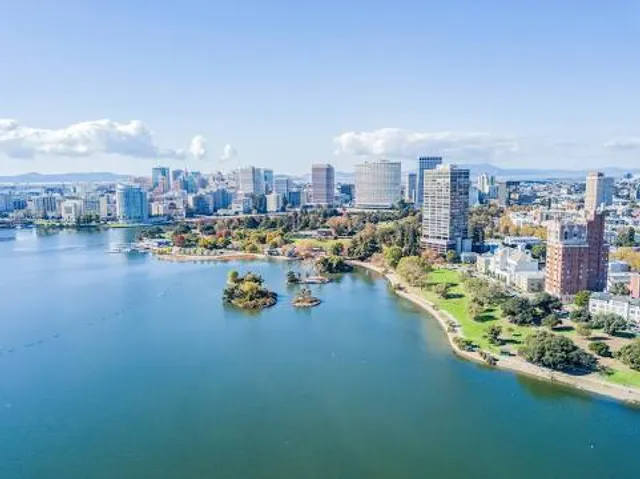
Lake Merritt
Lake MerrittLake Merritt
no-comment

No one has commented yet...