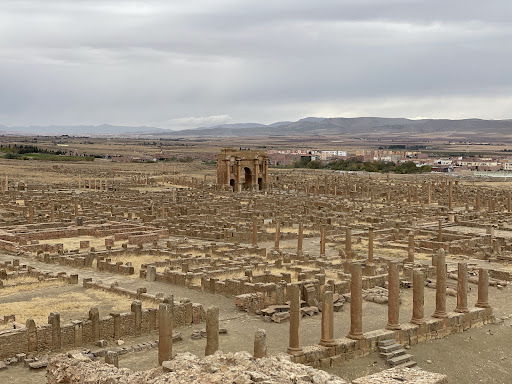
A magnificent colonial city exemplifying the grid design used in Roman urban planning.
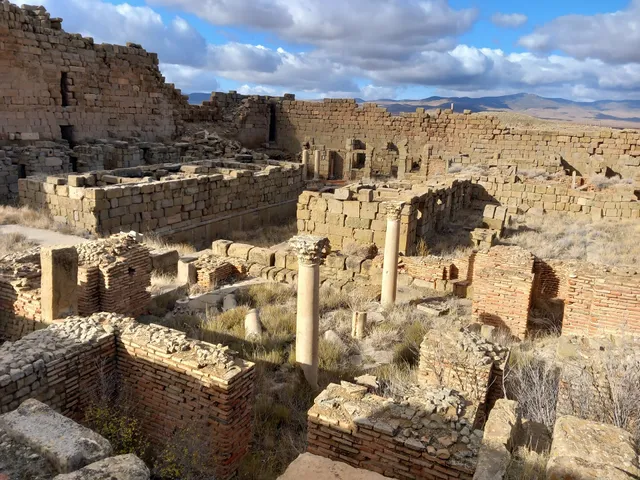
Preserved by centuries of burial in Saharan sand, the ruins of Timgad in the Aurès mountains of present-day Algeria are sometimes referred to as the Algerian Pompeii. Although sacked by invaders in the 5th and 8th centuries, the foundations of the Roman walled city have survived, along with some of the original structures, and the site today shows the sophistication of Roman town planning at its height.
Limestone city. Timgad was founded in about 100 CE by the Roman Emperor Trajan, probably as a residence for troops defending the Roman colony in Numidia from Berber attack. Working on a site where there had been no previous settlement, the city’s planners had free reign and an opportunity to design a city on a strictly regular grid. Local limestone was used for paving the streets and as the primary building material; many of the buildings were lavishly decorated with mosaics. Originally designed to house around 15,000 people, Timgad rapidly expanded beyond the city walls as it became a trading center, as well as a garrison town, and later, in the 3rd century, an important regional center of Christianity. The Romans were forced out in the 5th century, and the town was ransacked and left uninhabited some 300...
Read moreThe ancient city of Timgad is located in eastern Algeria, and belongs to the province of Batna, which is also called the "capital of Aures" (429 km east of Algiers).
And "Tamukadi" or "Thamouqadi", is the first name for the ancient Roman city of Timgad in Algeria, and archaeologists discovered the reason or the story of naming the city with this name.
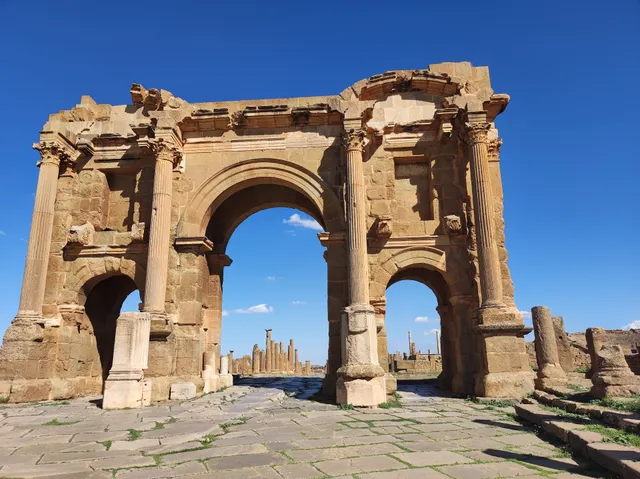
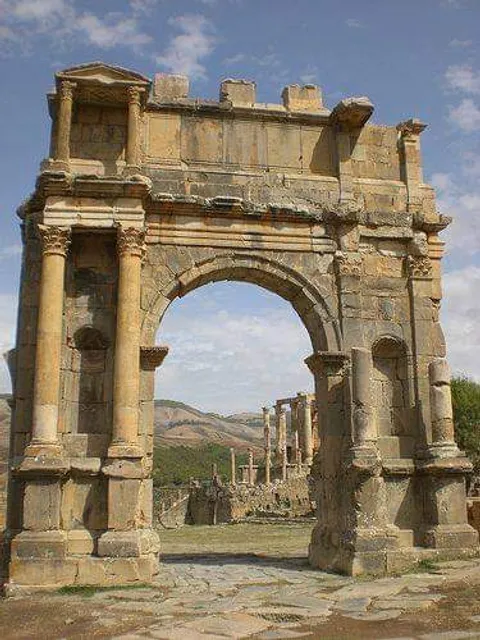
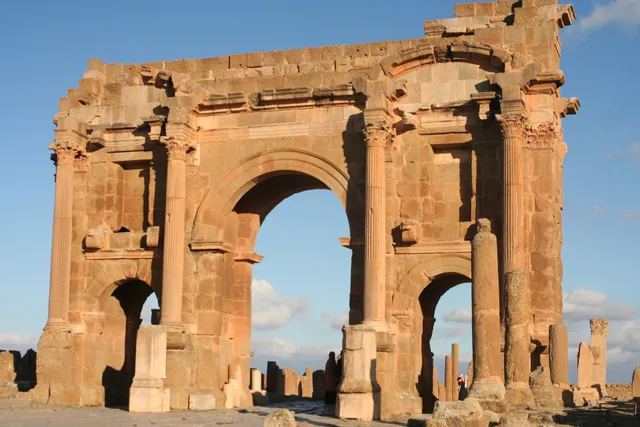
Through the "Arc de Triomphe" that is located in the ancient city, the scholars discovered a "dedication text", so that it became clear that the Roman Emperor "Trajan" founded the city of Timgad in 100 AD in honor of his sister, and wrote on the arch "Marciana Traiana Thamugadi", It was initially a Roman settlement in eastern Algeria The ancient Algerian city of Timgad is the only one of the Roman cities that has preserved its initial shape and design on the African continent. Several historical studies have stated that the Roman Emperor "Trajan" ordered that it be built in the form of a...
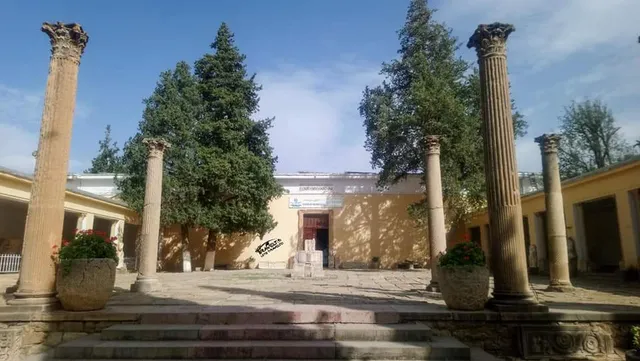
Read moreI visited this city last October 2021. Entry ticket was 200DA (very affordable) for the roman city and 200 DA more of you want to see the museum The Roman city itself was beautiful and rich of history and culture, however it would be good to have some context introducing each area what was it at the time, such as the hammam or other parts of the city. Also would love to have more attractions such as guided tour, professional photography..etc offered at an extra cost.
Overall, the experience was beautiful, in every corner there’s a story to tell. free car park was available and small souvenirs shops at the exist.
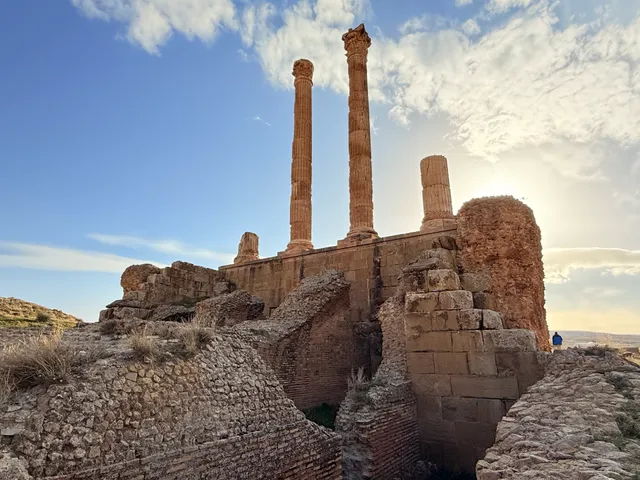
From the hill top you can see Timgad the new city and hear the Adhan from a local mosque which was beautiful and shows the contrast between...
Read more