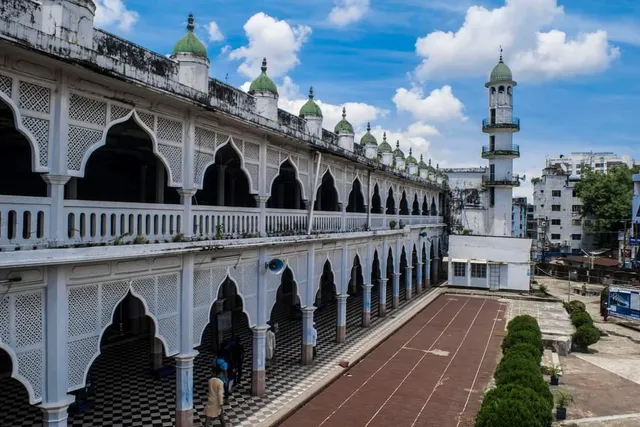
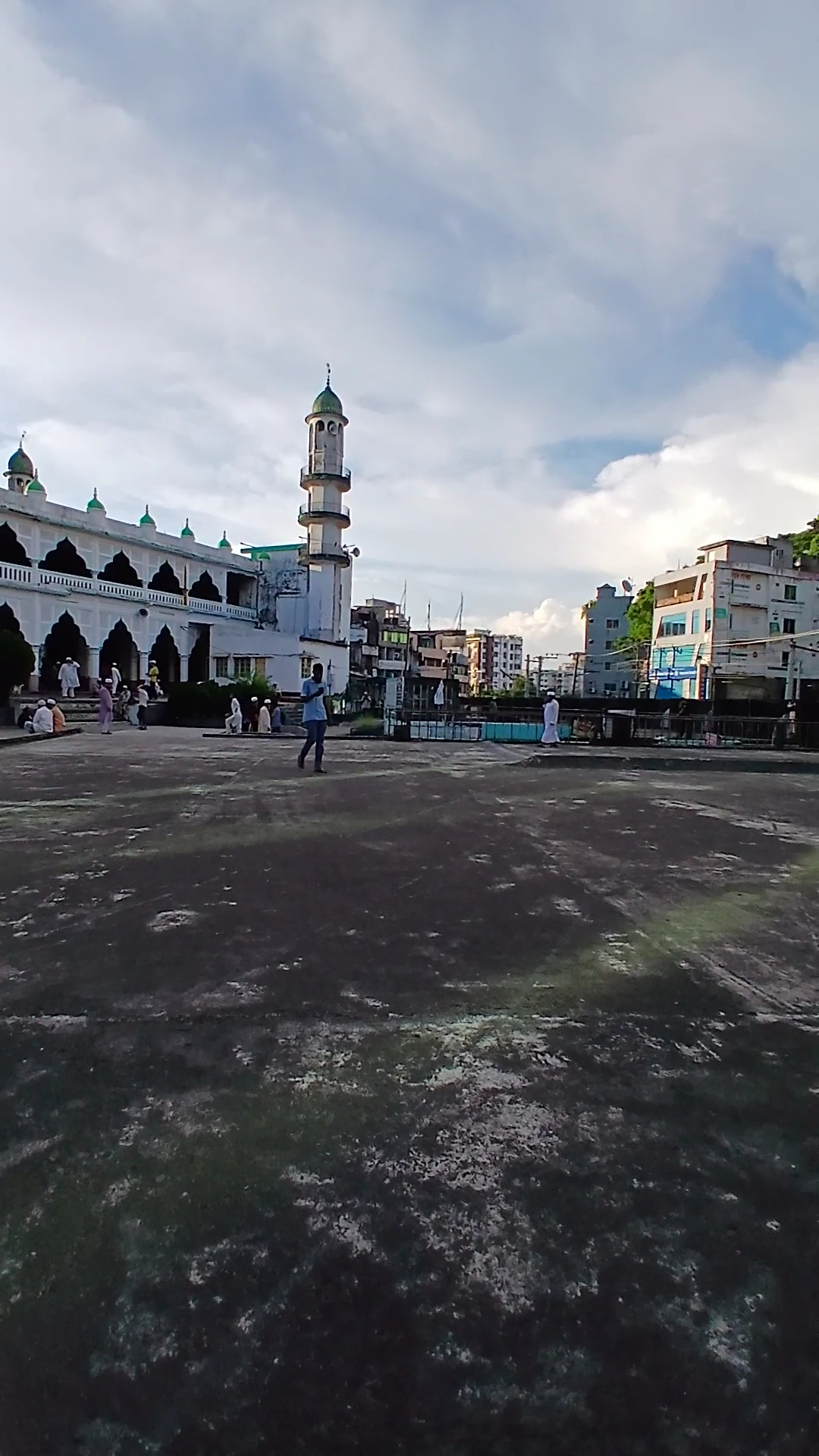
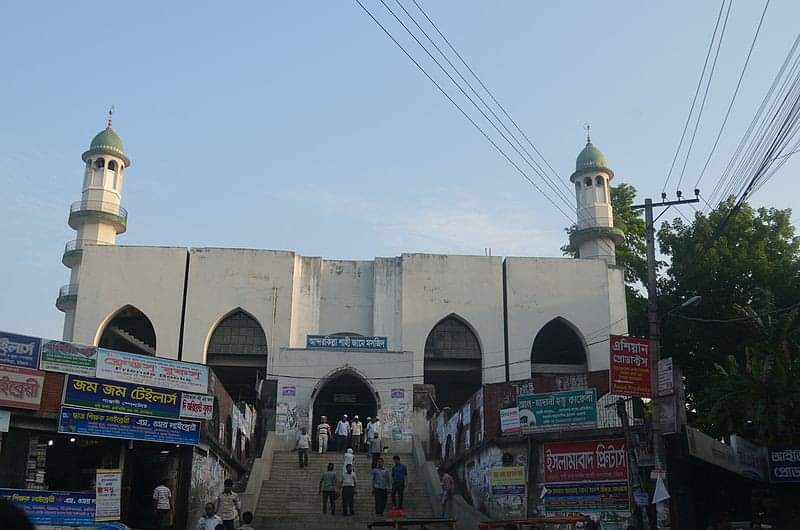
Chittagong Development Authority (CDA) has taken a project of Tk 200 crore to expand and reconstruct Anderkilla Shahi Jame Masjid, a 340-year-old hilltop mosque of Mughal era in the port city. CDA would complete the work keeping the mosque's original shape unchanged. The design and plan of the project will be presented to the ministry for housing and public work today (December 18), sources said. CDA initiated the project as part of its plans to preserve and conserve monuments and structures of historical and archeological significance. Umed Khan, son of Nawab Shayesta Khan, set up the Anderkilla Shahi Jame Masjid in 1667 as a monument to commemorate the Mughals' victory over Arakani Moghs and Portuguese pirates in the previous year, they said. Shayesta Khan and his son Bujurg Umed Khan donated huge properties for maintenance of the mosque and a madrasa on over 2.4276 acres of land at Anderkilla. The name Anderkilla meaning “Inner fort” and the mosque stands as a symbol of the Muslim triumph over the hostile and the odds. But, rows of shops of the mosque market now block the panoramic view of the masque that stands 30-foot above the adjoining ground when a project of Tk 24.88 crore for beautification and renovation by Islamic Foundation remained shelved since 2005, sources said. CDA also has a plan to construct a two-storey building surrounding the 27-foot high main mosque building keeping its original design and shape unharmed, sources said. The pictorial complex would have three laps before the main compound of the mosque. The first lap would have a parking lot with capacity of some 500 cars, said senior architect Maharina Jafrin. Shops of the mosque market will be rehabilitated on two other laps to enable one to have a view of the mosque from distance, she said. There would be two hydraulic lifts at the east and north gates of the mosque to help the elderly and the persons with disability reach the main compound apart from two other lifts in the main mosque building, she added. The mosque would have sufficient space for over 8,000 devotees to say prayers at a time where some 2,000 say prayers now. Apart from two eye-catching minarets (tombs) of modern architectural designs at the north entry points, green patches would be developed surrounding the mosque complex, they said. A 20-storey city tower would also be constructed on the southeast of the mosque complex for offices and shops. Spaces in the tower would be sold or rented out that would help self-financing of the project later on. CDA Chairman Shah Muhammad Akhteruddin said they would start implementing the project with its own fund. He said in the meantime a number of donors from both home and abroad, including Turkish agency TK group and AK Khan group, have already shown interest in financing over Tk 70 crore for the complex. According to the historians, during the British colonial rule, East India Company turned the mosque into a magazine for arms and ammunitions. They destroyed the domes and some pillars of the mosque and kept all the mosque-based activities suspended forcibly for around 95 years. However, Khan Bahadur Hamidullah Khan, a revenue officer under the British Raj in the 19th century, launched a movement that succeeded to free the mosque in 1856. But, the properties of the mosque had been registered as the waqf properties for the next 106 years until a committee headed by deputy commissioner of Chittagong was formed in 1962 to look after the mosque. Anderkilla Shahi Jamey Mosque was handed over to the Islamic Foundation Bangladesh under the ministry for religious affairs on January 7 in 1986 for its maintenance...
Read moreAndarkilla Masjid built on the top of a high hill called 'Andar Qila' (the inner fort) is the first Mughal building in Chottagram city. The Persian inscriptions in the masjid reveal that Subahdar shaista khan built it in 1667. The real builder of the masjid was possibly Buzurg Umed Khan, the eldest son of the Subahdar and the conqueror of Chottagram, but his name has not been cited in the inscription. The masjid had long remained unused, and the British military officials converted it in 1761 into storage of arms and ammunitions. In 1853 the leading Muslims of Chottagram headed by Hamidullah Khan approached the government for its release to the Muslim community. In 1855 the masjid was released and, as known from an inscription, it was thoroughly repaired. In the Pakistan period the masjid was enlarged and much of its original features were altered. Extension and repair works are still going on and it is now a multi-storeyed building. In spite of a series of repair works the masjid has preserved its original layout. The original masjid is an oblong structure measuring internally 17.07 m from north to south and 7.32 m from east to west. Of the four octagonal corner towers only the two rear ones have survived. They are carried beyond the horizontal parapets and topped over with solid kiosks and cupolas terminating in kalasa finials. All the five arched doorways - three on the east and one each on the north and south sides have been widened. Each of the three eastern doorways opens out under a half-domed vault. In the axis of these eastern entrances there are three mihrabs inside the qibla wall, and of them the flanking mihrabs have now been converted into windows. Both the central archway and the central mihrab, being usually bigger than their flanking counterparts, have outward projections with bordering ornamental turrets. These turrets, like the corner towers, rise above the roof level and are topped over by small cupolas terminating in kalasa finials. The large interior hall is divided into three bays by two wide arches. The central bay is larger and 7.32 m square, while each of the flanking ones is a rectangle of 7.32 m by 3.35 m. The central bay is covered with a dome on a circular drum, which is directly placed on two wide arches and the blocked arches over the central mihrab and the central doorway. The corners are covered up by small half-domed squinches. The roofs of the flanking rectangular bays are of the cross-vaulted type in the inside. In the centre of each of these cross-vaults is again placed a small false dome, which can only be seen from outside. This gives the impression of a three-domed masjid from the outside. All the domes are crowned with the usual lotus and kalasa finials. The masjid is now completely devoid of its original ornamentation save the traces of the merloned-frieze in the parapet in the rear. The four inner walls are now covered with costly modern cut-tiles from Japan. The exterior face of the walls is plastered and white-washed. The cross-vaulted roof over the flanking rectangular bays calls for special comment. This particular feature of the masjid, hitherto not noticed in Bengal architecture, appears to have been directly derived from north Indian Mughal architecture, such as can be seen in the Turkish Sultana's Bath at Fathpur-sikri. Such cross-vaults abound in Iranian architecture from the 12th century onwards. Two earlier examples of this feature in Muslim architecture are to be seen in the Qusyr Amra (c 714) and in the Baghdad Gate of the...
Read more"Rush Place" most likely refers to Rush Lane, also known as Graffiti Alley, a vibrant and ever-evolving outdoor art gallery located in the Fashion District of downtown Toronto, Canada. Spanning approximately three city blocks, this pedestrian-only alleyway, officially named after a local landowner, has become a significant cultural landmark and a popular destination for both locals and tourists. What was once an overlooked back alley has transformed into a dynamic canvas for a diverse range of street artists. Walls are adorned with colourful murals, intricate graffiti art, and thought-provoking installations, creating a unique and visually stimulating environment. The artwork is constantly changing as new pieces are added and older ones are painted over, making each visit a fresh experience. You might stumble upon large, collaborative murals by well-known artists or discover smaller, hidden gems tucked away in corners. Graffiti Alley serves not only as a display of artistic talent but also as a reflection of contemporary social and political themes. Many murals carry powerful messages, sparking conversations and offering commentary on current events. The alley has also become a popular backdrop for photoshoots, music videos, and even small street festivals, contributing to its lively atmosphere. Despite its artistic and cultural significance, Graffiti Alley wasn't always officially recognized. Initially a space for unsanctioned graffiti, the city eventually acknowledged its importance by legalizing it and establishing StreetARToronto (StART) in 2011. This initiative provides funding and approval for public murals and graffiti art, further enhancing the alley's artistic value and ensuring its continued evolution as a vital part of Toronto's urban landscape. A stroll through Rush Lane offers a glimpse into the city's creative spirit and provides a unique and...
Read more