HTML SitemapExplore
Find Things to DoFind The Best Restaurants

Rinpung Dzong — Attraction in Paro District

Name
Rinpung Dzong
Description
Nearby attractions
National Museum of Bhutan འབྲུག་གི་འགྲེམས་སྟོན་ཁང་།
CCHG+F6R, Paro, Bhutan
Jangsarbu Lhakhang
CCHF+G33, Paro, Bhutan
Valleys Of Bhutan
CCH8+FGH, Paro, Bhutan
Nearby restaurants
Nearby hotels
Green Valley Boutique
Opposite Children Park, Paro Town Town, Bhutan
Related posts
Bhutan's Hidden Wonders
Keywords
Rinpung Dzong tourism.Rinpung Dzong hotels.Rinpung Dzong bed and breakfast. flights to Rinpung Dzong.Rinpung Dzong attractions.Rinpung Dzong restaurants.Rinpung Dzong travel.Rinpung Dzong travel guide.Rinpung Dzong travel blog.Rinpung Dzong pictures.Rinpung Dzong photos.Rinpung Dzong travel tips.Rinpung Dzong maps.Rinpung Dzong things to do.
Rinpung Dzong things to do, attractions, restaurants, events info and trip planning
Rinpung Dzong
BhutanParo DistrictRinpung Dzong

Basic Info

Rinpung Dzong

CCGF+Q54, Paro, Bhutan
4.6(347)
Open 24 hours
Save
spot

Ratings & Description

Info

Cultural
Scenic
Family friendly
Accessibility
attractions: National Museum of Bhutan འབྲུག་གི་འགྲེམས་སྟོན་ཁང་།, Jangsarbu Lhakhang, Valleys Of Bhutan, restaurants:
logoLearn more insights from Wanderboat AI.
Website
paro.gov.bt

Plan your stay

hotel
Pet-friendly Hotels in Paro District
Find a cozy hotel nearby and make it a full experience.
hotel
Affordable Hotels in Paro District
Find a cozy hotel nearby and make it a full experience.
hotel
The Coolest Hotels You Haven't Heard Of (Yet)
Find a cozy hotel nearby and make it a full experience.
hotel
Trending Stays Worth the Hype in Paro District
Find a cozy hotel nearby and make it a full experience.

Reviews

Nearby attractions of Rinpung Dzong

National Museum of Bhutan འབྲུག་གི་འགྲེམས་སྟོན་ཁང་།

Jangsarbu Lhakhang

Valleys Of Bhutan

National Museum of Bhutan འབྲུག་གི་འགྲེམས་སྟོན་ཁང་།

National Museum of Bhutan འབྲུག་གི་འགྲེམས་སྟོན་ཁང་།

4.3

(803)

Open 24 hours
Click for details
Jangsarbu Lhakhang

Jangsarbu Lhakhang

4.7

(8)

Open 24 hours
Click for details
Valleys Of Bhutan

Valleys Of Bhutan

4.7

(18)

Open until 12:00 AM
Click for details
Get the Appoverlay
Get the AppOne tap to find yournext favorite spots!
Wanderboat LogoWanderboat

Your everyday Al companion for getaway ideas

CompanyAbout Us
InformationAI Trip PlannerSitemap
SocialXInstagramTiktokLinkedin
LegalTerms of ServicePrivacy Policy

Get the app

© 2025 Wanderboat. All rights reserved.

Posts

Bhutan's Hidden Wonders
Hannah AndyHannah Andy
Bhutan's Hidden Wonders
Yeshi SamdupYeshi Samdup
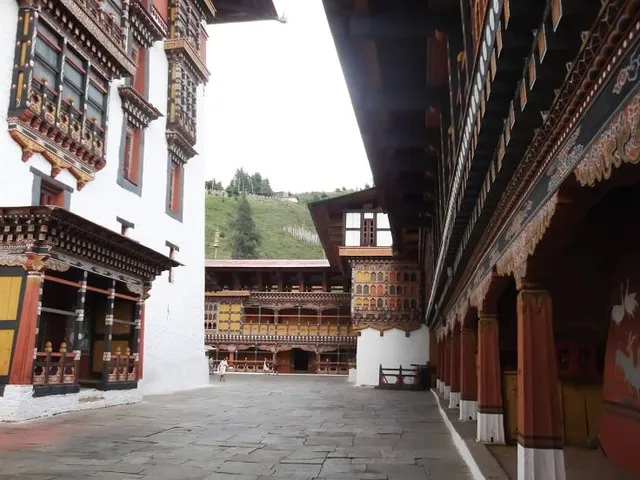
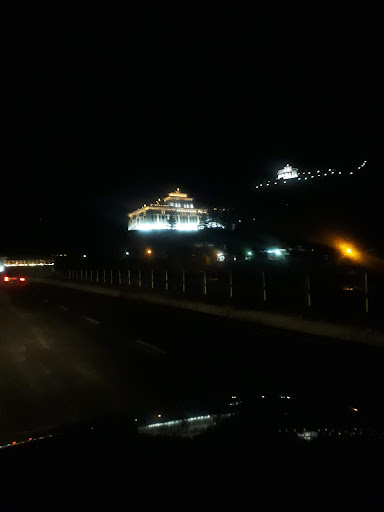
Paro Dzong ranks as a high point of Bhutanese architecture. The massive buttressed walls that tower over the town are visible throughout the valley, especially when floodlit at night. It was formerly the meeting hall for the National Assembly and now, like most dzongs, houses both the monastic body and district government offices, including the local courts. Most of the chapels are closed to tourists but it's worth a visit for its stunning architecture and views. The dzong courtyard is open daily, but on weekends the offices are deserted. Foreign visitors should wear long sleeves and long trousers and remove their hats when entering. Citizens from South Asian Association for Regional Cooperation (SAARC) countries are charged an entry fee but foreign tourists are not, since they pay a daily minimum tariff that includes most entry fees. The dzong's formal name, Rinchen Pung Dzong (usually shortened to Rinpung Dzong), means 'Fortress on a Heap of Jewels'. In 1644 Zhabdrung Ngawang Namgyal ordered the construction of the dzong on the foundation of a monastery built by Guru Rinpoche. The fort was used on numerous occasions to defend the Paro valley from invasions by Tibet. The British political officer John Claude White reported that in 1905 there were old catapults for throwing great stones stored in the rafters of the dzong's veranda. The dzong survived a 1897 earthquake but was severely damaged by fire in 1907. The dzong is built on a steep hillside, and the front courtyard of the administrative section is 6m higher than the courtyard of the monastic portion. The road to the National Museum branches down to the dzong's northeastern entrance, which leads into the dochey (courtyard). The utse (central tower) inside the dochey is five storeys tall and was built in the time of the first penlop (governor) of Paro in 1649. The richly carved wood, painted in gold, black and ochres, and the towering whitewashed walls reinforce the sense of established power and wealth. A stairway leads down to the monastic quarter, which houses about 200 monks. The kunrey, which functions as the monks' classroom, is on the southern side (to the left) and centred around an image of Buddha aged 16. Look left of the exterior vestibule for the mural of the 'mystic spiral', a uniquely Bhutanese variation on the mandala. Other murals here depict Mt Meru, the legendary centre of the universe, surrounded by seven mountain ranges and four continents. The large dukhang (prayer hall) opposite has lovely exterior murals depicting the life of Tibet's poet-saint Milarepa. The first day of the spring Paro tsechu is held in this courtyard, which fills to bursting point. The views from the courtyard's far windows are superb. Outside the dzong, to the northeast of the entrance, is a stone-paved festival ground where masked dancers perform the main dances of the tsechu. A thondrol – a huge thangka (painted or embroidered religious picture) of Guru Rinpoche of more than 18 sq metres, is unfurled shortly after dawn on the final day of the tsechu – you can see the huge rail upon which it is hung. It was commissioned in the 18th century by the eighth desi (secular ruler of Bhutan), also known as Druk Desi, Chhogyel Sherab Wangchuck. Below the dzong, a traditional wooden covered bridge called Nyamai Zam spans the Paro Chhu. This is a reconstruction of the original bridge, which was washed away in a flood in 1969. Earlier versions of this bridge were removed in times of war to protect the dzong. The most picturesque photos of Paro Dzong are taken from the west bank of the river, just downstream from the bridge. An interesting side note: scenes from Bernardo Bertolucci's 1993 film Little Buddha were filmed here.
C GC G
Visiting Rinpung Dzong རིན་སྤུང་རྫོང་། in Paro, Bhutan, was an extraordinary experience that left me in awe of its architectural grandeur and spiritual ambiance. Nestled amidst the verdant hills and overlooking the Paro Valley, this majestic fortress-monastery is a testament to Bhutan's rich cultural heritage. The intricate woodwork, vibrant murals, and serene courtyards transport you back in time, offering a glimpse into the country’s deep-rooted Buddhist traditions. 🌸 To explore the interiors of Rinpung Dzong, having a guide is essential. The guides are incredibly knowledgeable, often sharing fascinating stories and insights about the Dzong’s history and significance. They provide context that enhances the experience, from explaining the symbolism in the art to detailing the Dzong's role in Bhutanese governance and spirituality. Without a guide, one might miss out on the deeper meanings behind the Dzong’s stunning visuals. 🗺️ Rinpung Dzong is one of the largest and most important Buddhist monasteries in Bhutan. It serves as both a monastic and administrative center, embodying the unique duality of Bhutanese architecture. The Dzong houses several sacred shrines and temples, where monks engage in daily prayers and rituals. The tranquility of these spaces, combined with the Dzong's imposing structure, evokes a profound sense of peace and reverence. 🕌 For anyone visiting Bhutan, Rinpung Dzong is a must-see. The panoramic views from the Dzong, especially during sunset, are simply breathtaking. You can witness the valley bathed in golden hues, with prayer flags fluttering in the breeze, adding to the Dzong’s ethereal beauty. The annual Paro Tshechu festival, held in the Dzong’s courtyard, is another highlight that draws both locals and tourists alike, offering a vibrant display of Bhutanese culture through dances and rituals. 🎉 Rinpung Dzong is not just an architectural marvel but also a spiritual haven. It encapsulates the essence of Bhutanese Buddhism and provides an enriching experience for anyone fortunate enough to visit. Make sure to bring a guide along to fully appreciate its historical and spiritual richness. 📸
See more posts
See more posts
hotel
Find your stay

Pet-friendly Hotels in Paro District

Find a cozy hotel nearby and make it a full experience.

Bhutan's Hidden Wonders
Hannah Andy

Hannah Andy

hotel
Find your stay

Affordable Hotels in Paro District

Find a cozy hotel nearby and make it a full experience.

Get the Appoverlay
Get the AppOne tap to find yournext favorite spots!
Paro Dzong ranks as a high point of Bhutanese architecture. The massive buttressed walls that tower over the town are visible throughout the valley, especially when floodlit at night. It was formerly the meeting hall for the National Assembly and now, like most dzongs, houses both the monastic body and district government offices, including the local courts. Most of the chapels are closed to tourists but it's worth a visit for its stunning architecture and views. The dzong courtyard is open daily, but on weekends the offices are deserted. Foreign visitors should wear long sleeves and long trousers and remove their hats when entering. Citizens from South Asian Association for Regional Cooperation (SAARC) countries are charged an entry fee but foreign tourists are not, since they pay a daily minimum tariff that includes most entry fees. The dzong's formal name, Rinchen Pung Dzong (usually shortened to Rinpung Dzong), means 'Fortress on a Heap of Jewels'. In 1644 Zhabdrung Ngawang Namgyal ordered the construction of the dzong on the foundation of a monastery built by Guru Rinpoche. The fort was used on numerous occasions to defend the Paro valley from invasions by Tibet. The British political officer John Claude White reported that in 1905 there were old catapults for throwing great stones stored in the rafters of the dzong's veranda. The dzong survived a 1897 earthquake but was severely damaged by fire in 1907. The dzong is built on a steep hillside, and the front courtyard of the administrative section is 6m higher than the courtyard of the monastic portion. The road to the National Museum branches down to the dzong's northeastern entrance, which leads into the dochey (courtyard). The utse (central tower) inside the dochey is five storeys tall and was built in the time of the first penlop (governor) of Paro in 1649. The richly carved wood, painted in gold, black and ochres, and the towering whitewashed walls reinforce the sense of established power and wealth. A stairway leads down to the monastic quarter, which houses about 200 monks. The kunrey, which functions as the monks' classroom, is on the southern side (to the left) and centred around an image of Buddha aged 16. Look left of the exterior vestibule for the mural of the 'mystic spiral', a uniquely Bhutanese variation on the mandala. Other murals here depict Mt Meru, the legendary centre of the universe, surrounded by seven mountain ranges and four continents. The large dukhang (prayer hall) opposite has lovely exterior murals depicting the life of Tibet's poet-saint Milarepa. The first day of the spring Paro tsechu is held in this courtyard, which fills to bursting point. The views from the courtyard's far windows are superb. Outside the dzong, to the northeast of the entrance, is a stone-paved festival ground where masked dancers perform the main dances of the tsechu. A thondrol – a huge thangka (painted or embroidered religious picture) of Guru Rinpoche of more than 18 sq metres, is unfurled shortly after dawn on the final day of the tsechu – you can see the huge rail upon which it is hung. It was commissioned in the 18th century by the eighth desi (secular ruler of Bhutan), also known as Druk Desi, Chhogyel Sherab Wangchuck. Below the dzong, a traditional wooden covered bridge called Nyamai Zam spans the Paro Chhu. This is a reconstruction of the original bridge, which was washed away in a flood in 1969. Earlier versions of this bridge were removed in times of war to protect the dzong. The most picturesque photos of Paro Dzong are taken from the west bank of the river, just downstream from the bridge. An interesting side note: scenes from Bernardo Bertolucci's 1993 film Little Buddha were filmed here.
Yeshi Samdup

Yeshi Samdup

hotel
Find your stay

The Coolest Hotels You Haven't Heard Of (Yet)

Find a cozy hotel nearby and make it a full experience.

hotel
Find your stay

Trending Stays Worth the Hype in Paro District

Find a cozy hotel nearby and make it a full experience.

Visiting Rinpung Dzong རིན་སྤུང་རྫོང་། in Paro, Bhutan, was an extraordinary experience that left me in awe of its architectural grandeur and spiritual ambiance. Nestled amidst the verdant hills and overlooking the Paro Valley, this majestic fortress-monastery is a testament to Bhutan's rich cultural heritage. The intricate woodwork, vibrant murals, and serene courtyards transport you back in time, offering a glimpse into the country’s deep-rooted Buddhist traditions. 🌸 To explore the interiors of Rinpung Dzong, having a guide is essential. The guides are incredibly knowledgeable, often sharing fascinating stories and insights about the Dzong’s history and significance. They provide context that enhances the experience, from explaining the symbolism in the art to detailing the Dzong's role in Bhutanese governance and spirituality. Without a guide, one might miss out on the deeper meanings behind the Dzong’s stunning visuals. 🗺️ Rinpung Dzong is one of the largest and most important Buddhist monasteries in Bhutan. It serves as both a monastic and administrative center, embodying the unique duality of Bhutanese architecture. The Dzong houses several sacred shrines and temples, where monks engage in daily prayers and rituals. The tranquility of these spaces, combined with the Dzong's imposing structure, evokes a profound sense of peace and reverence. 🕌 For anyone visiting Bhutan, Rinpung Dzong is a must-see. The panoramic views from the Dzong, especially during sunset, are simply breathtaking. You can witness the valley bathed in golden hues, with prayer flags fluttering in the breeze, adding to the Dzong’s ethereal beauty. The annual Paro Tshechu festival, held in the Dzong’s courtyard, is another highlight that draws both locals and tourists alike, offering a vibrant display of Bhutanese culture through dances and rituals. 🎉 Rinpung Dzong is not just an architectural marvel but also a spiritual haven. It encapsulates the essence of Bhutanese Buddhism and provides an enriching experience for anyone fortunate enough to visit. Make sure to bring a guide along to fully appreciate its historical and spiritual richness. 📸
C G

C G

See more posts
See more posts

Reviews of Rinpung Dzong

4.6
(347)
avatar
5.0
7y

Paro Dzong ranks as a high point of Bhutanese architecture. The massive buttressed walls that tower over the town are visible throughout the valley, especially when floodlit at night. It was formerly the meeting hall for the National Assembly and now, like most dzongs, houses both the monastic body and district government offices, including the local courts. Most of the chapels are closed to tourists but it's worth a visit for its stunning architecture and views.

The dzong courtyard is open daily, but on weekends the offices are deserted. Foreign visitors should wear long sleeves and long trousers and remove their hats when entering. Citizens from South Asian Association for Regional Cooperation (SAARC) countries are charged an entry fee but foreign tourists are not, since they pay a daily minimum tariff that includes most entry fees.

The dzong's formal name, Rinchen Pung Dzong (usually shortened to Rinpung Dzong), means 'Fortress on a Heap of Jewels'. In 1644 Zhabdrung Ngawang Namgyal ordered the construction of the dzong on the foundation of a monastery built by Guru Rinpoche. The fort was used on numerous occasions to defend the Paro valley from invasions by Tibet. The British political officer John Claude White reported that in 1905 there were old catapults for throwing great stones stored in the rafters of the dzong's veranda. The dzong survived a 1897 earthquake but was severely damaged by fire in 1907. The dzong is built on a steep hillside, and the front courtyard of the administrative section is 6m higher than the courtyard of the monastic portion. The road to the National Museum branches down to the dzong's northeastern entrance, which leads into the dochey (courtyard). The utse (central tower) inside the dochey is five storeys tall and was built in the time of the first penlop (governor) of Paro in 1649. The richly carved wood, painted in gold, black and ochres, and the towering whitewashed walls reinforce the sense of established power and wealth.

A stairway leads down to the monastic quarter, which houses about 200 monks. The kunrey, which functions as the monks' classroom, is on the southern side (to the left) and centred around an image of Buddha aged 16. Look left of the exterior vestibule for the mural of the 'mystic spiral', a uniquely Bhutanese variation on the mandala. Other murals here depict Mt Meru, the legendary centre of the universe, surrounded by seven mountain ranges and four continents.

The large dukhang (prayer hall) opposite has lovely exterior murals depicting the life of Tibet's poet-saint Milarepa. The first day of the spring Paro tsechu is held in this courtyard, which fills to bursting point. The views from the courtyard's far windows are superb. Outside the dzong, to the northeast of the entrance, is a stone-paved festival ground where masked dancers perform the main dances of the tsechu. A thondrol – a huge thangka (painted or embroidered religious picture) of Guru Rinpoche of more than 18 sq metres, is unfurled shortly after dawn on the final day of the tsechu – you can see the huge rail upon which it is hung. It was commissioned in the 18th century by the eighth desi (secular ruler of Bhutan), also known as Druk Desi, Chhogyel Sherab Wangchuck.

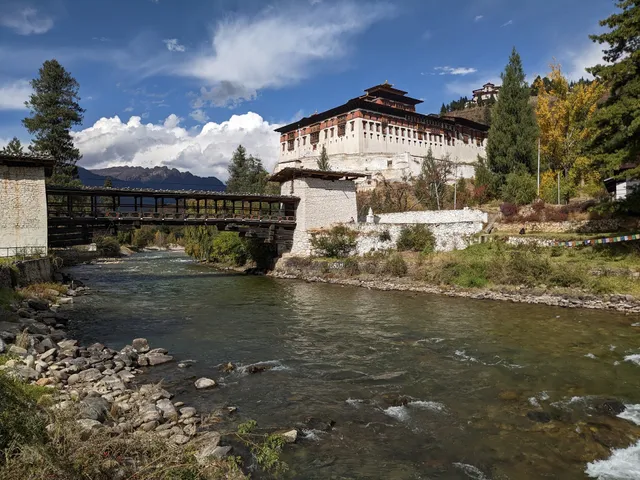
Below the dzong, a traditional wooden covered bridge called Nyamai Zam spans the Paro Chhu. This is a reconstruction of the original bridge, which was washed away in a flood in 1969. Earlier versions of this bridge were removed in times of war to protect the dzong. The most picturesque photos of Paro Dzong are taken from the west bank of the river, just downstream from the bridge.

An interesting side note: scenes from Bernardo Bertolucci's 1993 film Little Buddha were...

   Read more

avatar
5.0
1y

Visiting Rinpung Dzong རིན་སྤུང་རྫོང་། in Paro, Bhutan, was an extraordinary experience that left me in awe of its architectural grandeur and spiritual ambiance. Nestled amidst the verdant hills and overlooking the Paro Valley, this majestic fortress-monastery is a testament to Bhutan's rich cultural heritage. The intricate woodwork, vibrant murals, and serene courtyards transport you back in time, offering a glimpse into the country’s deep-rooted Buddhist traditions. 🌸

To explore the interiors of Rinpung Dzong, having a guide is essential. The guides are incredibly knowledgeable, often sharing fascinating stories and insights about the Dzong’s history and significance. They provide context that enhances the experience, from explaining the symbolism in the art to detailing the Dzong's role in Bhutanese governance and spirituality. Without a guide, one might miss out on the deeper meanings behind the Dzong’s stunning visuals. 🗺️

Rinpung Dzong is one of the largest and most important Buddhist monasteries in Bhutan. It serves as both a monastic and administrative center, embodying the unique duality of Bhutanese architecture. The Dzong houses several sacred shrines and temples, where monks engage in daily prayers and rituals. The tranquility of these spaces, combined with the Dzong's imposing structure, evokes a profound sense of peace and reverence. 🕌

For anyone visiting Bhutan, Rinpung Dzong is a must-see. The panoramic views from the Dzong, especially during sunset, are simply breathtaking. You can witness the valley bathed in golden hues, with prayer flags fluttering in the breeze, adding to the Dzong’s ethereal beauty. The annual Paro Tshechu festival, held in the Dzong’s courtyard, is another highlight that draws both locals and tourists alike, offering a vibrant display of Bhutanese culture through dances and rituals. 🎉

Rinpung Dzong is not just an architectural marvel but also a spiritual haven. It encapsulates the essence of Bhutanese Buddhism and provides an enriching experience for anyone fortunate enough to visit. Make sure to bring a guide along to fully appreciate its historical and spiritual...

   Read more
avatar
5.0
7y

The construction of the Paro Dzong began in 1644 on the order of Zhabdrung Ngawang Namgyal. Paro Dzong’s full name is Ringpung Dzong, which means ‘heap of jewels - fort’. In 15th century, two brothers Gyelchok and Gyelzom, descendents of Phajo (the founder of Drukpa Kagyu in Bhutan), lived in the valley. Gyelchok left for Tibet to study theology and when he returned, moved to Humrelkha and built a small structure that would later become the Paro Dzong. Gyelchok’s descendants, who controlled a large portion of the valley, were known as Lords of Humrelkha. In 1645, the Lords of Humrelkha relinquished their small fort to Zhabdrung Ngawang Namgyel, recognizing his religious and political prowess. Immediately, Zhabdrung began construction of a much more superior fortress and in 1646, the Dzong was consecrated. It is approached by a gently sloping flagstone road and an attractive wooden bridge, roofed with shingles. Like most Dzongs, Rinphung is the administrative seat of the district of Paro, and also houses state monastic community of about 200 members. Administrative offices line the first courtyard of the Dzong. The Utse (tower) of the Dzong is one of the most beautiful in Bhutan with its outstanding woodwork. In 1905 the Dzong caught fire, but was repaired in 1908/9 to its original state with the addition of statues of Guru Rinpoche, Buddha and the Zhabdrung. The most precious object of the Dzong, is the Thongdroel, a 20×20 meter wide Thangka –applique work. It was saved from the fire and is annually displayed to public during the Paro Tshechu...

   Read more
Page 1 of 7
Previous
Next