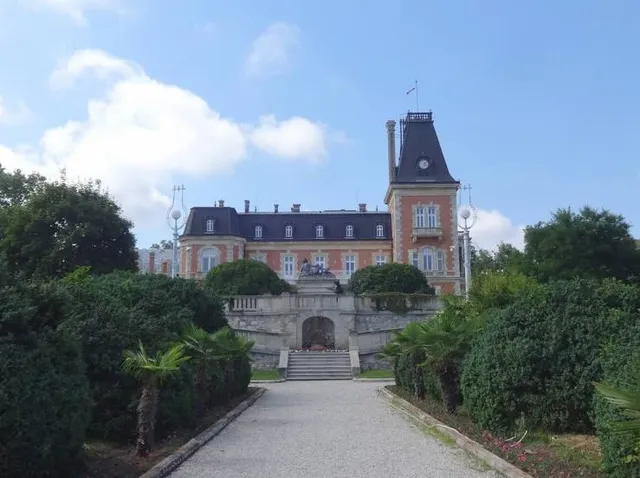
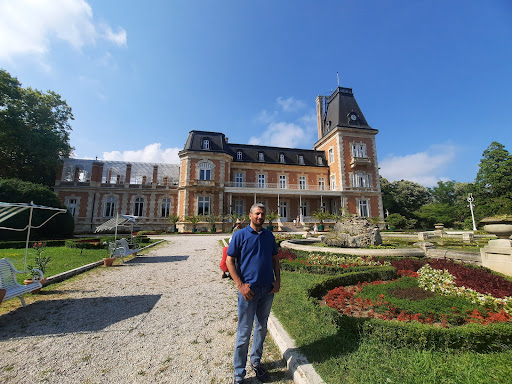
The one of the most beautiful place in Bulgaria. But you have to book your visit on the website in advance. Euxinograd palace as it stands today dates from the reign of Knyaz Ferdinand. He brought the pediment and other materials from the right wing of the Château de Saint-Cloud (a former French royal residence) in France to Bulgaria and integrated them into his new palace. The palace was designed in the style of an 18th-century French château, with a high metal-topped mansard roof, figured brickwork, balconies and a clock tower. The main building has 3 floors. On the first are the reception rooms, music hall and dining room, on the second were the bedrooms of the royal family, and the third was intended for the staff. I was attracted by 1)the sundial that was a gift to King Ferdinand from the British Queen Victoria as a sign of gratitude for the rescue of English ships in the Gulf of Varna and 2) by the central pediment with the roofs of the French castle - Château de Saint-Cloud (where Prince Ferdinand's parents were married in 1843) built under the main terrace. It bears the French royal coat of arms, and was transported stone by stone in an Oriental Express carriage in 1891, when the original building of Château de Saint-Cloud outside Paris was demolished. One of the most beautiful parts of Euxinograd is its park, that occupies over 550 decares. The first decorative material for the park was delivered from Marseille in 1880-1912 - over 50,000 trees and plants of over 310 species imported from Constantinople, Hungary, France and Italy. Then the first plantations take place. The centuries-old species of coniferous, juniper and broad-leaved trees and shrubs were planted. The plantings in 1900-1910 were particularly intensive. First, firs, cedars, cypresses and libocedrus were planted in the park.After them, luxuriant roses, rhododendrons and azaleas descend towards the seashore. A natural continuation of the palace towards the sea is the garden with the lake, known like "Water Mirrors", due to the interesting optical effect of the floating water lilies. A statue of Neptune with angels completes the...
Read moreConstruction of the palace began soon after its site was presented to Knyaz Alexander Battenberg by the Greek bishopric on 16 March 1882. At the time, the land was occupied by two small monasteries, St. Demetrius and St. Constantine; these were subsequently converted into the first royal residence on the site. This conversion was constructed to plans drawn the Viennese architect Viktor Rumpelmayer in 1885. Initially, the palace was named Sandrovo after the Italian diminutive of Alexander's name — Sandro. Later the knyaz extended the estate to its current area of 80 hectares (200 acres). However, no further building work was carried out.
The palace, as it is today, was constructed during the reign of Knyaz (later Tsar) Ferdinand. The pediment and other materials from the right wing of Château de Saint-Cloud in France, a former French royal residence, were brought to Bulgaria by Ferdinand and integrated into his new palace.
Ferdinand commissioned Swiss architect Hermann Mayer and Bulgarian architect Nikola Lazarov to complete the design of the palace. In 1893, on the insistence of Princess Marie Louise, Ferdinand's first wife, the palace was renamed Euxinograd - the name derives from the Ancient Greek term for the Black Sea, Εὔξεινος Πόντος (Euxeinos Pontos, "hospitable sea") and the South Slavic suffix –grad, meaning "town" or, historically, "fortress".
Tsar Ferdinand's second wife, Tsaritsa Eleonore, died in Euxinograd on 12 September 1917.
Following the abolition of the monarchy in Bulgaria, the result of a referendum held under the auspices of the Communists in 1946, Euxinograd became a summer residence of the then-Communist authorities. The democratic changes in 1989 made the former royal palace a presidential and governmental residence and it was opened...
Read moreConstruction of the palace began soon after the Greek bishopric presented the site to Knyaz Alexander Battenberg, the reigning Prince of Bulgaria, on 16 March 1882. At the time the land was occupied by two small monasteries: St. Demetrius and St. Constantine; these were subsequently converted into the first royal residence on the site. This conversion followed plans drawn up by the Viennese architect Viktor Rumpelmayer in 1885. Initially, the palace was named Sandrovo after the Italian diminutive of Alexander's name — Sandro. Later the knyaz extended the estate to its current area of 80 hectares (200 acres). However, no further building work took place.
The palace as it stands today dates from the reign of Knyaz (later Tsar) Ferdinand (r. 1887–1918). Ferdinand brought the pediment and other materials from the right wing of Château de Saint-Cloud (a former French royal residence) in France to Bulgaria and integrated them into his new palace.
Ferdinand commissioned Swiss architect Hermann Mayer and Bulgarian architect Nikola Lazarov to complete the design of the palace. In 1893, on the insistence of Princess Marie Louise, Ferdinand's first wife, the palace was renamed Euxinograd - the name derives from the Ancient Greek term for the Black Sea, Εὔξεινος Πόντος (Euxeinos Pontos, "hospitable sea") and the South Slavic suffix –grad, meaning "town" or, historically,...
Read more