HTML SitemapExplore
logo
Find Things to DoFind The Best Restaurants

Baksei Chamkrong Temple — Attraction in Siem Reap

Name
Baksei Chamkrong Temple
Description
Nearby attractions
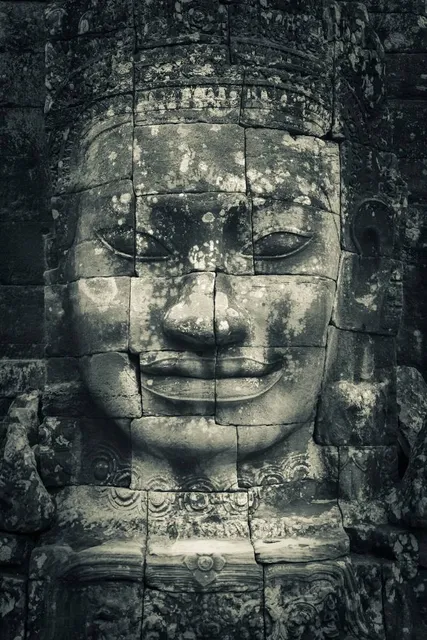
Phnom Bakheng
CVF4+GCW Angkor Archaeological Park, Krong Siem Reap 17000, Cambodia
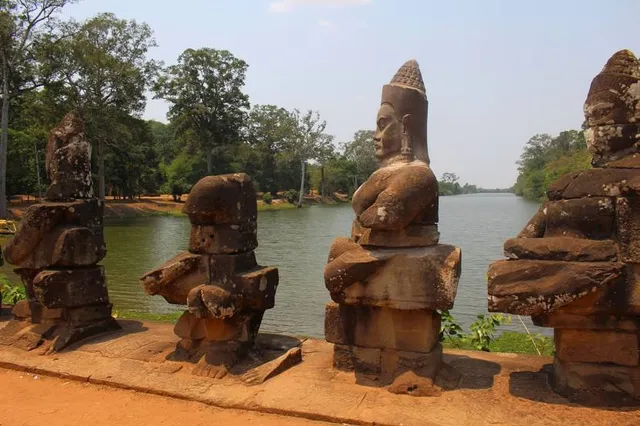
Tonle Om Gate (Southern Gate)
CVH5+2RJ, ស្ពានក្លោងទ្វាខាងត្បូង, Krong Siem Reap, Cambodia
Prasat Bay Kaek East
CVG5+GH2, Angkor, Cambodia
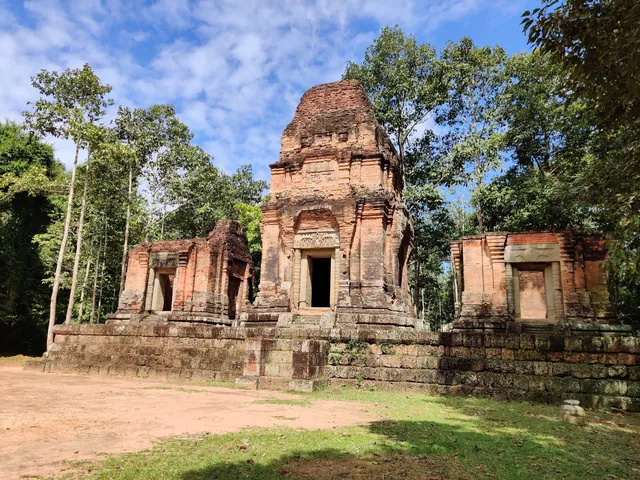
Prasat Bei
Angkor Archaeological Park, Krong Siem Reap 17000, Cambodia
Nearby restaurants
Nearby hotels
Related posts
Keywords
Baksei Chamkrong Temple tourism.Baksei Chamkrong Temple hotels.Baksei Chamkrong Temple bed and breakfast. flights to Baksei Chamkrong Temple.Baksei Chamkrong Temple attractions.Baksei Chamkrong Temple restaurants.Baksei Chamkrong Temple travel.Baksei Chamkrong Temple travel guide.Baksei Chamkrong Temple travel blog.Baksei Chamkrong Temple pictures.Baksei Chamkrong Temple photos.Baksei Chamkrong Temple travel tips.Baksei Chamkrong Temple maps.Baksei Chamkrong Temple things to do.
Baksei Chamkrong Temple things to do, attractions, restaurants, events info and trip planning
Baksei Chamkrong Temple
CambodiaSiem ReapBaksei Chamkrong Temple

Basic Info

Baksei Chamkrong Temple

CVG5+582 Angkor, Krong Siem Reap 17000, Cambodia
4.6(219)
Open 24 hours
Save
spot

Ratings & Description

Info

Cultural
Outdoor
Scenic
Off the beaten path
attractions: Phnom Bakheng, Tonle Om Gate (Southern Gate), Prasat Bay Kaek East, Prasat Bei, restaurants:
logoLearn more insights from Wanderboat AI.

Plan your stay

hotel
Pet-friendly Hotels in Siem Reap
Find a cozy hotel nearby and make it a full experience.
hotel
Affordable Hotels in Siem Reap
Find a cozy hotel nearby and make it a full experience.
hotel
The Coolest Hotels You Haven't Heard Of (Yet)
Find a cozy hotel nearby and make it a full experience.
hotel
Trending Stays Worth the Hype in Siem Reap
Find a cozy hotel nearby and make it a full experience.

Reviews

Nearby attractions of Baksei Chamkrong Temple

Phnom Bakheng

Tonle Om Gate (Southern Gate)

Prasat Bay Kaek East

Prasat Bei

Phnom Bakheng

Phnom Bakheng

4.5

(1.7K)

Closed
Click for details
Tonle Om Gate (Southern Gate)

Tonle Om Gate (Southern Gate)

4.7

(753)

Closed
Click for details
Prasat Bay Kaek East

Prasat Bay Kaek East

4.5

(60)

Closed
Click for details
Prasat Bei

Prasat Bei

4.2

(33)

Open 24 hours
Click for details

Things to do nearby

Personalized Angkor Wat Sunrise Tour by Tuktuk
Sun, Dec 7 • 5:00 AM
Krong Siem Reap, Siem Reap Province 17252, Cambodia
View details
Explore Kampong Phluk Floating Village at sunset
Sun, Dec 7 • 2:30 PM
Krong Siem Reap, Siem Reap Province 171204, Cambodia
View details
Jungle adventure: a nature and wildlife walk
Sun, Dec 7 • 12:30 PM
Krong Siem Reap, Siem Reap Province 17250, Cambodia
View details
Get the Appoverlay
Get the AppOne tap to find yournext favorite spots!
Wanderboat LogoWanderboat

Your everyday Al companion for getaway ideas

CompanyAbout Us
InformationAI Trip PlannerSitemap
SocialXInstagramTiktokLinkedin
LegalTerms of ServicePrivacy Policy

Get the app

© 2025 Wanderboat. All rights reserved.
logo

Reviews of Baksei Chamkrong Temple

4.6
(219)
avatar
5.0
7y

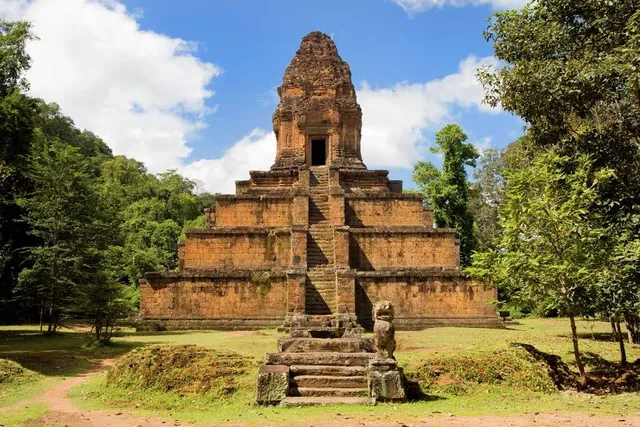
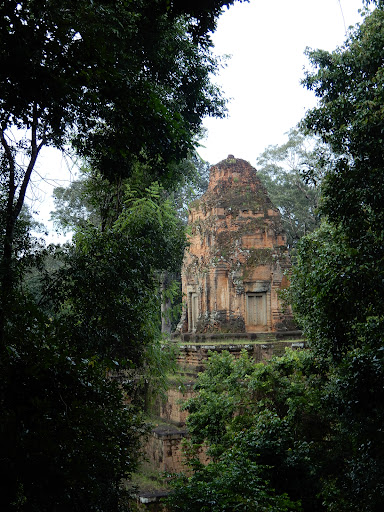
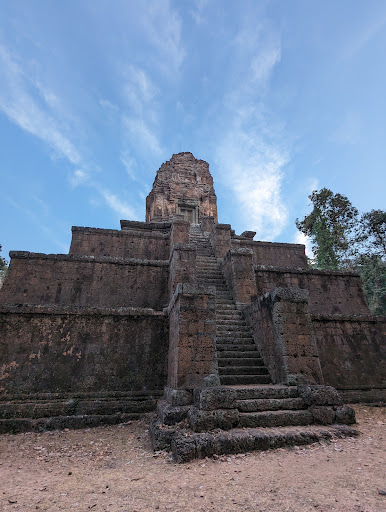
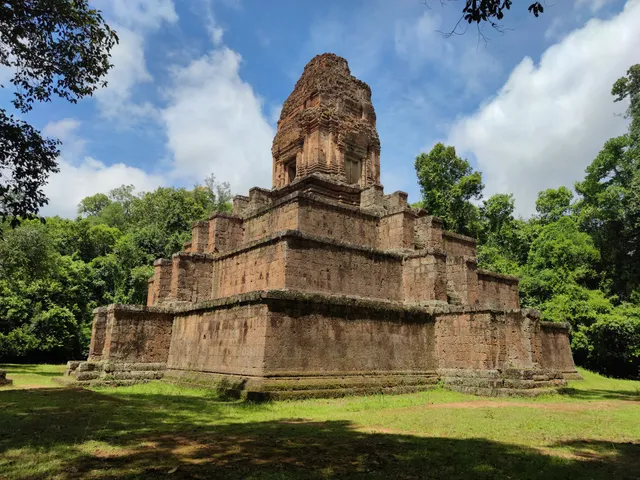
The bird that shelters under its wings.This little temple with its four square tiers of laterite, crowned by a brick sanctuary, might serve for a model in miniature of some of its giant neighbors, and is almost as perfect as perfect as the day it was built. Prasat Baksei Chamkrong is located 150 meters (492 feel) north of Phnom Bakheng and 80 meters (262 feet) from the road leading to the south gate of Angkor Thom. A visit to Baksei Chamkrong can be combined with a stop at the south gate of Angkor Thom. Enter and leave the temple from the east entrance. The stairs to the Central Sanctuary are in poor condition but the architecture and decoration of this temple can be viewed by walking around it (in a clockwise direction). Those who persist in climbing to the Central Sanctuary should use the north stairway. It was built in middle of the tenth century (947), perhaps begun by Harshavarman I and completed by Rajendravarman II, dedicated to Siva (Hindu) may have been a funerary temple for the parents of the king with following transitional between Bakheng and Koh ker. According to legend, the king fled during an attack on Angkor and was saved from being caught by the enemy when a large bird swooped down and spread its wings to shelter the king. The name of the temple derives from this legend. Baksei Chamkrong was the first temple-mountain at Angkor built entirely of durable materials brick, laterite and sandstone. Even though it is small the balanced proportions and scale of this monument are noteworthy. Inscriptions on the columns of the door and the arches give the date of the temple and mention a golden image of Siva. Baksei Chamkrong is a simple plan with a single tower on top of a square tiered base with four levels of diminishing size (27 meters, 89 feet, a side at the base) built of laterite (1-4). The height from the ground to the top of the Central Sanctuary is 13 meters (43 feet). Three levels of the base are undecorated but the top one has horizontal molding around it and serves as a base for the Central sanctuary. A steep staircase on each side of the base leads to the top. A brick wall (5) with an entry tower (6) and sandstone steps enclosed the temple. Although it has almost all disappeared vestiges are visible on the east side of the temple. CENTRAL SANCTUARY The square central tower is built of brick and stands on a sandstone base. It has one door opening to the east with three false doors on the other sides. As is typical of tenth-century Khmer architecture, the columns and lintels are made of sandstone. A vertical panel in the center of each false door contains motifs of foliage on stems. The interior of the tower has a sunken floor and a vault with a corbel arch. The finely worked decoction on the sandstone columns and horizontal beams above the doors imitates woodcarving. An outline divinity can be seen in the bricks at the corners of the tower. A three-headed elephant on the east lintel is...

   Read more
avatar
5.0
2y

Baksei Chamkrong (also spelled Baksey Chamkrong, Khmer: បក្សីចាំក្រុង) is a legendary monarch of Cambodia, whose life and rule are known from the Cambodian Royal Chronicles. Despite a lack of historicity, the narrative of his epic has had a lasting influence on Cambodian culture and politics. Legend: found there. While the men were arguing, making a mess to look at the traces on the flour, Ta Kohé, sensing the danger, grabbed Baksei Cham Krong, carried him in his arms and fled.

Flight of Ta Kohé Ta Kohé had been able to get out, because the tumult was great, and the guards could not stop them. They brought this matter to the attention of His Majesty who ordered the troops to be raised to pursue and arrest Baksei Cham Krong. Ta Kohé went to tell his wife what had happened in all respects, then asked her to prepare food. Then he went to take back Baksei Cham Krong; and carrying him in his arms, he fled through the forests. In the morning, they left their place of rest, and arriving on the edge of the river, they did not find a boat to cross to the other bank. Seeing a large rokar tree standing on their bank, and a large coila[spelling?] tree on the other bank, Baksei Cham Krong said, "If I possess merits (Mean Boun) and really must ascend the throne, may this tree bend forward, so that the lovea tree bends to meet it”. The two trees then bowed to meet each other according to the invocation. They crossed the river and managed to reach the eastern bank. This is how there have been, since then and up to the present day, villages called Roka Kong and Lovea Té.

Ascension to the throne

King Prom Kel reigned 20 years and died at the age of 31. Then the dignitaries and all the mandarins, having learned that Baksei Cham Krong possessed miraculous merits, met and agreed to go and invite Baksei Cham Krong to leave the Phnom Prasiddh region. Then they invited him to ascend the...

   Read more
avatar
5.0
6y

Baksei Chamkrong (Khmer: ប្រាសាទបក្សីចាំក្រុង) is a small Hindu temple located in the Angkor complex (Siem Reap, Cambodia). It is dedicated to Lord Shivaand used to hold a golden image of him. The temple can be seen on the left side when entering Angkor Thom at the southern gate. It was dedicated to Yasovarman by his son, King Harshavarman I. The temple was completed by Rajendravarman II (944-968). This temple is one of the first temples constructed of durable material such as bricks and laterite and with decoration in sandstone. A brick enclosure originally surrounded the pyramid with a stone gopura on the east side is now almost completely disappeared. Much of the stucco on the surface of the temple has vanished. The main sandstone lintel is decorated with a fine carving of Indra standing on his three-headed elephant Airavata. Garlands emanate from either side of Indra in the style current to the monument. There is an inscription on either side of the small doorway which detail the dedication and praises the early Khmer kings from Jayavarman IIonward as well as earlier legendary kings, including the ancestor of the nation, the hermit Kambu. The pyramid measures 27 metres across at the base and 15 at the summit for an overall height of 13 metres. Four stairway reach the summit at the cardinal points. The brick sanctuary tower, eight meters square on a sandstone base open to the east with the usual blind doors on the...

   Read more
Page 1 of 7
Previous
Next

Posts

Shankar RajasekharanShankar Rajasekharan
The bird that shelters under its wings.This little temple with its four square tiers of laterite, crowned by a brick sanctuary, might serve for a model in miniature of some of its giant neighbors, and is almost as perfect as perfect as the day it was built. Prasat Baksei Chamkrong is located 150 meters (492 feel) north of Phnom Bakheng and 80 meters (262 feet) from the road leading to the south gate of Angkor Thom. A visit to Baksei Chamkrong can be combined with a stop at the south gate of Angkor Thom. Enter and leave the temple from the east entrance. The stairs to the Central Sanctuary are in poor condition but the architecture and decoration of this temple can be viewed by walking around it (in a clockwise direction). Those who persist in climbing to the Central Sanctuary should use the north stairway. It was built in middle of the tenth century (947), perhaps begun by Harshavarman I and completed by Rajendravarman II, dedicated to Siva (Hindu) may have been a funerary temple for the parents of the king with following transitional between Bakheng and Koh ker. According to legend, the king fled during an attack on Angkor and was saved from being caught by the enemy when a large bird swooped down and spread its wings to shelter the king. The name of the temple derives from this legend. Baksei Chamkrong was the first temple-mountain at Angkor built entirely of durable materials brick, laterite and sandstone. Even though it is small the balanced proportions and scale of this monument are noteworthy. Inscriptions on the columns of the door and the arches give the date of the temple and mention a golden image of Siva. Baksei Chamkrong is a simple plan with a single tower on top of a square tiered base with four levels of diminishing size (27 meters, 89 feet, a side at the base) built of laterite (1-4). The height from the ground to the top of the Central Sanctuary is 13 meters (43 feet). Three levels of the base are undecorated but the top one has horizontal molding around it and serves as a base for the Central sanctuary. A steep staircase on each side of the base leads to the top. A brick wall (5) with an entry tower (6) and sandstone steps enclosed the temple. Although it has almost all disappeared vestiges are visible on the east side of the temple. CENTRAL SANCTUARY The square central tower is built of brick and stands on a sandstone base. It has one door opening to the east with three false doors on the other sides. As is typical of tenth-century Khmer architecture, the columns and lintels are made of sandstone. A vertical panel in the center of each false door contains motifs of foliage on stems. The interior of the tower has a sunken floor and a vault with a corbel arch. The finely worked decoction on the sandstone columns and horizontal beams above the doors imitates woodcarving. An outline divinity can be seen in the bricks at the corners of the tower. A three-headed elephant on the east lintel is finely carved.
Eng NounEng Noun
Built during the first decades of the 10" century at the foot of Phnom Bakheng (the Central Mountain), Baksei Chamkrong is the only pyramid temple found among the sanctuaries from that time which are scattered around the immediate environs of the hill. These small sanctuaries can be missed by the inattentive visitor. Of admirable proportions, Baksei Chamkrong is a little architectural jewel, more easily approached and admired since its brick encircling wall and western entry pavilion are today leveled. It was in 948 AD that the King Rajendravarman chose this monument, built forty years earlier, to engrave a Sanskrit text on its door jamb. Among the over 1300 known inscriptions from ancient Cambodia, this one is unique in its content. The inscription relates the suc- cession of Khmer Kings from even before pre- Angkorian times, grounding the dynasty on a mythical foundation. Thus the Khmer descend from the union of an ascetic named Kambu, said to be "born from himself" and the most beautiful nymph, Mera. Baksei Chamkrong is one of numerous Angkorian monuments in the Park which are built on previous proto-historic sites.
Elena TitkovaElena Titkova
Interesting to see if you have a lot of time (3 days Angkor ticket etc). But during 1 day visit I would advise to choose another locations. Built during the first decades of the tenth century at the foot of Phnom Bakheng, Baksei Chamkrong is the only pyramid temple in this area that survives from that era. Like many other Angkorean monuments in the park, Baksei Chamkrong was constructed atop a previous structure. Today, this often-overlooked architectural jewel is more easily approached and admired, as a high brick wall that once encircled it has long since vanished. In 948 CE, 40 years after the temple was built, King Rajendravarman had a Sanskrit text engraved on its doorjamb. Of the estimated 1,500 inscriptions in Southeast Asia known to survive, this one is unique in that it relates the succession of Khmer kings from pre-Angkorean times, grounding the dynasty on a mythic foundation. The lineage is said to descend from the union of the hermit Kamba, said to be "born from himself," and the celestial nymph Mera.
See more posts
See more posts
hotel
Find your stay

Pet-friendly Hotels in Siem Reap

Find a cozy hotel nearby and make it a full experience.

The bird that shelters under its wings.This little temple with its four square tiers of laterite, crowned by a brick sanctuary, might serve for a model in miniature of some of its giant neighbors, and is almost as perfect as perfect as the day it was built. Prasat Baksei Chamkrong is located 150 meters (492 feel) north of Phnom Bakheng and 80 meters (262 feet) from the road leading to the south gate of Angkor Thom. A visit to Baksei Chamkrong can be combined with a stop at the south gate of Angkor Thom. Enter and leave the temple from the east entrance. The stairs to the Central Sanctuary are in poor condition but the architecture and decoration of this temple can be viewed by walking around it (in a clockwise direction). Those who persist in climbing to the Central Sanctuary should use the north stairway. It was built in middle of the tenth century (947), perhaps begun by Harshavarman I and completed by Rajendravarman II, dedicated to Siva (Hindu) may have been a funerary temple for the parents of the king with following transitional between Bakheng and Koh ker. According to legend, the king fled during an attack on Angkor and was saved from being caught by the enemy when a large bird swooped down and spread its wings to shelter the king. The name of the temple derives from this legend. Baksei Chamkrong was the first temple-mountain at Angkor built entirely of durable materials brick, laterite and sandstone. Even though it is small the balanced proportions and scale of this monument are noteworthy. Inscriptions on the columns of the door and the arches give the date of the temple and mention a golden image of Siva. Baksei Chamkrong is a simple plan with a single tower on top of a square tiered base with four levels of diminishing size (27 meters, 89 feet, a side at the base) built of laterite (1-4). The height from the ground to the top of the Central Sanctuary is 13 meters (43 feet). Three levels of the base are undecorated but the top one has horizontal molding around it and serves as a base for the Central sanctuary. A steep staircase on each side of the base leads to the top. A brick wall (5) with an entry tower (6) and sandstone steps enclosed the temple. Although it has almost all disappeared vestiges are visible on the east side of the temple. CENTRAL SANCTUARY The square central tower is built of brick and stands on a sandstone base. It has one door opening to the east with three false doors on the other sides. As is typical of tenth-century Khmer architecture, the columns and lintels are made of sandstone. A vertical panel in the center of each false door contains motifs of foliage on stems. The interior of the tower has a sunken floor and a vault with a corbel arch. The finely worked decoction on the sandstone columns and horizontal beams above the doors imitates woodcarving. An outline divinity can be seen in the bricks at the corners of the tower. A three-headed elephant on the east lintel is finely carved.
Shankar Rajasekharan

Shankar Rajasekharan

hotel
Find your stay

Affordable Hotels in Siem Reap

Find a cozy hotel nearby and make it a full experience.

Get the Appoverlay
Get the AppOne tap to find yournext favorite spots!
Built during the first decades of the 10" century at the foot of Phnom Bakheng (the Central Mountain), Baksei Chamkrong is the only pyramid temple found among the sanctuaries from that time which are scattered around the immediate environs of the hill. These small sanctuaries can be missed by the inattentive visitor. Of admirable proportions, Baksei Chamkrong is a little architectural jewel, more easily approached and admired since its brick encircling wall and western entry pavilion are today leveled. It was in 948 AD that the King Rajendravarman chose this monument, built forty years earlier, to engrave a Sanskrit text on its door jamb. Among the over 1300 known inscriptions from ancient Cambodia, this one is unique in its content. The inscription relates the suc- cession of Khmer Kings from even before pre- Angkorian times, grounding the dynasty on a mythical foundation. Thus the Khmer descend from the union of an ascetic named Kambu, said to be "born from himself" and the most beautiful nymph, Mera. Baksei Chamkrong is one of numerous Angkorian monuments in the Park which are built on previous proto-historic sites.
Eng Noun

Eng Noun

hotel
Find your stay

The Coolest Hotels You Haven't Heard Of (Yet)

Find a cozy hotel nearby and make it a full experience.

hotel
Find your stay

Trending Stays Worth the Hype in Siem Reap

Find a cozy hotel nearby and make it a full experience.

Interesting to see if you have a lot of time (3 days Angkor ticket etc). But during 1 day visit I would advise to choose another locations. Built during the first decades of the tenth century at the foot of Phnom Bakheng, Baksei Chamkrong is the only pyramid temple in this area that survives from that era. Like many other Angkorean monuments in the park, Baksei Chamkrong was constructed atop a previous structure. Today, this often-overlooked architectural jewel is more easily approached and admired, as a high brick wall that once encircled it has long since vanished. In 948 CE, 40 years after the temple was built, King Rajendravarman had a Sanskrit text engraved on its doorjamb. Of the estimated 1,500 inscriptions in Southeast Asia known to survive, this one is unique in that it relates the succession of Khmer kings from pre-Angkorean times, grounding the dynasty on a mythic foundation. The lineage is said to descend from the union of the hermit Kamba, said to be "born from himself," and the celestial nymph Mera.
Elena Titkova

Elena Titkova

See more posts
See more posts