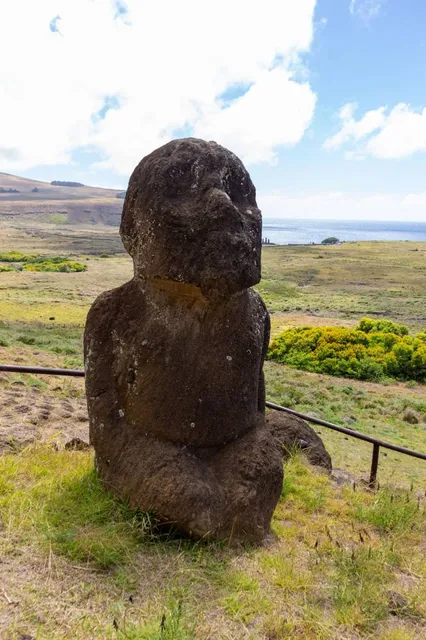
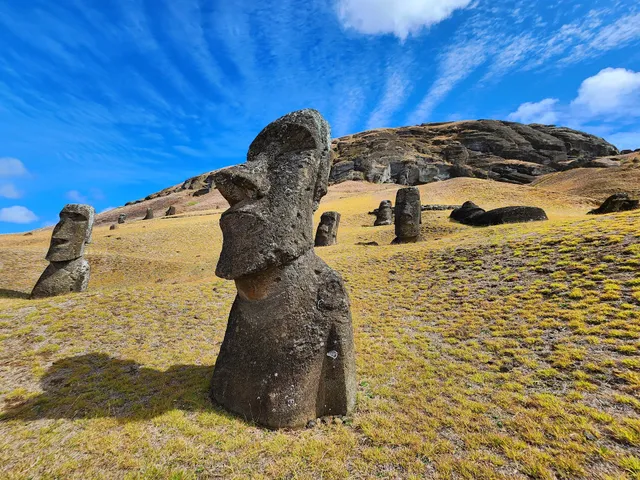
In my opinion, these are the statues ( Moai Heads) that come to mind when talking about Easter Island. The imagery is prolific. I don't need to post pics because there's no shortage. If you come here and find a favorite, ask your tour guide what it's name is.
It's kinda funny. These are icons and yet, technically, they're not formal monuments like the ones you see elsewhere. These are not quite complete, the defective cookies. Some of these fell over while they were trying to get them out of the quarry. They are magnificent all the same. If you do the homework, you will come to appreciate this fact. There was a darker time in the history of Rapa Nui when these were the only statues still standing.
Here's some things to take into account before you come here. Most of Easter Island is a national park. You need to purchase a ticket first before you can see stuff like this. It'll be good for all the park sites during your stay. You can buy online, keep a copy on your phone and a printed copy helps. It'll get stamped.
Wait a minute now, that's not the only requirement. You can't just go galavanting around Easter Island without a TOUR GUIDE. As of this post, there are only three sites on the whole Island that don't require you to have one. RANO RARAKU ISN'T ONE OF THEM. As a matter of fact, you are only allowed to visit RANO RARAKU once during the duration of your stay. Make it count!
Here's some other things. In the national park there's no drinking, no smoking, no fires of any kind, no camping AND TAKE YOUR GARBAGE WITH YOU. On the whole I think it's an excellent system, especially in light of the recent troubles they've had. If you have trouble 'adulting' don't come.
This system benefits the people who live here. It seems to put the cultural wealth back in the hands of the indigenous community. This system benefits you as well. This place wasn't crowded. This place was clean, clean, CLEAN. The tour guide system puts you in touch with proud, knowledgeable people who are only too happy to tell you about their home. Guides aren't hard to come by. Your hotel or car rental agency could put you in touch with one if you couldn't find your own online.
The road to RANO RARAKU is an experience in of itself. There are vast expanses of grass that lead to an ocean vista that might as well be Lapis Lazuli! There are horses grazing nearby. You might stop and take in the bluffs with the crashing waves and the salt air. The road is also strewn with potholes but my guide drove like a mad woman around craters, critters and slowpokes. She probably could've done it blindfolded. Oh, it was so much fun! We laughed our @$$3$ off! My guide made my trip.
RANO RARAKU made me feel like I witnessed something profound. Come get this vibe...
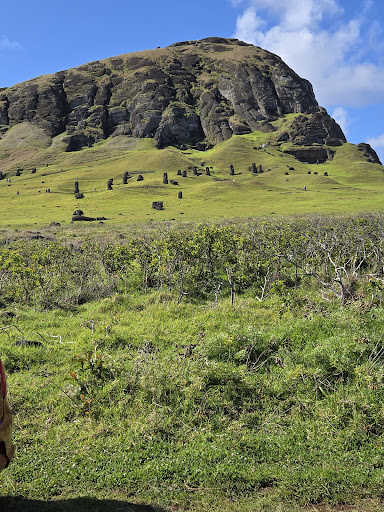
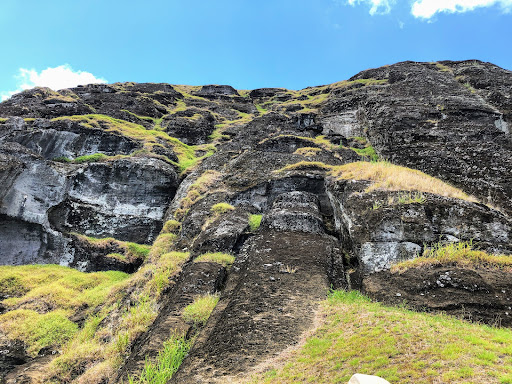
Read moreIf you only have one hour at the island - visit Rana Raraku! (Yes, this place is even more important than Orongo). Rana Raraku, the quarry on Rapa Nui where its famous gigantic stone statues were craved. Scattered over the quarry are 397 stone statues, all at different phases - some are still in the foundation bedrock, some only have the details in ears/hands to complete… there are 4 slops/paths to transport the Moai to Ahn located at north, east, west coasts. And there are 97 Moais left on the roads. It makes you wonder what happened? Why the craving maters their students and the entire society just drop all their tools and work and left? What kind of wealth and power an island society can possess to have so many Moai in the factory? Then suddenly, all collapsed. You can also see Ahn Tongariki from here. This is a beautiful monument telling the story of the human society that destroyed itself by overexploiting its own resources. And its beauty will haunt you even years...
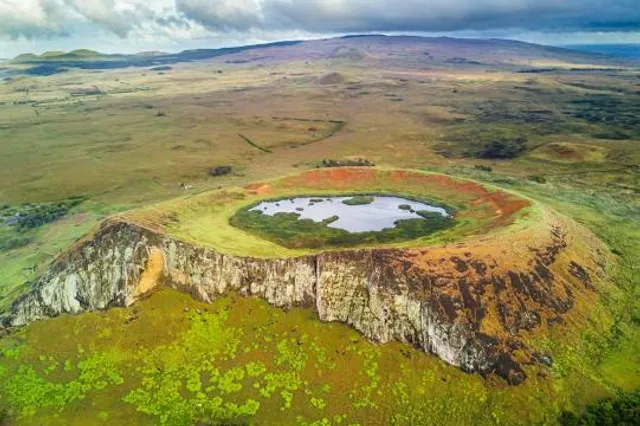
Read moreSiguiendo con Pascua, toca reseñar el (mi) top 3 de la Isla con...tres primeros y muy principales: Raraku, Tongariki- y Anakena-Ahu Nau Nau. Vamos con el volcán-cantera. "El volcán Rano Raraku es uno de los sitios arqueológicos más increíbles y extraordinarios del planeta. En este lugar mágico y repleto de misterio fueron elaborados los moai, las estatuas gigantes que han dado fama mundial a Isla de Pascua. Las enormes figuras y las canteras del volcán superan cualquier expectativa y consiguen que el viajero se quede sin palabras cuando contempla una de las más fascinantes maravillas de la humanidad. El volcán Rano Raraku está situado a 20 km al nordeste de Hanga Roa, muy cerca de la península de Poike y a unos escasos 1.000 metros al noroeste de la bahía de Hanga Nui. Su singular forma y ubicación hacen que tanto las vistas que se tienen del volcán desde Tongariki, como la amplia perspectiva que se observa desde su ladera sean de una gran belleza. El Rano Raraku tiene una altura máxima de 160 metros en su borde sureste y su cráter presenta una forma elíptica cuyo diámetro mayor mide unos 700 metros. En su interior alberga una laguna de agua dulce de unos 3 a 4 metros de profundidad originada por las frecuentes precipitaciones que sufre la isla. A diferencia de la mayor parte de los conos volcánicos isleños, Rano Raraku está compuesto por un tipo de roca única en la isla conocida con el nombre de toba lapilli. La toba es una roca porosa formada por la acumulación de ceniza volcánica expulsada durante una erupción, que al enfriarse, en contacto con la atmósfera, se compacta y endurece. (...) Los anteriores detalles geológicos explican porque Rano Raraku se convirtió en la cantera donde se esculpieron la casi totalidad de las 1.000 estatuas que se han hallado en Isla de Pascua. Aquí se tallaban los moai que luego eran conducidos a los ahu o plataformas ceremoniales, repartidos a lo largo de toda la costa, para honrar la memoria de los antepasados" (Fuente ⛲: Imagina Isla de...
Read more