The origins of the Summer Palace date back to the Jurchen-led Jin dynasty in 1153, when the fourth ruler, Wanyan Liang (r. 1150–1161), moved the Jin capital from Huining Prefecture (in present-day Acheng District, Harbin, Heilongjiang) to Yanjing (present-day Beijing). He ordered the construction of a palace in the Fragrant Hillsand Jade Spring Hill in the northwest of Beijing.
Around 1271, after the Yuan dynasty established its capital in Khanbaliq (present-day Beijing), the engineer Guo Shoujing initiated a waterworks project to direct the water from Shenshan Spring (神山泉) in Baifu Village (白浮村), Changping into the Western Lake (西湖), which would later become Kunming Lake. Guo's aim was to create a water reservoir that would ensure a stable water supply for the palace.
In 1494, the Hongzhi Emperor (r. 1487–1505) of the Ming dynasty had a Yuanjing Temple (圓靜寺) built for his wet nurse, Lady Luo, in front of Jar Hill (瓮山), which was later renamed Longevity Hill. The temple fell into disrepair over the years and was abandoned, and the area around the hill became lush with vegetation. The Zhengde Emperor(r. 1505–21), who succeeded the Hongzhi Emperor, built a palace on the banks of the Western Lake and turned the area into an imperial garden. He renamed Jar Hill, "Golden Hill" (金山) and named the lake "Golden Sea" (金海). Both the Zhengde Emperor and the Wanli Emperor (r. 1572–1620) enjoyed taking boat rides on the lake. During the reign of the Tianqi Emperor (r. 1620–27), the court eunuch Wei Zhongxian took the imperial garden as his personal property.
Qing dynastyEdit
In the early Qing dynasty, Jar Hill served as the site for horse stables in the imperial palace. Eunuchs who committed offences were sent there to weed and cut grass.
In the beginning of the reign of the Qianlong Emperor (r. 1735-1796), many imperial gardens were built in the area around present-day Beijing's Haidian District and accordingly, water consumption increased tremendously. At the time, much of the water stored in the Western Lake came from the freshwater spring on Jade Spring Hill, while a fraction came from the Wanquan River (萬泉河). Any disruption of the water flow from Jade Spring Hill would affect the capital's water transport and water supply systems.
Around 1749, the Qianlong Emperor decided to build a palace in the vicinity of Jar Hill and the Western Lake to celebrate the 60th birthday of his mother, Empress Dowager Chongqing. In the name of improving the capital's waterworks system, he ordered the Western Lake to be expanded further west to create two more lakes, Gaoshui Lake (高水湖) and Yangshui Lake (養水湖). The three lakes served not only as a reservoir for the imperial gardens, but also a source of water for the surrounding agricultural areas. The Qianlong Emperor collectively named the three lakes "Kunming Lake" after the Kunming Pool (昆明池) constructed by Emperor Wu (r. 141–187 BCE) in the Han dynasty for the training of his navy. The earth excavated from the expansion of Kunming Lake was used to enlarge Jar Hill, which was renamed "Longevity Hill". The Summer Palace, whose construction was completed in 1764 at a cost of over 4.8 million silver taels, was first named "Qingyiyuan" (清漪園; 'Gardens of Clear Ripples"').
The design of the Summer Palace was based on a legend in Chinese mythology about three divine mountains in the East Sea, namely Penglai, Fangzhang (方丈) and Yingzhou (瀛洲). The three islands in Kunming Lake – Nanhu Island (南湖島), Tuancheng Island (團城島) and Zaojiantang Island (藻鑒堂島) – were built to represent the three mountains, while the lake itself was based on a blueprint of the West Lake in Hangzhou. Besides, many architectural features in the palace were also built to resemble or imitate various attractions around China. For example: the Phoenix Pier (鳳凰墩) represented Lake Tai; the Jingming Tower (景明樓) resembled Yueyang Tower, Hunan; the Wangchan Pavilion (望蟾閣) resembled Yellow Crane Tower; the shopping streets were designed to imitate those in Suzhou and Yangzhou. The centrepiece of the Summer Palace was the...
Read moreThe Summer Palace, in Chinese Yihe Yuan, is now the largest and the most well-preserved imperial garden in China, counted as one of the four famous Chinese imperial gardens (the other three being Chengde Summer Palace, Suzhou Humble Administrator's Garden, and Suzhou Lingering Garden). It was listed as World Heritage by UNESCO in 1998.
Situated in Haidian District, 15km from downtown Beijing, the Summer Palace occupies an area of 290 hectares, with the lake taking up three quarters of its total area.
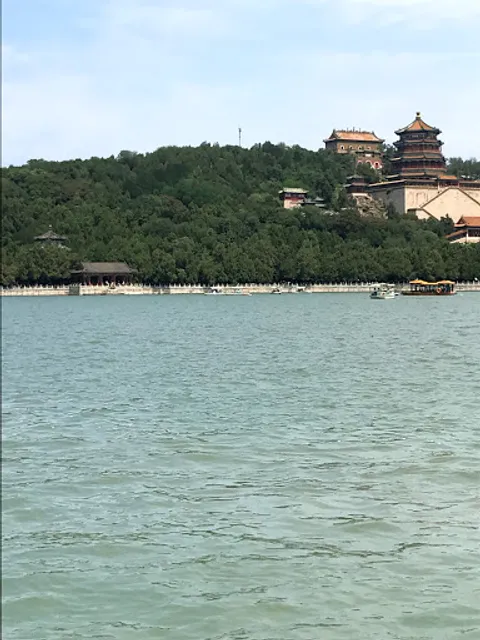
It is designed around Kunming Lake and Longevity Hill as the key features, modeled on West Lake in Hangzhou, and draws from design techniques and artistic conception of gardens from the south of China. This large landscaped and well-preserved garden is known as the Chinese imperial garden museum.
The Summer Palace was created in 1750, originally as the Emperor’s garden retreat in the Qing Dynasty. It was called Qingyi Garden at first.
The major project in its creation was the Three Hills and Five Gardens. The Three Hills refers to Longevity Hill, Fragrant Hill, and Jade Spring Hill, and the Five Gardens are Jingyi Garden, Jingming Garden, Qingyi Garden, and the surrounding Changchun Garden and Yuanming Yuan).
Qingyi Garden was destroyed by British and French troops during the Second Opium War in the 1860s. In 1888 Empress Cixi spent a large amount of money to rebuild a similar garden, for luxury and pleasure in summer time, called the Summer Palace.
In the late Qing Dynasty, 1900, the Summer Palace was damaged again by eight European countries’ allied forces, and many national treasures were looted. The palace was repaired in 1903. Later in the period of Kuomintang in the power of regime, the Summer Palace was damaged again.
After 1949, the Summer Palace was repaired and protected by the Communist government, and on March 4, 1961, the Summer Palace was announced as the first National Cultural Relics Protection Site.
The Summer Palace has a great combination of imperial garden features, immersed in the surrounding natural landscape. It reflects the imperial garden principle of "built by man with resources from nature".
Summer PalaceApart from Longevity Hill and Kunming Lake, there are over a hundred scenic spots, more than 20 courtyards and 3,000 ancient structures, and 1,600 trees over a hundred years old.
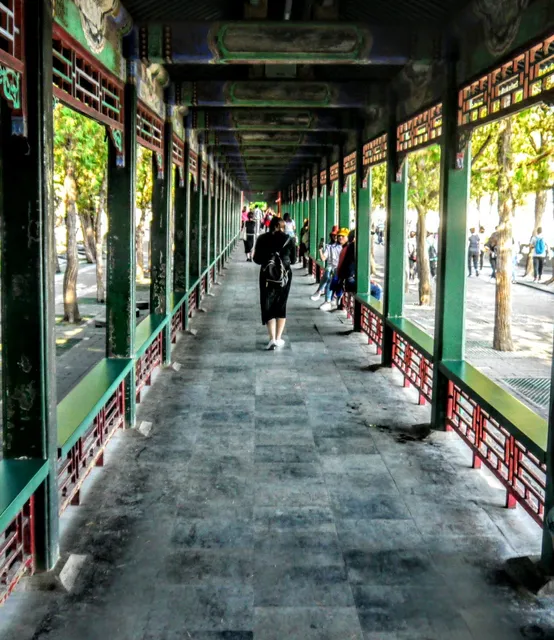
The Tower of Buddhist Incense, Long Gallery, Marble Boat, Suzhou Market Street, Seventeen Arch Bridge, Garden of Harmonious Interests, and Ancient Stage are the most noted scenic spots.
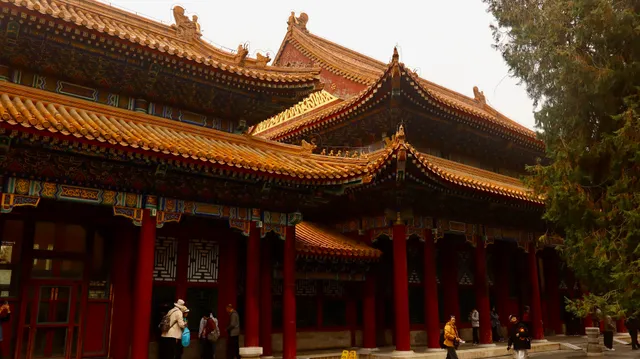
The main viewing areas in the park are broadly divided into three sections. The first one is by the Hall of Benevolent Longevity, which was once the place for taking care of internal affairs, and diplomatic and political activities by Emperor Guangxu and Empress Cixi.
The second sightseeing area is between the Hall of Joy and the Hall of Jade Billows. The courtyards were used as the living area for Empress Cixi and Emperor Guangxu with his concubines.
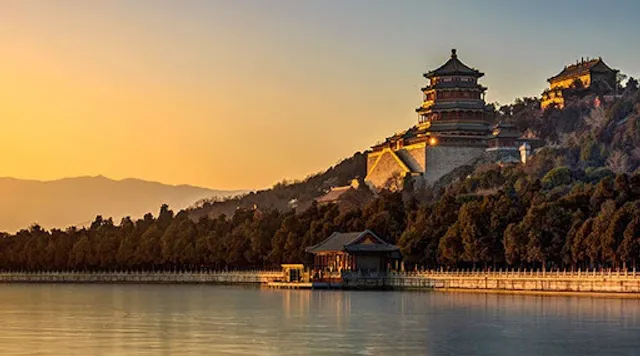
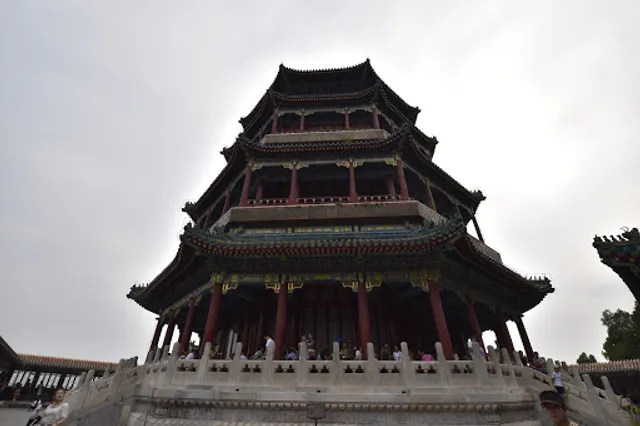
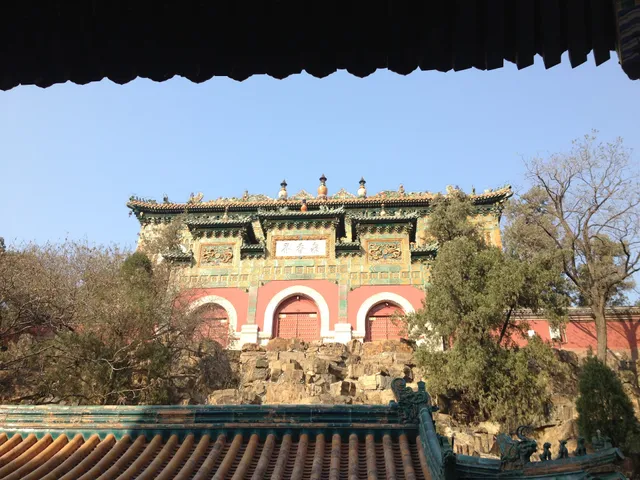
Summer PalaceThe last viewing area is around Long Gallery and Back Hill. This area was for the imperial family's daily luxury and recreation. On the central axis of the south slope of Longevity Hill are located three magnificent buildings: Tower of Buddhist Incense, the Hall of Dispelling Clouds, and the Hall of the Sea of Wisdom.
Tower of Buddhist Incense has three stories and eight sides. It is built on the slope of Longevity Hill and faces Kunming Lake, commanding a view of the whole park.
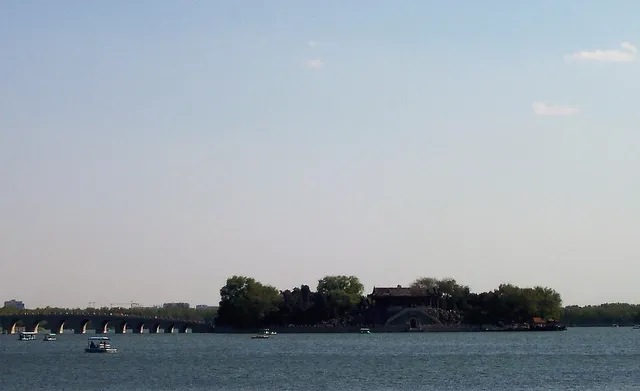
The magnificent Seventeen Arch Bridge, poised above the vastness of Kunming Lake, is at its best when viewed reflecting on the water.
On the shore of Kunming Lake are the famous sites of Marble Boat, Bronze Ox, and Spring Pavilion.
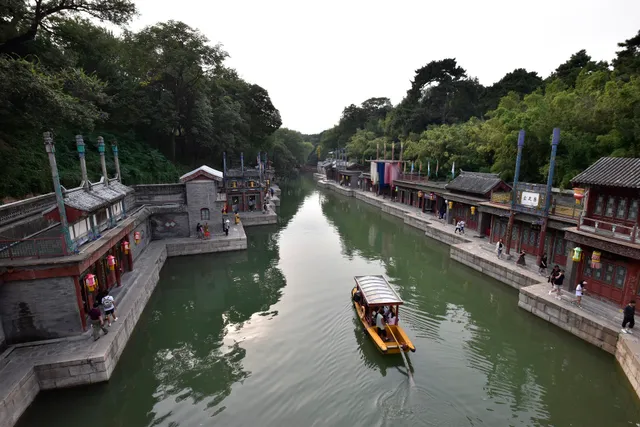
Suzhou Market Street, adjacent to Front Lake, has various stores in the style of the bustle trading streets hundreds of years ago.
The Summer Palace, along with the Forbidden City, and the Temple of Heaven, is a must-see imperial...
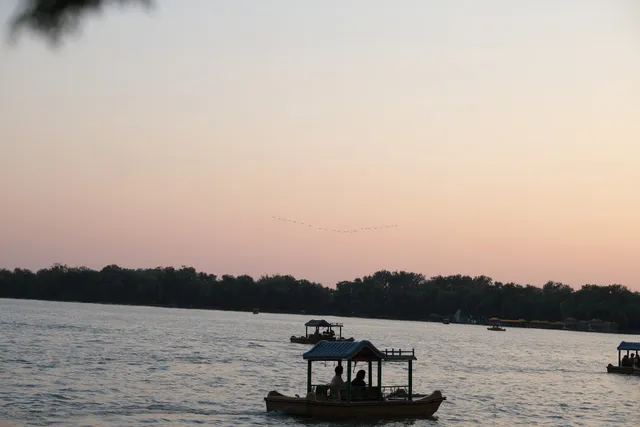
Read moreThis UNESCO site is probably the most enchanting place I've visited in China. It exudes an old imperial beauty, that takes you on an immersive journey back to the splendour of the Qing Dynasty. It covers an area of approximately 3 sq kms, so be prepared for a trek while taking in the visual delights of attractions such as The Hall of Longevity, The Marble Boat, The Long Corridor, The 17 Arch Bridge, The Dragon Temple, and a collection of lakes, vast gardens, pavilions, temples, all with many tales from a medieval era. This picturesque area is located on the outskirts of Western Beijing. We came here on a lovely June day for a half day tour after visiting the Great Wall, and so we were able to see the natural beauty of the Chinese countryside along the way, complete with quaint villages and locals all out picking a huge range of fruit from the plenty of orchards we saw. The Summer Palace grounds was pretty crowded with locals at the time we went (after 2pm), but that didn't take away from this amazing experience. We took a serene boating trip around Kunming Lake on an old school traditional Chinese boat, to get a different view of the Summer Palace and other landmarks in the area. This definitely saves you a lot of walking in the heat and is worth the trip. Incidentally, Kunming Lake is artificially made, with all the water taken and transported from the Yangtze River in the South of the country, which I found mad. This was the palace of the famous Empress Cixi (The Dragon Lady), who was probably the most powerful woman in Chinese history. She earned the name Dragon Lady because she was very spiteful, cunning and manipulative (plus the likelihood of poisonings), however she also embraced change, and launched this ancient country from the last imperial empire into the modern age. She definitely had good taste, when you look at this place, as she was responsible for it's refurbishment and addition of many features. The ticketing here is done in two tiers - access to the lake/park, and the other access to inside the main palace. My advice is, if you have the time, buy both, and spend the whole day out at this...
Read more