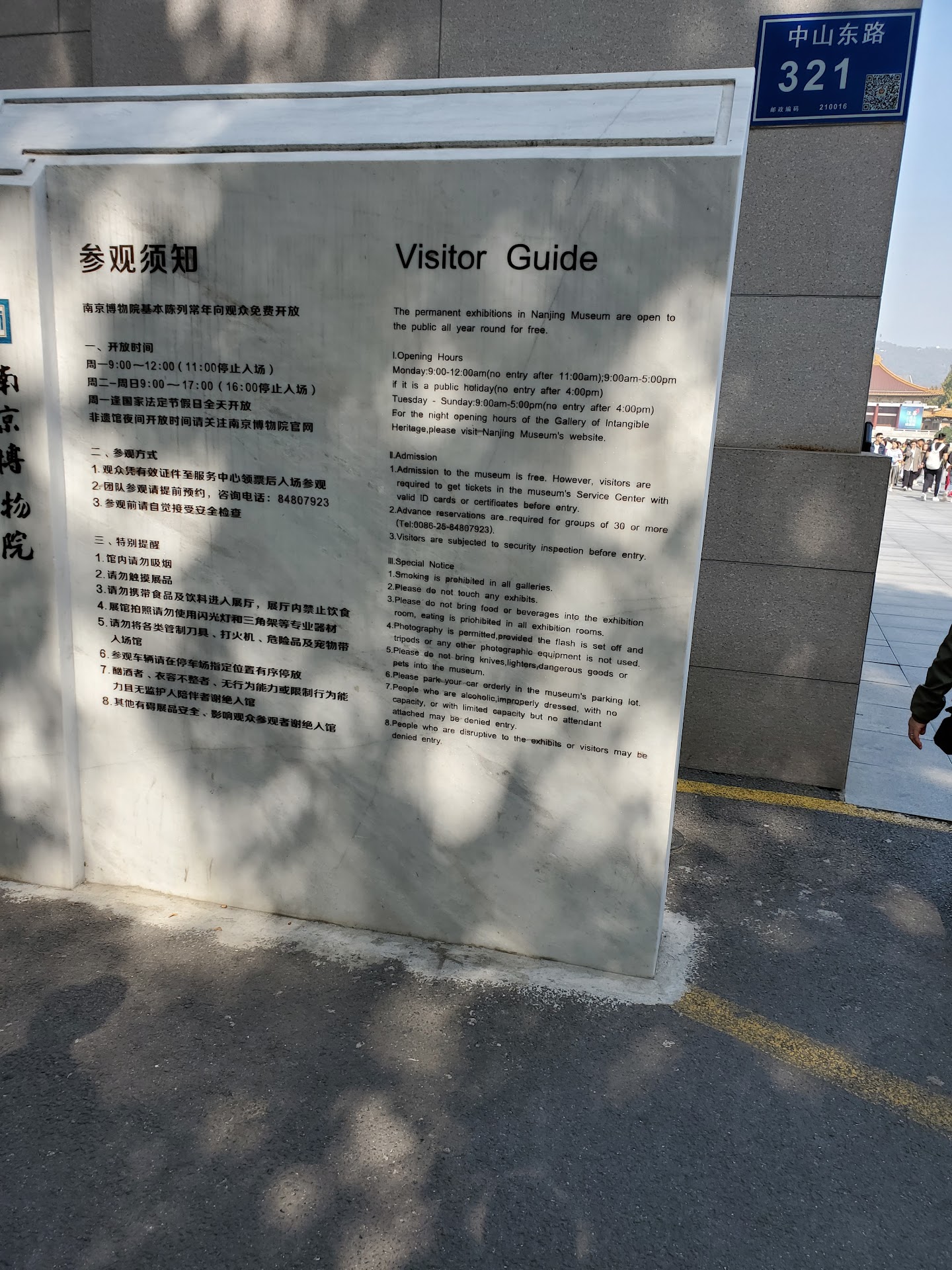
Free to enter but must pre-book entry tickets via their mini app in Wechat. Tickets are open 1 week prior at 6pm.
They have a free guided tour, capped at 30pax, that starts at 10am (or 2pm), ear pieces are given out 20 mins prior. As foreigners, we had to go to the ticket counter in the History Hall 历史馆 to exchange for a physical ticket. We were there by 930am but by then the queue for the free tour was already quite long, in fact we missed the 10am tour by 4 persons. Luckily that day they had another one at 1030am. You can also opt to pay RMB150 per pax for a private guide or RMB30 to rent a pre-recorded audio guide. But my preference is always for a live guide.
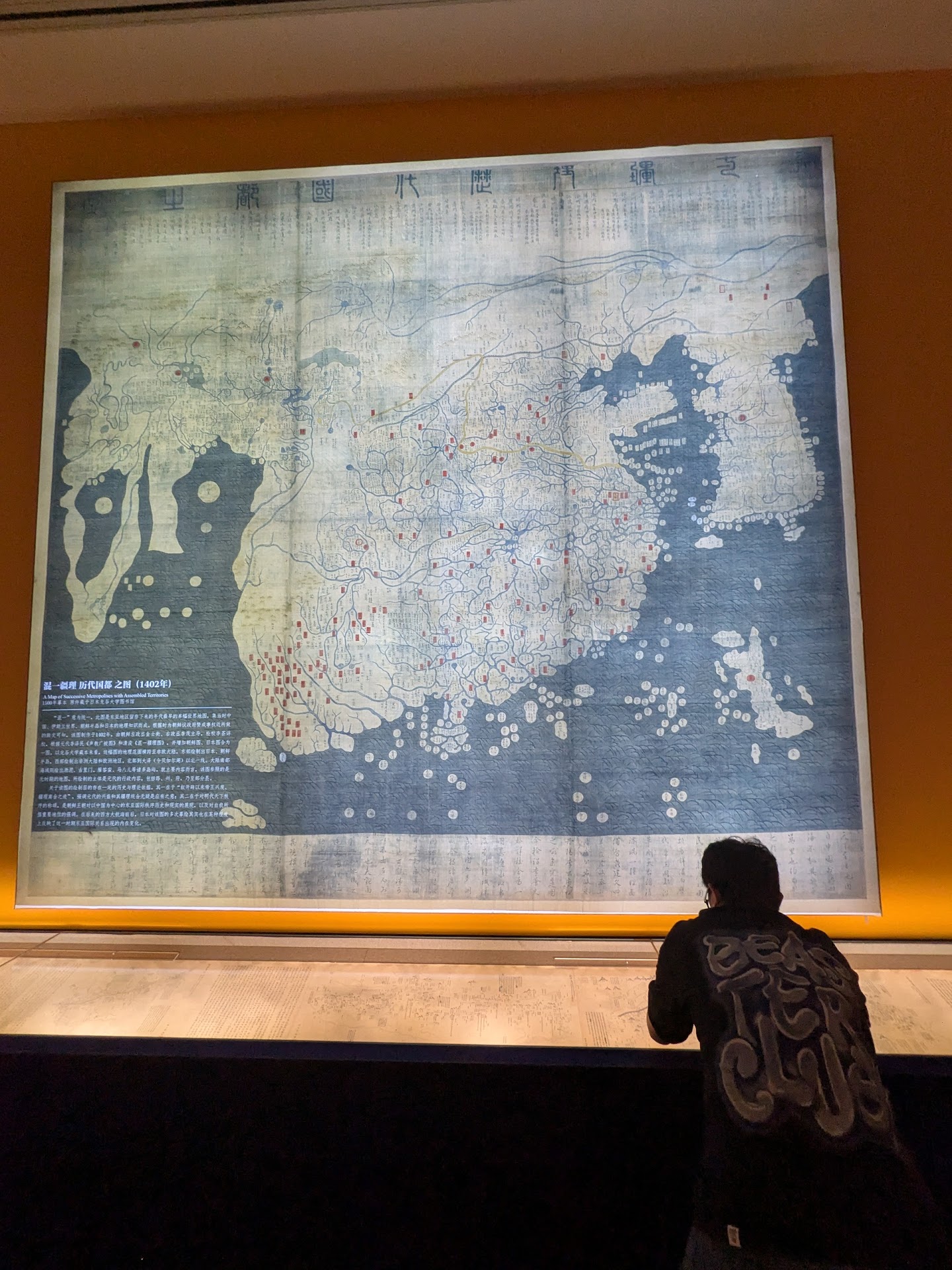
This is the first of 2 博物院 (instead of 博物馆) in China, covering 6 halls, consisting 18 pieces of 镇院之宝, with the prime spot going to the 金兽 (Golden Creature), exhibited exclusively in the Special Exhibit Hall. The 1.5 hours tour took us through only the History Hall 历史馆 and for most of it, we could only hear but not really see as the crowd was too crazy. Most of the time I could only see the item after the guide has finished the narrative and on the move to the next stop. It was made worse by 'free-riders' who didn't join the queue for the free tour and was just sticking close to the guide to listen in, thereby blocking our view. The History Hall is the largest and even the 1.5 hr tour couldn't bring us through everything here. It would have been a more enjoyable experience with lesser crowd, but I really don't think that's ever possible in China given that I was there on a supposedly low season, week-day morning. Nonetheless, still highly recommended as a must-visit...
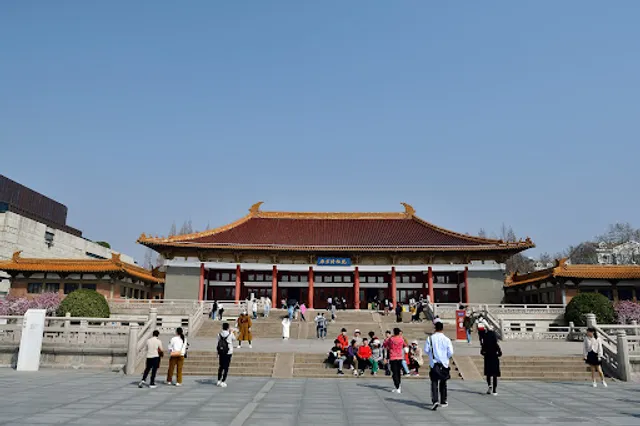
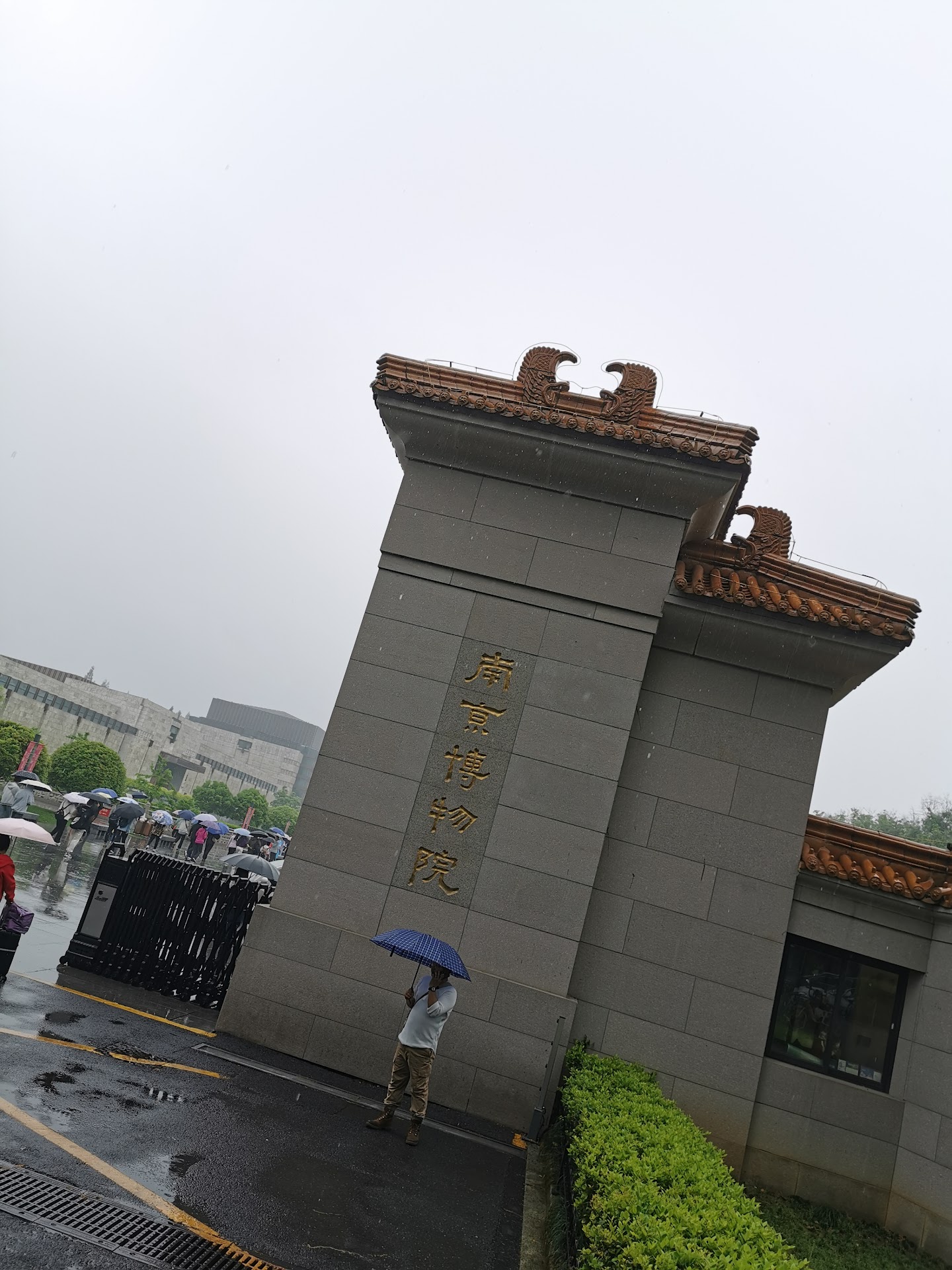
Read more南京博物院位于南京市玄武区中山东路321号,是中国三大博物馆之一[1],简称南院或南博,其前身是民国二十二年(1933年)蔡元培等倡建的国立中央博物院,是中国创建最早的博物馆、中国第一座由国家投资兴建的大型综合类博物馆[2]。现为大型综合性的国家级博物馆、首批国家一级博物馆[3]、首批中央地方共建国家级博物馆[4]、国家AAAA级旅游景区[5]、全国重点文物保护单位和中国20世纪建筑遗产[6]。 南京博物院占地13万余平方米,为“一院六馆”格局,即历史馆、特展馆、数字馆、艺术馆、非遗馆、民国馆。另全院设“六所”的研究部门,即考古研究所、文物保护研究所、古代建筑研究所、陈列艺术研究所、非遗保护研究、古代艺术研究所,并设有中国博物馆中唯一的民族民俗学研究机构[2],其中文物保护研究所被称为“文物三甲医院”,是中国纸质文物保护国家文物局重点科研基地[7]。 截至2018年,南京博物院拥有各类藏品432768件(套),珍贵文物371032件(套),珍贵文物数量居中国第二,仅次于故宫博物院[8]。馆藏文物上至旧石器时代,下迄当代;既有全国性的,又有地域性的;既有宫廷传世品,又有考古发掘品,还有一部分来源于社会征集及捐赠,均为历朝历代的珍品佳作和备受国内外学术界瞩目的珍品。青铜、玉石、陶瓷、金银器皿、竹木牙角、漆器、丝织刺绣、书画、印玺、碑刻造像等所有文物品类一应俱有,每一品种又自成历史系列,是数千年中华文明历史发展最为直接的见证[2]。
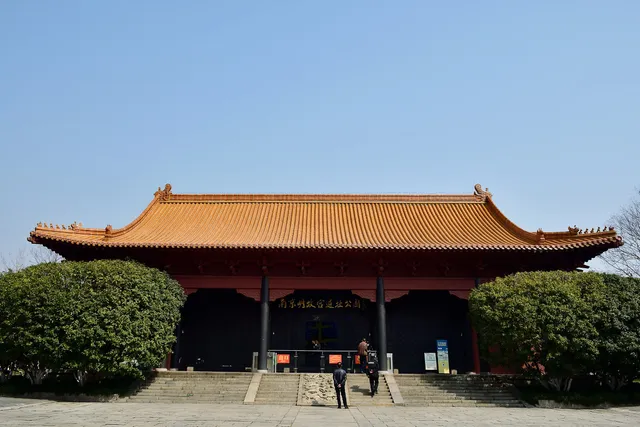
1933年,由中国近代民主革命家、教育家,时任国立中央研究院院长的蔡元培先生倡议创建的国立中央博物院筹备处落成。蔡先生亲自兼任第一届理事会理事长,在中山门半山园征地12.9公顷,原拟建“人文”、“工艺”、“自然”三大馆,后因时局关系,仅建“人文馆”,即南京博物院大殿。该建筑为仿辽代宫殿式,由民国著名建筑师徐敬直设计,经建筑大师梁思成修改。当时通过收购、拨交、发掘,集中全国第一流珍品约二三十万件,其中包括绘画中的《历代帝后像》、《唐人明皇幸蜀图》;铜器中的毛公鼎、后母戊鼎等稀世国宝。 南京博物院当时为中国唯一一座仿照欧美一流博物馆建馆的现代综合性大型博物馆,直属当时的教育部领导,北平历史博物馆曾归属于中央博物院的建制而成为分院。 1934年7月,傅氏因中央研究院本职事务太忙而离职,教育部改聘李济继任。李济上任后,着手进行博物院主体建筑的兴建,成立“中央博物院建筑委员会”,委员长为翁文灏,委员有张道藩、傅汝霖、傅斯年、丁文江、李书华、梁思成、雷震、李济。1934年7月26日在第一次会议上,公推其中的张道藩、傅斯年、丁文江三位为常务委员,梁思成为专门委员,会议还讨论了征用院址土地的问题。8月4日,筹备处即正式致函南京市政府,拟征收中山门内路北旧旗地为院址。至1935年4月,市政府正式函复,划定半山园旗地100亩为院址,后又增加93亩。地价、青苗、拆迁诸费共五万多元,由中央研究院补助,于1935年分别拨付。建筑费由管理中英庚款董事会补助150万元。当时计划建:自然馆1410平方丈,人文馆1320平方丈,工艺馆2000平方丈,公用270平方丈,共计5000平方丈。建筑工程分三期进行,第一期包括行政办公楼和人文馆等,人文馆暂由三馆共用。 1935年4月16日第二次会议上,通过了征选建筑图案章程,邀请李宗侃、李锦沛、徐敬直、杨廷宝等13位建筑师送设计图参选。审查委员会由管理中英庚款董事会总干事杭立武、著名建筑师刘敦祯、专门委员梁思成及张道藩、李济等5人组成。经审查,全部图案均不符合章程规定,故决定从各图中选出比较合用、最有修改价值的图案。用不记名投票的方法,审查委员们一致选出兴业建筑事务所建筑师徐敬直设计的图案,报呈教育部备案。院建筑委员会聘请徐敬直为本院建筑师,由他会同专门委员梁思成等修正原图,测量院址,并指导、监督建筑工作。参选的十多份建筑图案,还于同年10月初在博物院筹备处公开陈列展览。 1935年9月6日,在13份竞选设计方案中,兴业建筑事务所建筑师徐敬直所拟建筑图案当选,徐敬直被委任为筹备处建筑师。徐敬直原设计大殿为清式建筑,经会同梁思成修改成仿辽建筑,陈列室内部为西式建筑样式。[9]...
Read moreThe museum itself is fine but the ticketing process is insane. My Chinese wife bought me a ticket in advance and we waited in the long line like everybody else. But when we got to the entry, the guard stopped me and made my wife go stand in a different long line with my passport while I had to stay in the front of the original line directly in everyone's way (there was nowhere else to go and it's what the guard told me to do). For someone with severe anxiety like myself, this was a nightmare for me. I already had a ticket, China often makes things intentionally difficult for foreigners and it is incredibly frustrating because I didn't do anything wrong. The exhibits are good but there is very little information about them, even in Chinese (and even less in English). They really on the audio guide (20 RMB) to provide context, but it is very quiet so with how loud the crowds are, it is almost inaudible. Oh and the crowds here are awful, even on weekdays. On weekends or public holidays, forget about even...
Read more