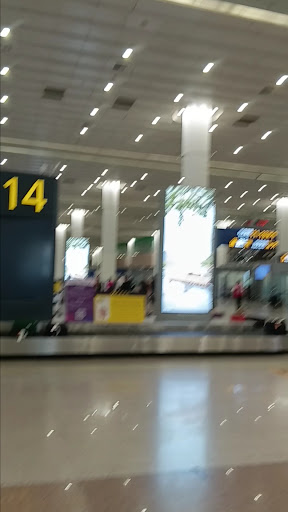
In the sprawling eastern edges of Shanghai, three vast, gleaming structures reach skyward, their silhouettes reminiscent of birds poised for flight. This is Shanghai Pudong International Airport, where China's economic ascendance and architectural aspirations have taken concrete form over two decades of remarkable expansion.
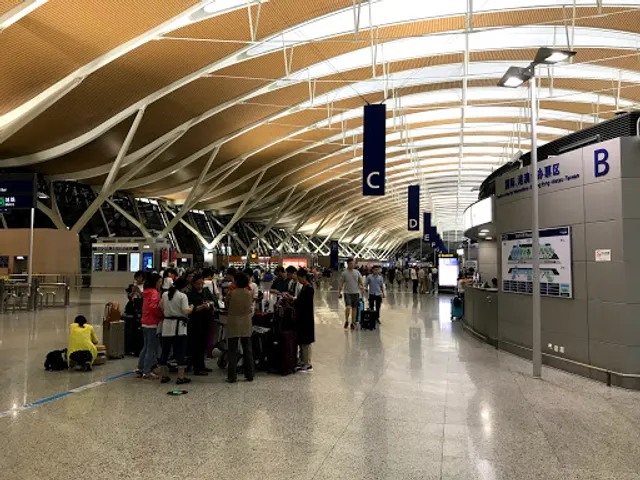
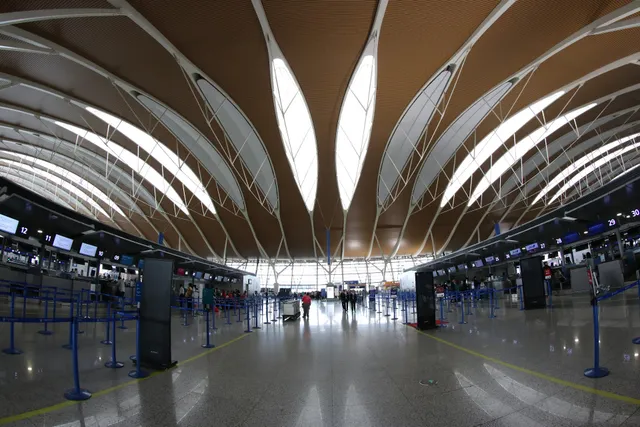
The airport's original Terminal 1, designed by French architect Paul Andreu and opened in 1999, established the avian metaphor that would define the complex. Its distinctive seagull-shaped exterior, with sweeping curves and a 400-meter central hall, arrived precisely as Shanghai was emerging from its socialist chrysalis. Andreu, known for his poetic approach to infrastructure, created a roof punctuated by skylights resembling "a shower of comets falling from the sky." It was architecture as economic manifesto—explicitly designed to serve as a symbol of the Middle Kingdom's rising power.
Eight years later came Terminal 2, where Richard Rogers' circular design and innovative upper skylighting scheme represented a different architectural language. Rogers, who had previously created a masterplan for Pudong, returned to find "Shanghai has grown the size of London or New York in those ten years." His response was fittingly ambitious—a terminal designed less for symbolic impact than for an optimized passenger experience, with short walking distances and thoughtful integration with mass transit systems.
Most recently, the 2019 addition of a massive H-shaped satellite concourse—the world's largest of its kind at 622,000 square meters—has completed the airport's transformation into one of Asia's preeminent aviation hubs. This functional colossus, designed by American firm Corgan with Chinese partner IPPR, sacrifices symbolic resonance for operational efficiency, reflecting shifting priorities in contemporary airport design.
What makes Pudong fascinating to architecture enthusiasts is this visible evolution of design philosophy. Here, three generations of aviation architecture stand in conversation: Andreu's poetic expressionism, Rogers' humanistic modernism, and Corgan's pragmatic functionalism. Each embodies its era's approach to reconciling the competing demands of national prestige, passenger experience, and operational requirements.
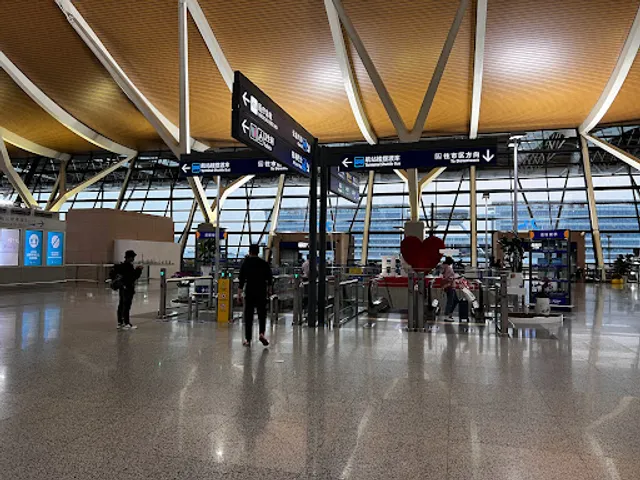
Yet the passenger experience reveals the limitations of architectural ambition. Despite the soaring spaces and careful planning, reviews describe an environment where basic wayfinding becomes challenging, language barriers frustrate travelers, and accessibility issues persist. The gap between design intention and lived experience feels particularly acute in Terminal 2, which one architectural assessment praised as "an expansive, contemporary, warm, spacious, spotless delight" compared to New York's "grim" JFK.
This contradiction epitomizes China's broader approach to infrastructure development—grand gestures sometimes undermined by operational details. Pudong Airport succeeds magnificently as architectural spectacle and symbol of national achievement, while struggling with the mundane realities of human-centered service.
As Shanghai continues its relentless growth and a third terminal rises, Pudong Airport stands as both triumph and cautionary tale. It reminds us that true architectural success in transportation buildings must be measured not just in dramatic forms and impressive statistics, but in the quality of experience for the millions who pass through its spaces every year—whether they notice the comet-shower skylights or simply search for a comprehensible sign pointing...
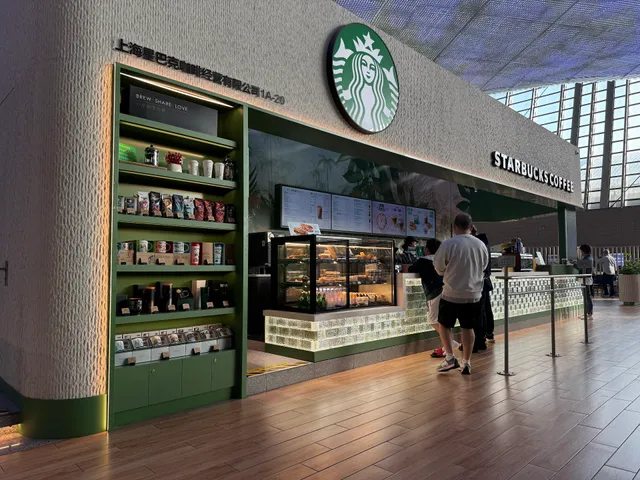
Read moreThe place is an absolute ghost town. I appreciate the silence, sure. But I think I would rather have a grocery shop at the very least. Looking down at the regional flights floor and seeing so many more shops feels like I'm outside looking in, being an international transfer. No place to buy decent snacks, just trash food. I was waiting for 13 hours, so I would very much appreciate a sandwich.
The transfer was the stuff of nightmares, and we dreaded repeating it. The first thing that happened after landing was airport workers yelling. To say we were confused would be an understatement. We were ushered around like cattle and given very little explanation.
For some undisclosed reason, what followed passport control was... a security check. Even though we never left the airport? A second security check right off the plane, with no warning. Now, I can understand that laws differ between countries, but give people a warning, would you? Maybe then we would be prepped for both security checks, instead of experiencing overwhelming anxiety over having my property confiscated simply because i had NO IDEA this would be happening. I prep for all my trips because of my anxiety, so this left me shaking on the verge of tears. The workers went through my bag with no respect or permission! Touching everything, throwing it around, questioning my powerbank, even though it was small. Again, I understood almost nothing of what was happening.
Somehow the security check on our way back was even worse. They made everyone throw their water out, even though it was purchased at the airport, past the first security check?????? The way my belongings were handled was atrocious. My bag was opened and closed at will by the workers, and taken back to be checked again with no warning, still half open. I worried about my documents and electronics, and when it came out again, nobody even cared anymore. I was left to my own devices to repack my bag from scratch, as it was chaotically spread by the workers between 3 trays.
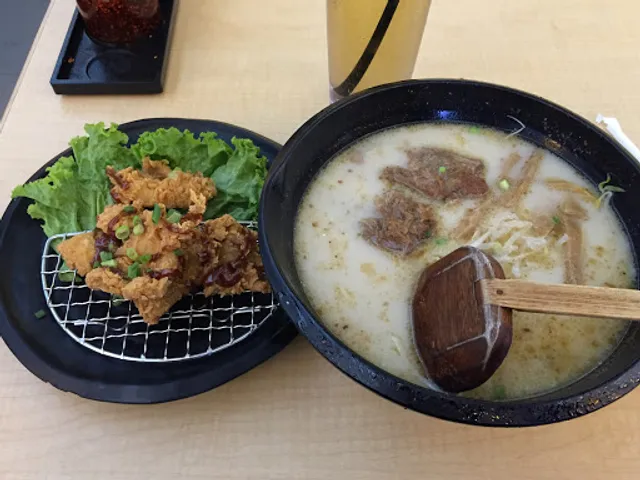
We waited for 13 hours, and could do nothing but sleep or use our electronics. Only one restaurant had prices we could even afford, since no sandwiches or other foods were available. Only one currency exchange was open in the entire airport, apparently, and it was at terminal 1, to which you can only travel by shuttle. There was one at our terminal, but just as most of the place, closed. The workers mostly acted as if forced to be there, and during our lengthy stay, exactly one of them was actually nice to us.
Through the 13 hours, we got no notification that our gate changed. There are no departure boards in the gates area where we were, and our gate had a piece of paper stuck to it about the flight to Paris gate changing (we were going to Frankfurt).
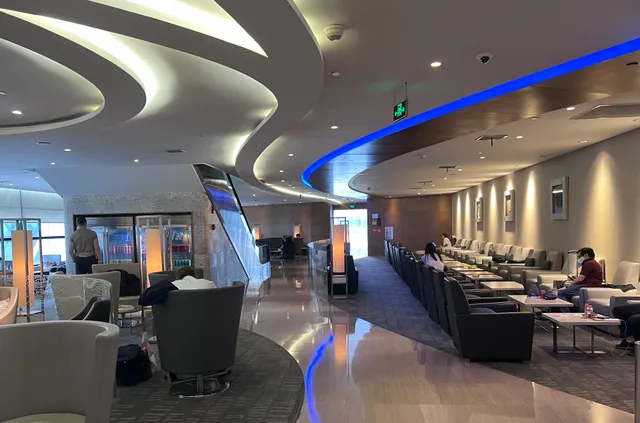
Nobody at this airport cares. We could be doing jumping jacks in the lounge, or putting a tent up, and I don't think anyone would even notice. People slept anywhere and everywhere, since there were no actual designated areas, and 90% of the place was empty.
I know this review is lengthy, and I thank you if you managed to read the whole thing. But I've been around, so to say, and I've had various airport experiences (some have even made me cry during security). And yet, this was by far the worst one. I never want to see this airport...
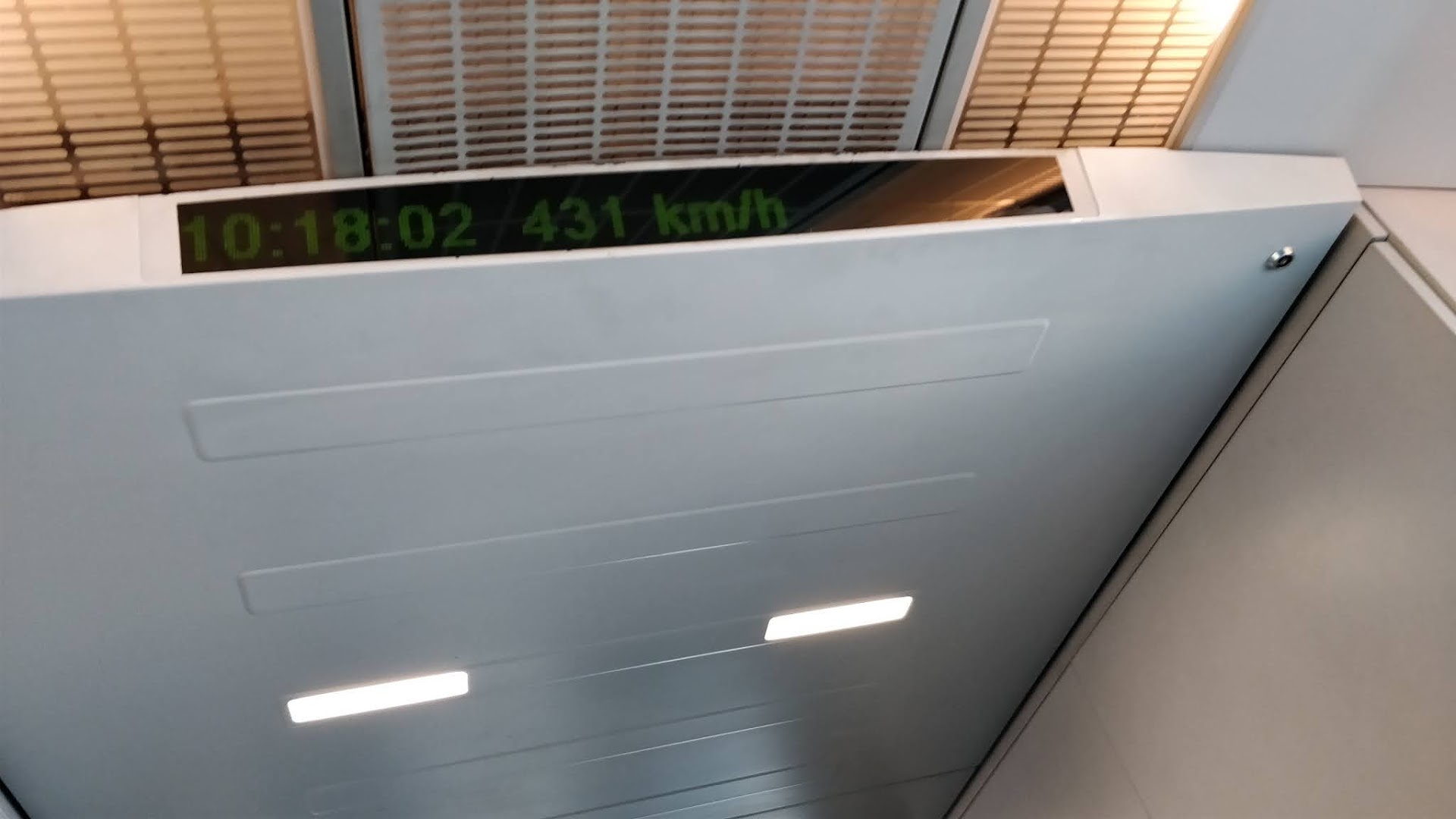
Read moreIf these issues are not addressed, foreign visitors will continue to harbor negative feelings toward China, leave with bad impressions, and provide unfavorable evaluations. I also experienced these typical situations during my first visit to China. At Shanghai Pudong Airport, near the gate to board the Maglev train connecting to the city center, I witnessed a female station staff member who was extremely rude and quick to anger, but only towards foreigners. Before I purchased my ticket and entered, there were visitors in front of me who spoke Spanish, French, and English. Some of them already had tickets, while others didn’t know where to buy them and tried to go through the gate first. They asked the staff very simple questions in English about where to purchase tickets, but the woman suddenly started yelling loudly and pointing at them with her finger, scolding them in Chinese. (likely saying something like "Step back" or "Get out of here"). I saw the expressions on those tourists' faces, and in an instant, they frowned, looked confused, and turned pale with embarrassment. A group of English-speaking travelers waiting in line behind them, shocked by what they saw, hesitated and abandoned their plan to take the Maglev train, choosing to leave the area instead. Since I had already bought my ticket and needed to board the train, it was my turn. I showed my passport and held my ticket to the sensor at the gate, but it didn’t respond. The female staff member said something to me in Chinese. This was my first visit, and naturally, I had only learned basic greetings and phrases for tourists in Chinese. Since I didn’t understand her, I reflexively and quietly asked, “Pardon?” Hearing English, her eyes widened, and she suddenly shouted, “GOOOOOOOOO!” with such force that her voice echoed through the entire ceiling, as if she were a protester. They must have seen a considerable number of foreigners passing through to board the train. Would it be so difficult to learn at least three basic English phrases like “Stop,” “Pass,” or “Over there”? Unfortunately, within just 30 minutes of stepping off the plane, my first impression of China was completely ruined by this railway employee. I immediately canceled all my plans for a second trip to another Chinese city, including flight tickets and hotel reservations I had already booked. Any desire to return to China disappeared entirely. Cultural exchange is based on mutual respect and understanding between people from different cultural backgrounds. Traveling from one country to another is a form of such cultural exchange. If people working at airports openly yell at, point fingers at, and ignore foreign visitors as if telling them all to leave, without making even the slightest effort to accommodate them, how can China hope to foster international relations or cultural exchange with other countries? If they are going to handle things so poorly, China might as well revoke its recently introduced visa-free policy for tourists from...
Read more