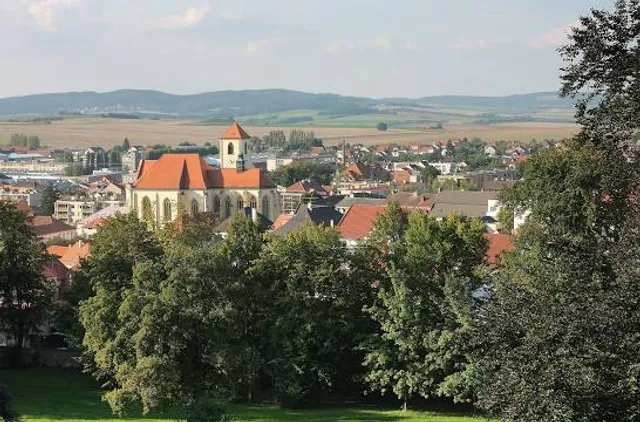
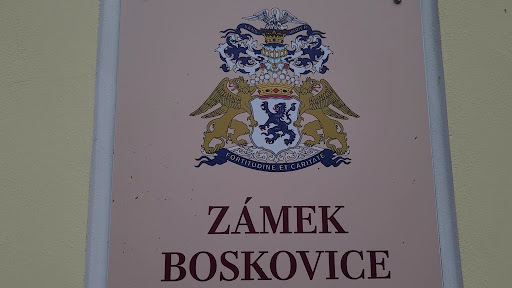
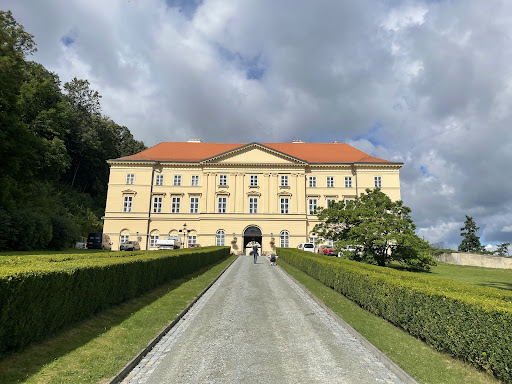
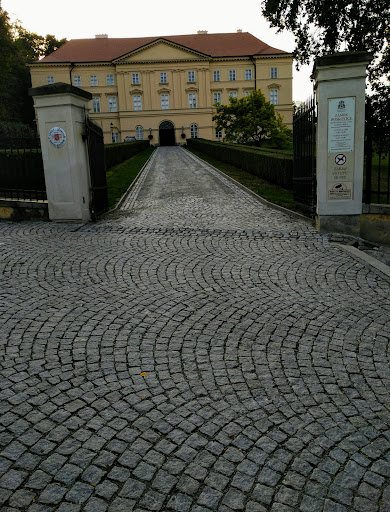
Beautiful Chateau but not open on Mondays!! There are tours available through online ticket purchases. Chateau Boskovice was built between 1819 and 1826. It has been a protected monument since 1958 and the entire chateau complex, including the park, has been listed as a cultural monument since 1964. A Dominican monastery with a church founded by the owner of the Boskovice estate Jan Bohuš of Zástřizl and his wife Zuzana Kateřina Prakšická stood, originally, on the site of today‘s Chateau Boskovice. Construction was completed in 1694. In 1690 the Boskovice estate was transferred to František Walter of Dietrichstein (1664–1738), who built a costly chateau residence near the centre of Boskovice in 1729–1733. This then served as the family’s mansion until the new chateau was built.
In 1784 Joseph II abolished the Dominican monastery and a year later the empty building was purchased by the Dietrichsteins, who set up a manufactory in it. After 1819, under František Xaver Dietrichstein, the monastery tract underwent a vigorous reconstruction and became the new chateau. The building in a large area of rolling English landscape park, was completed in 1826.
This is how one of the most charming Empire chateaus in Moravia was created, a building which has retained its own purity of style to the present day. The author of the reconstruction project was probably Josef Esch. During the next construction phase in 1831–1839 improvements were made to the interior of the castle and especially to its monumental entrance area with its three-flight staircase. The last significant modification of the castle building was caused by an accident in 1916, when excessive static loads led to the collapse of the courtyard wall of the west wing. After this, the arcades were reinforced with metal anchors and then bricked up. In 1850 the Boskovice Dietrichsteins died without a male heir and the estate was inherited from František Xaver Dietrichstein by his youngest daughter Terezie Rosa Františka (1823–1856), who married Count Alfons Friedrich Mensdorff-Pouilly in 1843. Terezie died in 1856 and her inheritance then became the property of the Mensdorff-Pouilly family.
In 1952 all the family‘s assets were confiscated. In the second half of the 20th century Boskovice‘s Museum was located in the chateau and the chateau was also used as a secondary school boarding house. Under the Restitution Act in 1991 the majority of their property, including the chateau, was returned to the Mensdorff-Pouilly family. Part of Chateau Boskovice is open...
Read moreKrásný zámek v empírovém stylu. Překvapilo mě, jak je to tam rozlehlé a zrekonstruované. Průvodkyně byla velmi příjemná a bylo vidět, že opravdu ví co mluví. Studenti s kartou ISIC mají slevu. Dospělí platí 120,- a studenti 70,-. A kolik tam bylo lidí? To se nedá říct jednoznačně - skupina, která měla prohlídku v 15.00 h byla velmi početná a plná asi osmi malých otravných hlučných dětí, ale ve skupince, která měla prohlídku až od 16.00 h, nás tam bylo jen pět. !!! Ráda bych poprosila všechny maminky a babičky, aby se svými dětmi (do 10 let) nejezdily na takovýto typ památek. Ať jdou s dětmi raději někam do lesa - do přírody, kde nebudou nikoho otravovat svým ječením, řvaním, plakáním, pobíháním, chováním atd. Ty děti ruší výklad průvodce (kterého to štve a praskají mu nervy) a i ostatní návštěvníky, kteří pak z toho výkladu nic nemají. Ty děti z tohoto "zážitku" prohlídky zámku taky nic nemají!!! Nebaví je to, nebudou si z toho nic pamatovat a jen...
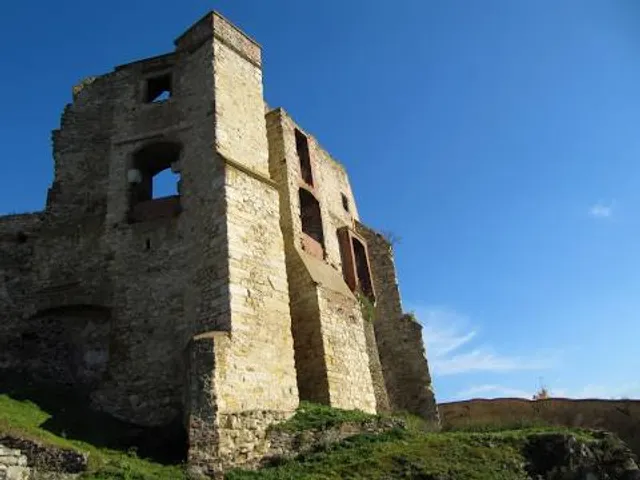
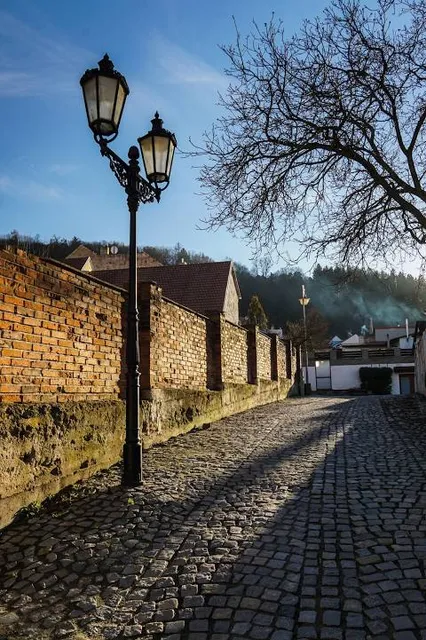
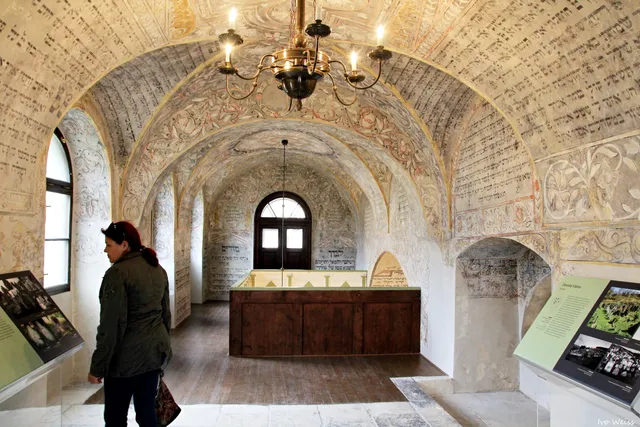
Read morePałac jako pałac ma śliczne wnętrza ,szerokie klatki schodowe z marmurowymi podłogami,dziedziniec warto zwrócić uwagę z nabijanych dębowych pali. Piękny park w którym można się chwilę podelektować. Powyżej rozległe ruiny zamku na których często odbywają się turnieje rycerskie. Jednak największe wrażenie robi dzielnica żydowska,bardzo czytelnie ponumerowane 79 domów pozostałość po żydowskich mieszkańcach ,domy odrestaurowane ,wrażenie robią te kamieniczki z wewnętrznymi dziedzińcami ,prawie włoski klimat. Synagoga Maior jest jedną z najpiękniejszych jakie widzieliśmy w życiu , wygląd wnętrza najbardziej zbliżony do synagogi w Zamościu .Naścienne freski wykonane przez Żydów krakowskich ,bardzo piękne i klimatyczne miejsce. Na rynku dużo lodziarni z pysznymi lodami ,niewątpliwym atutem tego miejsca jest to że nie jest zadeptane ,jechaliśmy na motocyklach z Cieszyna pięknymi wiejskimi drogami,polecamy na wycieczki jednodniowe jak i na...
Read more