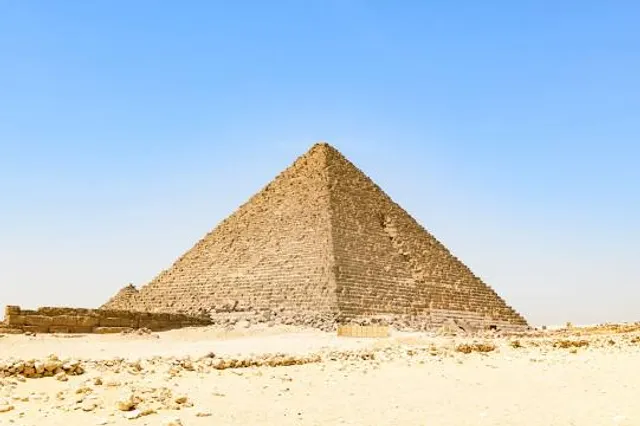
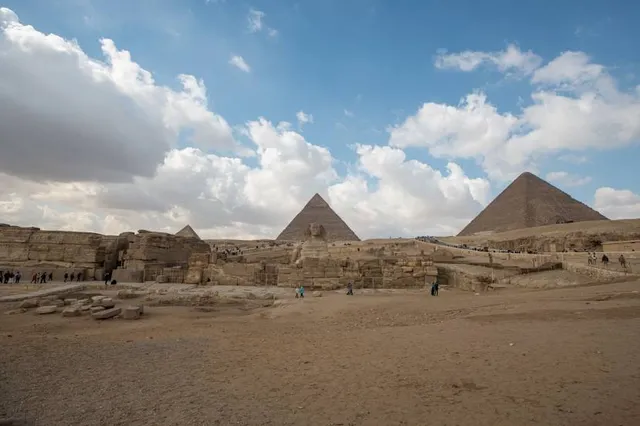
The Pyramid of Menkaure, also known as the pyramid of Chephren, stands as a remarkable testament to ancient Egyptian architecture and engineering. Let me take you on a journey to explore this awe-inspiring monument:
Historical Marvel:
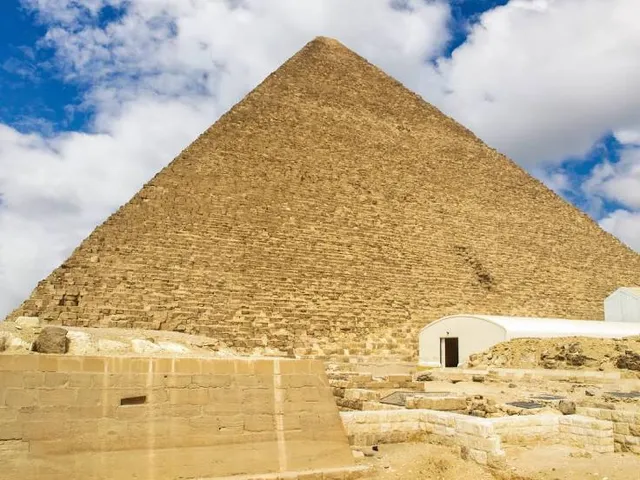
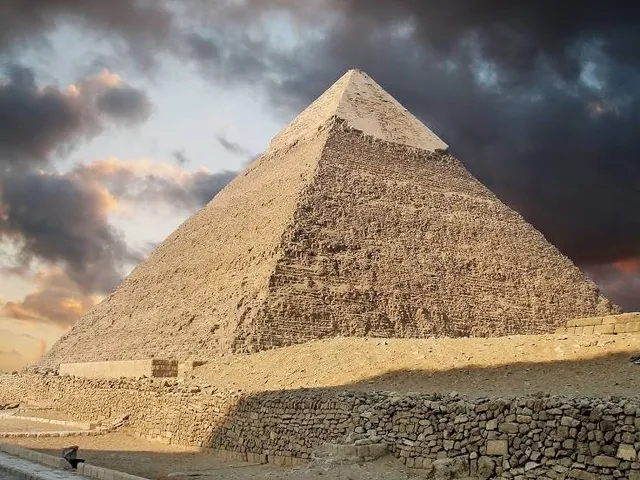
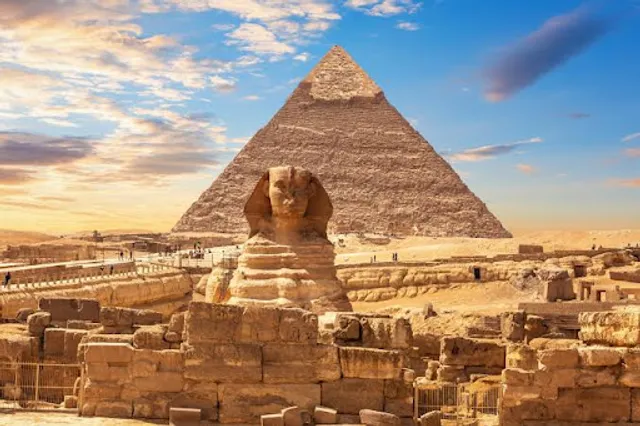
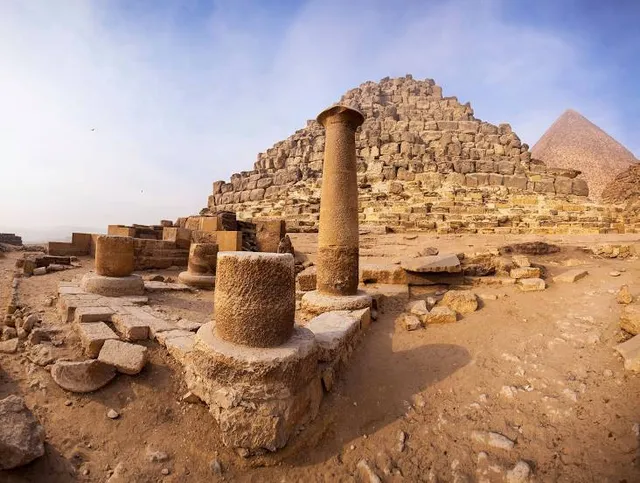
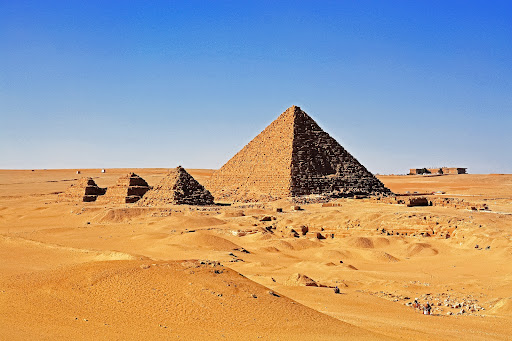
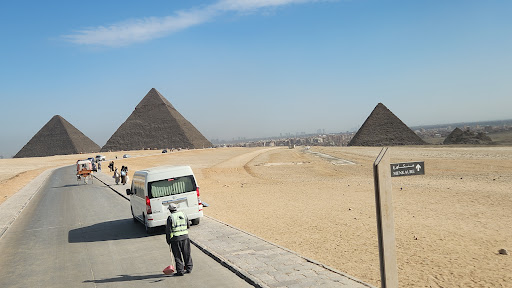
The Pyramid of Menkaure is the smallest of the three main pyramids of the Giza pyramid complex, located on the Giza Plateau in the southwestern outskirts of Cairo, Egypt.
It is thought to have been built to serve as the tomb of the Fourth Dynasty Egyptian Pharaoh Menkaure.
Size and Construction:
Menkaure’s pyramid had an original height of 65.5 meters (215 ft), and was the smallest of the three major pyramids at the Giza Necropolis.
It now stands at 61 meters (200 ft) tall with a base of 108.5 meters (356 ft).
Its angle of incline is approximately 51°20’25".
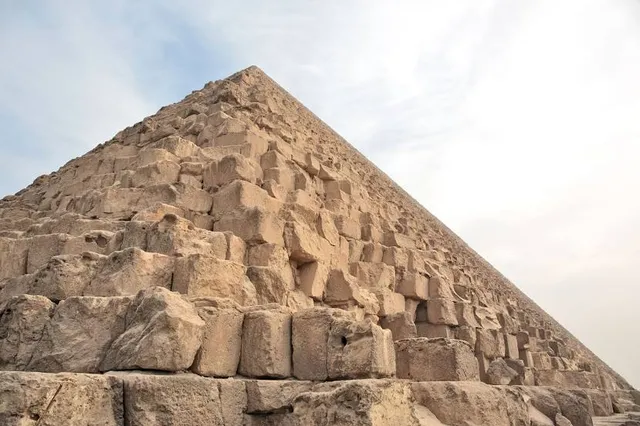
The pyramid was constructed of limestone and Aswan granite. The first sixteen courses of the exterior were made of red granite, while the upper portion was cased in the normal manner with Tura limestone.
Incomplete projects such as this pyramid help archaeologists understand the methods used to build pyramids and temples. The descending passage to the lower burial chamber is in the ‘large apartment’ floor, probably originally hidden by floor blocks. It is theorized that originally the pyramid was planned to be smaller, with the blind alley being the originally planned entrance passage.
Age and Location:
The pyramid’s date of construction is unknown because Menkaure’s reign has not been accurately defined, but it was probably completed in the 26th century BC.
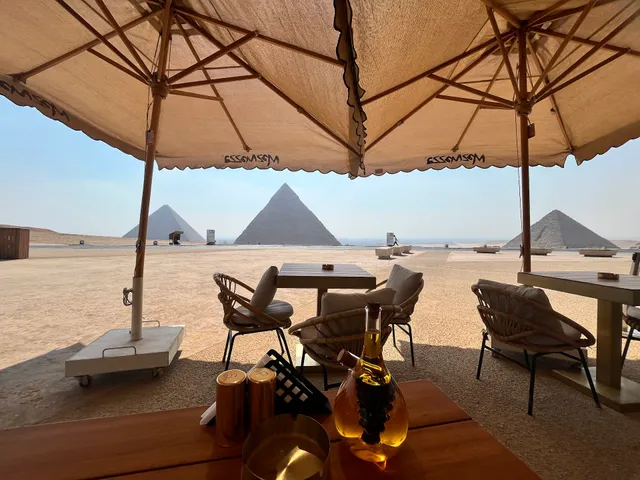
It is a few hundred meters southwest of its larger neighbors, the pyramid of Khafre and the Great Pyramid of Khufu in the Giza necropolis.
Sarcophagus and Coffin:
In 1837, Howard Vyse and John Shae Perring discovered the basalt sarcophagus of Menkaure. It was described as beautiful, black, and rich in detail with a bold projecting cornice. However, it contained the bones of a young woman.
A wooden anthropoid coffin inscribed with Menkaure’s name and containing the remains of a mummy were found in the upper burial chamber and later transferred safely to the British Museum. The coffin was radiocarbon dated to 1212–846 BC, from the late New Kingdom to the Third Intermediate Period.
In summary, the Pyramid of Menkaure stands as a beacon of Egypt’s rich history, a marvel of ancient ingenuity, and a tribute to the pharaohs who shaped the sands of...
Read moreThe pyramid of Menkaure is the smallest of the three main pyramids of the Giza pyramid complex, located on the Giza Plateau in the southwestern outskirts of Cairo, Egypt. It is thought to have been built to serve as the tomb of the Fourth Dynasty Egyptian Pharaoh Menkaure. Menkaure's pyramid had an original height of 65.5 meters (215 ft), and was the smallest of the three major pyramids at the Giza Necropolis. It now stands at 61 m (200 ft) tall with a base of 108.5 m (356 ft). Its angle of incline is approximately 51°20′25″. It was constructed of limestone and Aswan granite. The first sixteen courses of the exterior were made of the red granite. The upper portion was cased in the normal manner with Tura limestone. Part of the granite was left in the rough. Incomplete projects such as this pyramid help archaeologists understand the methods used to build pyramids and temples.
The descending passage to lower burial chamber is in the 'large apartment' floor, probably original hidden by floor blocks. It is theorised that originally the pyramid was planned to be smaller. The blind alley being the originally planned entrance passage. In the mortuary temple, the foundations and the inner core were made of limestone. The floors were begun with granite and granite facings were added to some of the walls. The foundations of the valley temple were made of stone. Both temples were finished with crude bricks. Reisner estimated that some of the blocks of local stone in the walls of the mortuary temple weighed as much as 220 tons. The heaviest granite ashlars imported from Aswan weighed more than 30 tons.
It is assumed that Menkaure's successor Shepseskaf completed the temple construction. An inscription was found in the mortuary temple that said he "made it (the temple) as his monument for his father, the king of upper and lower Egypt."
Subsequent architectural additions and two stelae from the Sixth Dynasty suggest that a cult for the Pharaoh was maintained, or was periodically renewed, for two centuries...
Read moreLocals completely ruined the experience. Everyone is out to scam you out of your money. To them, your hard earned money is better in their pockets. Supposed government tourists guide are ther to lead you to their preferred vendors. This includes the horse & carage ride up the hill for $40 US. I absolutely turned that down. The guide was apologetic but quickly led me to the next camels scamer is . This guy started out asking for $240 US for a 1/2 hour camel ride for me & my girl. W after some haggling, we agreed on 80 for the both of us. In retrospect, that was too much. It should have been more like 40 for both of us. The camel handlers will ask for money at the end of the ride , which is ok. But what is not ok is the them taking you to oil / papaya paper factory ( not at all a factory) they cool you off and give you drinks and try selling you some way over priced oil. The shop keep and your camel guild start playing good cop trying to make you feel bad for saying no. Finally, after all that, we walk out, and the original guide is there saying how bad he feels about the shop keep and the camel harder and now can get you the same oil that was $80 US for $8. After we ignore him and keep walking into God knows where , about a 1/2 mile away from where we were picked up. We walked to the nearest main street with kids pleading for just one dollar. Please , please, just one dollar for food . This was crazy, the entire city is there to run scames . I thought Bangkok was bad with the Taylor scam , but Egyptian have Thia people beat!
My best advice is to take American money . They begrudgingly will take the Egyptian pound. Say no to everything until it seems reasonable, and then say no 10 more times. Do not laugh with these people. They are only trying to disarm you with hospitality. Keep your business face on at all times. Or simply walk the site for free. It's not that big. It may take you 2 hours to walk all the pyramids, but it will be worth it not to have to deal with people trying...
Read more