HTML SitemapExplore
logo
Find Things to DoFind The Best Restaurants

Turku Castle — Attraction in Turku sub-region

Name
Turku Castle
Description
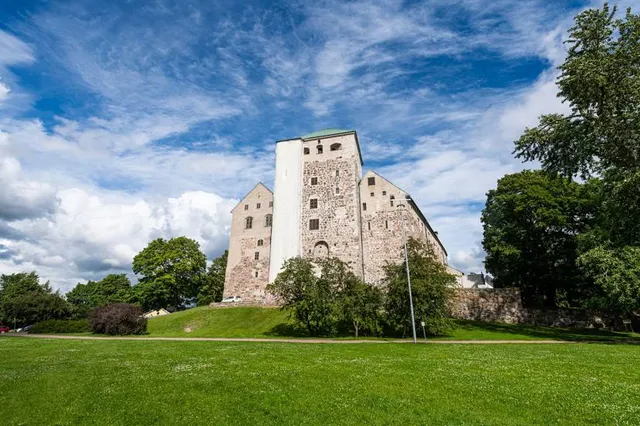
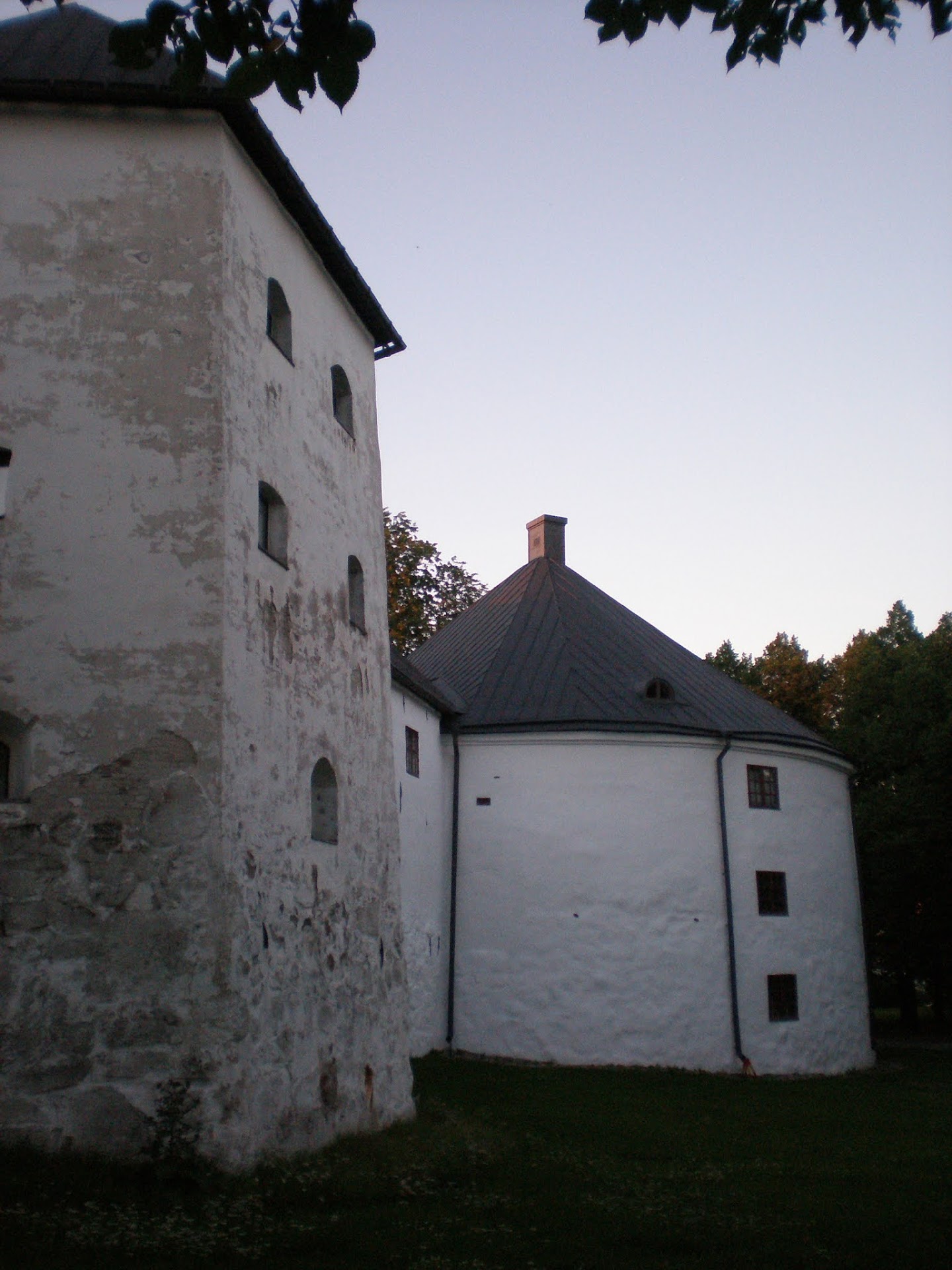
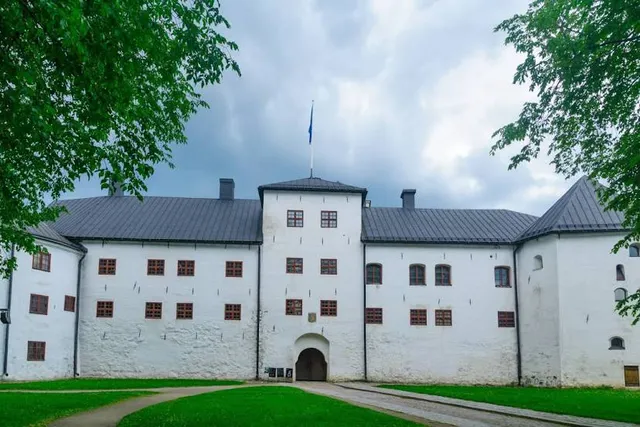
Turku Castle is a medieval building in the city of Turku in Finland. Together with Turku Cathedral, the castle is one of the oldest buildings still in use and the largest surviving medieval building in Finland. It was founded in the late 13th century and stands on the banks of the Aura River.
Nearby attractions
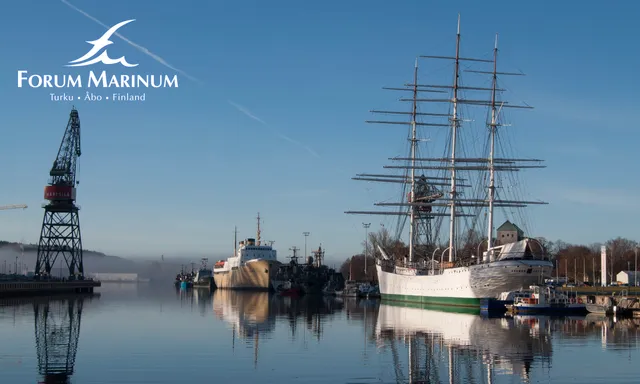
Forum Marinum
Linnankatu 72, 20100 Turku, Finland
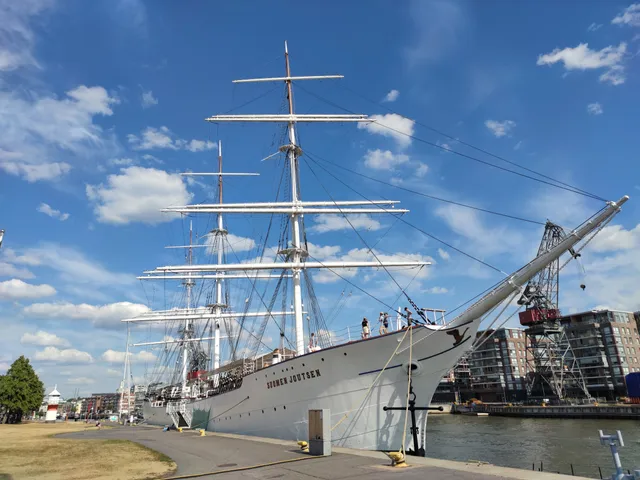
Suomen Joutsen
Linnankatu 72, 20100 Turku, Finland
Nearby restaurants
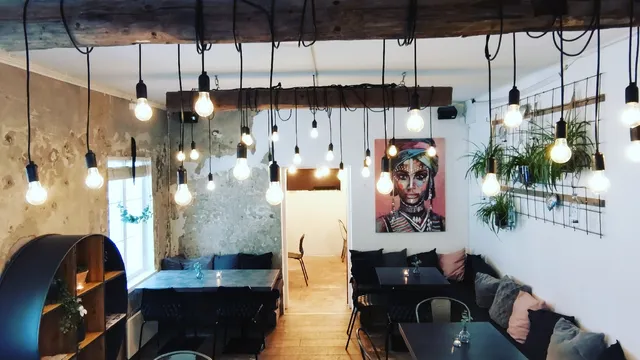
Nick's Food Design
Linnankatu 85, 20100 Turku, Finland
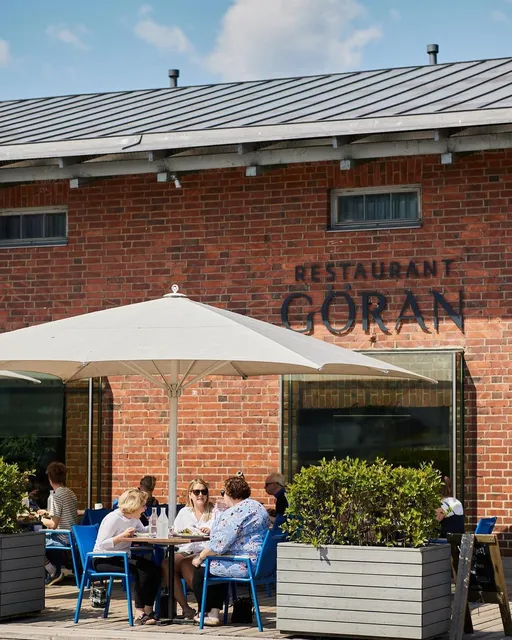
Restaurant Göran
Merikeskus Forum, Linnankatu 72, 20100 Turku, Finland
Restaurant Nobi
Itäinen Rantakatu 77, 20810 Turku, Finland
Harbour Restaurant
Toinen linja 7, 20100 Turku, Finland
Pegasus Hansasali
Puutarhakatu 45, 20100 Turku, Finland
Related posts
Keywords
Turku Castle tourism.Turku Castle hotels.Turku Castle bed and breakfast. flights to Turku Castle.Turku Castle attractions.Turku Castle restaurants.Turku Castle travel.Turku Castle travel guide.Turku Castle travel blog.Turku Castle pictures.Turku Castle photos.Turku Castle travel tips.Turku Castle maps.Turku Castle things to do.
Turku Castle things to do, attractions, restaurants, events info and trip planning
Turku Castle
FinlandMainland FinlandTurku sub-regionTurku Castle

Basic Info

Turku Castle

Linnankatu 80, 20100 Turku, Finland
4.5(4.3K)
Open 24 hours
Save
spot

Ratings & Description

Info

Turku Castle is a medieval building in the city of Turku in Finland. Together with Turku Cathedral, the castle is one of the oldest buildings still in use and the largest surviving medieval building in Finland. It was founded in the late 13th century and stands on the banks of the Aura River.

Cultural
Family friendly
Accessibility
attractions: Forum Marinum, Suomen Joutsen, restaurants: Nick's Food Design, Restaurant Göran, Restaurant Nobi, Harbour Restaurant, Pegasus Hansasali
logoLearn more insights from Wanderboat AI.
Phone
+358 2 2620300
Website
turunlinna.fi

Plan your stay

hotel
Pet-friendly Hotels in Turku sub-region
Find a cozy hotel nearby and make it a full experience.
hotel
Affordable Hotels in Turku sub-region
Find a cozy hotel nearby and make it a full experience.
hotel
The Coolest Hotels You Haven't Heard Of (Yet)
Find a cozy hotel nearby and make it a full experience.
hotel
Trending Stays Worth the Hype in Turku sub-region
Find a cozy hotel nearby and make it a full experience.

Reviews

Nearby attractions of Turku Castle

Forum Marinum

Suomen Joutsen

Forum Marinum

Forum Marinum

4.4

(763)

Closed
Click for details
Suomen Joutsen

Suomen Joutsen

4.5

(418)

Open 24 hours
Click for details

Nearby restaurants of Turku Castle

Nick's Food Design

Restaurant Göran

Restaurant Nobi

Harbour Restaurant

Pegasus Hansasali

Nick's Food Design

Nick's Food Design

4.3

(252)

$$

Click for details
Restaurant Göran

Restaurant Göran

4.0

(495)

Click for details
Restaurant Nobi

Restaurant Nobi

4.4

(223)

Click for details
Harbour Restaurant

Harbour Restaurant

4.0

(50)

Closed
Click for details
Get the Appoverlay
Get the AppOne tap to find yournext favorite spots!
Wanderboat LogoWanderboat

Your everyday Al companion for getaway ideas

CompanyAbout Us
InformationAI Trip PlannerSitemap
SocialXInstagramTiktokLinkedin
LegalTerms of ServicePrivacy Policy

Get the app

© 2025 Wanderboat. All rights reserved.
logo

Reviews of Turku Castle

4.5
(4,316)
avatar
5.0
12w

Places that have been around for over seven hundred years collect history, especially if they're used and adapted over that time. Turku Castle has been around long enough that the /geography around it/ has changed; originally built as a small fortification on a smaller island in the middle of the river it eventually grew into a local seat of feudal government and got bigger and better fortified as it connected to the northern shore and the river itself migrated south. Since it was in use this entire time, it was adapted both to its changing roles and to the changing architectural styles and methods of its times. Like many other such places, parts of the castle were damaged beyond economical repair for the time, functionally abandoned, then a subject for renovation and restoration by Romantically-driven movements, damaged some more by World Events™, and finally restored in the modern era with more modern sensibilities regarding the preservation of such buildings.

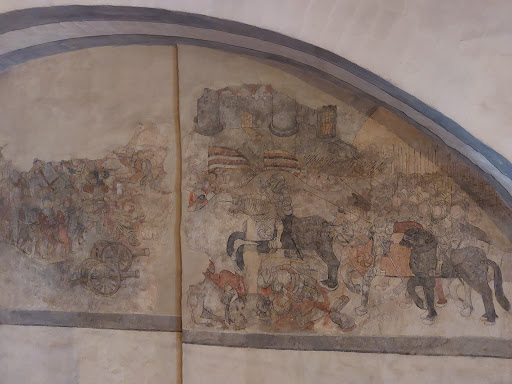
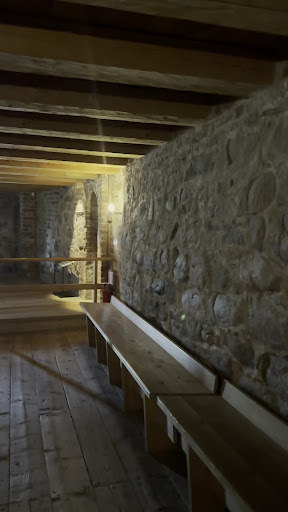
All this lead-in is to say that a goodly portion of Turku Castle's restoration is of the "light touch" vareity. Some portions have been restored/renovated to a condition to show what they would've been like in well-attested times, particuarly the Renaissance-era outer wings, but others, like the medieval central bailey, are preserved structurally so they're not ruins but otherwise not trying to be what we imagine they would've looked like at the time. For a few examples (for which pictures are provided), where there's still signs of murals on the walls they've been preserved but not /restored/; if they're faint, they're faint. If they're more visible because they were protected behind a bookshelf for a couple hundred years, then that's the state they are preserved in. The old chapel used to have a vaulted ceiling in the medieval period but this was dismantled somewhat roughly later to match both Renaissance preferences for rectilinear rooms and for the building materials; both are preserved in that it's a rectilinear room but it's clear where the vaulting was.

The portions of the Castle that are more museum-like, usually the Renaissance areas, are more completely restored but this appears to be done both as a way to ground the exhibits and also to demonstrate the stronger academic knowledge of better-recorded times. These exhibits are comprehensive, recounting the entire history of the castle, the roles it played in a local and regional sociopolitical context, and the sorts of people who lived and worked in it.

An important thing to note about Turku Castle that's different from some other fortifications I've visited is that there is a LOT of it, the layout is linear with two circuits (Medieval and Renaissance), and you will be going up and down stairs for all of it. Pencil in at least a full day to go through it or else you'll find yourself rushing towards the end. In hindsight I'd almost recommend going through it in two visits (or at least one visit broken up by a refreshment recharge), one for the medieval portion and one for the Renaissance portion.

In terms of language barriers: as long as you can speak and/or read one of the languages you'd expect to see in the region (plus English) there is no real...

   Read more
avatar
5.0
4y

Turku Castle (Finnish: Turun linna, Swedish: Åbo slott) is a medieval building in the city of Turku in Finland. Together with Turku Cathedral, the castle is one of the oldest buildings still in use and the largest surviving medieval building in Finland. It was founded in the late 13th century and stands on the banks of the Aura River. The castle served as a bastion and administrative centre in Eastland, as Finland was known during its time as a province of Sweden. Only once did the castle figure in the defence of the realm, when Russian invaders from Novgorod destroyed Turku in 1318. It more frequently played a role in internal struggles for power within Sweden and the Kalmar Union. The castle's heyday was in the mid-16th century during the reign of Duke John of Finland and Catherine Jagellon. That was when the Renaissance Floor and King's and Queen's hall were built, along with other features. It lost its status as an administrative centre in the 17th century after Per Brahe's period as governor-general of Finland came to an end. Turku castle is today Finland's most visited museum, with attendance reaching 200,000 in some years. In addition, many of the larger rooms are used for municipal functions. The Turku Castle is the setting for the fairy tale The Tomten in Åbo Castle written by Zachris Topelius in 1849. At the time of writing, Turku Castle was badly damaged, and just like Victor Hugo's The Hunchback of Notre-Dame in the case of Notre-Dame de Paris, the story of Topelius had a major influence on the desire to restore this important landmark of Turku. The walls of the castle or the castle itself are also featured in many Finnish films. These include the adventure film Sadan miekan mies from 1951 directed by Ilmari Unho and drama film The Girl King from 2015 directed by...

   Read more
avatar
3.0
27w

We visited Turun Linna (Turku Castle) and again were charmed by its moody corridors, thick stone walls, and a courtyard that felt plucked straight from a fantasy film. I particularly loved the early afternoon light flooding through the great room windows. The courtyard (free access, btw) has the most beautiful light on summer afternoons.

The staff were unfailingly nice and polite.

It’s worth mentioning that one part of the castle was unfortunately closed due to a water pipe mishap, but tickets were sold at half price, which is a thoughtful approach.

Now, to the incident that left a sour note. I brought my DJI OM – a nifty little device that keeps my phone steady. It’s a quarter the length of a traditional selfie stick, doesn’t extend or wave around, and is, quite literally, designed to avoid the pitfalls of the “selfie stick menace.” However, as we were walking past the ticket desk, I was informed it was “forbidden.” There were no signs, no prior warnings, and I was summarily banned from using it. Here’s the kicker: I need that stabilizer. My hands don’t have the strength to hold the phone steady, so this tool makes it possible for me to take photos at chest height. But apparently, people with longer arms can stick their phones out as far as they like – no issue – while I, with my non-waving, non-stretchy support device, was singled out. It felt needlessly strict, and frankly, discriminatory. If you’re going to ban devices that assist visitors in capturing their experience, perhaps at least a sign or a better policy explanation is in order.

All in all, Turun Linna is worth a visit, particularly for the atmospheric light in some of the spaces, while it's mostly renovated. Just don’t expect to use your OM or any tool that might make your photographic...

   Read more
Page 1 of 7
Previous
Next

Posts

Tim CooperTim Cooper
Places that have been around for over seven hundred years collect history, especially if they're used and adapted over that time. Turku Castle has been around long enough that the /geography around it/ has changed; originally built as a small fortification on a smaller island in the middle of the river it eventually grew into a local seat of feudal government and got bigger and better fortified as it connected to the northern shore and the river itself migrated south. Since it was in use this entire time, it was adapted both to its changing roles and to the changing architectural styles and methods of its times. Like many other such places, parts of the castle were damaged beyond economical repair for the time, functionally abandoned, then a subject for renovation and restoration by Romantically-driven movements, damaged some more by World Events™, and finally restored in the modern era with more modern sensibilities regarding the preservation of such buildings. All this lead-in is to say that a goodly portion of Turku Castle's restoration is of the "light touch" vareity. Some portions have been restored/renovated to a condition to show what they would've been like in well-attested times, particuarly the Renaissance-era outer wings, but others, like the medieval central bailey, are preserved structurally so they're not ruins but otherwise not trying to be what we imagine they would've looked like at the time. For a few examples (for which pictures are provided), where there's still signs of murals on the walls they've been preserved but not /restored/; if they're faint, they're faint. If they're more visible because they were protected behind a bookshelf for a couple hundred years, then that's the state they are preserved in. The old chapel used to have a vaulted ceiling in the medieval period but this was dismantled somewhat roughly later to match both Renaissance preferences for rectilinear rooms and for the building materials; both are preserved in that it's a rectilinear room but it's clear where the vaulting was. The portions of the Castle that are more museum-like, usually the Renaissance areas, are more completely restored but this appears to be done both as a way to ground the exhibits and also to demonstrate the stronger academic knowledge of better-recorded times. These exhibits are comprehensive, recounting the entire history of the castle, the roles it played in a local and regional sociopolitical context, and the sorts of people who lived and worked in it. An important thing to note about Turku Castle that's different from some other fortifications I've visited is that there is a LOT of it, the layout is linear with two circuits (Medieval and Renaissance), and you will be going up and down stairs for all of it. Pencil in at least a full day to go through it or else you'll find yourself rushing towards the end. In hindsight I'd almost recommend going through it in two visits (or at least one visit broken up by a refreshment recharge), one for the medieval portion and one for the Renaissance portion. In terms of language barriers: as long as you can speak and/or read one of the languages you'd expect to see in the region (plus English) there is no real language barrier.
Ngo Hai AnhNgo Hai Anh
Turku Castle (Finnish: Turun linna, Swedish: Åbo slott) is a medieval building in the city of Turku in Finland. Together with Turku Cathedral, the castle is one of the oldest buildings still in use and the largest surviving medieval building in Finland. It was founded in the late 13th century and stands on the banks of the Aura River. The castle served as a bastion and administrative centre in Eastland, as Finland was known during its time as a province of Sweden. Only once did the castle figure in the defence of the realm, when Russian invaders from Novgorod destroyed Turku in 1318. It more frequently played a role in internal struggles for power within Sweden and the Kalmar Union. The castle's heyday was in the mid-16th century during the reign of Duke John of Finland and Catherine Jagellon. That was when the Renaissance Floor and King's and Queen's hall were built, along with other features. It lost its status as an administrative centre in the 17th century after Per Brahe's period as governor-general of Finland came to an end. Turku castle is today Finland's most visited museum, with attendance reaching 200,000 in some years. In addition, many of the larger rooms are used for municipal functions. The Turku Castle is the setting for the fairy tale The Tomten in Åbo Castle written by Zachris Topelius in 1849. At the time of writing, Turku Castle was badly damaged, and just like Victor Hugo's The Hunchback of Notre-Dame in the case of Notre-Dame de Paris, the story of Topelius had a major influence on the desire to restore this important landmark of Turku. The walls of the castle or the castle itself are also featured in many Finnish films. These include the adventure film Sadan miekan mies from 1951 directed by Ilmari Unho and drama film The Girl King from 2015 directed by Mika Kaurismäki.
Mina NMina N
We visited Turun Linna (Turku Castle) and again were charmed by its moody corridors, thick stone walls, and a courtyard that felt plucked straight from a fantasy film. I particularly loved the early afternoon light flooding through the great room windows. The courtyard (free access, btw) has the most beautiful light on summer afternoons. The staff were unfailingly nice and polite. It’s worth mentioning that one part of the castle was unfortunately closed due to a water pipe mishap, but tickets were sold at half price, which is a thoughtful approach. Now, to the incident that left a sour note. I brought my DJI OM – a nifty little device that keeps my phone steady. It’s a quarter the length of a traditional selfie stick, doesn’t extend or wave around, and is, quite literally, designed to avoid the pitfalls of the “selfie stick menace.” However, as we were walking past the ticket desk, I was informed it was “forbidden.” There were no signs, no prior warnings, and I was summarily banned from using it. Here’s the kicker: I need that stabilizer. My hands don’t have the strength to hold the phone steady, so this tool makes it possible for me to take photos at chest height. But apparently, people with longer arms can stick their phones out as far as they like – no issue – while I, with my non-waving, non-stretchy support device, was singled out. It felt needlessly strict, and frankly, discriminatory. If you’re going to ban devices that assist visitors in capturing their experience, perhaps at least a sign or a better policy explanation is in order. All in all, Turun Linna is worth a visit, particularly for the atmospheric light in some of the spaces, while it's mostly renovated. Just don’t expect to use your OM or any tool that might make your photographic life easier.
See more posts
See more posts
hotel
Find your stay

Pet-friendly Hotels in Turku sub-region

Find a cozy hotel nearby and make it a full experience.

Places that have been around for over seven hundred years collect history, especially if they're used and adapted over that time. Turku Castle has been around long enough that the /geography around it/ has changed; originally built as a small fortification on a smaller island in the middle of the river it eventually grew into a local seat of feudal government and got bigger and better fortified as it connected to the northern shore and the river itself migrated south. Since it was in use this entire time, it was adapted both to its changing roles and to the changing architectural styles and methods of its times. Like many other such places, parts of the castle were damaged beyond economical repair for the time, functionally abandoned, then a subject for renovation and restoration by Romantically-driven movements, damaged some more by World Events™, and finally restored in the modern era with more modern sensibilities regarding the preservation of such buildings. All this lead-in is to say that a goodly portion of Turku Castle's restoration is of the "light touch" vareity. Some portions have been restored/renovated to a condition to show what they would've been like in well-attested times, particuarly the Renaissance-era outer wings, but others, like the medieval central bailey, are preserved structurally so they're not ruins but otherwise not trying to be what we imagine they would've looked like at the time. For a few examples (for which pictures are provided), where there's still signs of murals on the walls they've been preserved but not /restored/; if they're faint, they're faint. If they're more visible because they were protected behind a bookshelf for a couple hundred years, then that's the state they are preserved in. The old chapel used to have a vaulted ceiling in the medieval period but this was dismantled somewhat roughly later to match both Renaissance preferences for rectilinear rooms and for the building materials; both are preserved in that it's a rectilinear room but it's clear where the vaulting was. The portions of the Castle that are more museum-like, usually the Renaissance areas, are more completely restored but this appears to be done both as a way to ground the exhibits and also to demonstrate the stronger academic knowledge of better-recorded times. These exhibits are comprehensive, recounting the entire history of the castle, the roles it played in a local and regional sociopolitical context, and the sorts of people who lived and worked in it. An important thing to note about Turku Castle that's different from some other fortifications I've visited is that there is a LOT of it, the layout is linear with two circuits (Medieval and Renaissance), and you will be going up and down stairs for all of it. Pencil in at least a full day to go through it or else you'll find yourself rushing towards the end. In hindsight I'd almost recommend going through it in two visits (or at least one visit broken up by a refreshment recharge), one for the medieval portion and one for the Renaissance portion. In terms of language barriers: as long as you can speak and/or read one of the languages you'd expect to see in the region (plus English) there is no real language barrier.
Tim Cooper

Tim Cooper

hotel
Find your stay

Affordable Hotels in Turku sub-region

Find a cozy hotel nearby and make it a full experience.

Get the Appoverlay
Get the AppOne tap to find yournext favorite spots!
Turku Castle (Finnish: Turun linna, Swedish: Åbo slott) is a medieval building in the city of Turku in Finland. Together with Turku Cathedral, the castle is one of the oldest buildings still in use and the largest surviving medieval building in Finland. It was founded in the late 13th century and stands on the banks of the Aura River. The castle served as a bastion and administrative centre in Eastland, as Finland was known during its time as a province of Sweden. Only once did the castle figure in the defence of the realm, when Russian invaders from Novgorod destroyed Turku in 1318. It more frequently played a role in internal struggles for power within Sweden and the Kalmar Union. The castle's heyday was in the mid-16th century during the reign of Duke John of Finland and Catherine Jagellon. That was when the Renaissance Floor and King's and Queen's hall were built, along with other features. It lost its status as an administrative centre in the 17th century after Per Brahe's period as governor-general of Finland came to an end. Turku castle is today Finland's most visited museum, with attendance reaching 200,000 in some years. In addition, many of the larger rooms are used for municipal functions. The Turku Castle is the setting for the fairy tale The Tomten in Åbo Castle written by Zachris Topelius in 1849. At the time of writing, Turku Castle was badly damaged, and just like Victor Hugo's The Hunchback of Notre-Dame in the case of Notre-Dame de Paris, the story of Topelius had a major influence on the desire to restore this important landmark of Turku. The walls of the castle or the castle itself are also featured in many Finnish films. These include the adventure film Sadan miekan mies from 1951 directed by Ilmari Unho and drama film The Girl King from 2015 directed by Mika Kaurismäki.
Ngo Hai Anh

Ngo Hai Anh

hotel
Find your stay

The Coolest Hotels You Haven't Heard Of (Yet)

Find a cozy hotel nearby and make it a full experience.

hotel
Find your stay

Trending Stays Worth the Hype in Turku sub-region

Find a cozy hotel nearby and make it a full experience.

We visited Turun Linna (Turku Castle) and again were charmed by its moody corridors, thick stone walls, and a courtyard that felt plucked straight from a fantasy film. I particularly loved the early afternoon light flooding through the great room windows. The courtyard (free access, btw) has the most beautiful light on summer afternoons. The staff were unfailingly nice and polite. It’s worth mentioning that one part of the castle was unfortunately closed due to a water pipe mishap, but tickets were sold at half price, which is a thoughtful approach. Now, to the incident that left a sour note. I brought my DJI OM – a nifty little device that keeps my phone steady. It’s a quarter the length of a traditional selfie stick, doesn’t extend or wave around, and is, quite literally, designed to avoid the pitfalls of the “selfie stick menace.” However, as we were walking past the ticket desk, I was informed it was “forbidden.” There were no signs, no prior warnings, and I was summarily banned from using it. Here’s the kicker: I need that stabilizer. My hands don’t have the strength to hold the phone steady, so this tool makes it possible for me to take photos at chest height. But apparently, people with longer arms can stick their phones out as far as they like – no issue – while I, with my non-waving, non-stretchy support device, was singled out. It felt needlessly strict, and frankly, discriminatory. If you’re going to ban devices that assist visitors in capturing their experience, perhaps at least a sign or a better policy explanation is in order. All in all, Turun Linna is worth a visit, particularly for the atmospheric light in some of the spaces, while it's mostly renovated. Just don’t expect to use your OM or any tool that might make your photographic life easier.
Mina N

Mina N

See more posts
See more posts