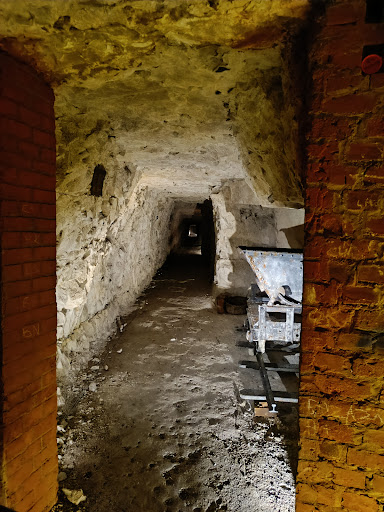
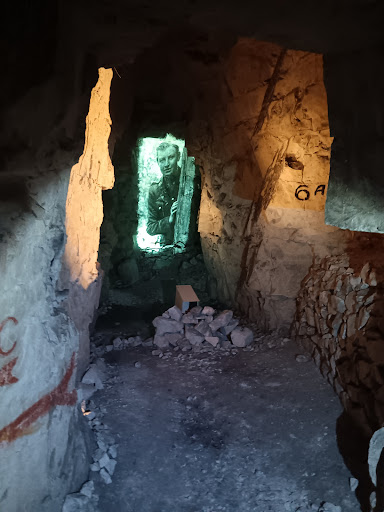
Below the city of Aras there is an extensive network of underground galleries, known as "Les Boves". These tunnels, which later became shelters for soldiers during World War I, are a unique and historic underground world. Excavated from the Middle Ages (and possibly from Roman times), the tunnels under Aras were originally used as storage areas by merchants and provided the limestone needed for the buildings built there until the 19th century. From the autumn of 1916, special tunnels were being constructed to connect the old ones to each other so that they would be ready for battle. There were 500 of them, built by the New Zealand Tunnel Company, which exploited experienced British miners, as well as the so-called "Bantam Soldiers", who were relatively short for British soldiers. For four months, the workers dug in eight-hour shifts, 24 hours a day. By the morning of the Battle of Aras (April 1917), they had completed 20 kilometers of electrically lit tunnels. The tunnels were named after New Zealand"s capital, Wellington (Carrière Wellington) and eventually turned into more than just tunnels, housing large warehouses, meeting rooms, kitchens, toilets, a hospital and a small railway network. The individual tunnels were named after New Zealand cities, from north to south, so that soldiers could find their way underground. The network of underground tunnels stretched about 20 kilometers below the city and allowed soldiers to go directly to the front lines of the war. 24,000 soldiers were underground the night before the battle. Used both as shelters and for the movement of troops during the offensive, the tunnels contributed to the success of the Battle of Aras. Despite the many casualties - an estimated 158,000 Allied soldiers and about 120,000 Germans were killed - the sudden attack in April 1917 was generally regarded as a tactical success, leading the Allies to the final victory. During World War II, the tunnels were reused by locals as shelters against air raids before being resealed in 1945 and forgotten, until they were rediscovered in 1990. In 2008 the tunnels were opened to the public as part of a new museum dedicated to the memory of those who served in World War I, with a particular focus on the tunnel workers and soldiers who lived and fought...
Read moreGreat place to visit, but
I visited Carrière Wellington in Arras recently, which is an old mine in Arras France in which 20000 British and Common Wealth troops hid to do a suprise attack for the Arras offensive on 9 April 1917. However during the tour my suspicions where raised as I was with my young son and was keen to make sure his understanding of what happened there. At no point during the tour was it made clear that the enemy were the Germans.
As the tour which was well presented, informative and professionally laid out continued, I noted other what I took to be pro Federal bias which peaked at the the end in a summary video which conculed that the Great War was like a European Civil War.
I was left speechless as this glossed over the fact that many common wealth soldiers gave their lives and that during a civil war which as we know is war between citizens of the same country. I believe this was done to condition visitors to think of the Great War as a European Civil war to take away the fact the Germany was the aggresor and to prepare the visitor for the coming of a European Super State.
The twisting of history to fit the Federalist ideal is in my opinion is a betrayal of the deeds and sacrifice these young men so generously gave to preserve...
Read moreI visited this museum on a class trip during mid November. Waiting time was a little over 10 minutes, which isn't that long as there was a class of 30+ students in line. The tour guide gave us an audio guide, which was helpful when exploring the mines. The tour guide also spoke in English, which was a tremendous help. The descent was around 30 metres via a lift. Our tour guide was a great help in terms of explaining the different stages of building the mines in the early 20th century. Booking in advance is recommended as waiting times can exceed 20 minutes. I would recommend visiting this museum if you are around the area as you can educate yourself on the war and how building mines and trenches played a crucial role in World War I. I would visit this museum again if I...
Read more