It’s over 150 years since Jacob and Wilhelm Grimm, fondly known as Brothers Grimm, passed away. But their childhood home in Steinau an der Straße still resonates the playful, erudite sensibilities of the two brothers who were destined one day to become the fathers of folklore. What makes this place special is unlike their birthplace in Hanau or other landmarks mentioned in their biography, this place retains the look and feel of that era.
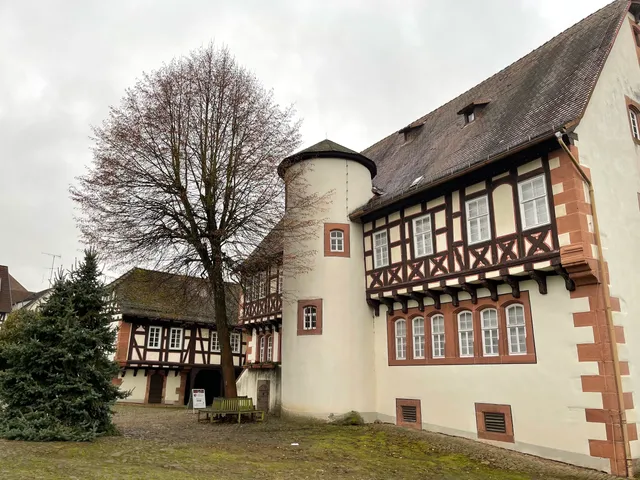
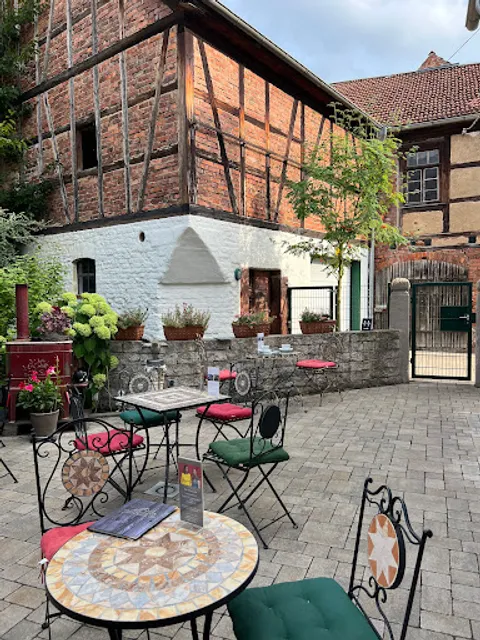
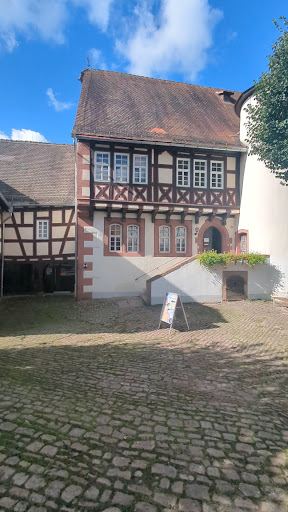
Originally a court house built in 1562, the family moved from Hanau to this place in 1791. The house is a stately renaissance structure with a stone base and an upper floor elaborately timbered on the side of the courtyard. The main building, together with the stable and barn, forms the centre of a picturesque and generously laid out complex surrounded by a wall.
Segmented, arched and profiled windows divide the ground floor. The upper floor, which can be reached through the attached tower via a spiral staircase, displays conspicuous ornamental timberwork resting on 21 richly sculptured wooden consoles. Widely swung St. Andrews crosses decorate the spaces beneath the windows. Especially noteworthy is the console above the pointed arch of the entrance. The lower part features the head of a fabled creature which was believed to have a protective function against ghosts.
The stone gables support a high tiled roof. Beneath the hip roof of the front gable a small wooden figure carries the load of the ridge on his back. The attached coach house is as old as the main building itself. A gothic staircase was attached to the south side in the early years of the 20th century.
According to the website dedicated to the House of Brothers Grimm, no original piece of furniture traceable to the family’s time in Steinau has been preserved. However, the kitchen area has been furnished with items used locally during the same period. The drawings of Ludwig Emil Grimm (the third brother) also give a picture of the family’s activities in the kitchen and the foods they prepared.
However, authentic pieces, actually used by the Grimm family and later in the households of Charlotte and her daughter Dorothea Hassenpflug, are presented in a small adjacent room. They are mostly items used by women of the time, e.g. needlework or jewellery in various degrees. In fact, the drawings of Ludwig Emil Grimm show how the needlework was carried out by the members of the family.
Various documents and autographs, especially by the father Philipp Wiheim Grimm exhibited in the adjacent rooms, demonstrate the close ties of the family to Steinau. The portrait of the mother, Dorothea Grimm, on the lid of a jewelry box is the work of the Franconian painter Georg Carl Urlaub. An oak wardrobe with rococo design from the year 1796 also gives an idea of what the furniture of the late 18th century may have looked like.
The upper floor is a spellbinding theatre where their fairy tales come to life. The first room sheds light on the early history of fairy tales in Europe, followed by rooms showcasing early editions of Little Red Riding Hood, Hansel and Gretel, and Puss in Boots and media rooms documenting The Sleeping Beauty and Snow White. It’s a place where imagination grows wings and bedtime stories turn alive. It’s a must visit for people who have grown up on fairy tales, including yours truly who came all the way from India to witness...
Read moreIt's a small museum dedicated to the Grimm Brothers and their tales worldwide known.
Distributed on two floors of the house where is located, is mainly for kids but the adults can also enjoy themselves, specially if they love those tales.
All of the information (to read or listen by fixed earphones) is in german except the brochures that they give you with the ticket entrance that are in various languages (spanish, english, french, etc.).
The staff at the ticket office speaks english and is very kind, specially with childrens.
In the first floor you mainly find information about the Grimm family and their ancestors, and the original printed tales, exposed in display cabinets.
The second floor houses recreations from the different tales in form of statues, figures,...
Read moreI visited the Brothers Grimm Museum in Steinau an der Straße and had a really great time. The building itself is beautiful and full of history, and the museum gives a deep insight into the lives and stories of the Grimm brothers. We were lucky to have an English-speaking guide, and she was amazing! There are so many small details in the house that we would've missed without her explanations. Just a heads up: photography and filming inside the house are not allowed, so you really have to take it all in with your eyes. There was also a barn (mentioned by the guide) that we didn’t get to visit, but she described it in detail. All in all, a wonderful experience, highly recommend if you're into fairy tales, German literature, or...
Read more