HTML SitemapExplore
logo
Find Things to DoFind The Best Restaurants

Memorial to Leonidas and 300 Spartans — Attraction in Lamia Municipality

Name
Memorial to Leonidas and 300 Spartans
Description
Nearby attractions
Στήλη των 300 Σπαρτιατών
Thermopylae 350 09, Greece
Baths of Thermopylae
Λουτρά Θερμοπυλων 350 09, Greece
Nearby restaurants
Nearby hotels
Related posts
Keywords
Memorial to Leonidas and 300 Spartans tourism.Memorial to Leonidas and 300 Spartans hotels.Memorial to Leonidas and 300 Spartans bed and breakfast. flights to Memorial to Leonidas and 300 Spartans.Memorial to Leonidas and 300 Spartans attractions.Memorial to Leonidas and 300 Spartans restaurants.Memorial to Leonidas and 300 Spartans travel.Memorial to Leonidas and 300 Spartans travel guide.Memorial to Leonidas and 300 Spartans travel blog.Memorial to Leonidas and 300 Spartans pictures.Memorial to Leonidas and 300 Spartans photos.Memorial to Leonidas and 300 Spartans travel tips.Memorial to Leonidas and 300 Spartans maps.Memorial to Leonidas and 300 Spartans things to do.
Memorial to Leonidas and 300 Spartans things to do, attractions, restaurants, events info and trip planning
Memorial to Leonidas and 300 Spartans
GreeceThessaly and Central GreeceLamia MunicipalityMemorial to Leonidas and 300 Spartans

Basic Info

Memorial to Leonidas and 300 Spartans

Thermopylae 350 09, Greece
4.4(2.5K)
Open until 12:00 AM
Save
spot

Ratings & Description

Info

Cultural
Scenic
Family friendly
Accessibility
attractions: Στήλη των 300 Σπαρτιατών, Baths of Thermopylae, restaurants:
logoLearn more insights from Wanderboat AI.
Website
culture.lamia.gr
Open hoursSee all hours
SunOpen 24 hoursOpen

Plan your stay

hotel
Pet-friendly Hotels in Lamia Municipality
Find a cozy hotel nearby and make it a full experience.

hotel
Affordable Hotels in Lamia Municipality
Find a cozy hotel nearby and make it a full experience.

hotel
The Coolest Hotels You Haven't Heard Of (Yet)
Find a cozy hotel nearby and make it a full experience.

hotel
Trending Stays Worth the Hype in Lamia Municipality
Find a cozy hotel nearby and make it a full experience.

Reviews

Nearby attractions of Memorial to Leonidas and 300 Spartans

Στήλη των 300 Σπαρτιατών

Baths of Thermopylae
Στήλη των 300 Σπαρτιατών

Στήλη των 300 Σπαρτιατών

4.6

(48)

Open 24 hours
Click for details
Baths of Thermopylae

Baths of Thermopylae

4.4

(178)

Open 24 hours
Click for details
Get the Appoverlay
Get the AppOne tap to find yournext favorite spots!
Wanderboat LogoWanderboat

Your everyday Al companion for getaway ideas

CompanyAbout Us
InformationAI Trip PlannerSitemap
SocialXInstagramTiktokLinkedin
LegalTerms of ServicePrivacy Policy

Get the app

© 2025 Wanderboat. All rights reserved.
logo

Reviews of Memorial to Leonidas and 300 Spartans

4.4
(2,510)
avatar
5.0
1y

Thermopylae, Greece Location of the legendary battle that took place during the second Persian invasion of Greece, occurring in August (or September) of 480 BC.

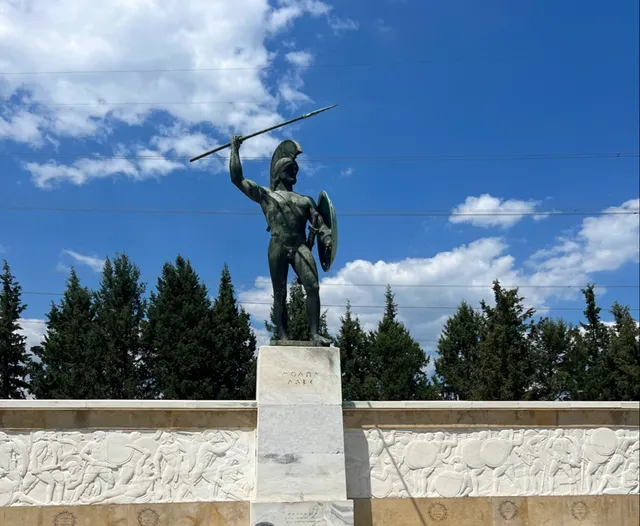
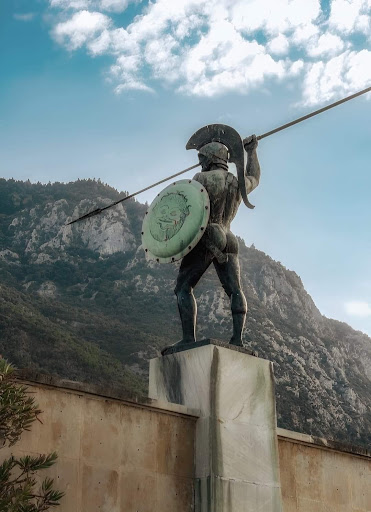
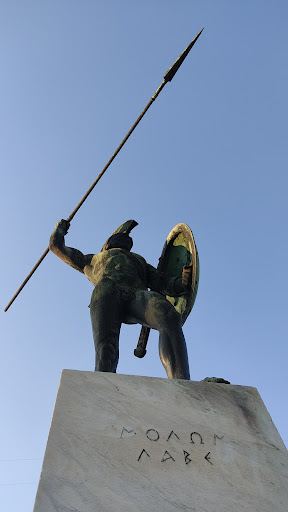
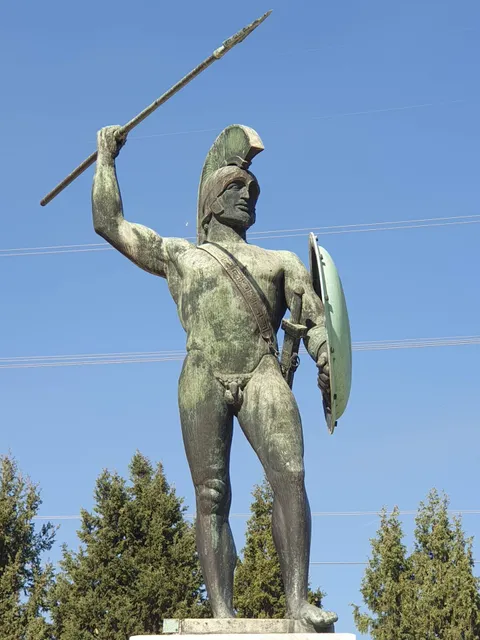
The modern Memorial at Thermopylae and Leonida's Monument stands opposite the historical hill of Kolonos and represents Leonidas in full armour. It was designed by B. Phalereus, and was erected in the 1950s at the expense of the Greek-American diaspora.

The monument was built to commemorate the battle at Thermopylae, and is located at the centre of the pass, where the final phase of the battle took place, as is attested by the accumulation at the foot of the hill of iron and bronze spearheads dated to the 5th century BC.

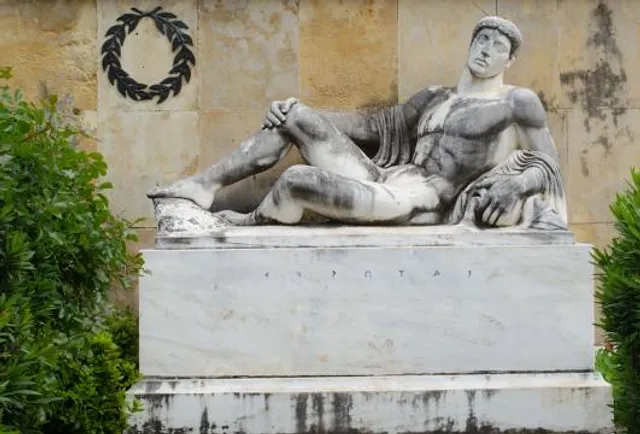
The sculptural synthesis consists of the brass statue of Leonidas with his spear and shield in the centre, while on the right and left and in a lower height we have the marble figures of the personified Taigetos, which is the highest mountain in the Peloponnese and the personified Evrotas which is a river flowing through the whole district of Laconia/Sparta. The figure of King Leonidas was based on an ancient warrior that was found in the excavation conducted by the British Archaeological School in 1920 and was identified as Leonidas.

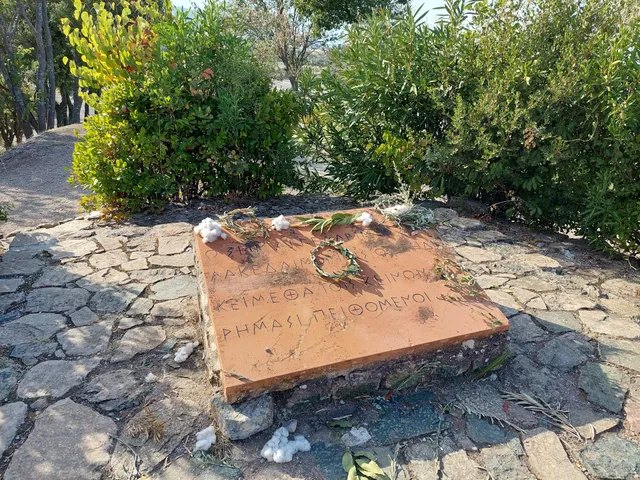
Leonidas' sacrifice along with his 300 comrades and the 4,000 Greeks (or 7,000) has become a timeless symbol of resistance against a much greater foe (Modern historians suggest 130,000 Persians. Herodotus and other ancient Greek authors mentioned millions of Persians as part of the Achaemenid army which nowadays is considered an exaggeration), a fight against all odds. In the location where Leonidas and his comrades died, ancient Greeks erected a momument bearing the well-known epigram : Ὦ ξεῖν’, ἀγγέλλειν Λακεδαιμονίοις ὅτι τῇδε κείμεθα, τοῖς κείνων ῥήμασι πειθόμενοι...which can be translated to "Go, tell the Spartans, stranger passing by, That here, obedient to their laws, we lie".

After the battle in Thermopylae a stone lion was built for everyone to remember the name of the King that died in this location. His body was sent to be buried in Sparta in 440 BC. In our day, neither the rock lion nor the inscription of the epigram is saved. A copy of the epigram has been placed on the top of the Hill of Kolonus opposite the Heroon, where the last scene of the...

   Read more
avatar
5.0
6y

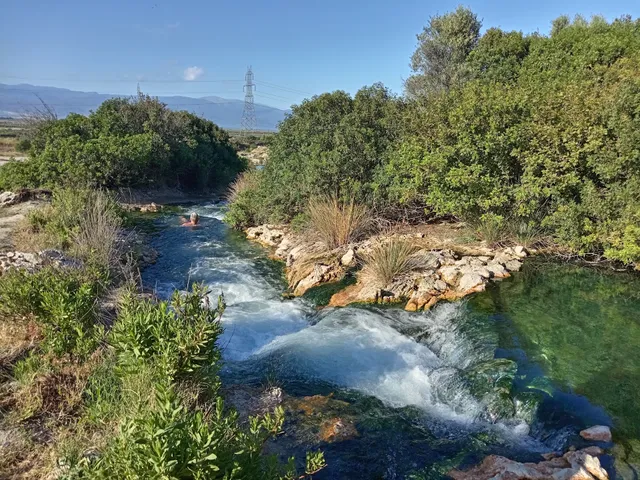
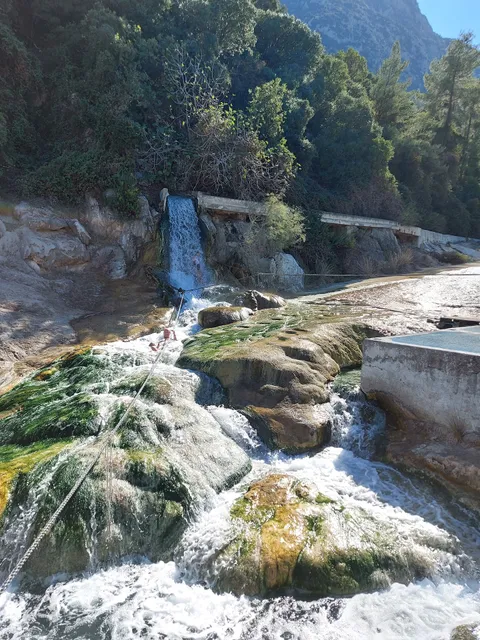
Near Athens lies this historic monument of Leonidas and the 300 Spartans it is a must go if you love Greece nevertheless the real treasure lies just a couple of hundred meters nearby.It is a thermal spa that is absolutely fantastic ,it has mini lagoons with thermal water with the smell of sulphur it is of course clean as the waters coming constantly throught the waterfall and draining elsewhere all the time.The big event and the most at least for me must see and feel is the waterfall.It is a real marvel as the waters coming constantly with high speed and dropping from the waterfall the pressure of the water is 5 - 6 kilograms per square centimetre which is equivalent to a little less pressure from a fire hose.It is the best hydro massage i have ever made and due to the fact that it is neglected because of the smell and because the municipal doesn't take care of it most of the times you can enjoy solo the waterfall.the first time I was there it was like having a massage for 1+ hour.It is a real opportunity and a must see experience you will remember it for a long time!!!!!!The place is not so big but for 5 to 10 people is perfect,FREE OF CHARGE.Do not...

   Read more
avatar
5.0
6y

For most tourists (certainly for bus-trippers), this monument will only be a quick stop and a group photo. For me this spot was an important tick off my bucket list ; I have been reading for years about this important period in Hellenistic and European history. It does take a little imagination to picture the battlefield as it was 2,500 years ago, because the sea has retreated a couple of kilometers ; it is easier to visualize it if you cross the busy motorway and climb up the mountain flank to where the plaque "go tell the Spartans" is. The monument is only a symbolic effort to memorize this symbol of ultimate courage, sacrifice and patriotism ; I'm sure the statue is more based on the movie "300" than on the King of the Spartans. But I find that rather irrelevant. The monument is there to make you stop and think - that works for me. PS Off to the side of the larger statue of Leonidas at Thermopylae, there is a monument to the 700 Thespians who died alongside the Spartans ; go and...

   Read more
Page 1 of 7
Previous
Next

Posts

David HarrisDavid Harris
Thermopylae, Greece Location of the legendary battle that took place during the second Persian invasion of Greece, occurring in August (or September) of 480 BC. The modern Memorial at Thermopylae and Leonida's Monument stands opposite the historical hill of Kolonos and represents Leonidas in full armour. It was designed by B. Phalereus, and was erected in the 1950s at the expense of the Greek-American diaspora. The monument was built to commemorate the battle at Thermopylae, and is located at the centre of the pass, where the final phase of the battle took place, as is attested by the accumulation at the foot of the hill of iron and bronze spearheads dated to the 5th century BC. The sculptural synthesis consists of the brass statue of Leonidas with his spear and shield in the centre, while on the right and left and in a lower height we have the marble figures of the personified Taigetos, which is the highest mountain in the Peloponnese and the personified Evrotas which is a river flowing through the whole district of Laconia/Sparta. The figure of King Leonidas was based on an ancient warrior that was found in the excavation conducted by the British Archaeological School in 1920 and was identified as Leonidas. Leonidas' sacrifice along with his 300 comrades and the 4,000 Greeks (or 7,000) has become a timeless symbol of resistance against a much greater foe (Modern historians suggest 130,000 Persians. Herodotus and other ancient Greek authors mentioned millions of Persians as part of the Achaemenid army which nowadays is considered an exaggeration), a fight against all odds. In the location where Leonidas and his comrades died, ancient Greeks erected a momument bearing the well-known epigram : Ὦ ξεῖν’, ἀγγέλλειν Λακεδαιμονίοις ὅτι τῇδε κείμεθα, τοῖς κείνων ῥήμασι πειθόμενοι...which can be translated to "Go, tell the Spartans, stranger passing by, That here, obedient to their laws, we lie". After the battle in Thermopylae a stone lion was built for everyone to remember the name of the King that died in this location. His body was sent to be buried in Sparta in 440 BC. In our day, neither the rock lion nor the inscription of the epigram is saved. A copy of the epigram has been placed on the top of the Hill of Kolonus opposite the Heroon, where the last scene of the Battle took place.
Andreas MilionisAndreas Milionis
A lovely statue, in the middle of nowhere, flanked by electricity pylons and dirty land. The spartans fought bravely till the last man standing and scared for sure the Persians. They deserve a much-much better memorial place. “Spartans never retreat! Spartans never surrender! Go spread the word. Let every Greek assembled know the truth of this. Let each among them search his own soul. And while you’re at it, search your own.” — King Leonidas, 300 Spartan warriors known for their professionalism were the best and most feared soldiers of Greece in the fifth century B.C. Their formidable military strength and commitment to guard their land helped Sparta dominate Greece in the fifth century. This legendary monument commemorates the battle in 480 B.C. in which a small band of 300 Spartan soldiers held off a huge Persian army for three days. The delay was long enough to allow for the successful defense of Athens against the Persians which ended with the great victory at Salamis naval battle.
Tomas Palacios PeyTomas Palacios Pey
Ubicado al costado de la ruta 1 Atenas-Tesalónica (no confundir con la autopista que está un poco más lejos por detrás) se encuentra este maravilloso monumento a Leónidas y los 300 espartanos que defendieron el paso de las Termópilas en el 480 a.C. ante los persas liderados por Jerjes I. De todos los monumentos de las guerras médicas contemporáneos que podemos ver en los distintos campos de batalla este es el más grande de todos. Casualmente es el único que fue una derrota, lo cual nos habla de la importancia simbólica que dejó en la historia y cómo este rey que antes de la batalla había pasado sin mucha importancia; se terminó convirtiendo en el rey espartano más conocido del mundo, llegando su fama y la de la ciudad de Esparta (hoy en día una pequeña ciudad) hasta nuestros días. El sacrificio de Leónidas está a la altura de semejante monumento y el hecho de estar en una ruta tan transitada (aunque se usa más la autopista que está por detrás), mucha gente decide tomar esta ruta solo para poder contemplar este monumento y visitar algunos de los puntos de interés del campo de batalla que hoy en día son posibles ver. Al lado del monumento hay un cartel con buena información de la batalla y muy cercano a este monumento hay un centro de información de Las Termópilas, que si lo encuentras abierto sin dudas debes ingresar. En mi caso lo encontré cerrado cuando fui. En el muro están representadas escenas de hoplitas griegos y 2 estatuas más a sus extremos. La parte central donde se encuentra el soldado al que todos identificamos como Leónidas se encuentra desnudo con su “dorys” en una mano, el “hoplon” en la otra, colgando su “xifos” y el “kranos” en su cabeza, al fiel estilo de representación griego antiguo. Es importante remarcar que donde actualmente está este monumento hace 2500 años atrás todo ese lugar estaba cubierto por el mar (golfo maliaco) y todo lo que vemos desde este monumento hasta donde se encuentra el mar actual es terreno ganado al mar. La batalla duró 3 días y es posible visitar el muro focidio que fue escenario de los 2 primeros días y el colonos hill que fue el escenario del último día. Fueron aproximadamente 10.000 griegos que lucharon los 2 primeros días y fue recién en el 3ro donde la mayoría se retiró mientras que los Espartanos, Tebanos, Tespios e Ilotas se quedaron a luchar hasta la muerte. Para conocer a fondo todo lo que sucedió visité Las Termópilas en Febrero de 2023 con el fin de hacer un documental de esta batalla mostrando cada uno de los lugares donde sucedieron los hechos y contando toda su historia basándome en el relato de Heródoto, podrás encontrarlo en mi YT como “Las Termpopilas 4k Desde El Campo De Batalla - Leonidas y sus 300 - Las Guerras Medicas ep. 2”
See more posts
See more posts
hotel
Find your stay

Pet-friendly Hotels in Lamia Municipality

Find a cozy hotel nearby and make it a full experience.

Thermopylae, Greece Location of the legendary battle that took place during the second Persian invasion of Greece, occurring in August (or September) of 480 BC. The modern Memorial at Thermopylae and Leonida's Monument stands opposite the historical hill of Kolonos and represents Leonidas in full armour. It was designed by B. Phalereus, and was erected in the 1950s at the expense of the Greek-American diaspora. The monument was built to commemorate the battle at Thermopylae, and is located at the centre of the pass, where the final phase of the battle took place, as is attested by the accumulation at the foot of the hill of iron and bronze spearheads dated to the 5th century BC. The sculptural synthesis consists of the brass statue of Leonidas with his spear and shield in the centre, while on the right and left and in a lower height we have the marble figures of the personified Taigetos, which is the highest mountain in the Peloponnese and the personified Evrotas which is a river flowing through the whole district of Laconia/Sparta. The figure of King Leonidas was based on an ancient warrior that was found in the excavation conducted by the British Archaeological School in 1920 and was identified as Leonidas. Leonidas' sacrifice along with his 300 comrades and the 4,000 Greeks (or 7,000) has become a timeless symbol of resistance against a much greater foe (Modern historians suggest 130,000 Persians. Herodotus and other ancient Greek authors mentioned millions of Persians as part of the Achaemenid army which nowadays is considered an exaggeration), a fight against all odds. In the location where Leonidas and his comrades died, ancient Greeks erected a momument bearing the well-known epigram : Ὦ ξεῖν’, ἀγγέλλειν Λακεδαιμονίοις ὅτι τῇδε κείμεθα, τοῖς κείνων ῥήμασι πειθόμενοι...which can be translated to "Go, tell the Spartans, stranger passing by, That here, obedient to their laws, we lie". After the battle in Thermopylae a stone lion was built for everyone to remember the name of the King that died in this location. His body was sent to be buried in Sparta in 440 BC. In our day, neither the rock lion nor the inscription of the epigram is saved. A copy of the epigram has been placed on the top of the Hill of Kolonus opposite the Heroon, where the last scene of the Battle took place.
David Harris

David Harris

hotel
Find your stay

Affordable Hotels in Lamia Municipality

Find a cozy hotel nearby and make it a full experience.

Get the Appoverlay
Get the AppOne tap to find yournext favorite spots!
A lovely statue, in the middle of nowhere, flanked by electricity pylons and dirty land. The spartans fought bravely till the last man standing and scared for sure the Persians. They deserve a much-much better memorial place. “Spartans never retreat! Spartans never surrender! Go spread the word. Let every Greek assembled know the truth of this. Let each among them search his own soul. And while you’re at it, search your own.” — King Leonidas, 300 Spartan warriors known for their professionalism were the best and most feared soldiers of Greece in the fifth century B.C. Their formidable military strength and commitment to guard their land helped Sparta dominate Greece in the fifth century. This legendary monument commemorates the battle in 480 B.C. in which a small band of 300 Spartan soldiers held off a huge Persian army for three days. The delay was long enough to allow for the successful defense of Athens against the Persians which ended with the great victory at Salamis naval battle.
Andreas Milionis

Andreas Milionis

hotel
Find your stay

The Coolest Hotels You Haven't Heard Of (Yet)

Find a cozy hotel nearby and make it a full experience.

hotel
Find your stay

Trending Stays Worth the Hype in Lamia Municipality

Find a cozy hotel nearby and make it a full experience.

Ubicado al costado de la ruta 1 Atenas-Tesalónica (no confundir con la autopista que está un poco más lejos por detrás) se encuentra este maravilloso monumento a Leónidas y los 300 espartanos que defendieron el paso de las Termópilas en el 480 a.C. ante los persas liderados por Jerjes I. De todos los monumentos de las guerras médicas contemporáneos que podemos ver en los distintos campos de batalla este es el más grande de todos. Casualmente es el único que fue una derrota, lo cual nos habla de la importancia simbólica que dejó en la historia y cómo este rey que antes de la batalla había pasado sin mucha importancia; se terminó convirtiendo en el rey espartano más conocido del mundo, llegando su fama y la de la ciudad de Esparta (hoy en día una pequeña ciudad) hasta nuestros días. El sacrificio de Leónidas está a la altura de semejante monumento y el hecho de estar en una ruta tan transitada (aunque se usa más la autopista que está por detrás), mucha gente decide tomar esta ruta solo para poder contemplar este monumento y visitar algunos de los puntos de interés del campo de batalla que hoy en día son posibles ver. Al lado del monumento hay un cartel con buena información de la batalla y muy cercano a este monumento hay un centro de información de Las Termópilas, que si lo encuentras abierto sin dudas debes ingresar. En mi caso lo encontré cerrado cuando fui. En el muro están representadas escenas de hoplitas griegos y 2 estatuas más a sus extremos. La parte central donde se encuentra el soldado al que todos identificamos como Leónidas se encuentra desnudo con su “dorys” en una mano, el “hoplon” en la otra, colgando su “xifos” y el “kranos” en su cabeza, al fiel estilo de representación griego antiguo. Es importante remarcar que donde actualmente está este monumento hace 2500 años atrás todo ese lugar estaba cubierto por el mar (golfo maliaco) y todo lo que vemos desde este monumento hasta donde se encuentra el mar actual es terreno ganado al mar. La batalla duró 3 días y es posible visitar el muro focidio que fue escenario de los 2 primeros días y el colonos hill que fue el escenario del último día. Fueron aproximadamente 10.000 griegos que lucharon los 2 primeros días y fue recién en el 3ro donde la mayoría se retiró mientras que los Espartanos, Tebanos, Tespios e Ilotas se quedaron a luchar hasta la muerte. Para conocer a fondo todo lo que sucedió visité Las Termópilas en Febrero de 2023 con el fin de hacer un documental de esta batalla mostrando cada uno de los lugares donde sucedieron los hechos y contando toda su historia basándome en el relato de Heródoto, podrás encontrarlo en mi YT como “Las Termpopilas 4k Desde El Campo De Batalla - Leonidas y sus 300 - Las Guerras Medicas ep. 2”
Tomas Palacios Pey

Tomas Palacios Pey

See more posts
See more posts