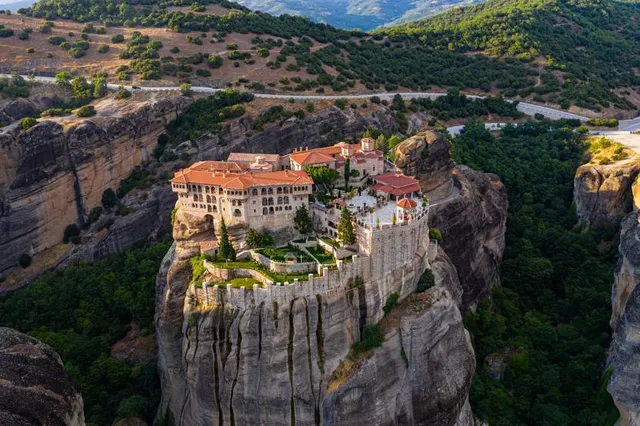
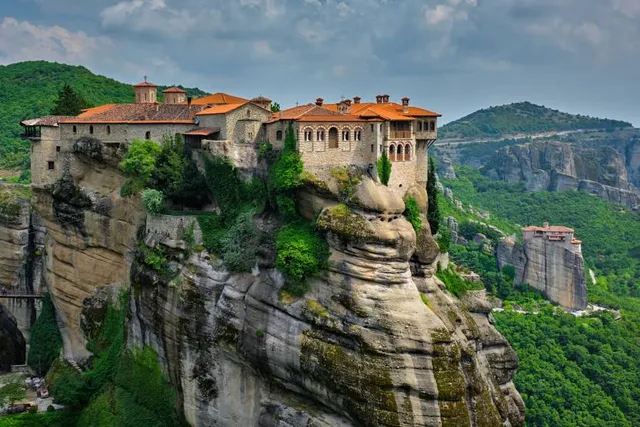
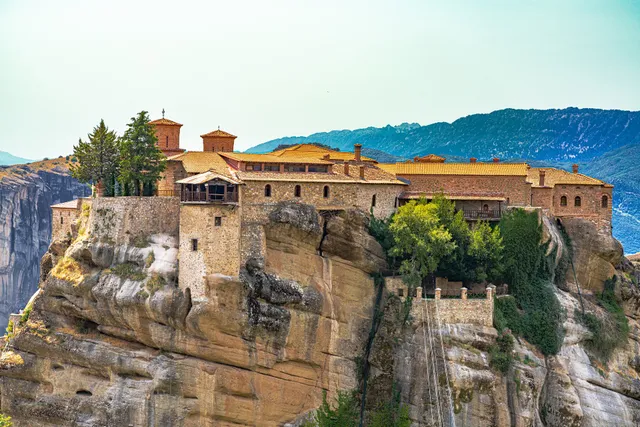
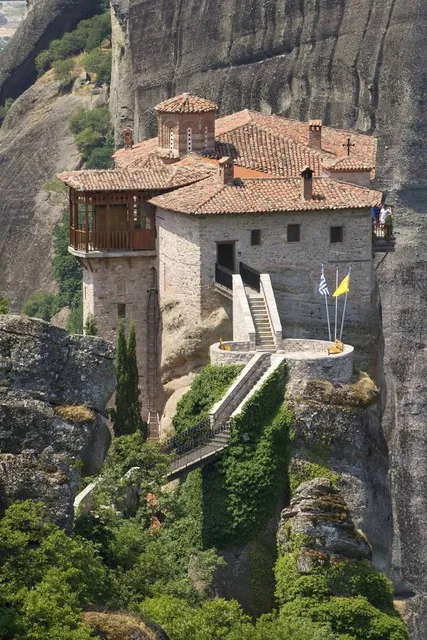
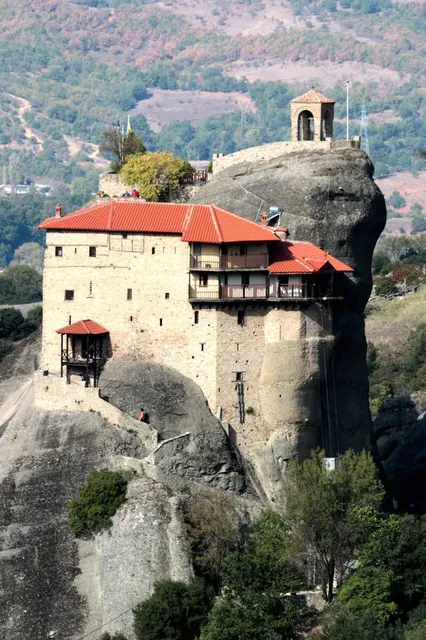
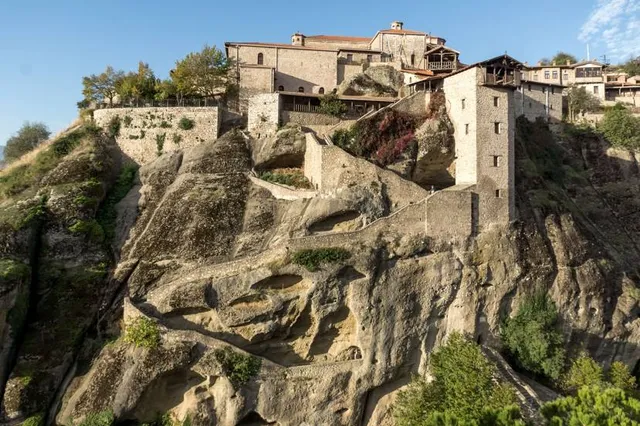
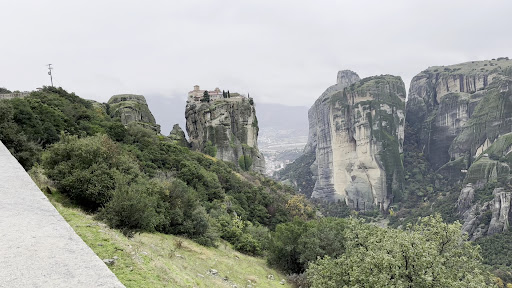
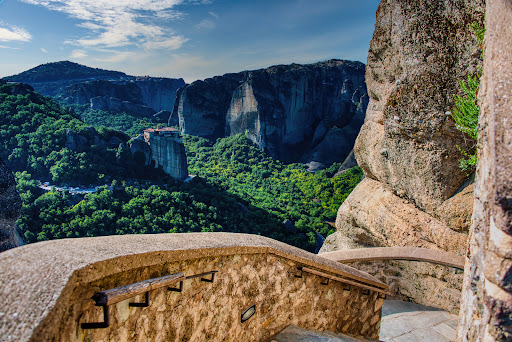
Meteora is a rock formation in the regional unit of Trikala in Greece. The edge of a mountain range is formed of semi detached rockey pillars. It is a plains at the bottom of these rock pillars. Six of those rock pillars are hosting one of the largest eastern orthodox monastric complexes built in 13-14 centuries. There had been 24 monastries originally but only 6 is remaining today. Varlaam is one prominant, largely visited and beautiful monastry.
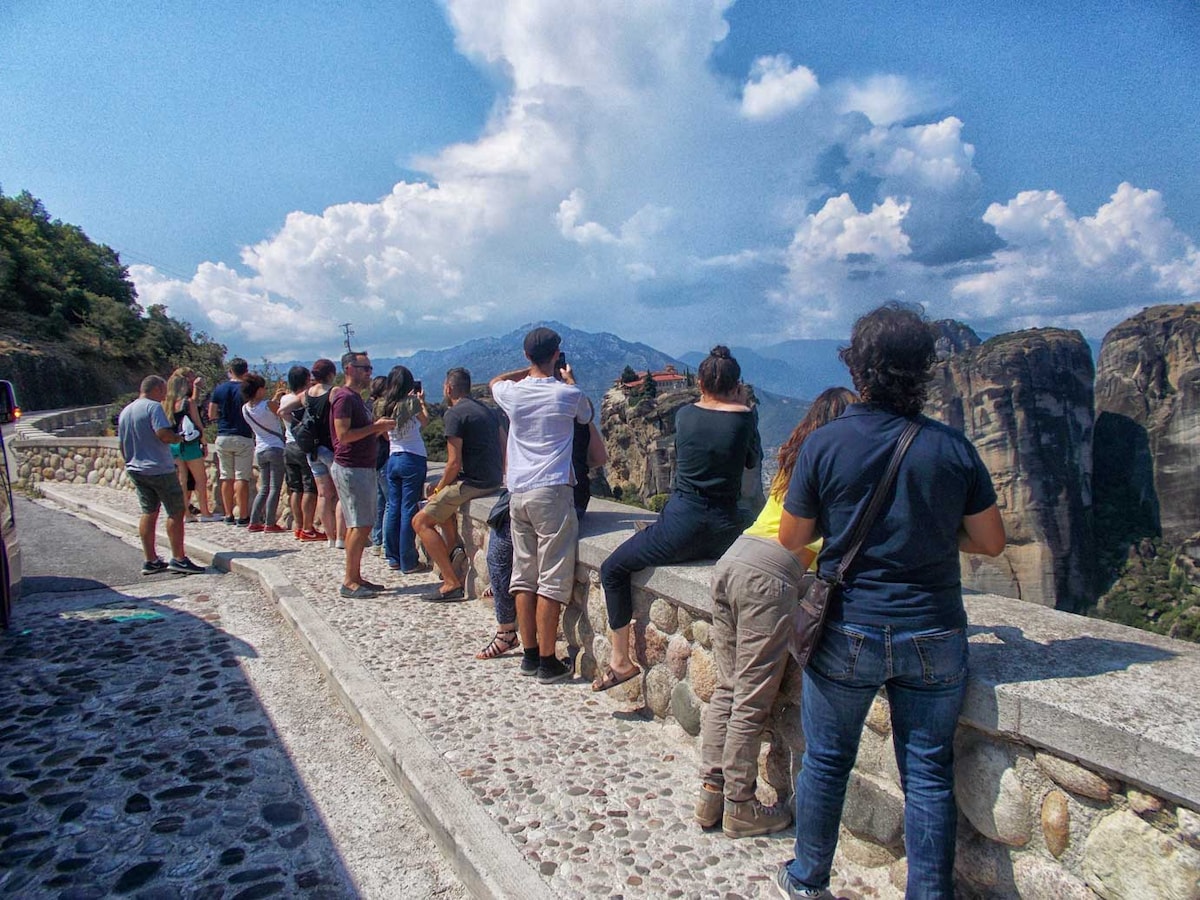
Kalambaka is the nearest town which is located at the foot of the hills. There is road access from Kalambaka to the monastries. When looking up from Kalambaka, 4 monastries are located to your left and 2 to the right. These two clusters are about 3 km apart. Monastries in each cluster are close by. Road up to the hills run through the valley between the two clusters. Road rises up to monastries and reaches them from behind. This raod offers fantastic view of the monastries and kalambaka town below. There are car parks close to monastries. Left side cluster of 4 is comprised of the Great Meteoron, Varlaam, Roussanou and St Nikolaos monastries. Right side cluster of 2 are Holy Trinity and St Sephan monastries. Out of all, Great Meteoron is the oldest, highest and the largest. Varlaam is also located very close to it and equally beautiful. Holy trinity is the least visited due to strenous climbing. It is the most detached pillar so that should climb down from the road and then climb up. St Stephan is the easiest to reach directly through a bridge from the road. On the way there are several view points worth paying a visit. An illustration of the monastries is attached here for easy understanding. Entry ticket per monastry is 3 euros.
Dress code
This is a relugious centre. So men should not wear shorts and skinnies. Women should cover their shoulders and must wear SKIRTS. Pants are not sufficient. For those who wear pants a cloth will be given at the ticket counter at a fee. But they may run out in the high season.
Opening times.
Monastries are closed on some days based on a schedule. Opening times change for summer and winter. Some Monastries close earlier than you think. Please check their official website and plan your visit accordingly.
Photography
Photography is not allowed inside main church. Other areas Ok.
Getting from Kalambaka to Meteora.
Buses are availabe from Kalambaka and they stop at every monastry. But buses run very few times such as 9.00 am and 12.15 from kalambaka and 11.00 and 2.15 from meteora. Easiest way is to get a taxi from Kalambaka taxi station. There are plenty of taxies. Taxi station is located close to bus station. you can take the contact number of the driver and ask to come to pick you for return. Restaurants and shops around too will give contact numbers of taxis. Charge to meteora was 12 euros. They will stop for photos on the way if requested. It will cost few additional euros. for return journey you can call and ask them to come and pick you up from meteora. It will take about 12-15 minutes to come up from Kalambaka. So call them early.
Getting to Kalambaka from Athens.
Trains to and from Athens operate from Larissa station. Larissa train station is located just outside once you come up (out) from the metro station. Tickets to kalambaka can be purchased from the station or via Hellanic Train app (Company has changed its name from TrainOSE to Hellanic Train in 2023). A picture of the app icon is attached. Train journey is nearly 5 hours and it is a comfortable ride. Sometimes, part of the journey towards Kalambaka end may be operated by a replacement bus. Trains and replacement buses run on time.
There are lot of hotels and restaurants in Kalambaka. They serve superb local food which are worth trying. Food is tastier than...
Read moreThe Monastery of Varlaam in Kalambaka, Greece, stands as one of the most captivating sites in the Meteora region, blending historical depth with breathtaking natural beauty.
My wife and I embarked on our journey to this extraordinary location shortly after visiting the Holy Church of Nativity of the Most Holy Mother of God in Kastraki, setting off at approximately 8:40 AM.
The drive was a serene experience, winding through verdant valleys with the imposing Meteora rock formations rising majestically in the distance. We reached the monastery around 9:00 AM and, due to limited parking space, had to park our vehicle along the road. The entry fee was a modest 3€, well worth the experience that awaited us.
Crossing the entrance, we followed a well-marked pathway leading us to the monastery. The ascent involved a lengthy staircase, carved into the rock, offering magnificent views of the rocky landscape and the valley below. It's worth noting that the climb is quite steep, so it's best to be prepared for a bit of a workout.
At the summit, we encountered the strict dress code for women, which requires long skirts. My wife had to purchase a sarong at the entrance to comply, as she was wearing trousers. The attention to traditional attire added to the authenticity and respect for the sacred space.
Exploring the monastery was a journey through time and faith. The katholikon, built in 1541, houses exquisite 16th-century frescoes by the famous iconographer Frangos Katelanos, depicting intricate religious scenes with vivid colours and meticulous detail. The old tower, with its ancient lift mechanism once used by monks to transport materials, showcased the ingenious engineering solutions of the past.
One of the highlights was the observation deck, which provided sweeping views of the Meteora landscape—a paradise for photographers. The small chapel dedicated to the Three Hierarchs exuded a sense of peace and reverence, while the large oak barrel used for water storage and the gazebo added to the monastery's rustic charm.
The new museum within the monastery was another highlight, displaying an array of religious icons and vestments from the Byzantine period. These artefacts offered a deeper understanding of the monastery's historical and cultural significance.
After our tour, we descended the staircase and took some time to explore the monastery's gardens and squares at ground level, enjoying the tranquil atmosphere.
Visiting the Monastery of Varlaam in the morning is ideal to avoid the crowds, and it's highly recommended to bring a camera to capture the stunning views. Remember that food is not allowed inside the monasteries, and the dress code is strictly enforced, so plan accordingly. Restrooms are available within the monastery for convenience.
Our visit to the Monastery of Varlaam was a deeply enriching experience, blending awe-inspiring natural beauty with profound historical and spiritual significance. It's a must-visit destination for anyone exploring the Meteora...
Read moreReview: Monastery of Varlaam
The Monastery of Varlaam is one of Meteora's most iconic and enchanting landmarks, offering visitors a glimpse into a world where spirituality, history, and architectural ingenuity converge. Perched atop a massive rock pillar, this monastery is a testament to human determination and devotion, and visiting it is an unforgettable experience.
Founded in the 14th century and expanded in the 16th century, the Monastery of Varlaam is the second-largest of the Meteora monasteries and is renowned for its rich history and stunning location. The ascent to the monastery involves a combination of modern steps and ancient pathways, but the effort is rewarded with panoramic views of the surrounding rock formations and the lush Thessalian plains.
Inside, the monastery is a treasure trove of Byzantine art and culture. The main church, dedicated to All Saints, features exquisite frescoes, vibrant icons, and intricate carvings that showcase the artistic excellence of the time. The museum within the monastery houses an impressive collection of manuscripts, relics, and other artifacts that tell the story of its monastic heritage.
The tranquility of the monastery is palpable, making it a perfect spot for reflection and spiritual connection. The well-preserved architecture, including the wooden winch used to hoist supplies and people before modern stairs were added, adds to the sense of stepping back in time.
Practical tips: Wear modest clothing, as this is a place of worship (scarves and wraps are often available at the entrance). Comfortable shoes are essential for the climb. Check the opening hours, as they can vary by season.
Whether you're drawn by its spiritual significance, historical value, or breathtaking views, the Monastery of Varlaam is a must-visit destination in Meteora. It offers a profound and enriching experience that leaves a...
Read more