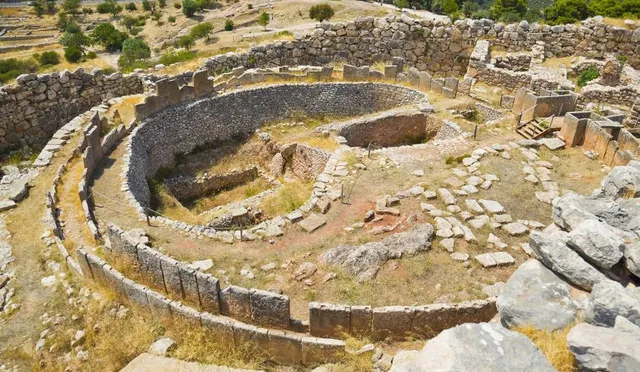
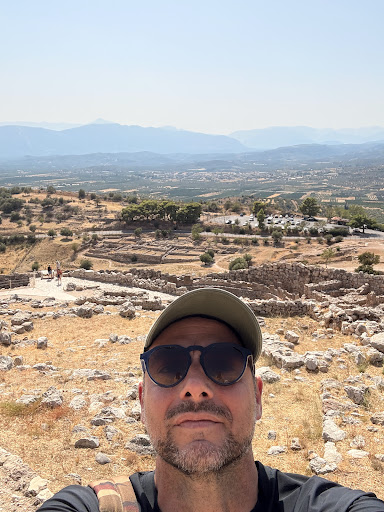
The Mycenaeans, the great civilization that led the Achaeans who sailed to Troy... The city of Mycenae was built on a hill 200-300 meters high, with a gentle slope facing the Gulf of Argolis and offering a clear view of Argos. On the other sides, it is surrounded by mountains reaching up to 800 meters, providing natural protection. These mountains also have fascinating natural rock formations. When I saw the mountains from the city’s highest point, I thought, "The Cyclopes must have built Mycenae from the striking rocks of these surrounding mountains."
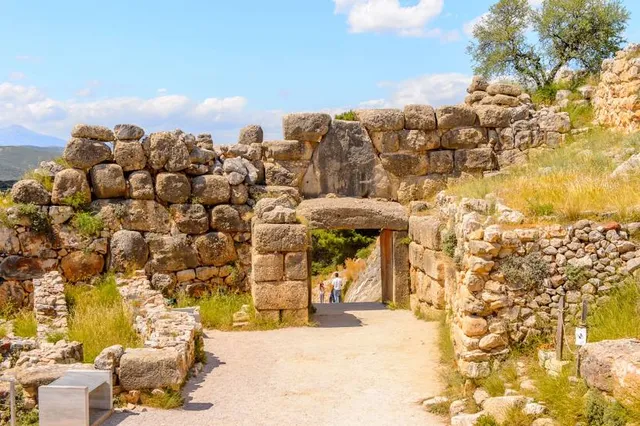
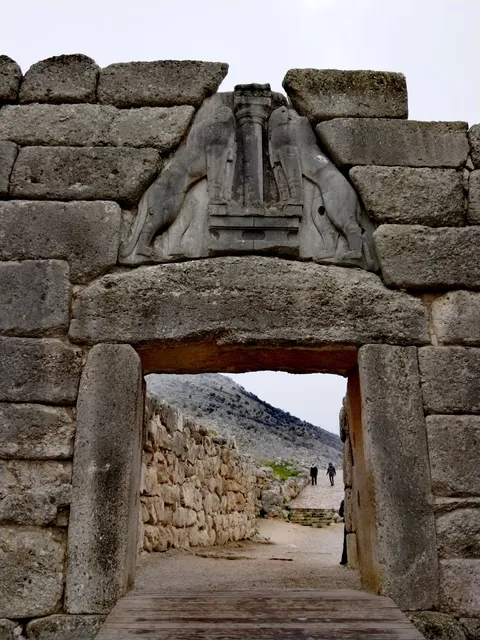
The entrance to the city, the Lion Gate, along with the remaining walls around it, creates an impressive atmosphere. It's clear that some of the upper stones were placed later to better showcase the Lion Gate, but the incredible craftsmanship of the lower stonework makes this obvious. Even stones added after 3,000 years don't come close to the skill of the Mycenaean masonry. Later, when I examined Schliemann’s drawings from his early excavations of Mycenae, I noticed he ended the fortifications right above the gate, which disappointed me. With such incredible craftsmanship, I believe the city had much taller walls in the past.
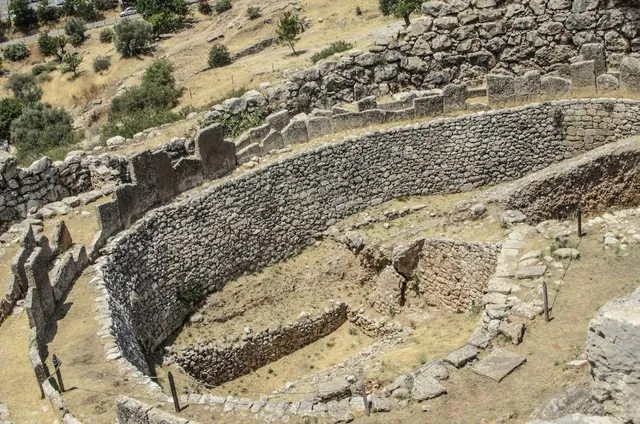
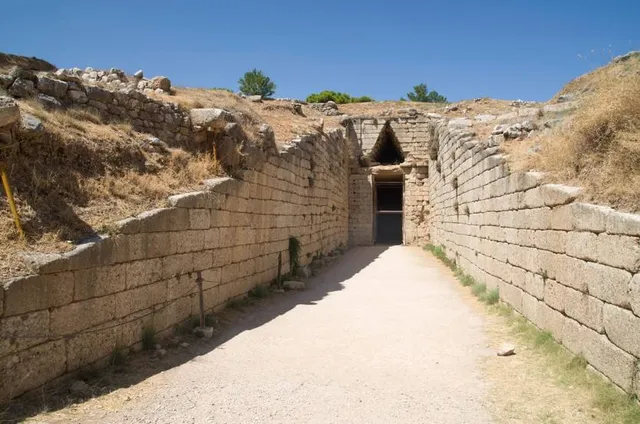
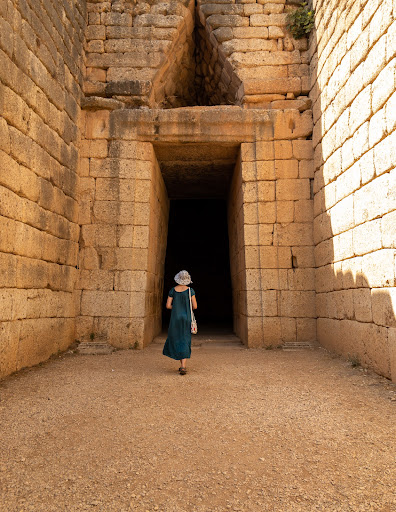
Some of the shaft tombs within the city and the nearby A Tomb of Clytemnestra were other structures we particularly enjoyed visiting.
Unlike the staff working at other archaeological sites and museums in the area, here there are racist, rude, and indifferent employees. Therefore, the rest of this long review is about the employees at the site, and they are the only reason for the low rating.
1-) My family and I started our morning tour of the area by purchasing a combined ticket at Tiryns. We asked for five combined tickets, but the lady who sold the tickets asked where we were from and the age of the child with us. Then she said that there was no need for a ticket for the child, as it was free, and sold us four adult combined tickets, while giving a ticket marked "free" for the child. With our combined tickets, we visited the Nafplio Archaeological Museum and Palamidi later in the day. At both locations, the women working there asked where we were from and the age of the child again while checking our tickets. They gave free tickets for the child.
In the evening, we came here as our fourth stop. The lady employee took the tickets, looked at them, said okey, and then asked where we were from. When we answered, she rudely began examining the tickets again, clearly being impolite! As if her rude behavior wasn't enough, she said we needed to buy a ticket for the child. I explained that at the previous three stops, they had also asked where we were from and the age of the child, and had given us free tickets for the child. I even took out the "free" tickets from my bag and showed them to her, but she didn't care. She was obviously taking a racist attitude. Since it was late in the day, we didn’t want to argue and just bought the 6€ ticket.
2-) We had chosen to see the A Tomb of Clytemnestra, just outside Mycenae, on our way down. As we headed there, multiple dogs approached us in a threatening manner, so we decided to take a different path down to the lower area. While we were exploring below, we witnessed this scene: the dogs began chasing a little girl who was trying to pass by. The girl, terrified of the dogs, started running uncontrollably downhill. If we hadn’t shouted to calm her, she would have likely suffered a serious fall. No staff members came to intervene. So, there are aggressive dogs in the area threatening people, and it seems the staff couldn't care less!
3-) As we were leaving, it was 8 PM, closing time. Another female employee at the gate was rudely shouting "exit" and "closed" to people, gesturing for them to leave. She was treating all these foreign visitors to the archaeological site as if she were herding a flock of sheep. I warned her to be polite while doing her job. Other people who were leaving with us agreed with this, but as we walked towards our car, the woman continued her rude behavior,...
Read more🏛️ Archaeological Site of Mycenae 🏺
Visiting the Archaeological Site of Mycenae was like stepping into a captivating tale of ancient civilization. As I entered through the iconic Lion Gate, I could feel the weight of history and the significance of this once-mighty Mycenaean citadel. The site is exceptionally well-preserved, and the knowledgeable guides added depth to my understanding of its historical importance.
Exploring the ruins of the Cyclopean Walls, the Treasury of Atreus, and the Royal Tombs left me in awe of the engineering prowess and architectural brilliance of the Mycenaeans. The attention to detail in the construction and the intricate designs showcased the cultural achievements of this ancient civilization.
Walking through the megaron and visualizing the lifestyle of the rulers was a unique experience. The Throne Room, adorned with its impressive hearth and majestic throne, transported me back in time, almost hearing the echoes of ancient ceremonies.
The panoramic views from the Acropolis were stunning, and it was easy to see why this strategic location was chosen for the citadel. The landscape surrounding the site was just as enchanting, with olive groves and rolling hills adding to the charm of the experience.
I couldn't help but imagine the daily life of the Mycenaeans as I wandered through the streets and houses of this ancient city. The on-site museum provided additional context and a vast collection of artifacts, including pottery, weapons, and jewelry, allowing me to get a glimpse into the daily lives, traditions, and artistry of the Mycenaean civilization.
Overall, the Archaeological Site of Mycenae is a must-visit destination for history enthusiasts, archaeology lovers, and anyone curious about ancient civilizations. The combination of well-preserved ruins, informative guides, and stunning surroundings creates an unforgettable journey into the past. It's a place that leaves you with a profound appreciation for the wonders of human history and a desire to learn even more about the fascinating world of...
Read moreWe Visited in March 2024
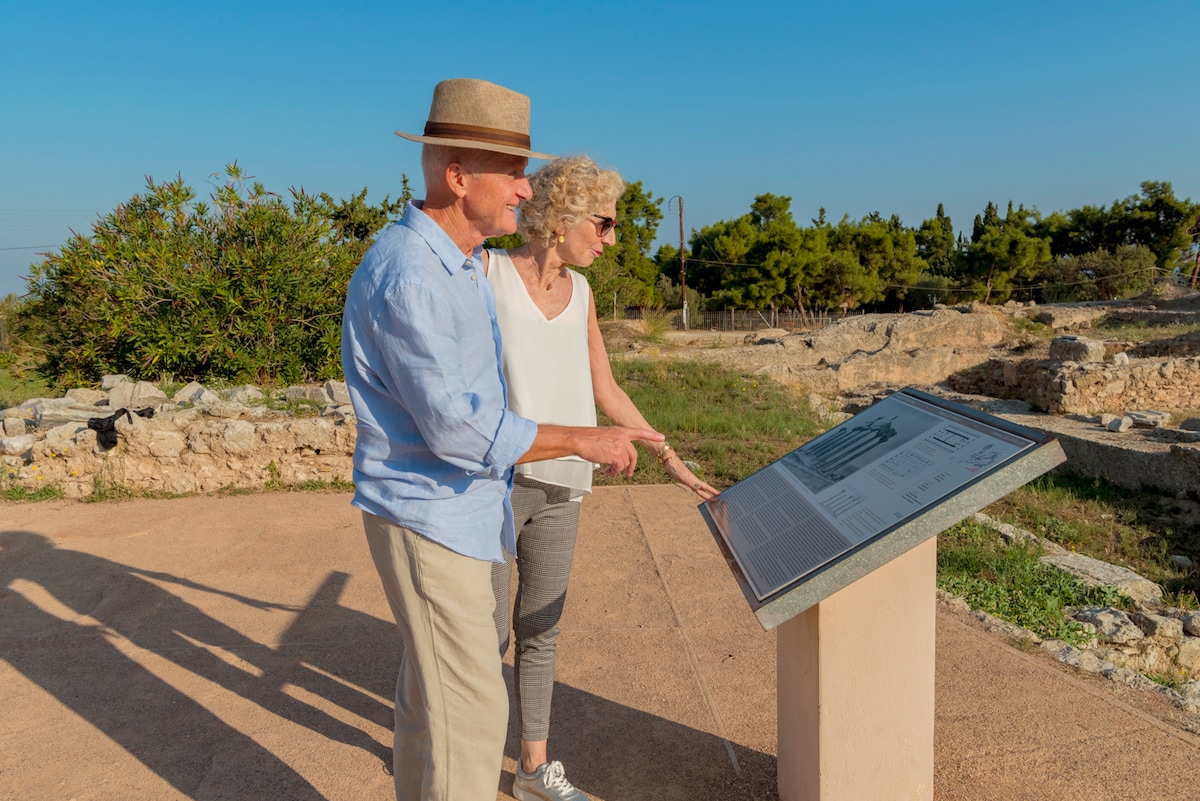
Truly a spectacular site. Driving up you witness the remains of the Ancient City on the hill and you start to get excited. A lot has been done to record, protect and preserve this site with good explanations on signage throughout. The museum is a very nice touch with really great pieces. That this was the home. We brought a couple of bottles of water which were needed because it was a hot day in April 2024 when we visited. There are a number of tourists shops and places to eat at the entrance. We thoroughly enjoyed this site.
Mycenae is an archaeological site near Mykines in Argolis, north-eastern Peloponnese, Greece. It is located about 120 kilometres south-west of Athens. In the second millennium BC, Mycenae was one of the major centres of Greek civilization, a military stronghold which dominated much of southern Greece, Crete, the Cyclades and parts of southwest Anatolia. The period of Greek history from about 1600 BC to about 1100 BC is called Mycenaean in reference to Mycenae. At its peak in 1350 BC, the citadel and lower town had a population of 30,000. In 1999, the archeological site of Mycenae was added to the UNESCO World Heritage List, along with the nearby site of Tiryns, because of its historical importance as the center of the Mycenaean civilization, its outstanding architecture, and its testimony to the development of Ancient Greek civilization.
The Lions Gate, the Treasury of Atreus, and the walls of Tiryns are examples of the noteworthy architecture found in Mycenae and Tiryns. These discoveries' structures and layouts exemplify the human creative talent of the time. Mycenae and Tiryns, which stand as the pinnacle of the early phases of Greek civilization, provided unique witness to political, social, and economic growth during the Mycenaean civilization. The accomplishments of the Mycenaean civilization in art, architecture, and technology, which inspired European cultures, are also on display at both locations. These sites are strongly connected to the...
Read more