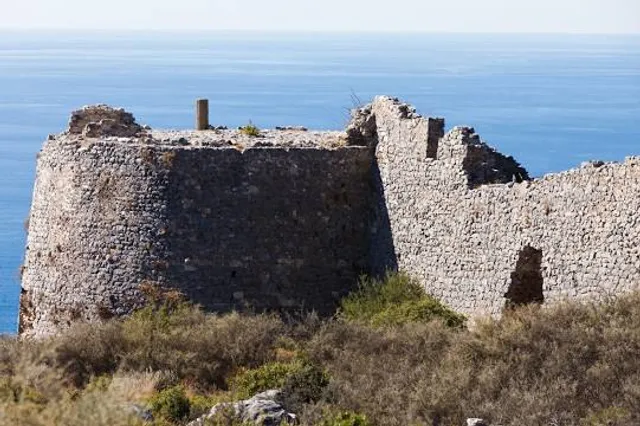
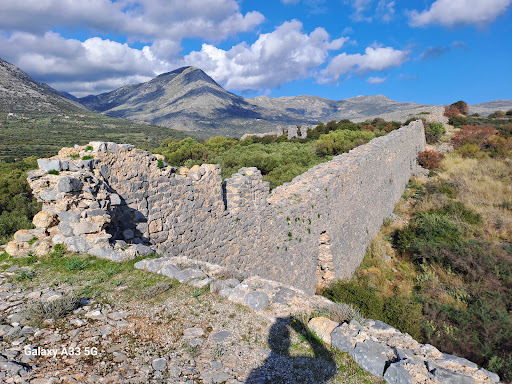
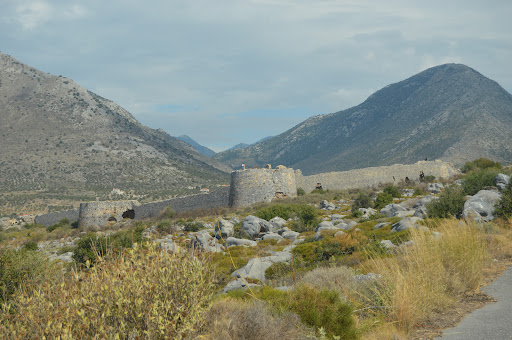
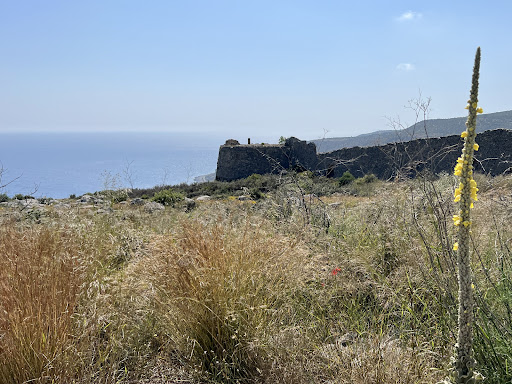
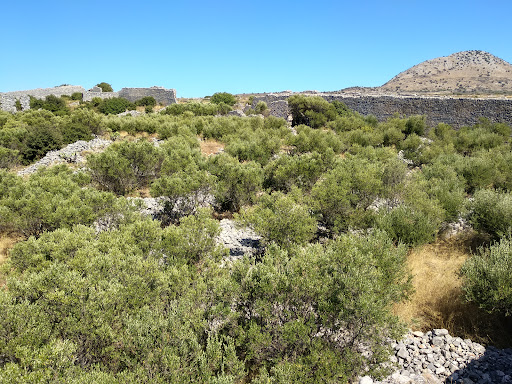
This Ottoman construct was hastily built and poorly designed with masonry that is surprisingly thin for the age of gunpowder. It could be argued that it was sufficient for dealing with the often insurgent yet ill equipped for siegecraft local population who were defiant to the Ottoman rule front day 1. As can be seen in Pylos, the Ottomans could build massive and effective defensive works when they needed to. As a rather recently built fortification, there is enough left to be seen for the entertainment of most visitors. Though unattended, it is quite easily accessible and rather manageable to walk along the eastern wall near the road. Getting deeper within is far more difficult, with scattered rocks hidden under endless reeds and bushes that make every step a troublesome affair. All in all, it is a nice and impressive site for a brief visit along the...
Read morePerched high above the bay of Neo Itilo (Νέο Οίτυλο), Kelefas Castle (Κάστρο Κελεφάς) is an Ottoman castle built in the 1670s to control the Inner Mani region of the Peloponnese. The castle is best approached from the south from Stereos (Σταυρός) as this gentle approach is contrasted with the steep ascent/descent from/to Neo Itilo. The castle itself is in poor repair (after being abandoned about 100 years after it was built). You can still see the scale of the castle - although it is in disrepair and there are plenty of loose parts of it lying around amongst the flora. Is it worth going to? In my opinion yes; but don't make...
Read moreDramatically located ruined castle, providing marvelous view. Open to explore, but full of thick prickly plants making access difficult in summer.
Kastro Kelefas was built in 1679 by the Ottomans, captured in 1685 by the Maniots, with assistance from Venice. The castle remained in Venetian hands for about 30 years; in 1715 the Ottomans recaptured the Peloponnese. Around 1780 the Ottomans abandoned the castle, which...
Read more