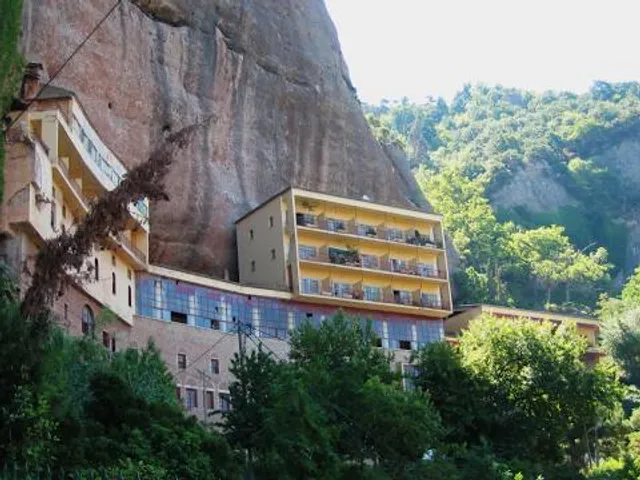
The monastery Mega Spileo (n) (Greek: Μέγα Σπήλαιον, i.e. Great Cave) is situated in the interior of the Peloponnese, in the valley of the river Vouraikos. It is one of the largest monasteries in Greece, and is named for the large natural cavity in the rock on which the church and part of the monastery buildings were built.
Although the exact age is unknown, it is believed that this is the oldest monastery in Greece. According to tradition, it would have been founded in 362 by two pious hermits, Simon and Theodoros, after they found – in the cave - a miraculous Mother of God icon by a shepherdess, Euphrosyne, whose name was whispered by the icon. The icon's work would be the evangelist Luke and carried reportedly miracles. For that reason it is a place of pilgrimage. Like the Agia Lavra played an important role in the uprising against the Turks, and was besieged by the troops of Ibrahim Pasha.
In the Middle Ages would have been one of the richest monasteries in Greece, but it was repeatedly ravaged by fire and always rebuilt again. That happened in 1400, 1640 and 1934. Nearby at Kalavryta, as revenge for the loss of eighty German soldiers, the Nazi troops killed the entire male population. The troops visited in 1943 the monastery. They killed a number of monks, servants and visitors and threw the bodies of the rocks down. Among the victims was the deacon who had saved the miraculous icon from the flames during the fire of 1934.
The monastery church called Panagía Chrysospiliotissa (i.e. "the Mother of God in the Golden Grotto") contains the miraculous icon numerous relics and votive offerings. In the treasury garments and weapons display of freedom fighters, as well as old manuscripts, icons and other valuable religious objects that show how rich the monastery once must have been.
From Wikipedia, the free...
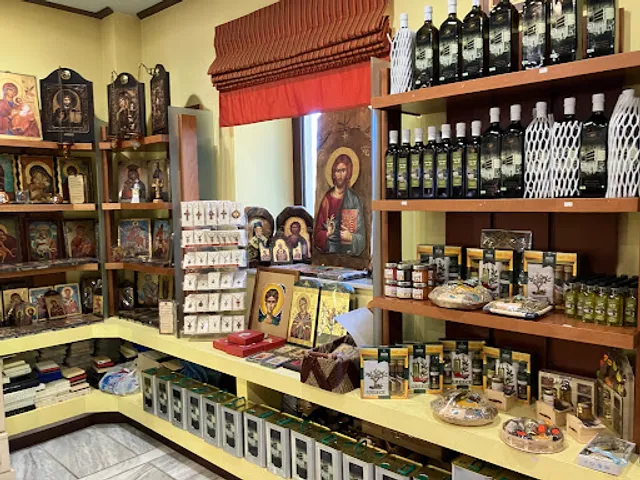
Read moreMuch more was expected. Monastery was open at opening time, that was good. A monk appeared with words Go there and was not seen any more. Some open rooms and stairs led to larger hall, iconostas perpendicular in the middle, with dark further opening, some 8 meters away. As we learned after that, the dark recess held the holy icon, completely unseen in darkness. Open corridor leads past to The big cave, if you know the history, you can tell others, that what I did. On the way back another monk appeared behind ornate and told, Two euro museum. That place was rather nice though unmarked, and monk just watched the group. That's all, except for quite well stocked shop with third silent living soul at cash desk. Cc are accepted. Toilets are not marked and were not accessible. Group consisted of some 30 males of relatively mature age wishing to pay respects to the icon of Panaghia. Nothing of this. Perhaps the coldest orthodox monastery reception in Greece in...
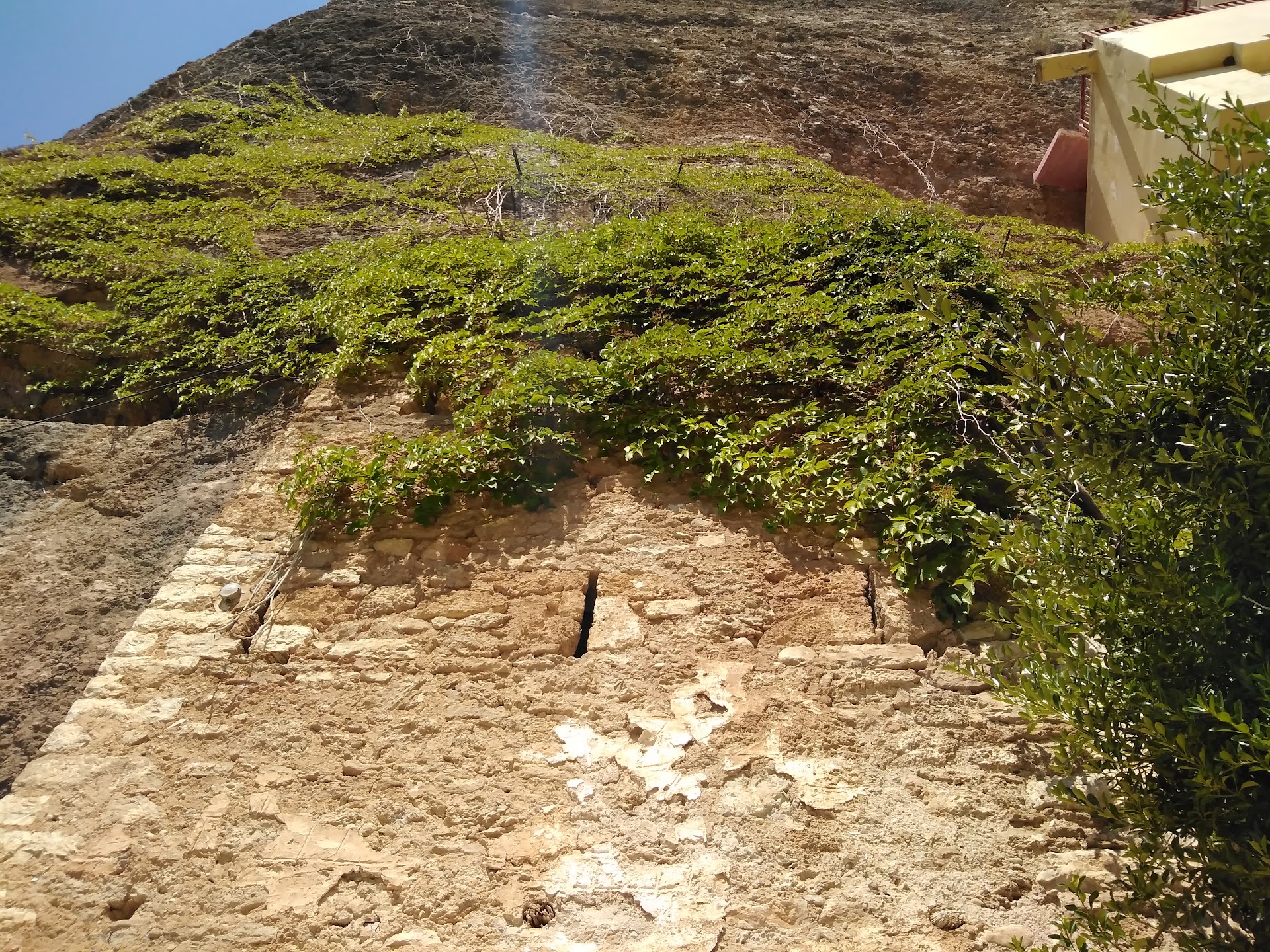
Read moreThis great monastery began as a reclusive abandon for monks seeking solitude and serenity for their prayers. They found this within the impressive cave. Gradually, more arrived, and they started building, and it gradually evolved into the massive complex we see today. At some part, as is most common with monasteries of the late medieval times, the accumulation of wealth (offerings of the pious) and provisions (the produce of the lands of the monastery, cultivated by monks residing within) attracted invaders. Thus, they evolved not only as communities but also as defensive structures. The tower just to the left of the main entrance to the yard tells part of this story. Its height, with arrow slits at all levels, bespeaks of its function with profane eloquence. The overall site is an outstanding natural landscape with wonderful architecture and a magnificent view. It is also easy to visit and requires little time. Therefore, believer or not, it's well...
Read more