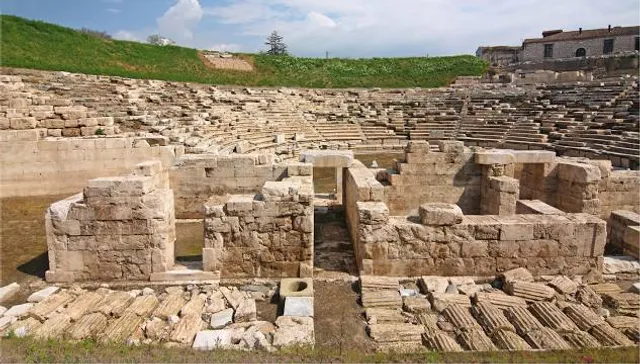
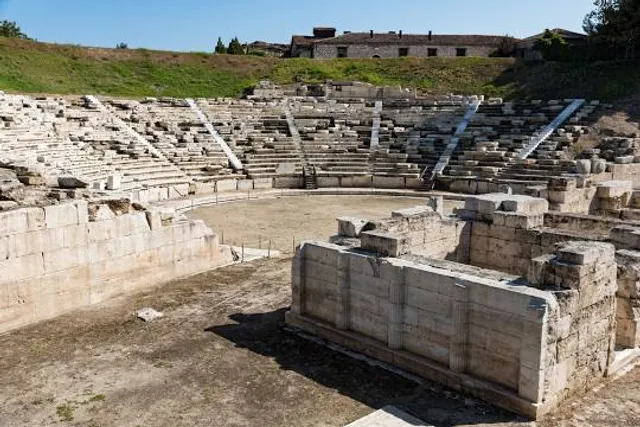
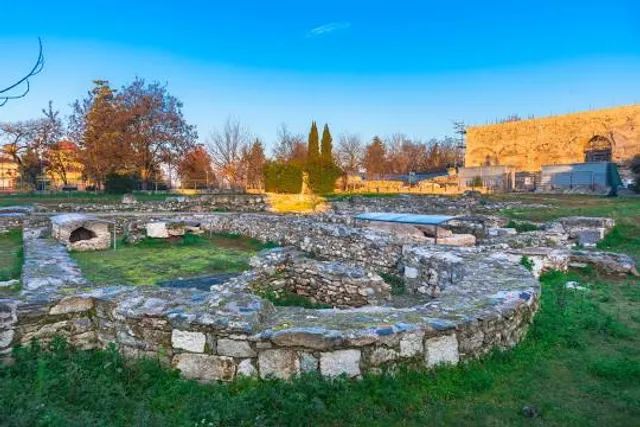
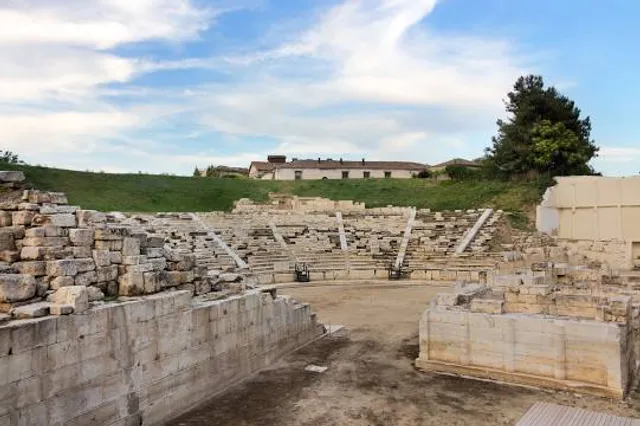
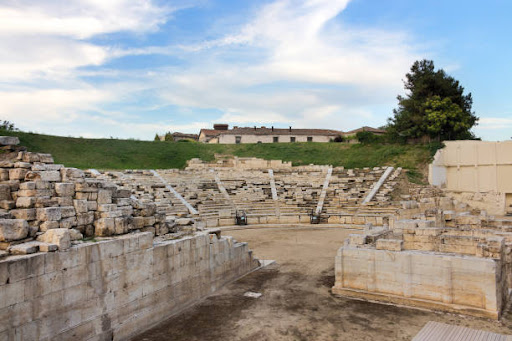
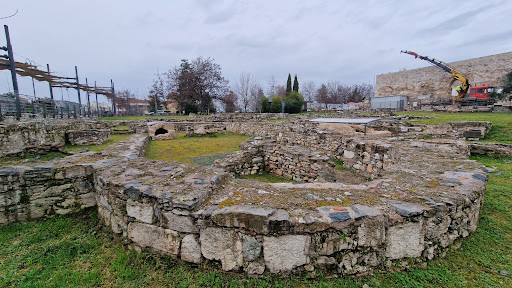
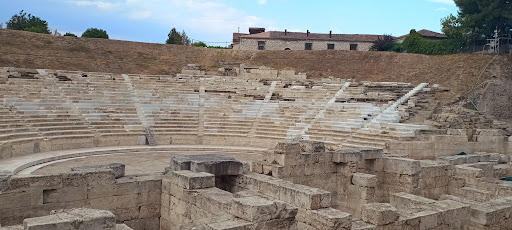
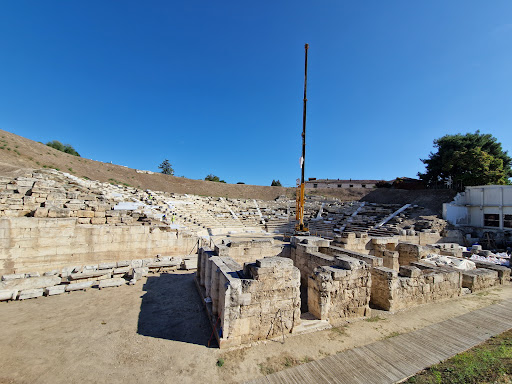
The ancient ruins of Larissa are located in the modern city of Larissa in central Greece. This site offers valuable insights into the history and culture of ancient Thessaly. Larissa was an important ancient city in Thessaly, known for its strategic location and cultural significance. It was a major center of Mycenaean civilization and later became prominent in the classical period. The name "Larissa" is derived from the ancient Greek city that played a significant role in regional politics and trade. Ancient Theater. The ancient theater of Larissa is one of the most well-preserved structures. It was used for theatrical performances and public gatherings. Ancient Agora.The central marketplace and civic center of the city, where economic and social activities took place. Ancient Walls. Remnants of the city’s fortifications that protected the inhabitants from invasions. Sanctuary of Asclepius.An ancient sanctuary dedicated to Asclepius, the god of medicine and healing, reflecting the city’s role in ancient Greek religion and medicine. It’s a good idea to check with local authorities or tourist information for current visiting hours. Best Time to Visit. The best times to visit the ancient ruins are during the spring and autumn when the weather is mild and comfortable. Summer can be quite hot, which might make exploring the ruins less pleasant. Historical Context. In addition to the ruins, you can explore local museums in Larissa that provide further context and artifacts from the ancient city. Local Events. Occasionally, there are guided tours and archaeological events that offer deeper insights into the history of the site. The ancient ruins are situated in the city of Larissa, which is easily accessible by car or public transport from other major cities in Greece. The ruins are well integrated into the modern city, allowing visitors to explore both ancient history and contemporary Greek life. The Larissa Ancient Ruins offer a fascinating glimpse into the past and are a valuable destination for history...
Read moreLa región de la antigua Larisa, al igual que la actual, se extendía en la parte noreste de la llanura de Tesalia, cerca de las orillas del río Peneo (Pinios). A finales del siglo VII a.C., Larisa ostentaba el liderazgo financiero y social de Tesalia, desempeñando un papel clave en la región.
En los siglos VI y V a.C. era la capital de Pelasgia, que componía una de las cuatro tetrarquías tesalias y la cabeza de la unión monetaria de los tesalios. En el siglo IV a.C. las ciudades tesalias se constituyeron en un estado de federación con un papel político-económico, la llamada «Comunidad de los Tesalios», que tenía su sede en Larisa. La soberanía macedonia en la ciudad comienza con la llegada de Filipo II en 357 a.C. y dura hasta 197 a.C., cuando el rey de Macedonia Filipo V fue derrotado por el romano Tito Quintio Flaminio en la «Batalla de Cinoscéfalas». La presencia romana en la región de Tesalia se remonta a épocas muy tempranas, desde los primeros años del siglo II a.C.
Desde el principio, las autoridades romanas se interesaron por la organización de esta vasta región geográfica y bajo su dominio se establecieron cinco «unidades regionales» (Tesalios, Magnetes, Perrhaebi, Ainis y Oitanos), cuyo número se redujo progresivamente a dos, los Tesalios y Magnetes. Larisa parece haber sido la ciudad más importante de las cuatro ciudades (Larisa, Demetrias, Thebae Phtioticae e Ypati) contenidas en las dos unidades regionales, también la conocida capital de la nueva «Unidad Tesalia».
Durante el Imperio Romano, tanto Larisa como la vasta zona de Tesalia obtuvieron bastantes beneficios debido a la política adoptada, que favorecía a los romanos, e incluso fue proclamada en el año 10 a.C. ciudad Augusta (ciudad noble y respetada) por Octavio Augusto. Tras su mandato, la ciudad decayó gradualmente hasta convertirse en una ciudad insignificante del Imperio Romano. Además, la infame unidad tesalia pierde poco a poco su fuerza y adquiere un papel más bien decorativo.
En la colina de la Fortaleza, además del Teatro Antiguo, se encontraban el templo de Atenea, los templos de Zeus Omoloos, de Zeus Thauliou, de Artemisa Throsias, de Artemisa Eilitheias, de Artemisa Vendidos (en el teatro antiguo), de Hércules de donde derivó el origen de Aleuadae (de Larisa). Aún más cerca del Teatro se alzaba el templo de Dioniso, conocido como Karpios. Todos estos templos constituyen un gran conjunto monumental, que se encuentra en el lado más atractivo de la ciudadela y del mercado libre, parte integrante del cual componía el propio teatro.
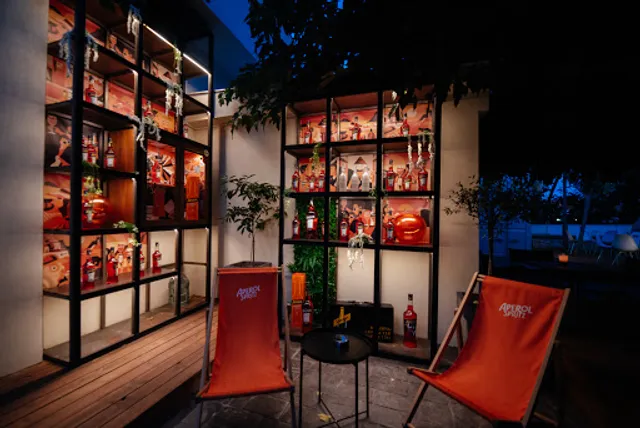
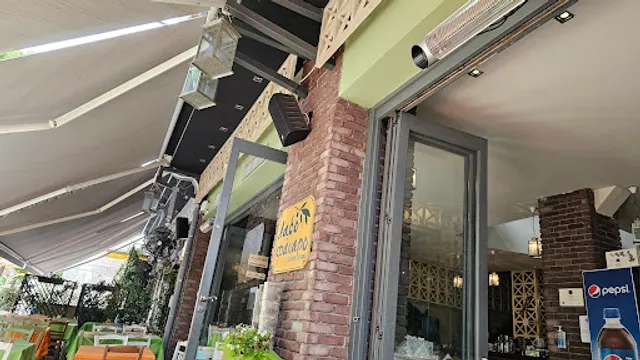
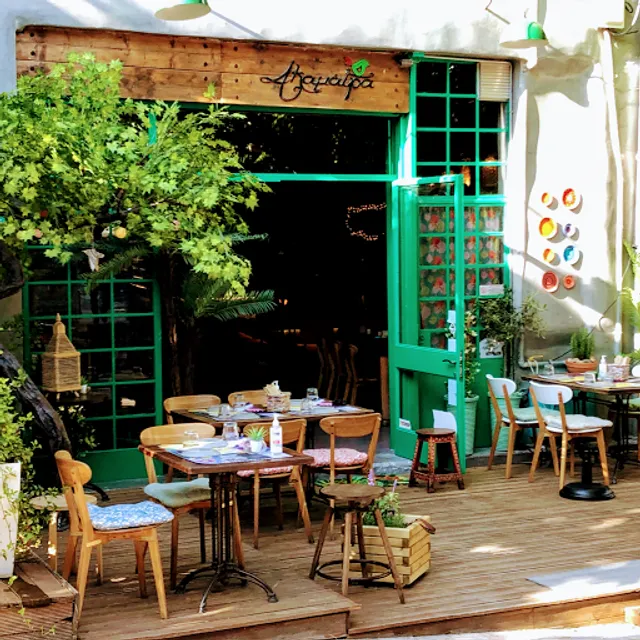
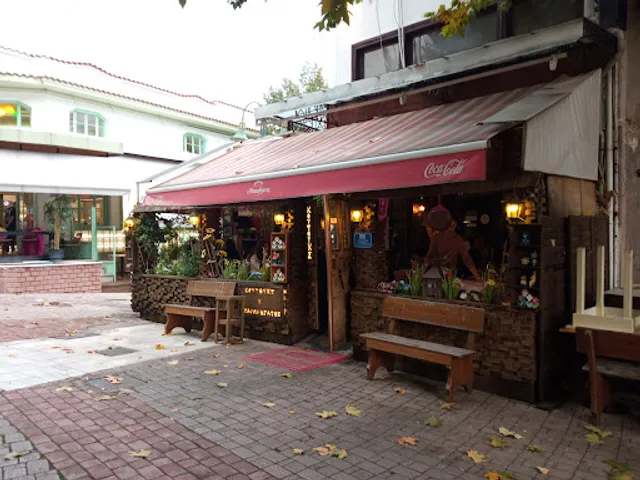
Hay varias ruinas que se pueden contemplar en esta zona aunque la mayoría son de época romana-bizantina. Se encuentran una al lado de la otra. Y hay un restoran-bar muy llamativo justo en la cima de la acrópolis.
Si te interesa conocer mas acerca de Larisa, Tesalia y el mundo griego antiguo te invito a pasar por mi YT donde dedico videos mostrando y contando todo esto :) Así me encuentras: Tomas...
Read moreΠρόσφατα επισκέφθηκα αυτόν τον αρχαιολογικό χώρο και παρατήρησα τις προσπάθειες που γίνονται για την αξιοποίηση και την προβολή του. Είναι εμφανές ότι έχει γίνει σημαντική δουλειά για να καταστεί ο χώρος προσβάσιμος και ενημερωτικός για τους επισκέπτες.
Ωστόσο, φαίνεται ότι χρειάζεται ακόμα περισσότερη δουλειά για να φτάσει ο χώρος στο πλήρες δυναμικό του. Παρόλο που οι πληροφορίες και η σήμανση είναι επαρκείς, η συντήρηση και η περαιτέρω ανάδειξη ορισμένων τμημάτων του χώρου θα μπορούσε να βελτιωθεί.
Η επίσκεψη στον αρχαιολογικό αυτό χώρο παραμένει μια ενδιαφέρουσα εμπειρία, ιδιαίτερα για τους λάτρεις της ιστορίας και της αρχαιολογίας. Παρέχει μια πολύτιμη ευκαιρία να δει κανείς από κοντά σημαντικά ευρήματα και να μάθει για το παρελθόν της περιοχής. Με περισσότερη δουλειά και φροντίδα, αυτός ο χώρος έχει το δυναμικό να γίνει ακόμα πιο εντυπωσιακός και...
Read more