HTML SitemapExplore

Samadhi Buddha Statue — Attraction in Sri Lanka

Name
Samadhi Buddha Statue
Description
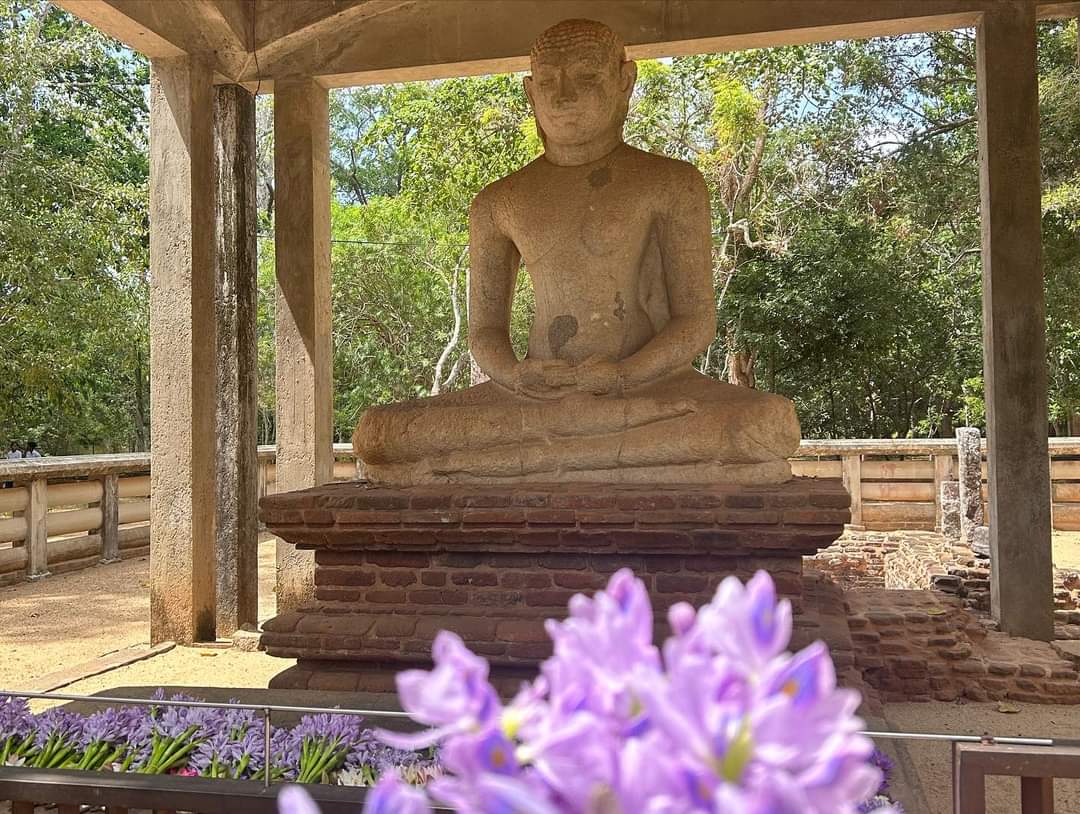
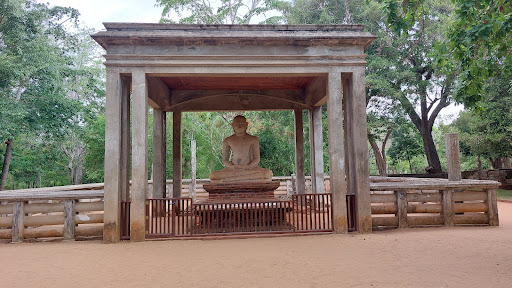
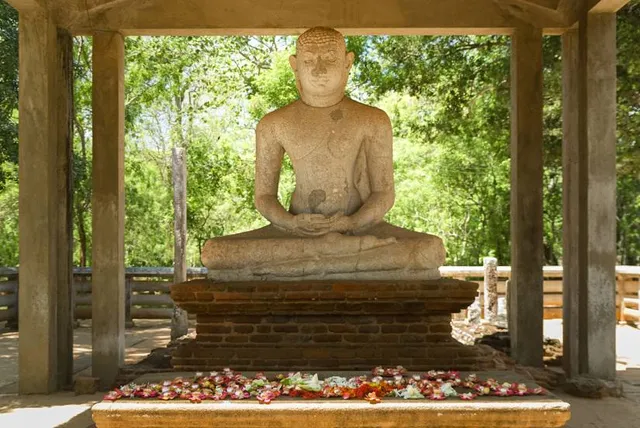
The Samadhi Buddha is a famous statue situated at Mahamevnāwa Park in Anuradhapura, Sri Lanka. The Buddha is depicted in the position of the Dhyana Mudra, the posture of meditation associated with his first Enlightenment. This statue is 7 feet 3 inches in height and carved from dolomite marble.
Nearby attractions
Kuttam Pokuna
9CC2+9FV, Anuradhapura, Sri Lanka
Abhayagiri Museum | අභයගිරි කෞතුකාගාරය
998V+HXV, Anuradhapura, Sri Lanka
Yathuru Pokuna (Circular Pond)
999W+862, Anuradhapura, Sri Lanka
Anuradhapura Moonstone
99CR+HQW, B341, Anuradhapura, Sri Lanka
Lankaramaya | ලංකාරාමය
Lankarama Dagoba, Lankarama Rd, Anuradhapura, Sri Lanka
Rathna Prasadaya & Guardstone - පොහොය ගෙය සහ මුරගල
99CR+5FW Abhayagiri Complex, Anuradhapura, Sri Lanka
Ath Pokuna
999R+97H, Watawandana Rd, Anuradhapura, Sri Lanka
Main Refectory of Abayagiri Monastery - අභයගිරි ප්‍රධාන දාන ශාලාව
Main Refectory of Abayagiri Monastery, Anuradhapura, Sri Lanka
ධාතු මන්දිරය - Relic House
Abayagiriya Stupa, Watawandana Rd, Anuradhapura, Sri Lanka
Samadhi Buddha Statue සමාධි බුද්ධ ප්‍රතිමාව
999R+R96, B341, Anuradhapura, Sri Lanka
Nearby restaurants
Nearby hotels
Punkalasa Tourist Lodge
111, Twin Ponds, Anuradhapura, Sri Lanka
Rajinka Rest
9C93+F9V, Anuradhapura, Sri Lanka
Green shield Resort
99GX+PMX, B509, Anuradhapura, Sri Lanka
Cadjan Sacred
996W+VQJ, Cadjan Sacred, Balagalle Estate, Anula Mawatha, Anuradhapura 50000, Sri Lanka
Related posts
Keywords
Samadhi Buddha Statue tourism.Samadhi Buddha Statue hotels.Samadhi Buddha Statue bed and breakfast. flights to Samadhi Buddha Statue.Samadhi Buddha Statue attractions.Samadhi Buddha Statue restaurants.Samadhi Buddha Statue travel.Samadhi Buddha Statue travel guide.Samadhi Buddha Statue travel blog.Samadhi Buddha Statue pictures.Samadhi Buddha Statue photos.Samadhi Buddha Statue travel tips.Samadhi Buddha Statue maps.Samadhi Buddha Statue things to do.
Samadhi Buddha Statue things to do, attractions, restaurants, events info and trip planning
Samadhi Buddha Statue
Sri LankaNorth Central ProvinceSri LankaSamadhi Buddha Statue

Basic Info

Samadhi Buddha Statue

999X+X73, Anuradhapura, Sri Lanka
4.8(1.0K)
Open 24 hours
Save
spot

Ratings & Description

Info

The Samadhi Buddha is a famous statue situated at Mahamevnāwa Park in Anuradhapura, Sri Lanka. The Buddha is depicted in the position of the Dhyana Mudra, the posture of meditation associated with his first Enlightenment. This statue is 7 feet 3 inches in height and carved from dolomite marble.

Cultural
Accessibility
attractions: Kuttam Pokuna, Abhayagiri Museum | අභයගිරි කෞතුකාගාරය, Yathuru Pokuna (Circular Pond), Anuradhapura Moonstone, Lankaramaya | ලංකාරාමය, Rathna Prasadaya & Guardstone - පොහොය ගෙය සහ මුරගල, Ath Pokuna, Main Refectory of Abayagiri Monastery - අභයගිරි ප්‍රධාන දාන ශාලාව, ධාතු මන්දිරය - Relic House, Samadhi Buddha Statue සමාධි බුද්ධ ප්‍රතිමාව, restaurants:
logoLearn more insights from Wanderboat AI.

Plan your stay

hotel
Pet-friendly Hotels in Sri Lanka
Find a cozy hotel nearby and make it a full experience.
hotel
Affordable Hotels in Sri Lanka
Find a cozy hotel nearby and make it a full experience.
hotel
The Coolest Hotels You Haven't Heard Of (Yet)
Find a cozy hotel nearby and make it a full experience.
hotel
Trending Stays Worth the Hype in Sri Lanka
Find a cozy hotel nearby and make it a full experience.

Reviews

Nearby attractions of Samadhi Buddha Statue

Kuttam Pokuna

Abhayagiri Museum | අභයගිරි කෞතුකාගාරය

Yathuru Pokuna (Circular Pond)

Anuradhapura Moonstone

Lankaramaya | ලංකාරාමය

Rathna Prasadaya & Guardstone - පොහොය ගෙය සහ මුරගල

Ath Pokuna

Main Refectory of Abayagiri Monastery - අභයගිරි ප්‍රධාන දාන ශාලාව

ධාතු මන්දිරය - Relic House

Samadhi Buddha Statue සමාධි බුද්ධ ප්‍රතිමාව

Kuttam Pokuna

Kuttam Pokuna

4.7

(128)

Open 24 hours
Click for details
Abhayagiri Museum | අභයගිරි කෞතුකාගාරය

Abhayagiri Museum | අභයගිරි කෞතුකාගාරය

4.5

(205)

Open 24 hours
Click for details
Yathuru Pokuna (Circular Pond)

Yathuru Pokuna (Circular Pond)

4.9

(15)

Open 24 hours
Click for details
Anuradhapura Moonstone

Anuradhapura Moonstone

4.8

(334)

Open 24 hours
Click for details

Things to do nearby

Tour Anuradhapura with a local tour guide
Fri, Jan 9 • 8:30 AM
Anuradhapura, North Central Province -, Sri Lanka
View details
Enjoy a Private Guided Tour in Anuradhapura
Fri, Jan 9 • 12:00 AM
Anuradhapura, North Central Province 00000, Sri Lanka
View details
Guided Excursion to Anuradhapura & Mihintale
Fri, Jan 9 • 12:00 AM
Anuradhapura, North Central Province 50000, Sri Lanka
View details
Get the Appoverlay
Get the AppOne tap to find yournext favorite spots!
Wanderboat LogoWanderboat

Your everyday Al companion for getaway ideas

CompanyAbout Us
InformationAI Trip PlannerSitemap
SocialXInstagramTiktokLinkedin
LegalTerms of ServicePrivacy Policy

Get the app

© 2025 Wanderboat. All rights reserved.

Reviews of Samadhi Buddha Statue

4.8
(1,035)
avatar
5.0
6y

The Samadhi Statue (Samadhi means in deep meditation) is a statue situated at Mahamevnawa Park in Anuradhapura, Sri Lanka. This is a work of an anonymous master-sculptor of the Anuradhapura period who has breathed life into a solid rock

The road goes through the site of the 11th century palace of king Vijayabahu I to the superb statue of the serene Buddha with an expression depicting 'extinction of feeling and compassion'. Roofed to protect it form the weather, it probably dates form the 3rd century AD.

The Buddha is depicted in the position of the Dhyana Mudra, the posture of meditation associated with his first Enlightenment, also called Nirvana. Whether the Buddha's Enlightenment was the experience technically called Samadhi, or some other phenomenon, may depend upon the philosophical allegiance of the believer. In the Dhyana Mudra the Buddha sits cross - legged with his upturned palms placed one over the other on his lap. This position is universally known throughout the Buddhist world, and this statue is therefore one of the most typical pieces of Buddhist sculpture. It is not to be confused with the very similar "Earth-Touching Mudra", which depicts the simple action the Buddha took to fend off the illusions projected by Mara, who was desperate to prevent the Buddha from realizing that his, Mara's, projections, and with them the entire world, are an illusion.

Samadhi Buddha statue is considered one of the best crafts made during the Anuradhapura era . This Samadhi statue is one of the eight sacred places (Atamasthana) at Anuradhapura. By a single glance at it, the statue has the capability to throw away ones agitation and to winds down the mind.

The statue is made up of granite and is considered more than 8 feet (2.4 m) in height. It is also believed that the eyes of the statue were impressed with precious stones as they are hollow. The characteristic feature of this great ancient craft is that it gives three different emotions when looking at the face of the statue from front, left side and from right side.

When someone looks at the face of the Samadhi Buddha statue from the right side, it shows a slight sadness and from the left side a slight smile indicating happiness, while from the front it gives neutral feelings. Buddhism is a philosophy that teaches the people to accept sadness and joy as normal occurrings in their lives and it teaches people not to be overridden by those feelings. Some think, the expression change as the sun's light moves across it.

Samadhi Statue is said to belong to the Abhayagiri period of the 3rd or 4th century of Sri Lanka’s history. The statue was found in 1888 and there was damage to the nose which has been now reconstructed. But still, the reconstruction has given some artificial appearance to the face which indicates, how brilliant and precise the ancient stone craftsmanship was during that ancient Anuradhapura era which was many centuries back, by appreciating the fact that it is difficult even to be replaced it by modern high technologies.

The popularity of the present statue is mostly due to late Indian Prime minister Sri Jawaharlal Nehru who found great solace in meditating looking at a picture of this statue during the period he was imprisoned. Jawaharlal Nehru admired it when he first saw the statue in 1931. He was so enthralled by this image that he is said to have kept a photograph of the statue in his prison cell from which he drew inspiration while serving a prison sentence during the British Raj.

Benjamin Rawland, in his book "Art and Architecture of India" describes the statue as, "The perfect embodiment of the idea of Samadhi is conveyed through the very simplicity of conception; the perfect material equilibrium of the figure connotes the perfect mental state of the Sakyamuni (Gautama Buddha) through the massive stability of the triangular base formed by the inter locked legs mounted by the erect column body which supports the perfectly impassive...

   Read more
avatar
5.0
2y

Samadhi Buddha Statues, Anuradhapura, Sri Lanka.

Many archeologists including Prof. Paranawithana believe that Buddha statues have been created in India for the first time and influenced Sri Lankan sculpture and the earliest statues can be seen in the country only after 2nd or 3rd Century AD. Quoting literary evidence, Mahawansa and Buddhist commentaries, some other scholars Including MH Sirisoma and Charls Godakumbura former DGs of Dept. of Archeology, DT Devendra and Martin Wickramasingha believe, that Sri Lankan Buddha statues have been created in Sri Lanka before India or simultaneously. To support this opinion they say that the arrival of Sri Maha Bodhi, various arts and craft were introduced to Sri Lanka. Mahawansa mentions that during the King Dewanam Piyatissa period a granite statue (Urusilapatima) was placed at the Thuprama premises. At the beginning, people may have created Buddha statues with perishable material such as clay or wood. Several literature sources mention about Buddha statues from the 2nd C. BC. However this opinion has not been established yet. The earliest Buddha statues are found in Mahailuppalama made out of marble or lime stones and in Ruwanweliseya, which belong to the 2nd Century AD. Both are upright statues. Archeologists believe that Sinhalese artists have created this statue having the instructions of Andra artists and the material. There are records that in the later period, the eyes of Buddha statues were adorned with gems and gold gilded.

"Smadhi Buddha Statue" from India? Sitting posture or the psychological implications of the Smadhi or Anuradhapura Buddha image, contradict all such speculations. “In Ceylon the making of the Buddha Image developed not as a commercial art but as a religious art under the guidance of monks and sculptors who derived inspiration from their devotional worship. Among the old Buddha images of Ceylon there is none that represents Saranath or ornamental Matura type. Ceylon monks seem to have conservatively and fiercely stuck to their austere conception of the iconography of the Buddhas Image ”.

"The Samadhi or Anuradhapura Buddha Statue easily surpasses the Buddhagaya image in representing in visual form the implications of the Buddhahood”, Martin Wickrakasingha - 1968.

Early Anuradhapura period (2nd C AD to 5th C AD), Sri Lankan sculptor has shown his ability to create Buddha statues, which depicted the Budhha’s sublime qualities such as serenity, compassion, loving kindness, and deep meditation in a very simple manner. The facial expression is very effective.

According to the Archaeologist, "Samadhi Buddha Statue" depicts following Main features.

Robe covers single shoulder No pleats of the robe and it is shown by just a line in the early period Full round hair with wide forehead Facial expression of compassion, kindness and deep meditation, serenity and spiritual purity. Deep Meditation Posture

This is the period that the Sri Lankan Buddha statues started to show the Sinhalesevtradition. What the Sri Lankan sculptor wanted was not to follow the texts on iconography to the letter but to show sublime qualities...

   Read more
avatar
5.0
46w

Lying between the gigantic Abhayagiriya Stupa and the Kuttam Pokuna (Twin Ponds) belonging to the ancient Abhayagiri Monastery, the Samadhi Statue is considered one of the greatest works of sculptural art of the early period of Anuradhapura era. It is thought to be done during the 3rd or the 4th century.

It is made out of dolomite marble and stands 7 feet 3 inches (2.21 meters) in height. This statue was found in the present location in 1886 fallen to the ground with damages to the nose. It was then erected and the nose was reconstructed unsuccessfully.

In 1914, it was found damaged by treasure hunters and re-constructed again which still was eye sore.

The statue’s eyes are hollow indicating they were impressed with crystal or precious stones. When this area was excavated it was clear that this was one of 4 statues placed around the Bodhi tree growing here. During excavations in 1960, the Bodhighara (Bodhi tree) was discovered including an Asanagala and a Sri Pathul gala. Of the 4 seated images, the one facing north has survived. There are a few fragments of another one on the pedestal facing South. It is quite possible that the other two had been removed to another temple at a later date.

The Samadhi Statute is carved from a single rock. A thin body-hugging robe without any visible folds covering only the left folder is carved from the rock. The right leg lies over the left leg with foot palms facing upwards in the Veerasana Posture. There is no urna roma at the forehead of the Buddha but the hair is carved in snail-like curls.

It is said that when you look at the face of the statue from three sides they show 3 different features. Looking at the profile of the face from left and right they show a slight sadness and a slightly smiling face on the other. Looking from the front, the face shows neutral features.

Today this statue is covered by a concrete structure which has somewhat destroyed its beauty. Even the reconstruction of the broken nose has not been a success which looks very artificial.

Next to the Samadhi statue are ruins of an image house which is called Bodhisattva Image House. According to Mahavamsa, the Great Chronicle of Sri Lanka, it is said that King Dhatusena (459-477) built an image house for the Maithree Bodhisattva left to the Abhayagiriya Bodhi Tree Shrine and decorated with royal garments. It is believed these remains are the image house built by King Dhatusena. A limestone Bodhisattva image has been found buried in the rubble which has been dated to the...

   Read more
Page 1 of 7
Previous
Next

Posts

Dasun TharangaDasun Tharanga
Samadhi Buddha Statues, Anuradhapura, Sri Lanka. Many archeologists including Prof. Paranawithana believe that Buddha statues have been created in India for the first time and influenced Sri Lankan sculpture and the earliest statues can be seen in the country only after 2nd or 3rd Century AD. Quoting literary evidence, Mahawansa and Buddhist commentaries, some other scholars Including MH Sirisoma and Charls Godakumbura former DGs of Dept. of Archeology, DT Devendra and Martin Wickramasingha believe, that Sri Lankan Buddha statues have been created in Sri Lanka before India or simultaneously. To support this opinion they say that the arrival of Sri Maha Bodhi, various arts and craft were introduced to Sri Lanka. Mahawansa mentions that during the King Dewanam Piyatissa period a granite statue (Urusilapatima) was placed at the Thuprama premises. At the beginning, people may have created Buddha statues with perishable material such as clay or wood. Several literature sources mention about Buddha statues from the 2nd C. BC. However this opinion has not been established yet. The earliest Buddha statues are found in Mahailuppalama made out of marble or lime stones and in Ruwanweliseya, which belong to the 2nd Century AD. Both are upright statues. Archeologists believe that Sinhalese artists have created this statue having the instructions of Andra artists and the material. There are records that in the later period, the eyes of Buddha statues were adorned with gems and gold gilded. "Smadhi Buddha Statue" from India? Sitting posture or the psychological implications of the Smadhi or Anuradhapura Buddha image, contradict all such speculations. “In Ceylon the making of the Buddha Image developed not as a commercial art but as a religious art under the guidance of monks and sculptors who derived inspiration from their devotional worship. Among the old Buddha images of Ceylon there is none that represents Saranath or ornamental Matura type. Ceylon monks seem to have conservatively and fiercely stuck to their austere conception of the iconography of the Buddhas Image ”. "The Samadhi or Anuradhapura Buddha Statue easily surpasses the Buddhagaya image in representing in visual form the implications of the Buddhahood”, Martin Wickrakasingha - 1968. Early Anuradhapura period (2nd C AD to 5th C AD), Sri Lankan sculptor has shown his ability to create Buddha statues, which depicted the Budhha’s sublime qualities such as serenity, compassion, loving kindness, and deep meditation in a very simple manner. The facial expression is very effective. According to the Archaeologist, "Samadhi Buddha Statue" depicts following Main features. - Robe covers single shoulder - No pleats of the robe and it is shown by just a line in the early period - Full round hair with wide forehead - Facial expression of compassion, kindness and deep meditation, serenity and spiritual purity. - Deep Meditation Posture This is the period that the Sri Lankan Buddha statues started to show the Sinhalesevtradition. What the Sri Lankan sculptor wanted was not to follow the texts on iconography to the letter but to show sublime qualities of the Buddha.
Prasad LokubalasuriyaPrasad Lokubalasuriya
Lying between the gigantic Abhayagiriya Stupa and the Kuttam Pokuna (Twin Ponds) belonging to the ancient Abhayagiri Monastery, the Samadhi Statue is considered one of the greatest works of sculptural art of the early period of Anuradhapura era. It is thought to be done during the 3rd or the 4th century. It is made out of dolomite marble and stands 7 feet 3 inches (2.21 meters) in height. This statue was found in the present location in 1886 fallen to the ground with damages to the nose. It was then erected and the nose was reconstructed unsuccessfully. In 1914, it was found damaged by treasure hunters and re-constructed again which still was eye sore. The statue’s eyes are hollow indicating they were impressed with crystal or precious stones. When this area was excavated it was clear that this was one of 4 statues placed around the Bodhi tree growing here. During excavations in 1960, the Bodhighara (Bodhi tree) was discovered including an Asanagala and a Sri Pathul gala. Of the 4 seated images, the one facing north has survived. There are a few fragments of another one on the pedestal facing South. It is quite possible that the other two had been removed to another temple at a later date. The Samadhi Statute is carved from a single rock. A thin body-hugging robe without any visible folds covering only the left folder is carved from the rock. The right leg lies over the left leg with foot palms facing upwards in the Veerasana Posture. There is no urna roma at the forehead of the Buddha but the hair is carved in snail-like curls. It is said that when you look at the face of the statue from three sides they show 3 different features. Looking at the profile of the face from left and right they show a slight sadness and a slightly smiling face on the other. Looking from the front, the face shows neutral features. Today this statue is covered by a concrete structure which has somewhat destroyed its beauty. Even the reconstruction of the broken nose has not been a success which looks very artificial. Next to the Samadhi statue are ruins of an image house which is called Bodhisattva Image House. According to Mahavamsa, the Great Chronicle of Sri Lanka, it is said that King Dhatusena (459-477) built an image house for the Maithree Bodhisattva left to the Abhayagiriya Bodhi Tree Shrine and decorated with royal garments. It is believed these remains are the image house built by King Dhatusena. A limestone Bodhisattva image has been found buried in the rubble which has been dated to the 5th century.
THISARA NEOTHISARA NEO
Lying between the gigantic Abhayagiriya Stupa and the Kuttam Pokuna (Twin Ponds) belonging to the ancient Abhayagiri Monastery, the Samadhi Statue is considered one of the greatest works of sculptural art of the early period of Anuradhapura era. It is thought to be done during the 3rd or the 4th century. It is made out of dolomite marble and stands 7 feet 3 inches (2.21 meters) in height. This statue was found in the present location in 1886 fallen to the ground with damages to the nose. It was then erected and the nose was reconstructed unsuccessfully. In 1914, it was found damaged by treasure hunters and re-constructed again which still was eye sore. The statue’s eyes are hollow indicating they were impressed with crystal or precious stones. When this area was excavated it was clear that this was one of 4 statues placed around the Bodhi tree growing here. During excavations in 1960, the Bodhighara (Bodhi tree) was discovered including an Asanagala and a Sri Pathul gala. Of the 4 seated images, the one facing north has survived. There are a few fragments of another one on the pedestal facing South. It is quite possible that the other two had been removed to another temple at a later date. The Samadhi Statute is carved from a single rock. A thin body-hugging robe without any visible folds covering only the left folder is carved from the rock. The right leg lies over the left leg with foot palms facing upwards in the Veerasana Posture. There is no urna roma at the forehead of the Buddha but the hair is carved in snail-like curls. It is said that when you look at the face of the statue from three sides they show 3 different features. Looking at the profile of the face from left and right they show a slight sadness and a slightly smiling face on the other. Looking from the front, the face shows neutral features. Today this statue is covered by a concrete structure which has somewhat destroyed its beauty. Even the reconstruction of the broken nose has not been a success which looks very artificial. Next to the Samadhi statue are ruins of an image house which is called Bodhisattva Image House. According to Mahavamsa, the Great Chronicle of Sri Lanka, it is said that King Dhatusena (459-477) built an image house for the Maithree Bodhisattva left to the Abhayagiriya Bodhi Tree Shrine and decorated with royal garments. It is believed these remains are the image house built by King Dhatusena. A limestone Bodhisattva image has been found buried in the rubble which has been dated to the 5th century.
See more posts
See more posts
hotel
Find your stay

Pet-friendly Hotels in Sri Lanka

Find a cozy hotel nearby and make it a full experience.

Samadhi Buddha Statues, Anuradhapura, Sri Lanka. Many archeologists including Prof. Paranawithana believe that Buddha statues have been created in India for the first time and influenced Sri Lankan sculpture and the earliest statues can be seen in the country only after 2nd or 3rd Century AD. Quoting literary evidence, Mahawansa and Buddhist commentaries, some other scholars Including MH Sirisoma and Charls Godakumbura former DGs of Dept. of Archeology, DT Devendra and Martin Wickramasingha believe, that Sri Lankan Buddha statues have been created in Sri Lanka before India or simultaneously. To support this opinion they say that the arrival of Sri Maha Bodhi, various arts and craft were introduced to Sri Lanka. Mahawansa mentions that during the King Dewanam Piyatissa period a granite statue (Urusilapatima) was placed at the Thuprama premises. At the beginning, people may have created Buddha statues with perishable material such as clay or wood. Several literature sources mention about Buddha statues from the 2nd C. BC. However this opinion has not been established yet. The earliest Buddha statues are found in Mahailuppalama made out of marble or lime stones and in Ruwanweliseya, which belong to the 2nd Century AD. Both are upright statues. Archeologists believe that Sinhalese artists have created this statue having the instructions of Andra artists and the material. There are records that in the later period, the eyes of Buddha statues were adorned with gems and gold gilded. "Smadhi Buddha Statue" from India? Sitting posture or the psychological implications of the Smadhi or Anuradhapura Buddha image, contradict all such speculations. “In Ceylon the making of the Buddha Image developed not as a commercial art but as a religious art under the guidance of monks and sculptors who derived inspiration from their devotional worship. Among the old Buddha images of Ceylon there is none that represents Saranath or ornamental Matura type. Ceylon monks seem to have conservatively and fiercely stuck to their austere conception of the iconography of the Buddhas Image ”. "The Samadhi or Anuradhapura Buddha Statue easily surpasses the Buddhagaya image in representing in visual form the implications of the Buddhahood”, Martin Wickrakasingha - 1968. Early Anuradhapura period (2nd C AD to 5th C AD), Sri Lankan sculptor has shown his ability to create Buddha statues, which depicted the Budhha’s sublime qualities such as serenity, compassion, loving kindness, and deep meditation in a very simple manner. The facial expression is very effective. According to the Archaeologist, "Samadhi Buddha Statue" depicts following Main features. - Robe covers single shoulder - No pleats of the robe and it is shown by just a line in the early period - Full round hair with wide forehead - Facial expression of compassion, kindness and deep meditation, serenity and spiritual purity. - Deep Meditation Posture This is the period that the Sri Lankan Buddha statues started to show the Sinhalesevtradition. What the Sri Lankan sculptor wanted was not to follow the texts on iconography to the letter but to show sublime qualities of the Buddha.
Dasun Tharanga

Dasun Tharanga

hotel
Find your stay

Affordable Hotels in Sri Lanka

Find a cozy hotel nearby and make it a full experience.

Get the Appoverlay
Get the AppOne tap to find yournext favorite spots!
Lying between the gigantic Abhayagiriya Stupa and the Kuttam Pokuna (Twin Ponds) belonging to the ancient Abhayagiri Monastery, the Samadhi Statue is considered one of the greatest works of sculptural art of the early period of Anuradhapura era. It is thought to be done during the 3rd or the 4th century. It is made out of dolomite marble and stands 7 feet 3 inches (2.21 meters) in height. This statue was found in the present location in 1886 fallen to the ground with damages to the nose. It was then erected and the nose was reconstructed unsuccessfully. In 1914, it was found damaged by treasure hunters and re-constructed again which still was eye sore. The statue’s eyes are hollow indicating they were impressed with crystal or precious stones. When this area was excavated it was clear that this was one of 4 statues placed around the Bodhi tree growing here. During excavations in 1960, the Bodhighara (Bodhi tree) was discovered including an Asanagala and a Sri Pathul gala. Of the 4 seated images, the one facing north has survived. There are a few fragments of another one on the pedestal facing South. It is quite possible that the other two had been removed to another temple at a later date. The Samadhi Statute is carved from a single rock. A thin body-hugging robe without any visible folds covering only the left folder is carved from the rock. The right leg lies over the left leg with foot palms facing upwards in the Veerasana Posture. There is no urna roma at the forehead of the Buddha but the hair is carved in snail-like curls. It is said that when you look at the face of the statue from three sides they show 3 different features. Looking at the profile of the face from left and right they show a slight sadness and a slightly smiling face on the other. Looking from the front, the face shows neutral features. Today this statue is covered by a concrete structure which has somewhat destroyed its beauty. Even the reconstruction of the broken nose has not been a success which looks very artificial. Next to the Samadhi statue are ruins of an image house which is called Bodhisattva Image House. According to Mahavamsa, the Great Chronicle of Sri Lanka, it is said that King Dhatusena (459-477) built an image house for the Maithree Bodhisattva left to the Abhayagiriya Bodhi Tree Shrine and decorated with royal garments. It is believed these remains are the image house built by King Dhatusena. A limestone Bodhisattva image has been found buried in the rubble which has been dated to the 5th century.
Prasad Lokubalasuriya

Prasad Lokubalasuriya

hotel
Find your stay

The Coolest Hotels You Haven't Heard Of (Yet)

Find a cozy hotel nearby and make it a full experience.

hotel
Find your stay

Trending Stays Worth the Hype in Sri Lanka

Find a cozy hotel nearby and make it a full experience.

Lying between the gigantic Abhayagiriya Stupa and the Kuttam Pokuna (Twin Ponds) belonging to the ancient Abhayagiri Monastery, the Samadhi Statue is considered one of the greatest works of sculptural art of the early period of Anuradhapura era. It is thought to be done during the 3rd or the 4th century. It is made out of dolomite marble and stands 7 feet 3 inches (2.21 meters) in height. This statue was found in the present location in 1886 fallen to the ground with damages to the nose. It was then erected and the nose was reconstructed unsuccessfully. In 1914, it was found damaged by treasure hunters and re-constructed again which still was eye sore. The statue’s eyes are hollow indicating they were impressed with crystal or precious stones. When this area was excavated it was clear that this was one of 4 statues placed around the Bodhi tree growing here. During excavations in 1960, the Bodhighara (Bodhi tree) was discovered including an Asanagala and a Sri Pathul gala. Of the 4 seated images, the one facing north has survived. There are a few fragments of another one on the pedestal facing South. It is quite possible that the other two had been removed to another temple at a later date. The Samadhi Statute is carved from a single rock. A thin body-hugging robe without any visible folds covering only the left folder is carved from the rock. The right leg lies over the left leg with foot palms facing upwards in the Veerasana Posture. There is no urna roma at the forehead of the Buddha but the hair is carved in snail-like curls. It is said that when you look at the face of the statue from three sides they show 3 different features. Looking at the profile of the face from left and right they show a slight sadness and a slightly smiling face on the other. Looking from the front, the face shows neutral features. Today this statue is covered by a concrete structure which has somewhat destroyed its beauty. Even the reconstruction of the broken nose has not been a success which looks very artificial. Next to the Samadhi statue are ruins of an image house which is called Bodhisattva Image House. According to Mahavamsa, the Great Chronicle of Sri Lanka, it is said that King Dhatusena (459-477) built an image house for the Maithree Bodhisattva left to the Abhayagiriya Bodhi Tree Shrine and decorated with royal garments. It is believed these remains are the image house built by King Dhatusena. A limestone Bodhisattva image has been found buried in the rubble which has been dated to the 5th century.
THISARA NEO

THISARA NEO

See more posts
See more posts