HTML SitemapExplore
logo
Find Things to DoFind The Best Restaurants

Tomb of Mariam-UZ-Zamani — Attraction in Agra

Name
Tomb of Mariam-UZ-Zamani
Description
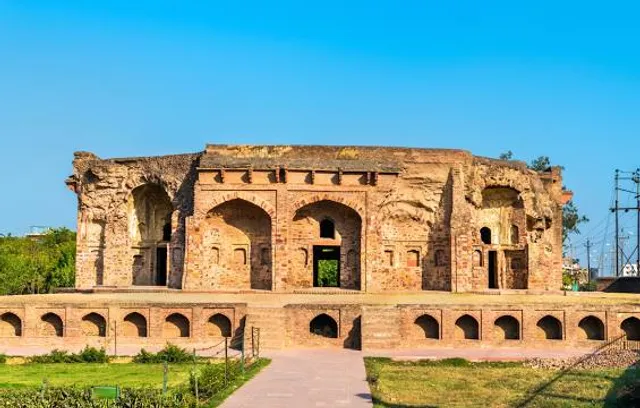
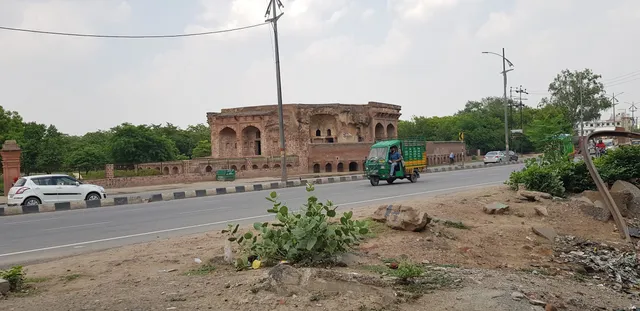
The Tomb of Mariam-uz-Zamani or Mariam's tomb is the mausoleum of Mariam-uz-Zamani, commonly known as Jodha bai, the favorite wife of the Mughal Emperor Akbar.
Nearby attractions
Tomb of Akbar
Tomb of Akbar The Great Area, Sikandra, Agra, Uttar Pradesh 282007, India
Sikandra Fort
6XC2+C53, Tomb of Akbar The Great Area, Sikandra, Agra, Uttar Pradesh 282007, India
The Lodhi Tomb
Tomb of Akbar The Great Area, Sikandra, Agra, Uttar Pradesh 282007, India
Nearby restaurants
Hungrill restaurant and cafe
Near mariam tomb, Sikandra, Agra, Uttar Pradesh 282007, India
Deshi Handi Restaurant
Sikandra Crossing, Radha Nagar, Sikandra, Agra, Uttar Pradesh 282007, India
Shiv Family Rastaurant ( Pure Vegetarian )
6X82+2J5, Bajrang Nagar, Agra, Uttar Pradesh 282007, India
Related posts
Keywords
Tomb of Mariam-UZ-Zamani tourism.Tomb of Mariam-UZ-Zamani hotels.Tomb of Mariam-UZ-Zamani bed and breakfast. flights to Tomb of Mariam-UZ-Zamani.Tomb of Mariam-UZ-Zamani attractions.Tomb of Mariam-UZ-Zamani restaurants.Tomb of Mariam-UZ-Zamani travel.Tomb of Mariam-UZ-Zamani travel guide.Tomb of Mariam-UZ-Zamani travel blog.Tomb of Mariam-UZ-Zamani pictures.Tomb of Mariam-UZ-Zamani photos.Tomb of Mariam-UZ-Zamani travel tips.Tomb of Mariam-UZ-Zamani maps.Tomb of Mariam-UZ-Zamani things to do.
Tomb of Mariam-UZ-Zamani things to do, attractions, restaurants, events info and trip planning
Tomb of Mariam-UZ-Zamani
IndiaUttar PradeshAgraTomb of Mariam-UZ-Zamani

Basic Info

Tomb of Mariam-UZ-Zamani

6W8V+43Q, Mathura Rd, near Pathwari Mandir, Kailash Mode, Sikandra, Agra, Bainpur Mustkil, Uttar Pradesh 282007, India
4.0(465)
Open until 6:00 PM
Save
spot

Ratings & Description

Info

The Tomb of Mariam-uz-Zamani or Mariam's tomb is the mausoleum of Mariam-uz-Zamani, commonly known as Jodha bai, the favorite wife of the Mughal Emperor Akbar.

Cultural
Scenic
Family friendly
Accessibility
attractions: Tomb of Akbar, Sikandra Fort, The Lodhi Tomb, restaurants: Hungrill restaurant and cafe, Deshi Handi Restaurant, Shiv Family Rastaurant ( Pure Vegetarian )
logoLearn more insights from Wanderboat AI.
Open hoursSee all hours
Fri6 AM - 6 PMOpen

Plan your stay

hotel
Pet-friendly Hotels in Agra
Find a cozy hotel nearby and make it a full experience.

hotel
Affordable Hotels in Agra
Find a cozy hotel nearby and make it a full experience.

hotel
The Coolest Hotels You Haven't Heard Of (Yet)
Find a cozy hotel nearby and make it a full experience.

hotel
Trending Stays Worth the Hype in Agra
Find a cozy hotel nearby and make it a full experience.

Reviews

Nearby attractions of Tomb of Mariam-UZ-Zamani

Tomb of Akbar

Sikandra Fort

The Lodhi Tomb

Tomb of Akbar

Tomb of Akbar

4.4

(2.7K)

Open 24 hours
Click for details
Sikandra Fort

Sikandra Fort

4.4

(1.1K)

Open until 7:00 PM
Click for details
The Lodhi Tomb

The Lodhi Tomb

4.1

(26)

Open 24 hours
Click for details

Things to do nearby

Taj Mahal Sunrise tour with Photography &Agra Fort
Sat, Dec 6 • 5:00 AM
Agra, Uttar Pradesh, 282004, India
View details
Private guided sunrise visit to Taj Mahal
Sat, Dec 6 • 5:30 AM
Agra, Uttar Pradesh, 282001, India
View details

Fully Customizable tour of Taj Mahal and Agra Fort
Sat, Dec 6 • 9:00 AM
Dhandhupura, Uttar Pradesh, 282001, India
View details
Nearby restaurants of Tomb of Mariam-UZ-Zamani

Hungrill restaurant and cafe

Deshi Handi Restaurant

Shiv Family Rastaurant ( Pure Vegetarian )

Hungrill restaurant and cafe

Hungrill restaurant and cafe

4.7

(244)

Click for details
Deshi Handi Restaurant

Deshi Handi Restaurant

4.0

(3)

Click for details
Shiv Family Rastaurant ( Pure Vegetarian )

Shiv Family Rastaurant ( Pure Vegetarian )

3.8

(45)

Click for details
Get the Appoverlay
Get the AppOne tap to find yournext favorite spots!
Wanderboat LogoWanderboat

Your everyday Al companion for getaway ideas

CompanyAbout Us
InformationAI Trip PlannerSitemap
SocialXInstagramTiktokLinkedin
LegalTerms of ServicePrivacy Policy

Get the app

© 2025 Wanderboat. All rights reserved.
logo

Posts

Aditya MalaviyaAditya Malaviya
Sometimes, the most memorable places aren’t the ones on every postcard — they’re the ones you stumble upon, tucked away from the chaos of traffic and tour groups. That’s exactly how I felt visiting Mariam’s Tomb in Agra. No crowds. No rush. Just birdsong, early morning sun, and the slow, graceful unfolding of Mughal history. It’s a little tricky to find — the road leading up to it is narrow and a bit bumpy, and honestly, not many locals seemed to know about it when I asked for directions. But that almost added to its hidden-gem charm. When I finally reached the gates, I was greeted by stillness — not the eerie kind, but the kind that wraps around you like a shawl. Peaceful, understated, and timeless. The tomb belongs to Mariam-uz-Zamani, also known as Harka Bai — a Rajput princess from Amber (modern-day Jaipur), and one of the most important women in the Mughal Empire. She was the wife of Emperor Akbar and the mother of Jahangir (Salim), and yet, her tomb is devoid of the pomp and spectacle that marks other royal Mughal monuments. And that’s what makes it even more touching — there’s quiet dignity here, an elegance that doesn’t shout. Interestingly, this wasn’t always a tomb. It was originally a pleasure pavilion built by Sultan Sikander Lodi in 1495 AD, well before the Mughals arrived. It was only in 1623 AD, during Jahangir’s reign, that the structure was transformed into a tomb for his mother. The original baradari (12-doored pavilion) now houses over 40 chambers on the ground floor, many with faint remnants of painted plaster walls — ghostly, but beautiful in their decay. The central cenotaph of Mariam rests on the ground floor, but climb up to the upper level, and you’ll find a marble cenotaph open to the sky, as if deliberately designed to invite the heavens in. The architecture is classic Mughal but not overbearing — red sandstone façades, adorned with finely carved geometric patterns, and topped with octagonal corner towers, each crowned with delicate chhatris (pavilions). It’s restrained, tasteful, and deeply harmonious with the lush gardens that surround it. I went in the early morning, and I highly recommend you do the same. The sunrise light hits the sandstone just right, giving it a soft, amber glow. The only sounds were my footsteps, the rustle of trees, and the occasional cooing of pigeons. What struck me most was how well-maintained the site was, despite being relatively unknown. It felt like a little slice of forgotten history, lovingly preserved for those who take the trouble to look for it. I spent nearly an hour just sitting under one of the shady trees, reading and soaking in the atmosphere. But a word of caution: While the monument's remoteness and quiet is its greatest aspect, please be aware of people, especially young adult boys, hanging around the inside of the monument in small groups, apparently doing nothing much. I found one such group sitting on the stairs leading to the tomb in the basement, and there was something about them I did not like, because of which I did not go ahead and went out instead. If you are with family, especially young children, women or girls, I would suggest you err on the side of caution, despite there being 1-2 guards I saw at the entrance to the monument.
Muhammad Hassan TahirMuhammad Hassan Tahir
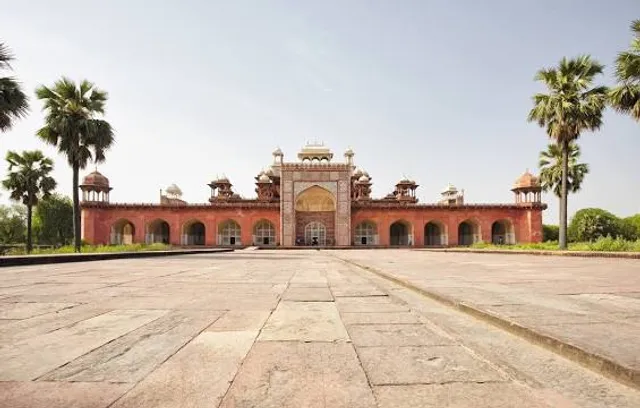
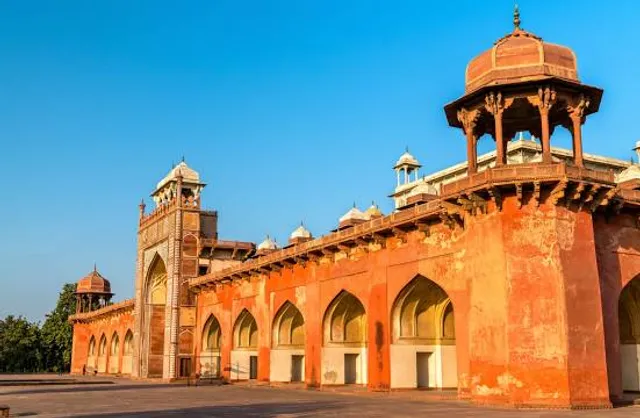
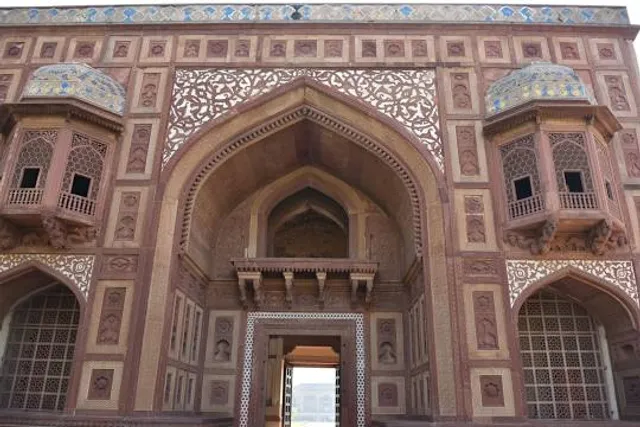
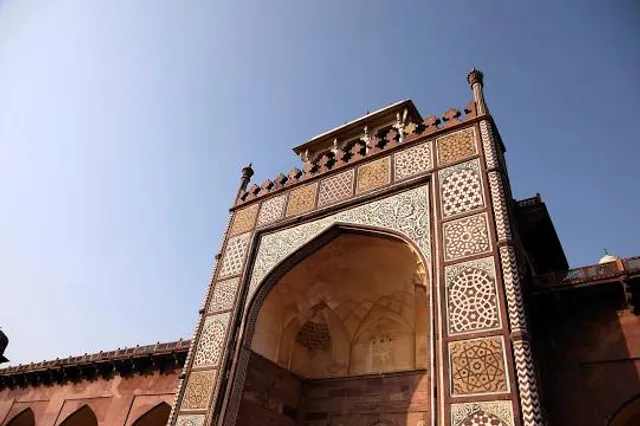
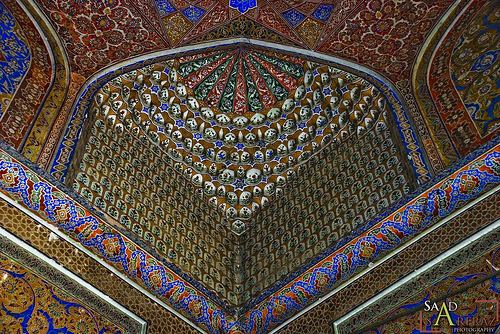
The Tomb of Mariam-uz-Zamani is the mausoleum of Mariam-uz-Zamani, the Queen consort of the Mughal Emperor Akbar.The tomb was built by Jahangir, in memory of his mother Mariam-uz-Zamani.The tomb is located in Sikandra, a suburb of Agra. Heer Kunwari was born a Rajput princess and was also the eldest daughter of Raja Bharmal of Amer. She was married to Emperor Akbar in 1562 CE. She was honoured with the title Mariam-uz-Zamani ("Mary of the Age") after she gave birth to Jahangir.[2][5] [10] She died in Agra in 1623[5] and her son Jahangir built a tomb for her in between 1623 and 1627 CE.The tomb is only a kilometer away from the Tomb of Akbar the Great, the only nearest of all the tombs of his other wives. The red sandstone facade and panels with a variety of decorative designs, such as floral patterns, tell a lot about the former splendor of this tomb. There are chevron patterns in the nook shafts, wine-vases within sunk niches and geometrical floral designs gracing the piers between the arches. The chhatris have beautiful carved columns with hexagonal bases. The stone brackets occupy the spaces just below the chajja, while beautifully carved friezes are above it. And white marble is inlaid underneath the dome. The friezes of the chhaparkhats were originally covered with glazed tiles and have pyramidal roof. Traces of floral paintings can still be seen in the corners that tells about the former beauty of the tomb.
Arun ManoharanArun Manoharan
Recently renovation going on it seems but more maintenance required. Beautiful architecture. The tomb houses the mortal remains of Mariam Zamani, a Rajpt Princess of Amber (Jaipur) and the wife of Emperor Akbar and mother of Jahangir (Salim). The structure was originally a pleasure pavilion under Sikander Lodi who built it in AD 1495. Additions and renovations were made in 1623 AD when this baradari was converted into a tomb. The ground floor consists of some forty chambers built by Sikander Lodi, which bear faint traces of paintings on plastered walls. The centre of the ground floor houses the cenotaph of Mariam. The facades of the baradari had been veneered with red sandstone, which is cut into numerous panels and adorned with geometrical patterns carved in bas-relief. Each quoin of the structure is added with an ornamental octagonal tower. The tower is crowned by a pavilion supported by slender pillars. The upper storey contains the marble cenotaph, which is open to sky.
See more posts
See more posts
hotel
Find your stay

Pet-friendly Hotels in Agra

Find a cozy hotel nearby and make it a full experience.

Sometimes, the most memorable places aren’t the ones on every postcard — they’re the ones you stumble upon, tucked away from the chaos of traffic and tour groups. That’s exactly how I felt visiting Mariam’s Tomb in Agra. No crowds. No rush. Just birdsong, early morning sun, and the slow, graceful unfolding of Mughal history. It’s a little tricky to find — the road leading up to it is narrow and a bit bumpy, and honestly, not many locals seemed to know about it when I asked for directions. But that almost added to its hidden-gem charm. When I finally reached the gates, I was greeted by stillness — not the eerie kind, but the kind that wraps around you like a shawl. Peaceful, understated, and timeless. The tomb belongs to Mariam-uz-Zamani, also known as Harka Bai — a Rajput princess from Amber (modern-day Jaipur), and one of the most important women in the Mughal Empire. She was the wife of Emperor Akbar and the mother of Jahangir (Salim), and yet, her tomb is devoid of the pomp and spectacle that marks other royal Mughal monuments. And that’s what makes it even more touching — there’s quiet dignity here, an elegance that doesn’t shout. Interestingly, this wasn’t always a tomb. It was originally a pleasure pavilion built by Sultan Sikander Lodi in 1495 AD, well before the Mughals arrived. It was only in 1623 AD, during Jahangir’s reign, that the structure was transformed into a tomb for his mother. The original baradari (12-doored pavilion) now houses over 40 chambers on the ground floor, many with faint remnants of painted plaster walls — ghostly, but beautiful in their decay. The central cenotaph of Mariam rests on the ground floor, but climb up to the upper level, and you’ll find a marble cenotaph open to the sky, as if deliberately designed to invite the heavens in. The architecture is classic Mughal but not overbearing — red sandstone façades, adorned with finely carved geometric patterns, and topped with octagonal corner towers, each crowned with delicate chhatris (pavilions). It’s restrained, tasteful, and deeply harmonious with the lush gardens that surround it. I went in the early morning, and I highly recommend you do the same. The sunrise light hits the sandstone just right, giving it a soft, amber glow. The only sounds were my footsteps, the rustle of trees, and the occasional cooing of pigeons. What struck me most was how well-maintained the site was, despite being relatively unknown. It felt like a little slice of forgotten history, lovingly preserved for those who take the trouble to look for it. I spent nearly an hour just sitting under one of the shady trees, reading and soaking in the atmosphere. But a word of caution: While the monument's remoteness and quiet is its greatest aspect, please be aware of people, especially young adult boys, hanging around the inside of the monument in small groups, apparently doing nothing much. I found one such group sitting on the stairs leading to the tomb in the basement, and there was something about them I did not like, because of which I did not go ahead and went out instead. If you are with family, especially young children, women or girls, I would suggest you err on the side of caution, despite there being 1-2 guards I saw at the entrance to the monument.
Aditya Malaviya

Aditya Malaviya

hotel
Find your stay

Affordable Hotels in Agra

Find a cozy hotel nearby and make it a full experience.

Get the Appoverlay
Get the AppOne tap to find yournext favorite spots!
The Tomb of Mariam-uz-Zamani is the mausoleum of Mariam-uz-Zamani, the Queen consort of the Mughal Emperor Akbar.The tomb was built by Jahangir, in memory of his mother Mariam-uz-Zamani.The tomb is located in Sikandra, a suburb of Agra. Heer Kunwari was born a Rajput princess and was also the eldest daughter of Raja Bharmal of Amer. She was married to Emperor Akbar in 1562 CE. She was honoured with the title Mariam-uz-Zamani ("Mary of the Age") after she gave birth to Jahangir.[2][5] [10] She died in Agra in 1623[5] and her son Jahangir built a tomb for her in between 1623 and 1627 CE.The tomb is only a kilometer away from the Tomb of Akbar the Great, the only nearest of all the tombs of his other wives. The red sandstone facade and panels with a variety of decorative designs, such as floral patterns, tell a lot about the former splendor of this tomb. There are chevron patterns in the nook shafts, wine-vases within sunk niches and geometrical floral designs gracing the piers between the arches. The chhatris have beautiful carved columns with hexagonal bases. The stone brackets occupy the spaces just below the chajja, while beautifully carved friezes are above it. And white marble is inlaid underneath the dome. The friezes of the chhaparkhats were originally covered with glazed tiles and have pyramidal roof. Traces of floral paintings can still be seen in the corners that tells about the former beauty of the tomb.
Muhammad Hassan Tahir

Muhammad Hassan Tahir

hotel
Find your stay

The Coolest Hotels You Haven't Heard Of (Yet)

Find a cozy hotel nearby and make it a full experience.

hotel
Find your stay

Trending Stays Worth the Hype in Agra

Find a cozy hotel nearby and make it a full experience.

Recently renovation going on it seems but more maintenance required. Beautiful architecture. The tomb houses the mortal remains of Mariam Zamani, a Rajpt Princess of Amber (Jaipur) and the wife of Emperor Akbar and mother of Jahangir (Salim). The structure was originally a pleasure pavilion under Sikander Lodi who built it in AD 1495. Additions and renovations were made in 1623 AD when this baradari was converted into a tomb. The ground floor consists of some forty chambers built by Sikander Lodi, which bear faint traces of paintings on plastered walls. The centre of the ground floor houses the cenotaph of Mariam. The facades of the baradari had been veneered with red sandstone, which is cut into numerous panels and adorned with geometrical patterns carved in bas-relief. Each quoin of the structure is added with an ornamental octagonal tower. The tower is crowned by a pavilion supported by slender pillars. The upper storey contains the marble cenotaph, which is open to sky.
Arun Manoharan

Arun Manoharan

See more posts
See more posts

Reviews of Tomb of Mariam-UZ-Zamani

4.0
(465)
avatar
5.0
5y

The Tomb of Mariam-uz-Zamani is the mausoleum of Mariam-uz-Zamani, the Queen consort of the Mughal Emperor Akbar.13] The tomb was built by Jahangir, in memory of his mother Mariam-uz-Zamani.[45 The tomb is located in Sikandra, a suburb of Agra.7]

HistoryEdit

Mariam-uz-Zamani was born a Rajput princess named Jodha Bai, the eldest daughter of Raja Bharmal of Amer.[28] She was married to Emperor Akbar in 1562 CE.[43] She was honoured with the title Mariam-uz-Zamani ("Mary of the Age") after she gave birth to Jahangir.[4 She died in Agra in 16234] and her son Jahangir built a tomb for her in between 1623 and 1627 CE.[1012] The tomb is just next to the Tomb of Akbar the Great, the only nearest of all the tombs of his other wives.[13

ArchitectureEdit

The structure was originally an open baradari (pleasure pavilion) under Sikander Lodi, who built it in 1495 AD. It was adopted by the Mughals in 1623 AD and was converted into a tomb by making a crypt below the central compartment and remodelling it substantially.

The mausoleum contains three tombstones: one in the underground mortuary chamber, which is the grave itself; the cenotaph above it; and another cenotaph on the terrace.12]

The ground floor consists of some forty chambers built by Sikander Lodi, which bears faint traces of paintings on plastered walls. The centre of the ground floor houses the cenotaph of Mariam.[7]

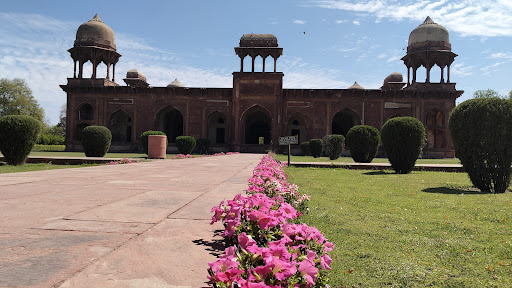
This square tomb stands in the centre of the Mughal garden. It is built on a raised platform with stairs on its northern and southern sides. The two corridors running from east to west and from north to south divide the structure into nine sections that are further subdivided into smaller compartments.[11] The largest one is at the centre, four smaller square ones at the corners and four oblong ones in their middle. Massive piers have been used to support the broad arches and vaulted ceilings. The tomb is built of brick and mortar, and finished with stucco.[10]

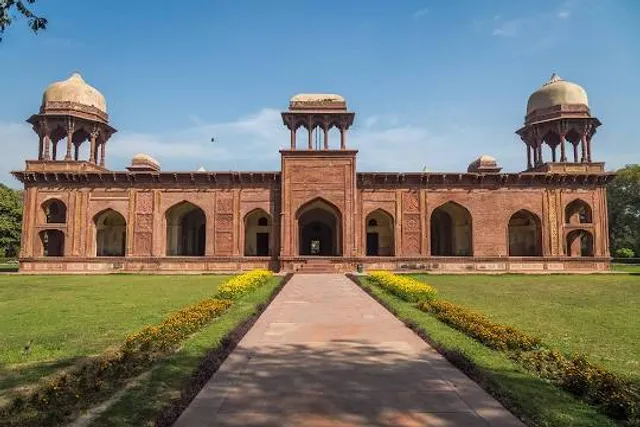
The facades (exterior) of the building were reconstructed with red sandstone panels and a chhajja with the addition of duchhati (mezzanine floors) at the corners by the Mughals. On each facade there is a rectangular structure which projects forward and has a pointy arch in it. It is flanked on either sides by wings, which consists of three arches and a set of double arches, one over the other, thus accommodating a duchhatti at each corner of the building. The wings are protected by chhajjas.[12 The duchhatti are accessible by stairways.11]

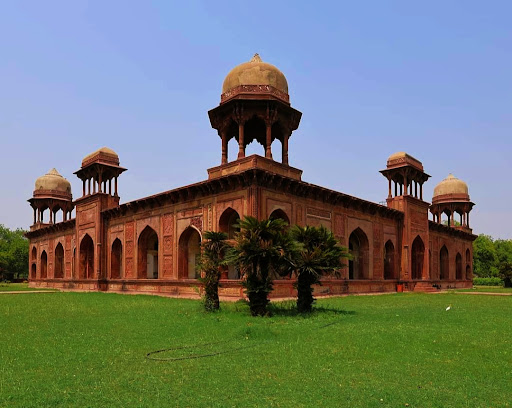
The tomb also contains the work of the Mughals, who remodelled them by adding chhatris and chhaparkhats. The tomb has four massive octagonal chhatris on its four corners, and four oblong chhaparkhats in the centre of the four sides. Each chhatri is made out of red sandstone with a white dome and stands on a square platform. The domes are crowned with an inverted lotus or 'padma kosha'. Brackets have been used to support the internal lintels and external chhajja, five on each pillar, making a total of 40 brackets in one chhatri. Each chhaparkhat is rectangular and has eight pillars with a similar cluster of brackets and a white roof. These chhatris and chhaparkhats are the most important ornament of the whole composition. The rectangular chhaparkhats with eight pillars and a cluster of brackets resemble the corner cupolas.The tomb doesn't have a dome. The mausoleum is of architectural importance in the category of Mughal tombs without a dome.[10[11]

Another important aspect of the tomb is that it is identical both in the front and the rear. Unlike other Mughal era structures, the back entrance is not a dummy but an actual...

   Read more
avatar
5.0
7y

The Tomb of Mariam-uz-Zamani is the mausoleum of Mariam-uz-Zamani, the Queen consort of the Mughal Emperor Akbar. The tomb was built by Jahangir, in memory of his mother Mariam-uz-Zamani. The tomb is located in Sikandra, a suburb of Agra. Heer Kunwari was born a Rajput princess and was also the eldest daughter of Raja Bharmalof Amer. She was married to Emperor Akbar in 1562 CE. She was honoured with the title Mariam-uz-Zamani ("Mary of the Age") after she gave birth to Jahangir. She died in Agra in 1623 and her son Jahangir built a tomb for her in between 1623 and 1627 CE. The tomb is only a kilometer away from the Tomb of Akbar the Great, the only nearest of all the tombs of his other wives.

The structure was originally an open baradari(pleasure pavilion) under Sikander Lodi, who built it in 1495 AD. It was adopted by the Mughals in 1623 AD and was converted into a tomb by making a crypt below the central compartment and remodelling it substantially.

The mausoleum contains three tombstones: one in the underground mortuary chamber, which is the grave itself; the cenotaph above it; and another cenotaph on the terrace.

The ground floor consists of some forty chambers built by Sikander Lodi, which bears faint traces of paintings on plastered walls. The centre of the ground floor houses the cenotaph of Mariam.

This square tomb stands in the centre of the Mughal garden. It is built on a raised platform with stairs on its northern and southern sides. The two corridors running from east to west and from north to south divide the structure into nine sections that are further subdivided into smaller compartments. The largest one is at the centre, four smaller square ones at the corners and four oblong ones in their middle. Massive piers have been used to support the broad arches and vaulted ceilings. The tomb is built of brick and mortar, and finished with stucco.

The facades (exterior) of the building were reconstructed with red sandstone panels and a chhajja with the addition of duchhati(mezzanine floors) at the corners by the Mughals. On each facade there is a rectangular structure which projects forward and has a pointy arch in it. It is flanked on either sides by wings, which consists of three arches and a set of double arches, one over the other, thus accommodating a duchhatti at each corner of the building. The wings are protected by chhajjas.The duchhatti are accessible by stairways.

The tomb also contains the work of the Mughals, who remodelled them by adding chhatris and chhaparkhats. The tomb has four massive octagonal chhatris on its four corners, and four oblong chhaparkhats in the centre of the four sides. Each chhatri is made out of red sandstone with a white dome and stands on a square platform. The domes are crowned with an inverted lotus or 'padma kosha'. Brackets have been used to support the internal lintels and external chhajja, five on each pillar, making a total of 40 brackets in one chhatri. Each chhaparkhat is rectangular and has eight pillars with a similar cluster of brackets and a white roof. These chhatris and chhaparkhats are the most important ornament of the whole composition. The rectangular chhaparkhats with eight pillars and a cluster of brackets resemble the corner cupolas.The tomb doesn't have a dome. The mausoleum is of architectural importance in the category of Mughal tombs without a dome.

Another important aspect of the tomb is that it is identical both in the front and the rear. Unlike other Mughal era structures, the back entrance is not a dummy but an...

   Read more
avatar
4.0
34w

Sometimes, the most memorable places aren’t the ones on every postcard — they’re the ones you stumble upon, tucked away from the chaos of traffic and tour groups. That’s exactly how I felt visiting Mariam’s Tomb in Agra. No crowds. No rush. Just birdsong, early morning sun, and the slow, graceful unfolding of Mughal history.

It’s a little tricky to find — the road leading up to it is narrow and a bit bumpy, and honestly, not many locals seemed to know about it when I asked for directions. But that almost added to its hidden-gem charm. When I finally reached the gates, I was greeted by stillness — not the eerie kind, but the kind that wraps around you like a shawl. Peaceful, understated, and timeless.

The tomb belongs to Mariam-uz-Zamani, also known as Harka Bai — a Rajput princess from Amber (modern-day Jaipur), and one of the most important women in the Mughal Empire. She was the wife of Emperor Akbar and the mother of Jahangir (Salim), and yet, her tomb is devoid of the pomp and spectacle that marks other royal Mughal monuments. And that’s what makes it even more touching — there’s quiet dignity here, an elegance that doesn’t shout.

Interestingly, this wasn’t always a tomb. It was originally a pleasure pavilion built by Sultan Sikander Lodi in 1495 AD, well before the Mughals arrived. It was only in 1623 AD, during Jahangir’s reign, that the structure was transformed into a tomb for his mother. The original baradari (12-doored pavilion) now houses over 40 chambers on the ground floor, many with faint remnants of painted plaster walls — ghostly, but beautiful in their decay.

The central cenotaph of Mariam rests on the ground floor, but climb up to the upper level, and you’ll find a marble cenotaph open to the sky, as if deliberately designed to invite the heavens in.

The architecture is classic Mughal but not overbearing — red sandstone façades, adorned with finely carved geometric patterns, and topped with octagonal corner towers, each crowned with delicate chhatris (pavilions). It’s restrained, tasteful, and deeply harmonious with the lush gardens that surround it.

I went in the early morning, and I highly recommend you do the same. The sunrise light hits the sandstone just right, giving it a soft, amber glow. The only sounds were my footsteps, the rustle of trees, and the occasional cooing of pigeons.

What struck me most was how well-maintained the site was, despite being relatively unknown. It felt like a little slice of forgotten history, lovingly preserved for those who take the trouble to look for it. I spent nearly an hour just sitting under one of the shady trees, reading and soaking in the atmosphere.

But a word of caution: While the monument's remoteness and quiet is its greatest aspect, please be aware of people, especially young adult boys, hanging around the inside of the monument in small groups, apparently doing nothing much. I found one such group sitting on the stairs leading to the tomb in the basement, and there was something about them I did not like, because of which I did not go ahead and went out instead. If you are with family, especially young children, women or girls, I would suggest you err on the side of caution, despite there being 1-2 guards I saw at the entrance to...

   Read more
Page 1 of 7
Previous
Next