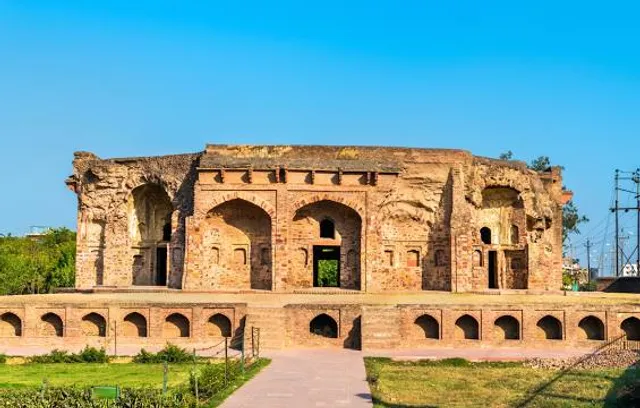
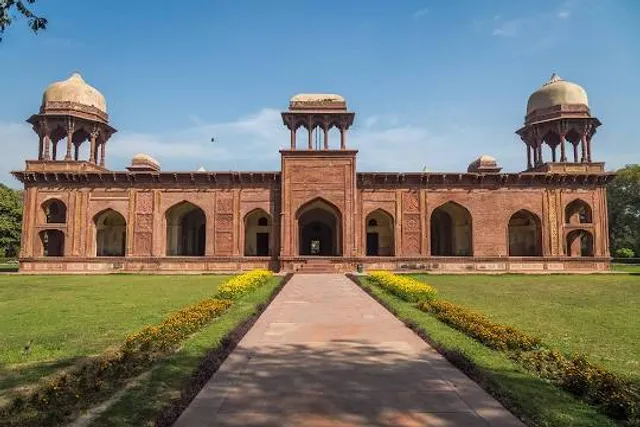
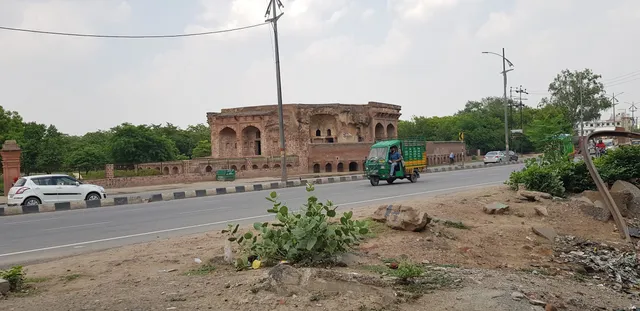
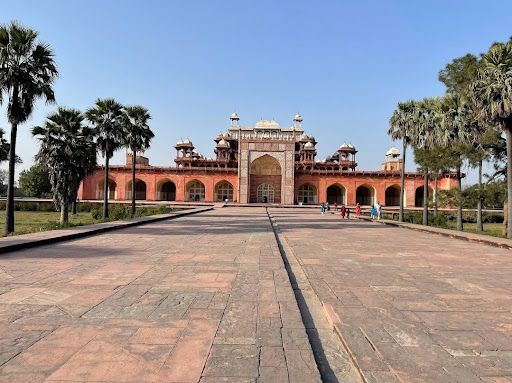
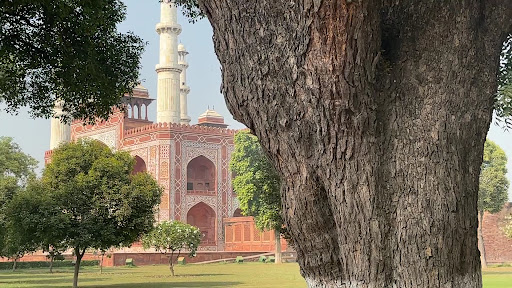
Sikandra Fort, more accurately referred to as the Tomb of Akbar or Akbar's Mausoleum, is a significant Mughal architectural masterpiece located in Sikandra, a suburb of Agra, Uttar Pradesh, India, about 10 km from Agra’s city center on the Mathura Road (NH2). It serves as the final resting place of Mughal Emperor Akbar, one of India’s most influential rulers, and is a testament to his vision of cultural and religious harmony. Below is a detailed overview of Sikandra Fort:
Historical Background Construction: Emperor Akbar (1542–1605), the third Mughal ruler, personally selected the site for his tomb and began its construction during his lifetime, following the Mughal tradition of building one’s own mausoleum. After Akbar’s death in 1605, his son, Emperor Jahangir (also known as Prince Salim), completed the construction between 1605 and 1613. Name Origin: The site is named after Sikander Lodi, a Delhi Sultan whose tomb is in Delhi, not Agra. The name "Sikandra" reflects the historical significance of the area. Historical Challenges: During the reign of Akbar’s great-grandson, Aurangzeb, the tomb was looted by Jats under Raja Ram Jat in a revolt against Mughal rule. They plundered gold, jewels, and carpets, and reportedly desecrated Akbar’s remains, an act considered highly offensive in Islamic tradition.
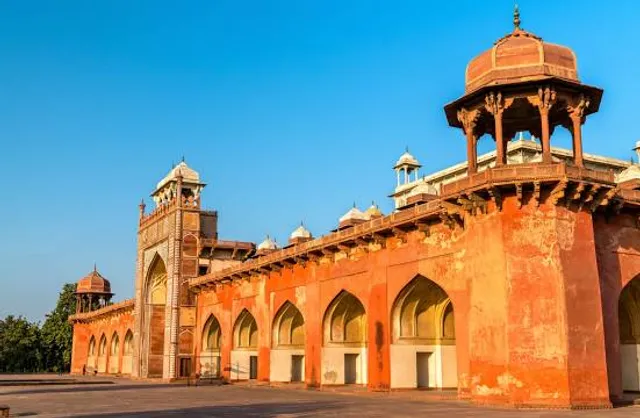
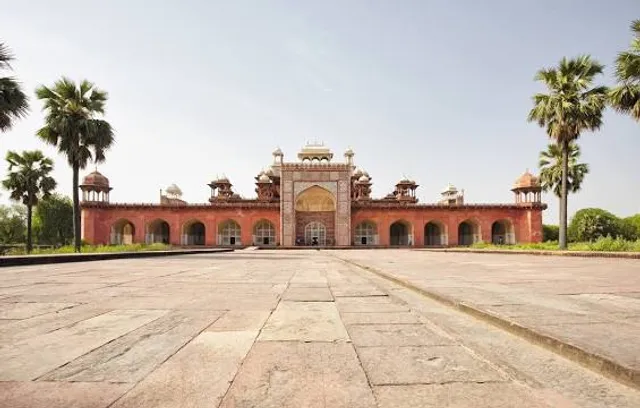
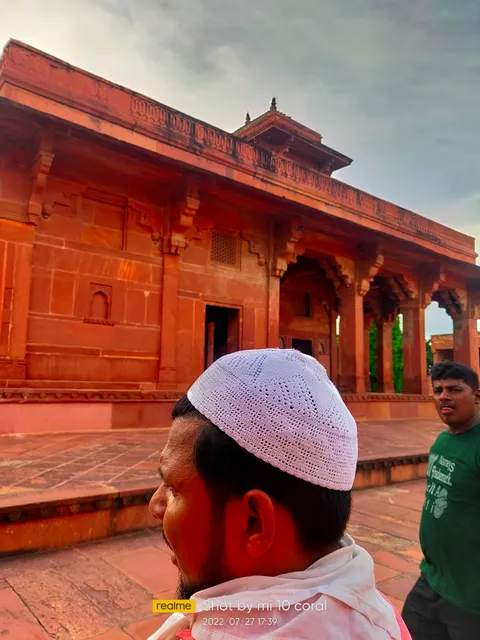
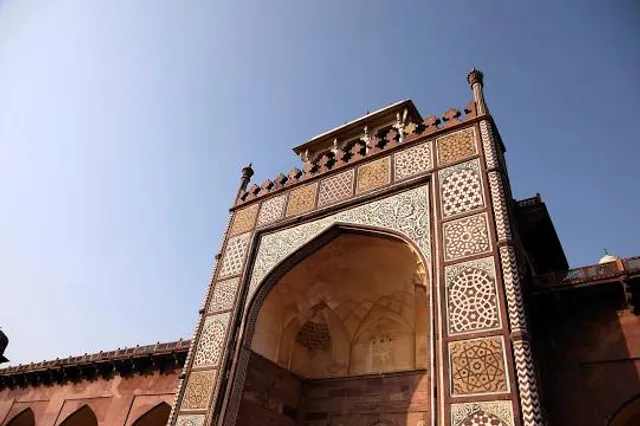
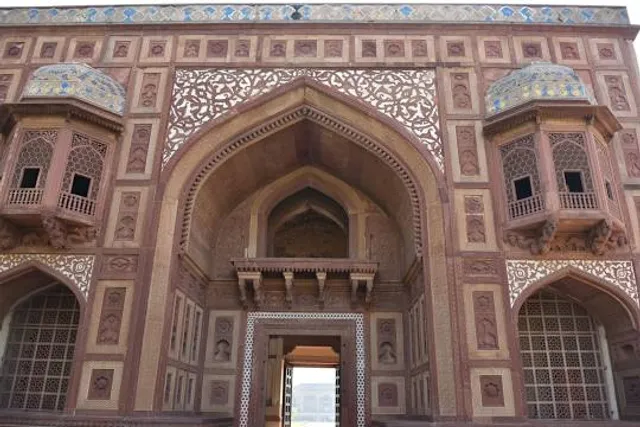
Architectural Features Design and Style: The mausoleum is a remarkable blend of Hindu, Islamic, Christian, Buddhist, and Jain architectural elements, reflecting Akbar’s inclusive philosophy and his creation of the syncretic religious movement Din-e-Ilahi. Unlike most Mughal tombs that face Mecca, Akbar’s tomb is oriented toward the rising sun, symbolizing his unique worldview. Materials: The structure is primarily built with deep red sandstone, with white marble inlays and accents, creating a striking visual contrast. The absence of a dome, a departure from typical Mughal tombs, and the use of chhatris (domed canopies) and tiered pavilions reflect local Rajput influences. Layout: The tomb is a five-story pyramidal structure, with the upper levels becoming progressively smaller. The ground floor features a central courtyard with a false cenotaph, while the actual tomb is in the basement, accessible via a decorated vestibule. The complex is set within a large charbagh garden (a four-part garden layout typical of Mughal architecture), divided by water channels and pathways. The garden is enclosed by high walls measuring 105 meters square. Four gateways mark the complex, with the southern gate being the largest and the primary entrance. This gate features four white marble chhatri-topped minarets, prefiguring those of the Taj Mahal. Intricate Details: The tomb is adorned with geometric patterns, floral designs, Persian calligraphy, and jali (perforated stone screens). The southern vestibule contains vibrant stucco paintings in gold, blue, and green, showcasing Mughal artistry.
Key Highlights Cultural Significance: The tomb embodies...
Read moreSikandra Fort is a great Place which is in Sikandara, Agra, approximately 2.5 km from Agra, ISBT. From there you may find sharing auto easily which may cost you ₹10 per person to reach here. Tickets would cost you ₹30 per person. This is a lovely and quite place. You may spend whole day by sitting in the peaceful ambience of this fort. You may click many good photos at here as there are many photogenic places you may find. One may come with family as well as with couple. Overall you will enjoy here.Akbar's tomb is in Sikandra, Who was the king of Mughal dynasty. This mausoleum is of red stone and marble which was built by Emperor Akbar during his time and was completed by his son Jahangir in 1613 AD. This fort is spread over 119 acres of land. In which there is a garden and in this garden you can also see deer and peacock. The tomb has a water channel surrounded by fountains. The shape of the tomb is pyramidal in which there are five storeysAbsolutely lovely history and the way they've maintained is very great Akbar planned the tomb and selected a suitable site for it. After his death, Akbar's son Jahangir completed the construction in 1605-1613. it cost 1,500,000 rupees to build and took 3 or 4 years to complete.[1] During the reign of Aurangzeb, Jats rose in rebellion under the leadership of Raja Ram Jat Mughal prestige suffered a blow when Jats ransacked Akbar's tomb, plundering and looting the gold, jewels, siiver and carpets. According to one account, even Akbar's grave was opened and his bones burnedThe tomb of Akbar is located inside the Sikandra Fort. A beautifully architected structure, it is made of deep red sandstone. The richness of the look and feel never fades away and is timeless. The tomb is located in Agra in a place called Sikandra. The fort and the tomb are excellent expositions of the combination of Hindu and Muslim architecture.The fort stands amidst a lush garden which is enclosed in four high walls. Each side of the wall has a colossal gate. The garden is portioned into four distinct spaces. This is in accordance with the Charbagh plan that existed during that time to landscape gardens. The garden has plenty of fountains. There are numerous water channels passing through the garden. Paved causeways provide visitors a unique pathway to walk and experience the excellence of architecture all around.Sikandra Fort is well-preserved and is among the top tourist places in Agra. When you visit this place you cannot deny the richness of the artistry on display. It is said that Akbar personally designed this fort. Many if not all elements of the fort's design are a reflection of his personality and his taste in architecture.The tomb resides on an elevated pyramid. This structure is five storeyed. The internal carvings are intricate and a tribute to great craftsmanship. The marble work inlaid into the tomb's complex is perfectly exquisite.The gateways of the fort are magnificent as well. These gates are made of sandstone and there are four of them. All gates lead to the complex and the Southern gate is the one...
Read moreThe tomb of Akbar is located inside the Sikandra Fort. A beautifully architected structure, it is made of deep red sandstone. The richness of the look and feel never fades away and is timeless. The tomb is located in Agra in a place called Sikandra. The fort and the tomb are excellent expositions of the combination of Hindu and Muslim architecture.The fort stands amidst a lush garden which is enclosed in four high walls. Each side of the wall has a colossal gate. The garden is portioned into four distinct spaces. This is in accordance with the Charbagh plan that existed during that time to landscape gardens. The garden has plenty of fountains. There are numerous water channels passing through the garden. Paved causeways provide visitors a unique pathway to walk and experience the excellence of architecture all around.Sikandra Fort is well-preserved and is among the top tourist places in Agra. When you visit this place you cannot deny the richness of the artistry on display. It is said that Akbar personally designed this fort. Many if not all elements of the fort’s design are a reflection of his personality and his taste in architecture.The tomb resides on an elevated pyramid. This structure is five storeyed. The internal carvings are intricate and a tribute to great craftsmanship. The marble work inlaid into the tomb’s complex is perfectly exquisite.The gateways of the fort are magnificent as well. These gates are made of sandstone and there are four of them. All gates lead to the complex and the Southern gate is the one that leads to Akbar’s mausoleum. This place is abuzz with visitors who enjoy the views around. Visiting this tomb complex once is not enough to detail the complete craftsmanship...
Read more