Chanderi is mentioned by the Persian scholar Alberuni in 1030. Ghiyas ud din Balban captured the city in 1251 for Nasiruddin Mahmud, Sultan of Delhi. Sultan Mahmud I Khilji of Malwa captured the city in 1438 after a siege of several months. Rana Sanga of Mewar conquer much of the Malwa along with Chanderi and appointed his vassal Medini Rai a rebellious minister of Sultan Mahmud II of Malwa as ruler of Malwa under his lordship. Medini Rai made Chanderi as capital of his kingdom.2] In the Battle of Chanderi, the Mughal Emperor Babur captured the fort from Medini Rai and witnessed the macabre Rajput rite of jauhar, in which, faced with certain defeat and in an attempt to escape dishonor in the hands of the enemy, women with children in their arms jumped in a fire pit to commit suicide, which was made for this specific purpose, against the background of vedic hymns recited by the priests. Jauhar was performed during the night and in the morning the men would rub the ashes of their dead women folk on their forehead, don a saffron garment known as kesariya, chew tulsi leaves (in India tulsi leaves are placed in the mouth of a dead body), symbolizing their awareness about impending death and resolve to fight and die with honour. This method of fighting & dying for the cause of retaining honour was called saka.[3] In 1529, Puran Mal was defeated by Babur's forces after he tried to recapture Chanderi.[4
In 1542 it was captured by Sher Shah Suri and added to the governorship of Shujaat Khan. The Mughal Emperor Akbar made the city a sarkar in the subah of Malwa.[citation needed]
The Bundela Rajputs captured the city in 1586, and it was held by Ram Sab, a son of Raja Madhukar of Orchha. In 1646 Devi Singh Bundela was made ruler of the city, and Chanderi remained in the hands of his family until it was annexed in 1811 by Jean Baptiste Filose for the Maratha ruler Daulat Rao Sindhia of Gwalior. The city was transferred to the British in 1844. The British lost control of the city during the Revolt of 1857, and the city was recaptured by Hugh Rose on 14 March 1858. Richard Harte Keatinge led the assault, for which he was awarded the Victoria Cross. The city was transferred back to the Sindhias of Gwalior in 1861, and became part of Isagarh District of Gwalior state.
After India's independence in 1947, Gwalior became part of the new state of Madhya Bharat, which was merged into Madhya Pradesh on 1...
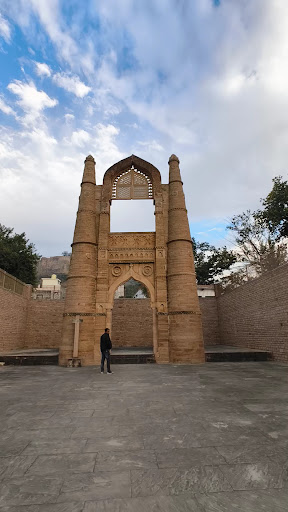
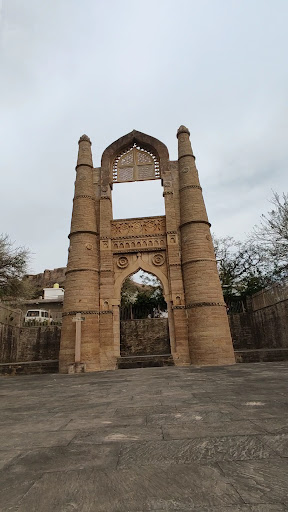
Read moreBadal Mahal Darwaza is basically a singular structure of a gate that doesn’t lead to any palace or mahal. This historic gate enjoys a central location in Chanderi, near the Jama Masjid. This imposing gate was constructed by Sultan Mehmood Shah Khilji, the King of Malwa, in the 15th century.
It was built to mark a significant victory. Badal Mahal Darwaza has a height of 100 ft. The structure features elaborate carvings and impressive motifs. The top of the gate features an arched design and two tall minarets stand guard on both sides. The specialty of the structural design is that a gap exists above the arched top of the gate, which is followed by another arch, which brings up the end of the gate. This gate served the purpose of welcoming and honouring the state guests and visiting kings in a grand manner.
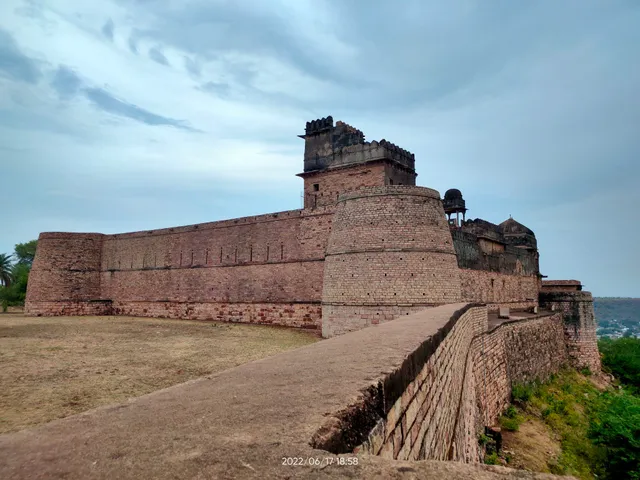
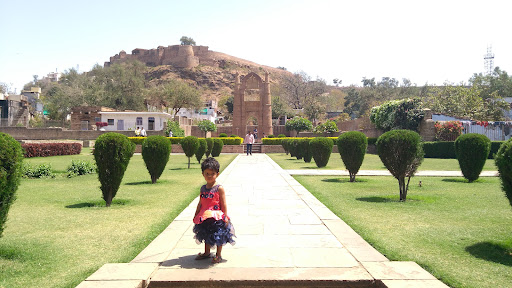
It is known that India is home to many such gates that were supposedly entrances to palaces; however in most cases, the palaces are dilapidated or missing. Similar to such gates is Badal Mahal Darwaza located in the compound. In place of a palace you’d find an array of slums and shanties that spread throughout the compound. The gate and palace is said to be built during the rule of Sultan Mahmud Shah Khilji. It is flanked by large fort walls and a beautifully maintained green garden. The arched gate bears intricate designs and netted windows that portray inferences of Mughal architecture. You can gauge the magnificence of the palace by looking at the gate and the route that bear testimony to the era bygone.
Archaeologists have also discovered a hidden underground palace in this compound. The foundation and courtyard-like rooms can be clearly seen after careful excavation. This new discovery will certainly intrigue all architects and history aficionados. A walk around the fort wall is a must in order to get a contrasting view of the modern world outside the wall and the bygone era on...
Read moreVisiting Badal mahal in Chanderi was an enriching experience that beautifully combined history, culture, and modern convenience. The site, well-maintained by MP Tourism, showcases a perfect balance of preserving heritage while embracing the benefits of digitization.
The first thing that stood out was the cleanliness and upkeep of the premises. It’s evident that MP Tourism has taken significant efforts to maintain the site's charm and historical integrity. The surroundings are immaculate, and the pathways are well-laid, making it easier for visitors to explore the area comfortably.
One of the highlights of my visit was the digitalized ticket booking process. Gone are the days of long queues and paper tickets; the seamless online booking system is not only convenient but also a step towards eco-friendliness. It saves time and ensures a hassle-free entry for visitors. This modernization adds to the overall experience, making it more enjoyable and accessible to tech-savvy travelers.
Badaahal itself is a treasure trove of history. The intricate architecture and the grandeur of the site speak volumes about its historical significance. Walking through the premises, you can feel a connection to the past, imagining the stories and events that once unfolded here.
The staff and guides at the site were courteous and knowledgeable, adding value to the visit with their insights and assistance. The addition of information boards and QR codes further enhances the learning experience, allowing visitors to delve deeper into the history and significance of Badaahal.
Overall, my visit to Badaahal was delightful and inspiring. MP Tourism's efforts to maintain and modernize the site without compromising its historical essence are commendable. Whether you’re a history enthusiast or a casual traveler, Badaahal is a must-visit destination in Chanderi that promises a...
Read more