HTML SitemapExplore
logo
Find Things to DoFind The Best Restaurants

The Open Hand Monument — Attraction in Chandigarh

Name
The Open Hand Monument
Description
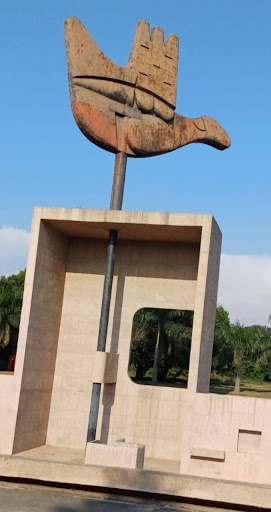
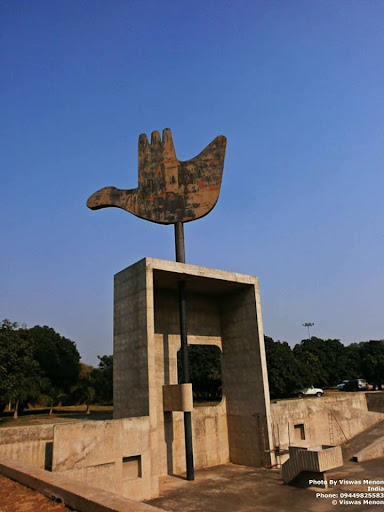
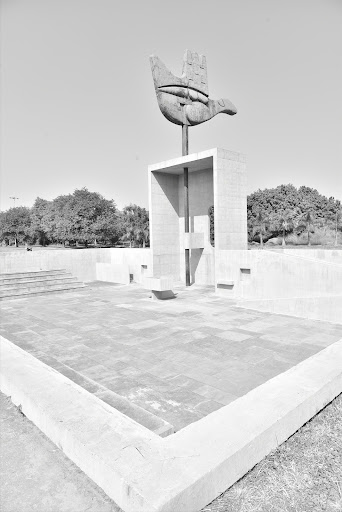
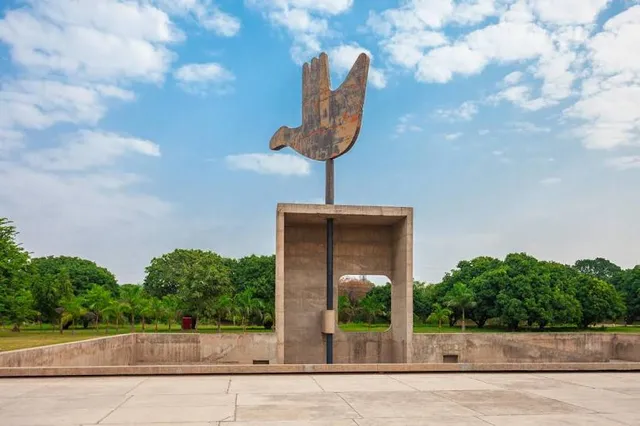
The Open Hand Monument is a symbolic structure designed by the architect Le Corbusier and located in the Capitol Complex of the Indian city and union territory of Chandigarh.
Nearby attractions
The Tower of Shadows - Chandigarh, India
Capitol Complex, Sector 1, Chandigarh, 160001, India
Nek Chand’s Rock Garden of Chandigarh
Uttar Marg, Rock Garden of Chandigarh, Sector 1, Chandigarh, 160001, India
High Court Museum
QR44+93H, Capitol Complex, Sector 1, Chandigarh, 160001, India
Capitol Complex Tourist Center
HIGH COURT, Capitol Complex, Sector 1, Chandigarh, 160001, India
Geometric Hill
QR53+JJM, Capitol Complex, Sector 1, Chandigarh, 160001, India
Rag Doll museum, Rock garden
QR35+39F, Rock Garden of Chandigarh, Sector 1, Chandigarh, 160001, India
Nearby restaurants
Sharma Sweets
Shop No 4, HIGH COURT, Capitol Complex, Sector 1, Chandigarh, 160001, India
THE KANSALS AROMA
VALENCIA STREET KANSAL, QR55+VRV, Chandigarh, Kansal, Chandigarh 160103, India
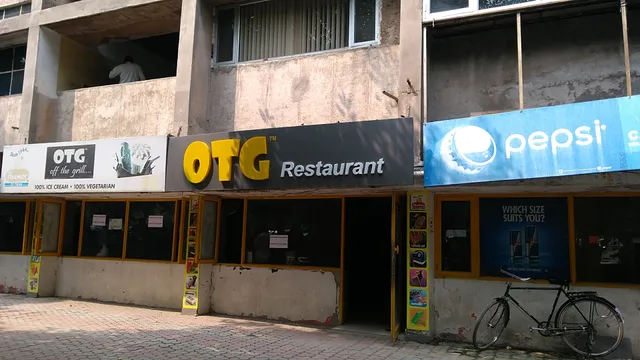
OTG Restaurant
QR44+CVC, Capitol Complex, Sector 1, Chandigarh, 160001, India
Chandigarh High Court Canteen
QR45+V73 Punjab and Haryana High Court Chandigarh, Capitol Complex, Sector 1, Chandigarh, 160001, India
Kadi Rajma Chhole chawal Chhole kulche stall
QR44+JQ4, Capitol Complex, Sector 1, Chandigarh, 160001, India
Farmer's kitchen
kaimbwala kansal Road, C Block, near Body Reshape Gym, near Rock Garden, Backside, Kansal, Chandigarh, Punjab 160103, India
Olive Meals
Booth-8,, Capitol Complex, Sector 1, Chandigarh, 160001, India
Nearby hotels
Capital O 14186 Royal lake suites
Kaimbwala Road Behind, Rock Garden of Chandigarh, Kansal, 160103, India
Albion Cottage
Sukhna Enclave, 402, Kaimbwala Rd, Block C, Kansal, Punjab 160103, India
Flagship The Chandigarh Lake Suites Hotel
Sukhna Enclave, 399, behind Rock Garden Of Chandigarh, Block C, Kansal, Chandigarh, 160103, India
SKYViEW HOLiDAY HOME(B&B) STAR HOTEL
back side, Vishnu Garden,adjacent Sukhna enclave gate, Kaimbwala Rd, Rock Garden of Chandigarh, Sector 1, Kansal, 160103, India
Related posts
Keywords
The Open Hand Monument tourism.The Open Hand Monument hotels.The Open Hand Monument bed and breakfast. flights to The Open Hand Monument.The Open Hand Monument attractions.The Open Hand Monument restaurants.The Open Hand Monument travel.The Open Hand Monument travel guide.The Open Hand Monument travel blog.The Open Hand Monument pictures.The Open Hand Monument photos.The Open Hand Monument travel tips.The Open Hand Monument maps.The Open Hand Monument things to do.
The Open Hand Monument things to do, attractions, restaurants, events info and trip planning
The Open Hand Monument
IndiaChandigarhChandigarhThe Open Hand Monument

Basic Info

The Open Hand Monument

31, Uttar Marg, Capitol Complex, Sector 1, Chandigarh, 160001, India
4.5(474)
Open 24 hours
Save
spot

Ratings & Description

Info

The Open Hand Monument is a symbolic structure designed by the architect Le Corbusier and located in the Capitol Complex of the Indian city and union territory of Chandigarh.

Cultural
Scenic
attractions: The Tower of Shadows - Chandigarh, India, Nek Chand’s Rock Garden of Chandigarh, High Court Museum, Capitol Complex Tourist Center, Geometric Hill, Rag Doll museum, Rock garden, restaurants: Sharma Sweets, THE KANSALS AROMA, OTG Restaurant, Chandigarh High Court Canteen, Kadi Rajma Chhole chawal Chhole kulche stall, Farmer's kitchen, Olive Meals
logoLearn more insights from Wanderboat AI.
Phone
+91 172 274 0154

Plan your stay

hotel
Pet-friendly Hotels in Chandigarh
Find a cozy hotel nearby and make it a full experience.
hotel
Affordable Hotels in Chandigarh
Find a cozy hotel nearby and make it a full experience.
hotel
The Coolest Hotels You Haven't Heard Of (Yet)
Find a cozy hotel nearby and make it a full experience.
hotel
Trending Stays Worth the Hype in Chandigarh
Find a cozy hotel nearby and make it a full experience.

Reviews

Nearby attractions of The Open Hand Monument

The Tower of Shadows - Chandigarh, India

Nek Chand’s Rock Garden of Chandigarh

High Court Museum

Capitol Complex Tourist Center

Geometric Hill

Rag Doll museum, Rock garden

The Tower of Shadows - Chandigarh, India

The Tower of Shadows - Chandigarh, India

4.6

(170)

Open until 12:00 AM
Click for details
Nek Chand’s Rock Garden of Chandigarh

Nek Chand’s Rock Garden of Chandigarh

4.5

(17.9K)

Open 24 hours
Click for details
High Court Museum

High Court Museum

4.4

(200)

Closed
Click for details
Capitol Complex Tourist Center

Capitol Complex Tourist Center

4.5

(673)

Open 24 hours
Click for details

Things to do nearby

The Hipster Chandigarh Architecture Experience
Sat, Dec 6 • 9:15 AM
Chandigarh, Chandigarh, 160017, India
View details
Uncover architectural heritage with an avid guide.
Sat, Dec 6 • 10:00 AM
Chandigarh, Chandigarh, 160001, India
View details
TSOW HR Meetup in Chandigarh
Sat, Dec 6 • 10:30 AM
Chandigarh, Chandigarh
View details

Nearby restaurants of The Open Hand Monument

Sharma Sweets

THE KANSALS AROMA

OTG Restaurant

Chandigarh High Court Canteen

Kadi Rajma Chhole chawal Chhole kulche stall

Farmer's kitchen

Olive Meals

Sharma Sweets

Sharma Sweets

3.8

(71)

Click for details
THE KANSALS AROMA

THE KANSALS AROMA

4.1

(12)

Closed
Click for details
OTG Restaurant

OTG Restaurant

3.8

(12)

Click for details
Chandigarh High Court Canteen

Chandigarh High Court Canteen

5.0

(1)

Click for details
Get the Appoverlay
Get the AppOne tap to find yournext favorite spots!
Wanderboat LogoWanderboat

Your everyday Al companion for getaway ideas

CompanyAbout Us
InformationAI Trip PlannerSitemap
SocialXInstagramTiktokLinkedin
LegalTerms of ServicePrivacy Policy

Get the app

© 2025 Wanderboat. All rights reserved.
logo

Reviews of The Open Hand Monument

4.5
(474)
avatar
5.0
1y

The Open Hand Monument is a symbolic structure designed by the architect Le Corbusier and located in the Capitol Complex of the Indian city and union territory of Chandigarh. It is the emblem and symbol of the Government of Chandigarh and symbolizes "the hand to give and the hand to take; peace and prosperity, and the unity of mankind". The largest example of Le Corbusier's many Open Hand sculptures, it stands 26 metres (85 ft) high. The metal structure with vanes is 14 metres (46 ft) high, weighs 50 short tons (100,000 lb), and was designed to rotate in the wind.The Open Hand (La Main Ouverte) in Chandigarh is a frequent theme in Le Corbusier's architecture, a symbol for him of "peace and reconciliation. It is open to give and open to receive". Le Corbusier also stated that it was a recurring idea that conveyed the "Second Machine Age".The Open Hand is located in Sector 1 in the Capitol Complex of Chandigarh, on the backdrop of the Himalayan Shivalik hill range. Le Corbusier thought of the Open Hand Monument first in 1948,"spontaneously, or more exactly, as a result of reflections and spiritual struggles arising from feelings of anguish and disharmony which separate mankind and so often create enemies".His passion for the hand had an important role in his career beginning from the age of seventeen-and-a-half when he picked up a brick, a gesture which led to millions of bricks being laid in later years.[8] Jane Drew felt that the symbol of Le Corbusier's philosophy should be made evident to the people of Chandigarh. Le Corbusier then perceived it as a sculptural monument to be erected in Chandigarh, the city he is credited with planning, designing, and implementing. One of his associates, Jerzy Soltan, a member of his atelier, had deliberated with him as to the type of hand to be made – whether an open hand or a fist holding a fighting device. The Open Hand became a public project rather than a private symbol when Le Corbusier planned it for the city of Chandigarh, where his associate and cousin Pierre Jeanneret was then working as chief architect and town planning advisor to the Government of Punjab, and was supervising the construction of Chandigarh. In case his preference for Chandigarh to erect the sculpture was not accepted, he had thought of an alternate location: the top of the Bhakra Dam, the 220 metres (720 ft) high dam in Nangal in Punjab.[8] He had planned to erect the Open Hand against the scenic background of the Himalayas. He called the location he had selected the "Pit of Contemplation" (Fosse de la Consideration). The design was a huge elevated object (a wind vane), which was an "inspirational symbol of humanity unarmed, fearless, and spiritually receptive". Le Corbusier had discussed this project with the then Prime Minister of India Jawaharlal Nehru when he had visited India in 1951. He had also written to Nehru, saying that since 1948 he had been obsessed with this symbol of the Open Hand which he wished to erect at the end of the capital (Chandigarh) in the foreground of the Himalayas. Nehru had concurred with the concept.In his letter to Nehru, Le Corbusier expressed a view that it could also become a symbol of the Non Aligned Movement (NAM), an idea that Nehru mooted although ultimately it was not adopted for NAM. Later, for Le Corbusier, the project had remained linked with Nehru, and on the occasion of the 75th anniversary of Nehru's birth in 1964, he was invited to submit something for a "celebratory volume". Le Corbusier forthwith sketched his concept of the Open Hand, for it was his recurring dream which had obsessed him for six years (prior to 1954). In the sketch, he conceived the Open Hand as a 26 metres (85 ft) high sculpture which would rotate with the wind and would shine with colours such as yellow, red, green, and white in the foreground of the mountain range.Above the sketch he inscribed, "La Fin d'un monde" (The End...

   Read more
avatar
4.0
6y

Open Hand Monument, Chandigarh

The Open Hand Monument is a symbolic structure located in the Indian Union Territory of Chandigarh, India, designed by the architect Le Corbusier. It is the emblem or symbol of the Government of Chandigarh and symbolizes "the hand to give and the hand to take; peace and prosperity, and the unity of mankind".

The largest example of Le Corbusier's many Open Hand sculptures,it stands 26 metres (85 ft) high. The metal structure with vanes is 14 metres (46 ft) high, weighs 50 short tons (100,000 lb), and was designed to rotate in the wind.

The Open Hand (La Main Ouverte) in Chandigarh is a frequent theme in Le Corbusier's architecture, a symbol for him of "peace and reconciliation. It is open to give and open to receive". Le Corbusier also stated that it was a recurring idea that conveyed the "Second Machine Age"

Open Hand is located in Sector 1 in the Capitol Complex of Chandigarh, in the backdrop of the Himalayan hill range of the Shivalik Mountains.

Le Corbusier thought of the Open Hand Monument first in 1948, as "spontaneously, or more exactly, as a result of reflections and spiritual struggles arising from feelings of anguish and disharmony which separate mankind and so often create enemies".His passion for the hand had an important role in his career beginning from the age of seventeen and half, when he picked a brick with his hand which had led to millions of brick laying in later years. Jane Drew felt that the symbol of Le Corbusier's philosophy should be made evident to the people of Chandigarh. Le Corbusier then perceived it as a sculptural monument to be erected in Chandigarh, the city he is credited with planning, designing, and implementing. One of his associates, Jerzy Soltan,s a member of his atelier, had deliberated with him as to the type of hand to be made – whether an open hand or a fist holding a fighting device.

The Open Hand became a public project rather than a private symbol when Le Corbusier planned it for the city of Chandigarh, where his associate and cousin Pierre Jeanneret was then working as chief architect and town planning advisor to the Government of Punjab, and was supervising the construction of Chandigarh.

The design was a huge elevated object (a wind vane), which was an "inspirational symbol of humanity unarmed, fearless, and spiritually receptive".

Le Corbusier had discussed this project with the then Prime Minister of India Jawaharlal Nehru when he had visited India in 1951. He had also written to Nehru, saying that since 1948 he had been obsessed with this symbol of the Open Hand which he wished to erect at the end of the capital (Chandigarh) in the foreground of the Himalayas. Nehru had concurred with the concept.

In the sketch, he conceived the Open Hand as a 26 metres (85 ft) high sculpture which would rotate with the wind and would shine with colours such as yellow, red, green, and white in the foreground of the mountain range. Above the sketch he inscribed, "La Fin d'un monde" (The End of a World).

The Open Hand sculpture is 26 metres (85 ft) high above a trench of 12.5 by 9 metres (41 ft × 30 ft).The metal wind vane, which is erected over a concrete platform, is 14 metres (46 ft) in height and weighs 50 tons; it appears like a flying bird.The sculpture was hand-cast in sheet metal at the Bhakra Nangal Management Board's workshop at Nangal. The surface of the vane is covered with polished steel and is fitted over a steel shaft with ball bearings to facilitate free rotation by the wind.

It is also meant to convey a message of peace "open to receive."

Photos by Viswas Menon © Viswas Menon Write up compiled by...

   Read more
avatar
4.0
35w

An Architectural Masterpiece – A Symbol of Peace, Friendship, and Ingenious Engineering

This structure is truly an architectural marvel, designed by a renowned French architect who envisioned a masterpiece that not only embodies beauty but also represents peace, friendship, and safety. The structure carries deep symbolic significance, serving as a testament to the harmonious relationship between design, balance, and engineering excellence.

A Structure Inspired by Nature

One of the most captivating aspects of this monument is its unique and elegant design, which resembles a bird in flight. The flowing contours and dynamic form give the impression of a creature soaring gracefully through the sky. This artistic interpretation adds to the monument’s charm, making it more than just an architectural wonder—it is also a symbol of freedom and movement, embodying the spirit of peace and unity.

Engineering Brilliance: The 360° Rotation

Beyond its visual appeal, what truly sets this structure apart is its incredible engineering feat. Despite weighing an astonishing 50 tons, it is designed in such a way that it can rotate a full 360° with ease. This ability to rotate so effortlessly is a remarkable example of architectural precision and mechanical ingenuity. The secret behind this smooth movement lies in its perfectly balanced weight distribution. The architect meticulously calculated and implemented a design that ensures stability and equilibrium, allowing the massive structure to rotate seamlessly without any external force. This level of craftsmanship is a rare achievement in the world of architecture and highlights the brilliance of the designer.

A UNESCO-Recognized Heritage Site in Chandigarh

This architectural wonder is located in Chandigarh, a city known for its modernist and innovative urban planning. Due to its historical and cultural significance, this site has been recognized as a UNESCO World Heritage Site, preserving its legacy for future generations. The monument’s recognition by UNESCO is a testament to its architectural excellence and global importance.

A Site of Multiple Architectural Wonders

Beyond this stunning structure, the site also houses five additional monuments, each with its own unique architectural style and historical value. These monuments, designed with the same level of ingenuity and artistic brilliance, make this site a treasure trove for architecture enthusiasts, historians, and travelers alike. Exploring these monuments offers a deeper understanding of the architectural vision that shaped this extraordinary site, and each one tells its own story through its design, form, and symbolic meaning.

A Must-Visit Destination for Architecture and History Enthusiasts

For anyone interested in architecture, engineering, or history, this site is an absolute must-visit. It not only showcases a fusion of art and science but also serves as a reminder of how brilliant architectural design can defy limitations. The ability to blend aesthetics with functionality while maintaining a deep cultural and symbolic essence makes this structure a true masterpiece.

Whether you are an architecture lover, a history buff, or simply a traveler looking to witness something extraordinary, this monument and its surrounding wonders offer an unforgettable experience. It stands as a symbol of innovation, harmony, and architectural brilliance, leaving visitors in awe of its...

   Read more
Page 1 of 7
Previous
Next

Posts

Aman SainiAman Saini
The Open Hand Monument is a symbolic structure designed by the architect Le Corbusier and located in the Capitol Complex of the Indian city and union territory of Chandigarh. It is the emblem and symbol of the Government of Chandigarh and symbolizes "the hand to give and the hand to take; peace and prosperity, and the unity of mankind". The largest example of Le Corbusier's many Open Hand sculptures, it stands 26 metres (85 ft) high. The metal structure with vanes is 14 metres (46 ft) high, weighs 50 short tons (100,000 lb), and was designed to rotate in the wind.The Open Hand (La Main Ouverte) in Chandigarh is a frequent theme in Le Corbusier's architecture, a symbol for him of "peace and reconciliation. It is open to give and open to receive". Le Corbusier also stated that it was a recurring idea that conveyed the "Second Machine Age".The Open Hand is located in Sector 1 in the Capitol Complex of Chandigarh, on the backdrop of the Himalayan Shivalik hill range. Le Corbusier thought of the Open Hand Monument first in 1948,"spontaneously, or more exactly, as a result of reflections and spiritual struggles arising from feelings of anguish and disharmony which separate mankind and so often create enemies".His passion for the hand had an important role in his career beginning from the age of seventeen-and-a-half when he picked up a brick, a gesture which led to millions of bricks being laid in later years.[8] Jane Drew felt that the symbol of Le Corbusier's philosophy should be made evident to the people of Chandigarh. Le Corbusier then perceived it as a sculptural monument to be erected in Chandigarh, the city he is credited with planning, designing, and implementing. One of his associates, Jerzy Soltan, a member of his atelier, had deliberated with him as to the type of hand to be made – whether an open hand or a fist holding a fighting device. The Open Hand became a public project rather than a private symbol when Le Corbusier planned it for the city of Chandigarh, where his associate and cousin Pierre Jeanneret was then working as chief architect and town planning advisor to the Government of Punjab, and was supervising the construction of Chandigarh. In case his preference for Chandigarh to erect the sculpture was not accepted, he had thought of an alternate location: the top of the Bhakra Dam, the 220 metres (720 ft) high dam in Nangal in Punjab.[8] He had planned to erect the Open Hand against the scenic background of the Himalayas. He called the location he had selected the "Pit of Contemplation" (Fosse de la Consideration). The design was a huge elevated object (a wind vane), which was an "inspirational symbol of humanity unarmed, fearless, and spiritually receptive". Le Corbusier had discussed this project with the then Prime Minister of India Jawaharlal Nehru when he had visited India in 1951. He had also written to Nehru, saying that since 1948 he had been obsessed with this symbol of the Open Hand which he wished to erect at the end of the capital (Chandigarh) in the foreground of the Himalayas. Nehru had concurred with the concept.In his letter to Nehru, Le Corbusier expressed a view that it could also become a symbol of the Non Aligned Movement (NAM), an idea that Nehru mooted although ultimately it was not adopted for NAM. Later, for Le Corbusier, the project had remained linked with Nehru, and on the occasion of the 75th anniversary of Nehru's birth in 1964, he was invited to submit something for a "celebratory volume". Le Corbusier forthwith sketched his concept of the Open Hand, for it was his recurring dream which had obsessed him for six years (prior to 1954). In the sketch, he conceived the Open Hand as a 26 metres (85 ft) high sculpture which would rotate with the wind and would shine with colours such as yellow, red, green, and white in the foreground of the mountain range.Above the sketch he inscribed, "La Fin d'un monde" (The End of a World).
Viswas K.P MenonViswas K.P Menon
Open Hand Monument, Chandigarh The Open Hand Monument is a symbolic structure located in the Indian Union Territory of Chandigarh, India, designed by the architect Le Corbusier. It is the emblem or symbol of the Government of Chandigarh and symbolizes "the hand to give and the hand to take; peace and prosperity, and the unity of mankind". The largest example of Le Corbusier's many Open Hand sculptures,it stands 26 metres (85 ft) high. The metal structure with vanes is 14 metres (46 ft) high, weighs 50 short tons (100,000 lb), and was designed to rotate in the wind. The Open Hand (La Main Ouverte) in Chandigarh is a frequent theme in Le Corbusier's architecture, a symbol for him of "peace and reconciliation. It is open to give and open to receive". Le Corbusier also stated that it was a recurring idea that conveyed the "Second Machine Age" Open Hand is located in Sector 1 in the Capitol Complex of Chandigarh, in the backdrop of the Himalayan hill range of the Shivalik Mountains. Le Corbusier thought of the Open Hand Monument first in 1948, as "spontaneously, or more exactly, as a result of reflections and spiritual struggles arising from feelings of anguish and disharmony which separate mankind and so often create enemies".His passion for the hand had an important role in his career beginning from the age of seventeen and half, when he picked a brick with his hand which had led to millions of brick laying in later years. Jane Drew felt that the symbol of Le Corbusier's philosophy should be made evident to the people of Chandigarh. Le Corbusier then perceived it as a sculptural monument to be erected in Chandigarh, the city he is credited with planning, designing, and implementing. One of his associates, Jerzy Soltan,s a member of his atelier, had deliberated with him as to the type of hand to be made – whether an open hand or a fist holding a fighting device. The Open Hand became a public project rather than a private symbol when Le Corbusier planned it for the city of Chandigarh, where his associate and cousin Pierre Jeanneret was then working as chief architect and town planning advisor to the Government of Punjab, and was supervising the construction of Chandigarh. The design was a huge elevated object (a wind vane), which was an "inspirational symbol of humanity unarmed, fearless, and spiritually receptive". Le Corbusier had discussed this project with the then Prime Minister of India Jawaharlal Nehru when he had visited India in 1951. He had also written to Nehru, saying that since 1948 he had been obsessed with this symbol of the Open Hand which he wished to erect at the end of the capital (Chandigarh) in the foreground of the Himalayas. Nehru had concurred with the concept. In the sketch, he conceived the Open Hand as a 26 metres (85 ft) high sculpture which would rotate with the wind and would shine with colours such as yellow, red, green, and white in the foreground of the mountain range. Above the sketch he inscribed, "La Fin d'un monde" (The End of a World). The Open Hand sculpture is 26 metres (85 ft) high above a trench of 12.5 by 9 metres (41 ft × 30 ft).The metal wind vane, which is erected over a concrete platform, is 14 metres (46 ft) in height and weighs 50 tons; it appears like a flying bird.The sculpture was hand-cast in sheet metal at the Bhakra Nangal Management Board's workshop at Nangal. The surface of the vane is covered with polished steel and is fitted over a steel shaft with ball bearings to facilitate free rotation by the wind. It is also meant to convey a message of peace "open to receive." Photos by Viswas Menon © Viswas Menon Write up compiled by Viswas Menon
Ar. Pranjal kumarAr. Pranjal kumar
Le Corbusier Purpose For Building An Open Hand Monument: It would be a sin to compare the Open hand Monument with any other monument of the world because Le Corbusier had a very strong reason to build such a monument, which is the official emblem of Chandigarh administration. The emblem for Chandigarh was designed to convey peace & reconciliation, and the unity of Mankind. The Open hand Monument stands in Sector-1 Capitol Complex and many other places of Chandigarh like Sukhna Lake, Chandigarh-Punjab Border (Zirakpur), etc. Le Corbusier Philosophy Behind An Open Hand Monument: Open hand Monument expresses the philosophy, the result of a life of study, of struggles, of defeats, of victories. From the first meeting with Prime Minister Nehru in Delhi and Chandigarh, the open hand was presented. Over the year the open hand became the crowning point of what Le Corbusier called the contemplation hollow, a place to discuss public affairs far from officials, elected or imposed.The hollow was dug at the summit of the city dominated by the 28 meter hand, shining against the Himalayas. The floor of this consideration,’considering to think, see, to talk about what’s real’ , was dug 5 meter deep and consist of two amphitheaters. Why Two? Because Corbusier philosophy was that ‘there are always two sides to a question.’ There are some chairs for people who wish to speak in the evening. Did you know, An Open Hand Monument is mounted on a ball bearing. It turn with the wind, not aimlessly, to express what life really is, constant changes and our daily break. The Open Hand is the only political act of Le Corbusier life. The true and simple meaning of the Open Hand is to GIVE & RECEIVE. Symbol of Optimism in the world of catastrophe. Do let us know what else do you know about Sir Le Corbusier’s Open Hand Monument and Chandigarh in the comment section below.
See more posts
See more posts
hotel
Find your stay

Pet-friendly Hotels in Chandigarh

Find a cozy hotel nearby and make it a full experience.

The Open Hand Monument is a symbolic structure designed by the architect Le Corbusier and located in the Capitol Complex of the Indian city and union territory of Chandigarh. It is the emblem and symbol of the Government of Chandigarh and symbolizes "the hand to give and the hand to take; peace and prosperity, and the unity of mankind". The largest example of Le Corbusier's many Open Hand sculptures, it stands 26 metres (85 ft) high. The metal structure with vanes is 14 metres (46 ft) high, weighs 50 short tons (100,000 lb), and was designed to rotate in the wind.The Open Hand (La Main Ouverte) in Chandigarh is a frequent theme in Le Corbusier's architecture, a symbol for him of "peace and reconciliation. It is open to give and open to receive". Le Corbusier also stated that it was a recurring idea that conveyed the "Second Machine Age".The Open Hand is located in Sector 1 in the Capitol Complex of Chandigarh, on the backdrop of the Himalayan Shivalik hill range. Le Corbusier thought of the Open Hand Monument first in 1948,"spontaneously, or more exactly, as a result of reflections and spiritual struggles arising from feelings of anguish and disharmony which separate mankind and so often create enemies".His passion for the hand had an important role in his career beginning from the age of seventeen-and-a-half when he picked up a brick, a gesture which led to millions of bricks being laid in later years.[8] Jane Drew felt that the symbol of Le Corbusier's philosophy should be made evident to the people of Chandigarh. Le Corbusier then perceived it as a sculptural monument to be erected in Chandigarh, the city he is credited with planning, designing, and implementing. One of his associates, Jerzy Soltan, a member of his atelier, had deliberated with him as to the type of hand to be made – whether an open hand or a fist holding a fighting device. The Open Hand became a public project rather than a private symbol when Le Corbusier planned it for the city of Chandigarh, where his associate and cousin Pierre Jeanneret was then working as chief architect and town planning advisor to the Government of Punjab, and was supervising the construction of Chandigarh. In case his preference for Chandigarh to erect the sculpture was not accepted, he had thought of an alternate location: the top of the Bhakra Dam, the 220 metres (720 ft) high dam in Nangal in Punjab.[8] He had planned to erect the Open Hand against the scenic background of the Himalayas. He called the location he had selected the "Pit of Contemplation" (Fosse de la Consideration). The design was a huge elevated object (a wind vane), which was an "inspirational symbol of humanity unarmed, fearless, and spiritually receptive". Le Corbusier had discussed this project with the then Prime Minister of India Jawaharlal Nehru when he had visited India in 1951. He had also written to Nehru, saying that since 1948 he had been obsessed with this symbol of the Open Hand which he wished to erect at the end of the capital (Chandigarh) in the foreground of the Himalayas. Nehru had concurred with the concept.In his letter to Nehru, Le Corbusier expressed a view that it could also become a symbol of the Non Aligned Movement (NAM), an idea that Nehru mooted although ultimately it was not adopted for NAM. Later, for Le Corbusier, the project had remained linked with Nehru, and on the occasion of the 75th anniversary of Nehru's birth in 1964, he was invited to submit something for a "celebratory volume". Le Corbusier forthwith sketched his concept of the Open Hand, for it was his recurring dream which had obsessed him for six years (prior to 1954). In the sketch, he conceived the Open Hand as a 26 metres (85 ft) high sculpture which would rotate with the wind and would shine with colours such as yellow, red, green, and white in the foreground of the mountain range.Above the sketch he inscribed, "La Fin d'un monde" (The End of a World).
Aman Saini

Aman Saini

hotel
Find your stay

Affordable Hotels in Chandigarh

Find a cozy hotel nearby and make it a full experience.

Get the Appoverlay
Get the AppOne tap to find yournext favorite spots!
Open Hand Monument, Chandigarh The Open Hand Monument is a symbolic structure located in the Indian Union Territory of Chandigarh, India, designed by the architect Le Corbusier. It is the emblem or symbol of the Government of Chandigarh and symbolizes "the hand to give and the hand to take; peace and prosperity, and the unity of mankind". The largest example of Le Corbusier's many Open Hand sculptures,it stands 26 metres (85 ft) high. The metal structure with vanes is 14 metres (46 ft) high, weighs 50 short tons (100,000 lb), and was designed to rotate in the wind. The Open Hand (La Main Ouverte) in Chandigarh is a frequent theme in Le Corbusier's architecture, a symbol for him of "peace and reconciliation. It is open to give and open to receive". Le Corbusier also stated that it was a recurring idea that conveyed the "Second Machine Age" Open Hand is located in Sector 1 in the Capitol Complex of Chandigarh, in the backdrop of the Himalayan hill range of the Shivalik Mountains. Le Corbusier thought of the Open Hand Monument first in 1948, as "spontaneously, or more exactly, as a result of reflections and spiritual struggles arising from feelings of anguish and disharmony which separate mankind and so often create enemies".His passion for the hand had an important role in his career beginning from the age of seventeen and half, when he picked a brick with his hand which had led to millions of brick laying in later years. Jane Drew felt that the symbol of Le Corbusier's philosophy should be made evident to the people of Chandigarh. Le Corbusier then perceived it as a sculptural monument to be erected in Chandigarh, the city he is credited with planning, designing, and implementing. One of his associates, Jerzy Soltan,s a member of his atelier, had deliberated with him as to the type of hand to be made – whether an open hand or a fist holding a fighting device. The Open Hand became a public project rather than a private symbol when Le Corbusier planned it for the city of Chandigarh, where his associate and cousin Pierre Jeanneret was then working as chief architect and town planning advisor to the Government of Punjab, and was supervising the construction of Chandigarh. The design was a huge elevated object (a wind vane), which was an "inspirational symbol of humanity unarmed, fearless, and spiritually receptive". Le Corbusier had discussed this project with the then Prime Minister of India Jawaharlal Nehru when he had visited India in 1951. He had also written to Nehru, saying that since 1948 he had been obsessed with this symbol of the Open Hand which he wished to erect at the end of the capital (Chandigarh) in the foreground of the Himalayas. Nehru had concurred with the concept. In the sketch, he conceived the Open Hand as a 26 metres (85 ft) high sculpture which would rotate with the wind and would shine with colours such as yellow, red, green, and white in the foreground of the mountain range. Above the sketch he inscribed, "La Fin d'un monde" (The End of a World). The Open Hand sculpture is 26 metres (85 ft) high above a trench of 12.5 by 9 metres (41 ft × 30 ft).The metal wind vane, which is erected over a concrete platform, is 14 metres (46 ft) in height and weighs 50 tons; it appears like a flying bird.The sculpture was hand-cast in sheet metal at the Bhakra Nangal Management Board's workshop at Nangal. The surface of the vane is covered with polished steel and is fitted over a steel shaft with ball bearings to facilitate free rotation by the wind. It is also meant to convey a message of peace "open to receive." Photos by Viswas Menon © Viswas Menon Write up compiled by Viswas Menon
Viswas K.P Menon

Viswas K.P Menon

hotel
Find your stay

The Coolest Hotels You Haven't Heard Of (Yet)

Find a cozy hotel nearby and make it a full experience.

hotel
Find your stay

Trending Stays Worth the Hype in Chandigarh

Find a cozy hotel nearby and make it a full experience.

Le Corbusier Purpose For Building An Open Hand Monument: It would be a sin to compare the Open hand Monument with any other monument of the world because Le Corbusier had a very strong reason to build such a monument, which is the official emblem of Chandigarh administration. The emblem for Chandigarh was designed to convey peace & reconciliation, and the unity of Mankind. The Open hand Monument stands in Sector-1 Capitol Complex and many other places of Chandigarh like Sukhna Lake, Chandigarh-Punjab Border (Zirakpur), etc. Le Corbusier Philosophy Behind An Open Hand Monument: Open hand Monument expresses the philosophy, the result of a life of study, of struggles, of defeats, of victories. From the first meeting with Prime Minister Nehru in Delhi and Chandigarh, the open hand was presented. Over the year the open hand became the crowning point of what Le Corbusier called the contemplation hollow, a place to discuss public affairs far from officials, elected or imposed.The hollow was dug at the summit of the city dominated by the 28 meter hand, shining against the Himalayas. The floor of this consideration,’considering to think, see, to talk about what’s real’ , was dug 5 meter deep and consist of two amphitheaters. Why Two? Because Corbusier philosophy was that ‘there are always two sides to a question.’ There are some chairs for people who wish to speak in the evening. Did you know, An Open Hand Monument is mounted on a ball bearing. It turn with the wind, not aimlessly, to express what life really is, constant changes and our daily break. The Open Hand is the only political act of Le Corbusier life. The true and simple meaning of the Open Hand is to GIVE & RECEIVE. Symbol of Optimism in the world of catastrophe. Do let us know what else do you know about Sir Le Corbusier’s Open Hand Monument and Chandigarh in the comment section below.
Ar. Pranjal kumar

Ar. Pranjal kumar

See more posts
See more posts