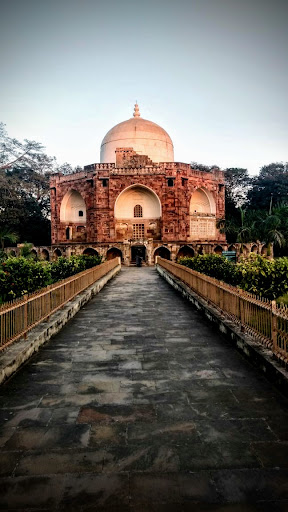
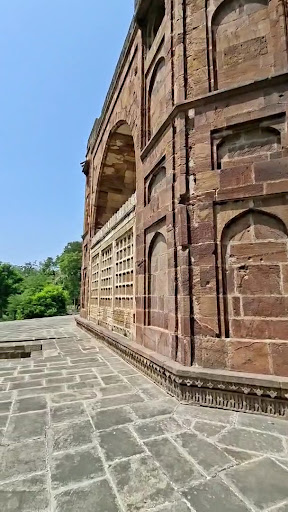
'Hazira Maqbara is a must-visit heritage spot – calm, elegant, and full of history. Free entry and great for an hour of peaceful exploration.'
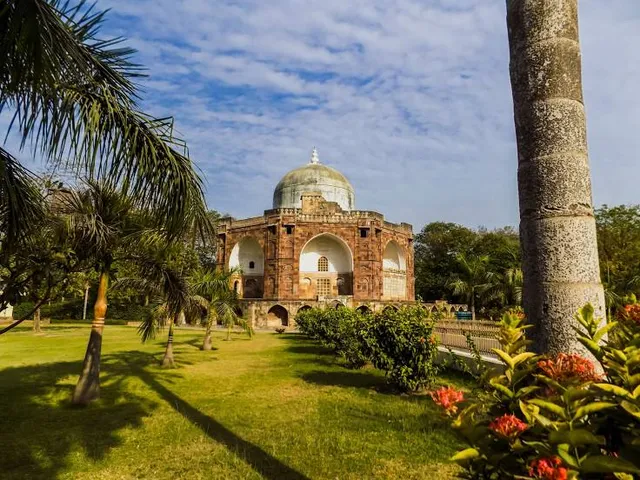
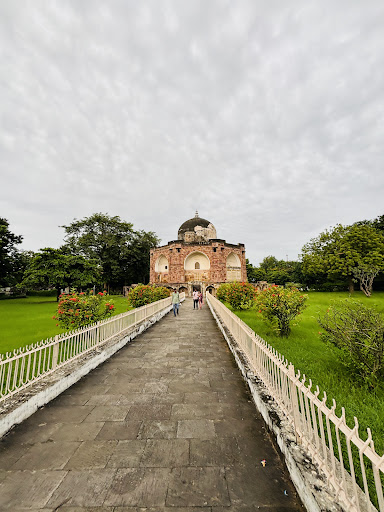
The Meer Nawab Shah Saiyed Qutubuddin Tomb, also known as Hazira Maqbara, is one of the most beautiful yet underrated historical monuments in Vadodara.
Built around the late 16th century (1586), it is the final resting place of Qutb-ud-din Muhammad Khan, a tutor to Prince Salim (later Emperor Jahangir), and his son Naurang Khan.
Architecturally, the tomb is a fine example of Mughal craftsmanship. The structure stands on a high octagonal platform with graceful arches, intricate jali work, and Quranic inscriptions carved into the walls. The double dome design, along with the merlon patterns and garden setting, gives the monument a very peaceful and regal look. The actual graves lie underground, while the chamber above holds symbolic cenotaphs.
The surrounding garden is simple but provides a calm environment for visitors. It’s an excellent spot for photography (especially in the morning or late afternoon when the sunlight enhances the symmetry and stonework). Entry is free, which makes it accessible for everyone. Mobile photography is allowed, but DSLR cameras may sometimes face restrictions.
A few practical points: Timings: Open daily from 10:00 AM to 7:00 PM. Parking: Limited space for two-wheelers; car owners may need to park a little away.
It’s generally peaceful, but visiting with company is better, especially during quieter hours.
The monument is well-maintained, though some areas could use more care and protection from loitering.
Overall, this is a must-visit heritage site in Vadodara for history lovers, architecture enthusiasts, and anyone looking for a calm, reflective outing. Despite being less crowded than other attractions, it carries immense historical value and offers a glimpse into the grandeur of...
Read moreThe tomb of Meer Nawab Shah Saiyed Qutubuddin is a remarkable historical monument located in [Please specify the location if known], which I will describe in approximately 210 words.
This stunning tomb is a testament to the rich architectural and cultural heritage of the region. It stands as a poignant memorial to Meer Nawab Shah Saiyed Qutubuddin, a prominent figure from the past whose legacy lives on through this elegant structure.
The tomb's architecture is a harmonious blend of Mughal and Persian styles, with intricate carvings, ornate domes, and delicate lattice work. The grand entrance gate is adorned with calligraphic inscriptions, inviting visitors to step into a world of history and artistry.
Inside, the tomb houses the final resting place of Saiyed Qutubuddin, and the serene atmosphere is conducive to contemplation. The interior is adorned with intricate floral designs and verses from Islamic scriptures.
Surrounded by a peaceful garden, the tomb provides a tranquil escape from the bustling city life. It's a place where visitors can appreciate the historical significance, architectural brilliance, and pay their respects to Saiyed Qutubuddin.
The tomb of Meer Nawab Shah Saiyed Qutubuddin is not only a remarkable historical site but also a symbol of cultural preservation, inviting us to explore the beauty of the past. It's a must-visit for history enthusiasts and anyone interested in the architectural marvels...
Read moreVery good place👌 Must visit this historic place
The mausoleum known as Hazira at Vadodara, Gujarat, India; contains the tombs of Qutb-ud-din Muhammad Khan who was the tutor of Salim, son and successor of Akbar, and also that of his son Naurang Khan who held important offices in Gujarat under Akbar. Qutb-ud-din was uncle of Mirza Aziz Kokafoster brother of Akbar and Governor of Gujarat thrice in between 1573 AD to 1583 AD. He was killed in 1583 by Muzaffar Shah III, the last sultan of Gujarat Sultanate. Built on high octagonal platform with smaller gates on the cardinal directions and five arches on each side. It is in the style of Mughal tombs at Delhi. The real grave is in an underground chamber and the false grave in the tomb chamber. The Quranic texts in Arabic are carved, inside tomb chamber, on lintels, arches and also above Jali work on eastern side walls. The extant parapet wall on the roof terrace is embellished with Merlondesigns in brick red color evident from the traces. The lower portion of cylindrical dome surrounding the tomb was covered with thick plaster of brick red color.
The mausoleum has a double dome and seems to have been a garden tomb and vav or step well to its across west the modern road was perhaps used for supplying the water to the...
Read more