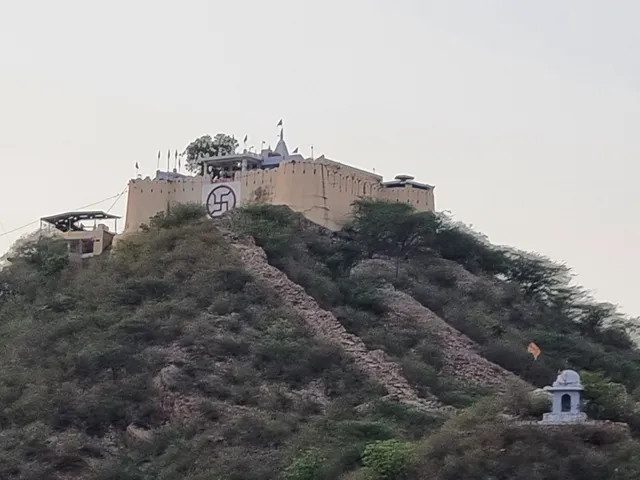
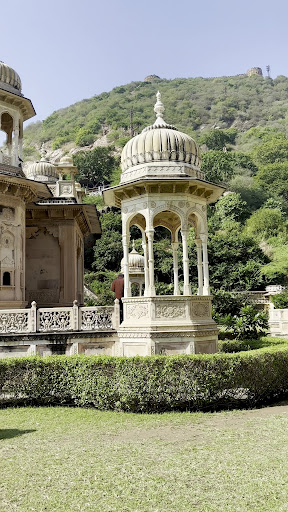
Gaitor ki Chhatriyan, nestled at the foothills of Nahargarh Fort in Jaipur, is one of the most serene and architecturally splendid memorial sites of Rajasthan. It serves as the royal crematorium for the illustrious Kachwaha dynasty, with every ruler of Jaipur—except Maharaja Sawai Ishwari Singh—commemorated here through intricately carved cenotaphs called chhatris.
Historical Significance The site was chosen in the 18th century by Maharaja Sawai Jai Singh II, the founder of Jaipur, as the final resting place for his dynasty. Since 1733, the tradition of cremating Jaipur's rulers at Gaitor ki Chhatriyan and erecting memorials in their honor continued for over two centuries. The name “Gaitor” is believed to be derived from “Gaye ka Thor,” meaning “resting place of the departed.” The only ruler not memorialized here is Sawai Ishwari Singh, whose cenotaph is located at the Jai Niwas Garden in the City Palace complex.
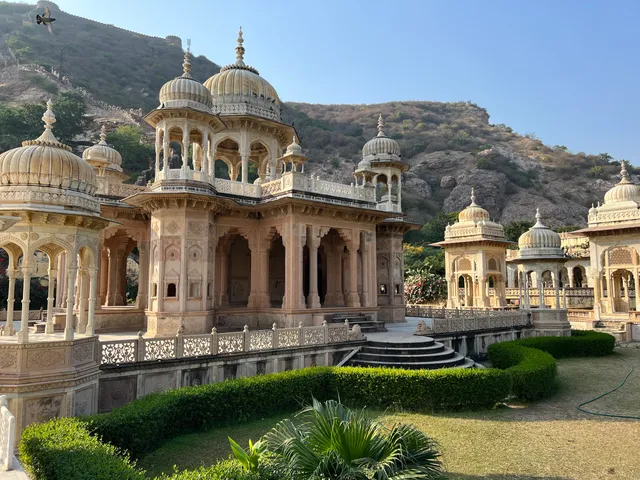
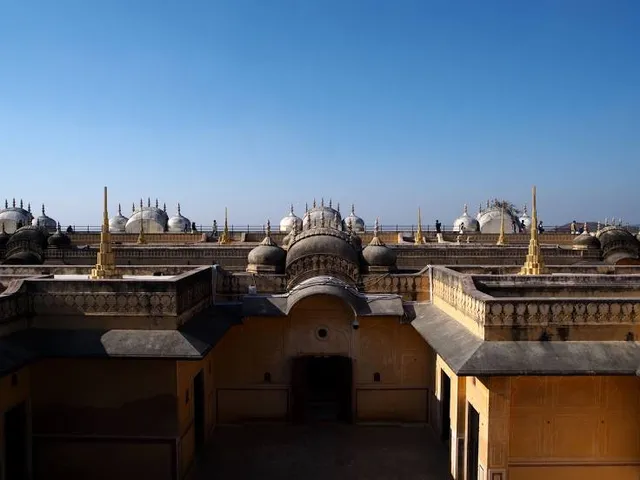
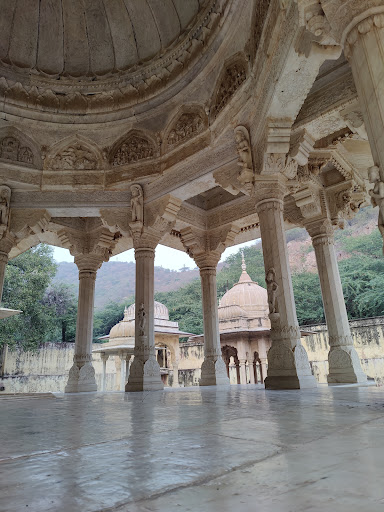
Architecture and Layout Gaitor ki Chhatriyan features a collection of chhatris—dome-shaped, open-air pavilions—built of pastel yellow sandstone and the finest Makrana marble. These memorials are architectural masterpieces combining Rajput, Mughal, and Indo-Persian influences, displaying the evolution of style and craftsmanship over generations. The complex is laid out according to Vedic principles, with memorials located near water and in secluded settings, away from the city’s hustle and bustle.
Distinct Chhatris: Each chhatri is dedicated to a particular Maharaja and reflects the tastes, wealth, and legacy of the era. The chhatri of Sawai Jai Singh II is regarded as the most exquisite—made of Makrana marble and supported by twenty pillars intricately carved with motifs of Hindu gods, dancers, musicians, and scenes from royal processions. Other prominent chhatris are dedicated to Sawai Madho Singh II, Sawai Prithvi Singh, and Sawai Jagat Singh II, with every structure differing in size and design, highlighting individuality and the changing styles through time.
Artistic Details: The cenotaphs are adorned with delicate latticework (jali), floral patterns, depictions of elephants, horses, and musical instruments. The level of detail, especially the subtle expressions and realistic folds in the carvings, stands as a testament to Jaipur's artisan skill.
Quiet Elegance: Unlike bustling tourist attractions, Gaitor ki Chhatriyan offers tranquility, with the only sound being that of birds and the rustle of leaves, making it a peaceful spot for reflection and admiration of artistry.
Cultural and Spiritual Importance These cenotaphs are not only memorials but serve as symbols of the continuity of the Kachwaha dynasty. Each new ruler oversaw the construction of a unique chhatri for his predecessor, marking respect and familial lineage. The site also highlights the deep connection between architecture, spirituality, and historical memory in Rajput tradition—a place where the soul, history, and artistry intertwine.
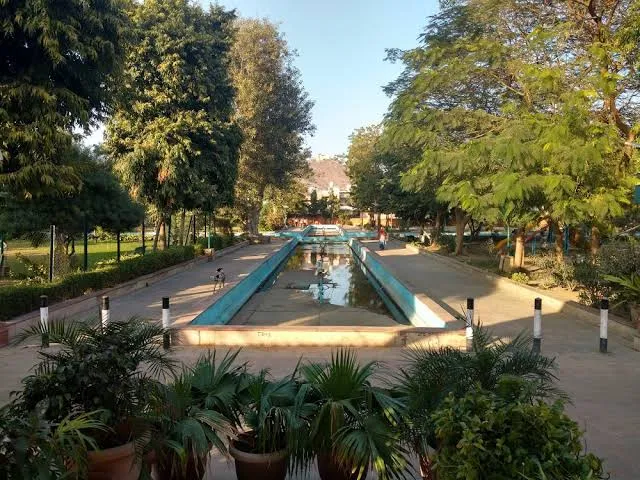
Visitor Experience Gaitor ki Chhatriyan remains off the typical tourist trail, yet it is a must-visit for anyone seeking peace, history, and artistry in Jaipur. Visitors can explore beautifully maintained gardens, take in the contrast between marble and sandstone, and enjoy views of Nahargarh Fort in the background. The shifting sunlight through lattice screens adds to the ethereal experience. Gaitor ki Chhatriyan encapsulates the royal legacy of Jaipur in stone. With its stunning chhatris dedicated to generations of rulers, the site invites contemplation and awe. It stands as a living museum of memory, artistry, and architectural brilliance—a must for those eager to encounter Jaipur’s regal heart away from its vibrant bazaars and...
Read moreHistorical Review of Gaitor Ki Chhatriyan, Jaipur
Tucked away in a quiet valley at the foothills of the Nahargarh Fort, Gaitor Ki Chhatriyan (or Gaitore Cenotaphs) in Jaipur is a regal reminder of Rajasthan’s royal past and architectural brilliance. Often overlooked by mainstream tourists, this cluster of chhatris (cenotaphs or royal memorials) serves as the final resting place for many of the Kachhwaha Rajput kings of Jaipur.
Historical Significance
The word Gaitor is believed to be a corruption of the Hindi phrase Gaye ka Thor, meaning "the resting place of the departed." This royal cremation ground dates back to the 18th century and was commissioned by Maharaja Sawai Jai Singh II, the founder of Jaipur. Since then, it became the designated cremation site for Jaipur's ruling dynasty.
Unlike typical cremation grounds, Gaitor stands apart due to its artistic grandeur and spiritual serenity. It reflects the deep reverence the Rajput rulers had for their ancestors and their commitment to leaving behind an eternal architectural tribute.
Architecture
The cenotaphs are constructed in white marble and sandstone, blending Mughal and Rajput architectural styles. Each chhatri is intricately carved with floral patterns, peacocks, battle scenes, and religious motifs, showcasing the craftsmanship of Rajasthani artisans.
Each structure is unique and reflects the personality and reign of the ruler it honors. The most notable cenotaph is that of Maharaja Sawai Jai Singh II, which is a delicately carved marble structure adorned with intricate carvings and beautiful pillars. Other prominent cenotaphs include those of Maharaja Madho Singh II and Maharaja Pratap Singh, reflecting a blend of royal dignity and artistic finesse.
Cultural and Tourist Importance
Today, Gaitor Ki Chhatriyan remains a peaceful site, offering a stark contrast to the bustling life of Jaipur. It is not only a historical site but also a serene getaway for those seeking to admire Rajasthani architecture in a tranquil setting. The backdrop of the Aravalli hills adds to its charm, making it a favorite among photographers, historians, and architecture enthusiasts.
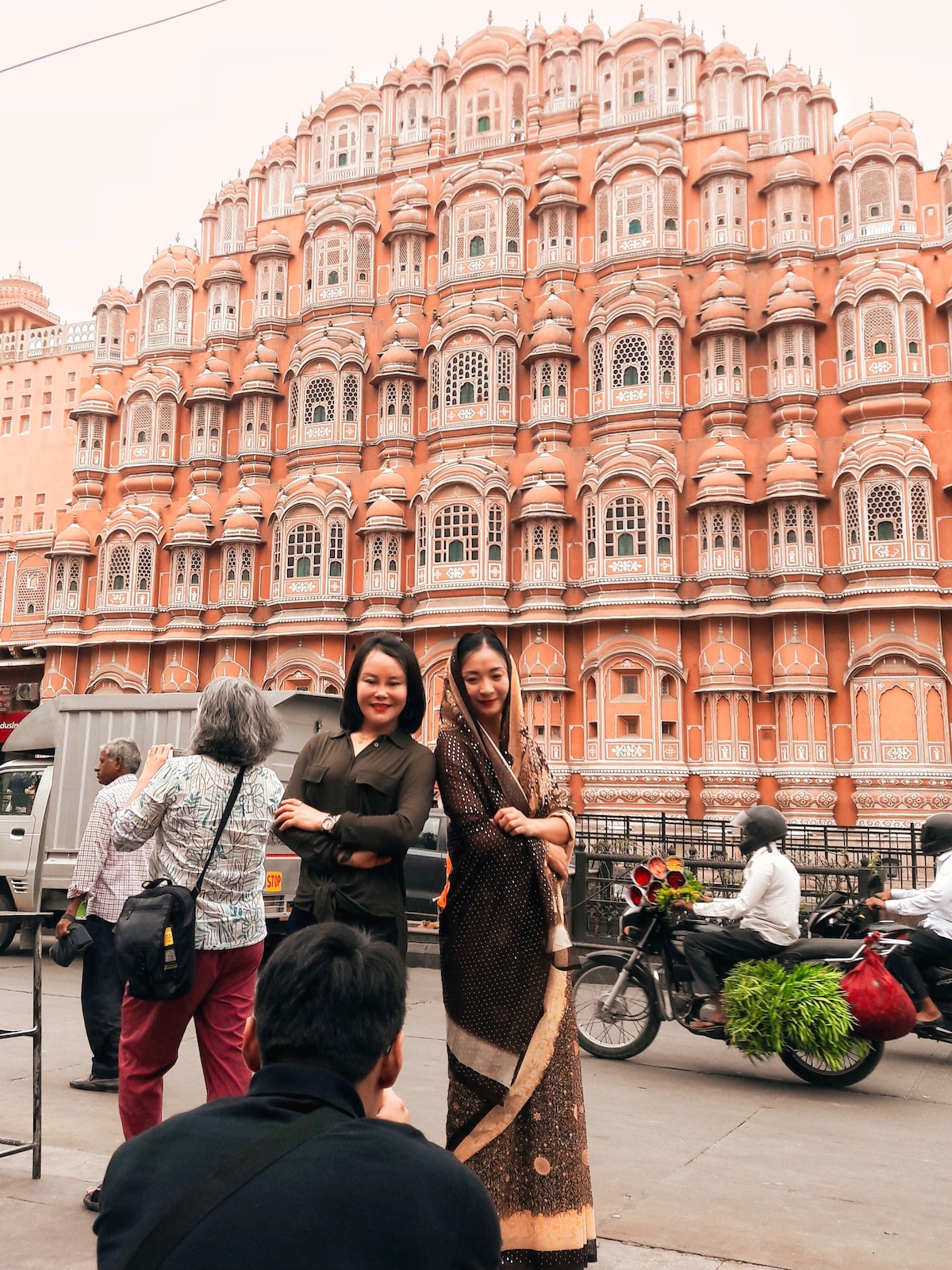
Despite being less frequented than Jaipur’s major attractions like the City Palace or Hawa Mahal, Gaitor is steadily gaining recognition for its cultural depth and historical authenticity. Its offbeat appeal makes it a hidden gem in the Pink City.
Conclusion
Gaitor Ki Chhatriyan is more than just a royal cremation ground—it's a timeless monument to Rajput valor, heritage, and artistry. It stands as a silent witness to centuries of regal legacy and serves as a poignant reminder of the impermanence of power and glory. For those interested in the lesser-known yet deeply enriching historical sites of Jaipur, Gaitor Ki Chhatriyan is...
Read moreGatore Ki Chhatriyan: A Serene Tribute to Royal Legacy in Jaipur - Gatore Ki Chhatriyan, a hidden gem in the vibrant city of Jaipur, unveils a unique blend of tranquility and regality as it stands as a majestic crematory for the revered Kachwaha dynasty. The site, meticulously designed by Maharaja Jai Singh II, the visionary founder of Jaipur, is a captivating testament to the royal heritage of Rajasthan.
The highlight of Gatore Ki Chhatriyan lies in its intricate stone monuments, each a masterpiece in Vedic architecture with Indo-Persian influences. As you step into this historical burial ground, you are greeted by a serene ambiance that encourages contemplation. The location, set in a tranquil landscape, invites visitors to take their time and absorb the rich history embedded in the beautifully carved cenotaphs.
The cenotaphs, scattered like regal towers and shrunken open-air palaces, showcase the architectural prowess of the artisans of yesteryears. Topped with umbrella-shaped domes or chhatris, these monuments are made of either marble or sandstone, adding a diverse touch to the landscape. The attention to detail is awe-inspiring, with intricate carvings depicting scenes from nature, battles, and the majestic presence of elephants, symbolizing the grandeur of the Rajput dynasty.
The historical significance of Gatore Ki Chhatriyan adds depth to the visitor's experience. Serving as the crematorium for the Kachwahas, the cenotaphs mark the official resting places of the former rulers. It is a place where the essence of a bygone era lingers, inviting you to reflect on the legacy of the royals who once graced the palaces of Jaipur.
While exploring this enthralling site, it is crucial to approach with respect and sensitivity, acknowledging the solemn history of the grounds. The tranquility of Gatore Ki Chhatriyan allows for a peaceful escape from the bustling city, offering a serene setting for those seeking a deeper connection with Jaipur's rich cultural tapestry.
In conclusion, Gatore Ki Chhatriyan stands as one of Jaipur's best-kept secrets, inviting visitors to unravel the stories etched in stone and pay homage to the royal lineage. With its captivating architecture, serene ambiance, and historical significance, this hidden treasure is a must-visit for those looking to delve into the soul of...
Read more