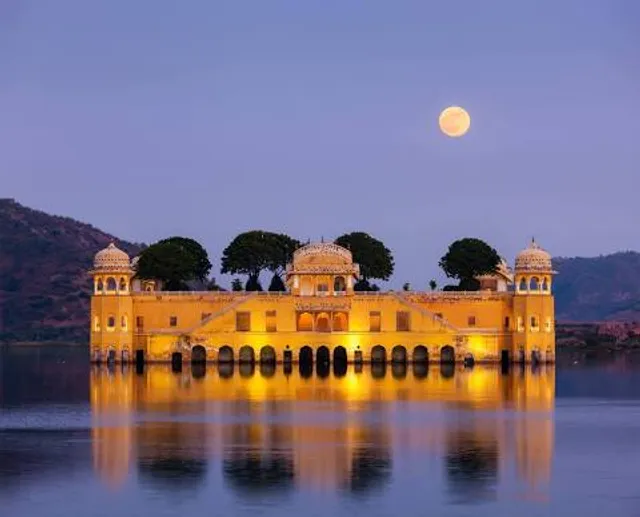
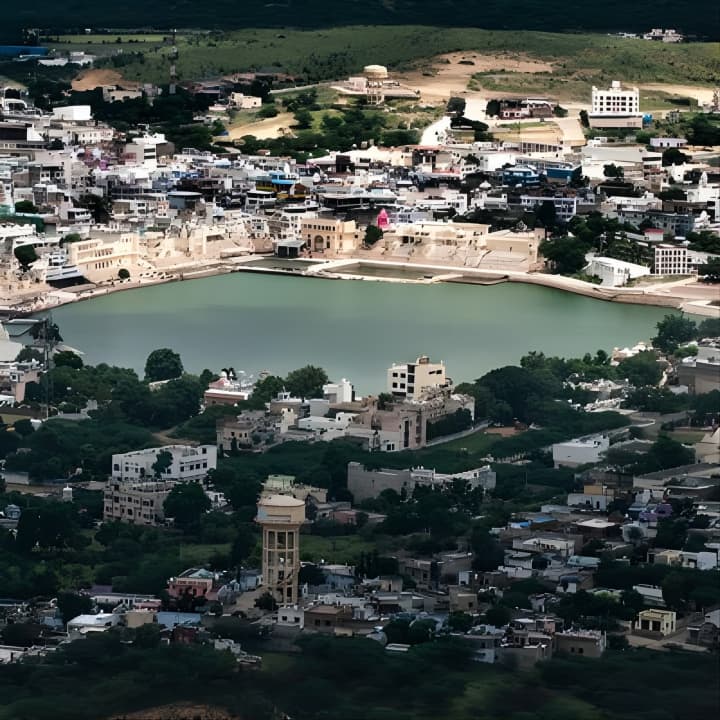
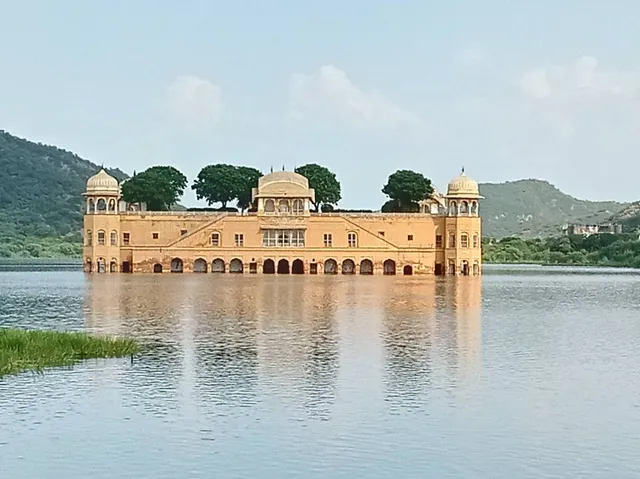
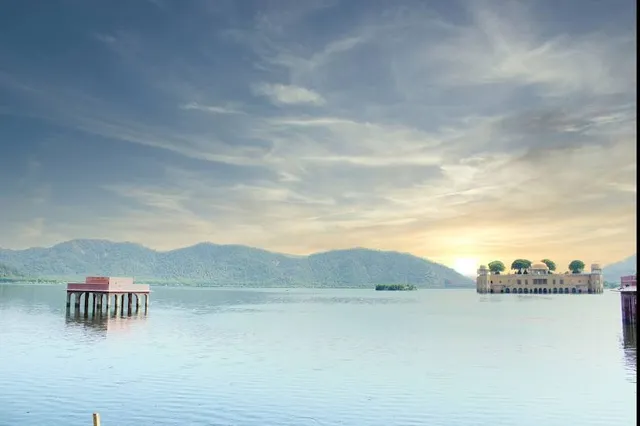
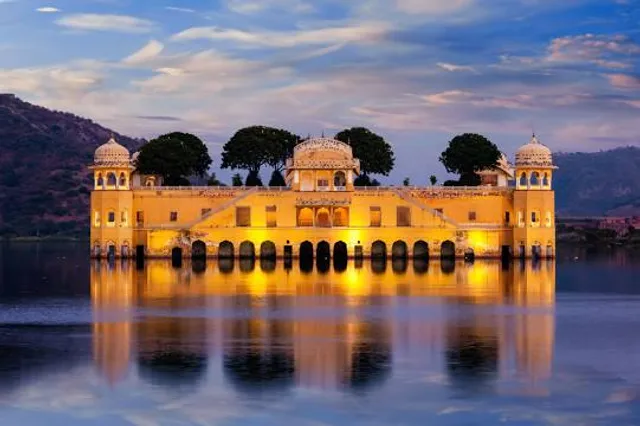
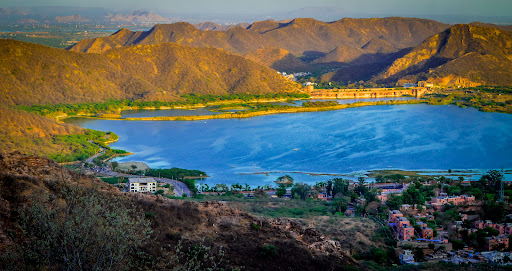
The lake, situated to the north of Jaipur city lies between Amer, the historic city and Jaipur, the provincial headquarters of Rajasthan state. It has a water spread area of 300 acres (121 ha) and is enclosed by the Aravalli hills on the north, west and eastern sides, while the southern side consists of plains that are intensely inhabited. There is the Nahargarh Fort (Nahargarh meaning home of tigers) in the hills that provides a commanding view of the Man Sagar Lake and the Jal Mahal palace, in addition to a beautiful view of the city of Jaipur. The lake was created by constructing a dam across the Darbhawati River, between Khilagarh hills and the hilly areas of Nahargarh, in the 16th century. The catchment area (watershed) for the lake is 23.5 square kilometres (9.1 sq mi) contributed by a semi-urban area as to 50% (generating in heavy rains unpaved street erosion) and hilly terrain accounting for the balance, being the largely-deforested or precipitous Aravalli hills, which also creates siltation. It is believed such deposition did not have to be fixed with dredging and filtration before the 20th century. Rainfall averages 657.4 millimetres (25.88 in) per year (90% of which occurs during June to September). The outlet end of the dam feeds a large irrigation system (obligatory water demand for this is reported to be 2,410,000 cubic metres during the five months from November to March). Two large nalas (streams) that also drain the surrounding Nahargarh hills and Jaipur are the Brahmpuri and Nagtalai, which bring in untreated sewage, in addition to sediment run-offs of unpaved streets.24
The Aravalli hills surrounding the lake area, towards the north east of Jaipur, have quartzite rock formations (with a thin layer of soil cover). Rock exposures on the surface in some parts of the project area have also been utilised for constructing buildings. From the north east, the Kanak Vrindavan valley, where a temple complex sits, the hills slope gently towards the lake edge. Within the lake area, the ground area is made up of a thick mantle of soil, blown sand and alluvium. Forest denudation, particularly in the hilly areas, has caused soil erosion, compounded by wind and water action. Due to these human factors silt built-up in the lake raises the bed level of the lake annually by many...
Read moreSagar Lake in Jaipur is an absolute gem and a testament to the city's rich history and natural beauty. From the moment you set eyes on it, you'll be captivated by its stunning charm and picturesque surroundings. The lake's serene waters and majestic architecture make it a truly enchanting destination for locals and tourists alike.
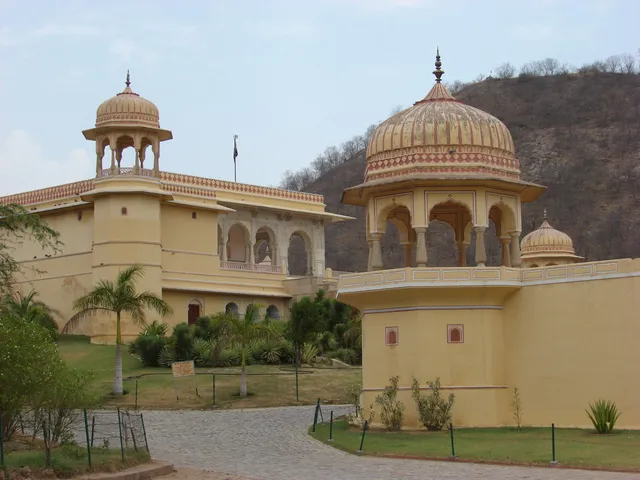
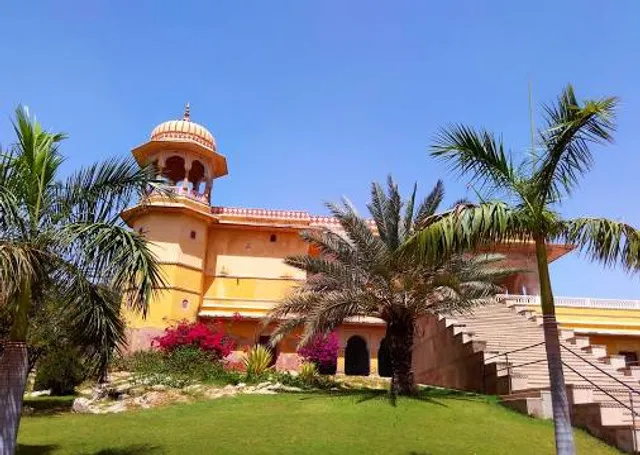
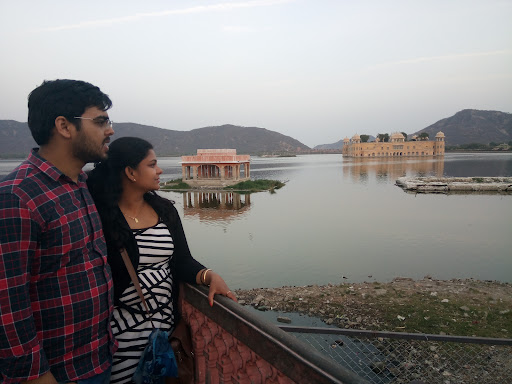
The architecture surrounding Sagar Lake is awe-inspiring, with intricate designs and historical significance that transports you to a bygone era. The reflection of the surrounding structures on the tranquil waters adds an extra layer of beauty to the scenery.
Visiting Sagar Lake early in the morning is an absolute treat. The soft morning light enhances the lake's beauty, creating a magical ambiance that is perfect for soulful contemplation or a leisurely stroll along the water's edge. It's a time when the lake is at its most peaceful and the surrounding landscape is embraced by a sense of serenity.
However, it's disheartening to witness the negative impact of human carelessness on this natural wonder. Despite the government's efforts to maintain cleanliness, some visitors seem to overlook the importance of preserving this beautiful location. The sight of garbage left behind by irresponsible visitors can tarnish the overall experience and threatens the delicate ecosystem of the lake.
As visitors, it is our duty to respect and preserve the natural beauty of such places. Let us remember that our actions have consequences, and each one of us can make a positive impact by being responsible and mindful of our surroundings. Together, we can ensure that Sagar Lake remains a pristine and magnificent location for generations to come.
In conclusion, Sagar Lake in Jaipur is undeniably a beautiful destination with its majestic architecture and captivating landscape. While the issue of garbage left by visitors is a concern, we can make a difference by promoting cleanliness and responsible tourism. Embrace the tranquility of early mornings at Sagar Lake, and let us all strive to preserve the splendor of this...
Read moreThis place will always be something special that has happened to me. For many years, the beautiful Mansagar Lake (which once used to be precious in history) served as a wasteland wherein the sewer from the nearby area of Brahmapuri & Nagtalai was dumped. The palace & the lake had already lost its charm as there was nothing to see except the filthy smell & deteriorating palace. Now, the things are not the same, as the lake has been restored. Government of Rajasthan has made tremendous efforts over the last 6 years to ensure the same. For restoration of cleaner Mansagar Lake, they had built a ‘fish shaped’ Retaining wall & some water treatment plant which treated the sewerage water from Brahmaputra & Nagtalai & purifies it to be restored in the Mansagar Lake, while the roughage is separated & diverted to the either side of the retaining wall. Nowadays in the best interest of maintaining the rich heritage of the fort, common people ain’t allowed to visit the palace except some high profile personalities. Still it doesn't keep off people from spreading nuisance & infect the lake by dumping the garbage & fish food into the lake, even when it is strictly prohibited. Strict guard system shall be deployed to maintain the clarity of the lake. It is simply annoying to see how a famous lake is...
Read more