Hazratbal Shrine: A Sacred Landmark of Srinagar
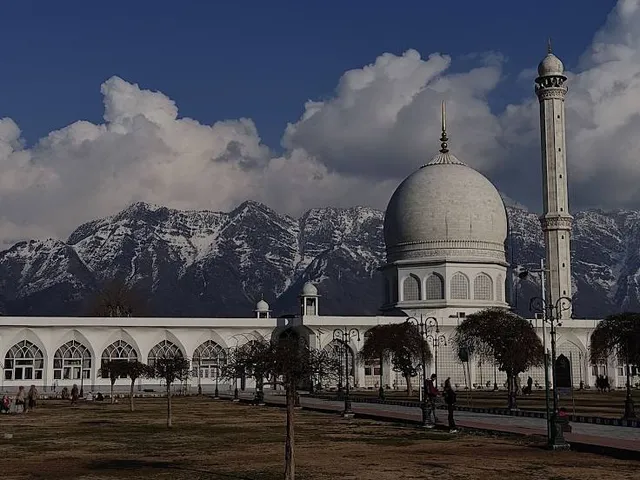
The Hazratbal Shrine is one of the most revered religious sites in Srinagar, significant both spiritually and culturally for the people of Kashmir. Situated on the northern shores of Dal Lake, it is not only known for its historical importance but also for its peaceful setting against the backdrop of snow-capped mountains.
Overview
Location: Situated on the northern edge of Dal Lake, approximately 10 km from Srinagar city center.
Significance: Dedicated to Hazratbal, meaning "holy place," the shrine is famous for housing a relic believed to be the hair of the Islamic Prophet Muhammad.
Visitors: A major destination for Muslim pilgrims, tourists, and locals who seek spiritual peace and scenic beauty.
Historical and Religious Significance
Relic of Prophet Muhammad: The shrine is believed to house a relic known as "Moi-e-Muqqadas", which is a sacred hair strand of Prophet Muhammad. The relic is displayed to the public on special occasions, particularly during the month of Ramzan.
Built By: Initially built in the 17th century during the reign of Mughal Emperor Shah Jahan by his governor, it was later renovated and expanded in the 20th century.
Sufism and Pilgrimages: The site is deeply associated with Sufism, and many Sufi scholars visited the shrine throughout history.
Architectural Features
Domed Structure: The Hazratbal Shrine features a white marble exterior and is topped by an elegant dome, which gives it a distinctive appearance. The combination of Islamic architecture and Kashmiri wooden craftsmanship can be observed in the structure.
Courtyard and Minarets: A large open courtyard surrounds the shrine, adding to its peaceful and open atmosphere. The site is also flanked by tall minarets, adding a sense of majesty.
Serene Surroundings: The shrine offers stunning views of the surrounding landscape, with the pristine waters of Dal Lake at its base and the majestic Zabarwan Range in the distance.
Things to Do at Hazratbal Shrine
Spiritual Experience:
The shrine is a place of prayer, meditation, and reflection. Visitors can participate in prayers or simply absorb the spiritual ambiance of the site.
Boat Ride:
From the main city, tourists often take Shikara rides on Dal Lake to reach the shrine, which adds to the charm of the visit and provides a scenic view of both the lake and the mountain range.
Picnicking:
The peaceful surroundings of the shrine make it a popular spot for locals and visitors to picnic. The serene landscape around the shrine, combined with Dal Lake's placid waters, creates a peaceful setting.
Accessibility
By Boat: The most scenic and common way to reach the shrine is via a Shikara ride across Dal Lake. This method offers a peaceful and scenic journey, allowing visitors to experience the lake’s beauty.
By Road: The shrine is also accessible via road, with easy access from Dal Lake or the city center.
Best Time to Visit
Summer (March to June): The pleasant weather makes it perfect for visiting and exploring the serene surroundings.
Ramzan (Month of Fasting): A particularly special time for Muslims, who come to visit and pray during the holy month, especially to see the relic during its public display.
Autumn (September to November): The fall foliage around Dal Lake offers beautiful views.
Pros
Spiritual and Cultural Value: It's one of the most sacred sites in the region for Muslims, deeply intertwined with Kashmir's religious traditions.
Scenic Beauty: Located on the edge of Dal Lake, it offers a breathtaking landscape and serene ambiance.
Historical Significance: The relic housed in the shrine and its connection to the Prophet Muhammad make it an important historical and religious landmark.
Cons
Limited Facilities: There aren't many amenities around the shrine, so visitors should come prepared.
Crowds: It can become quite crowded during major religious holidays, particularly...
Read moreThe Hazratbal Shrine (Kashmiri: درگاه حَضْرَت بل), popularly called Dargah Sharif ("the Holy Shrine"), is a Muslim shrine located in Hazratbal, Srinagar, Jammu and Kashmir, India. It contains a relic, Moi-e-Muqqadas, which is widely believed to be the hair of the Islamic prophet Muhammad. It is situated on the northern bank of the Dal Lake in Srinagar, and is considered to be Kashmir's holiest Muslim shrine.
Quick Facts Religion, Affiliation ...
The name of the shrine is a combination of the Persian word hazrat (lit. 'respected') and the Kashmiri word bal (lit. 'place').
The shrine contains strands of what is believed by many Muslims to be the hair of the Islamic prophet Muhammad. The relic was first brought to Kashmir by Syed Abdullah Madani, a purported descendant of Muhammad who left Medina (in present-day Saudi Arabia) and settled in the South Indian city of Bijapur in 1635, at a time when the Islamic Mughal Empire was rapidly expanding across India.
Following Abdullah's death, his son Syed Hameed inherited the relic. The region was conquered by the Mughals shortly afterwards, and Hameed was stripped of his family estates. Finding himself unable to care for the relic, he passed it to Khwaja Nur-ud-Din Eshai, a wealthy Kashmiri businessman.
However, when the Mughal emperor Aurangzeb was informed of the holy relic's existence and transfer, he had it seized and sent to the shrine of Sufi mystic Mu'in al-Din Chishti in Ajmer, and imprisoned Eshai in Delhi. After nine days Aurangzeb had a dream of Muhammad with four caliphs: Abu Bakr, Umar, Usman and Ali. In the dream, Muhammad ordered him to send the Moi-e-Muqaddas to Kashmir from Ajmer. Then Aurangzeb returned the holy relic to Eshai and allow him to take it to Kashmir. However, Eshai had already died while imprisoned. By 1700, the relic had been transported to Kashmir, along with the body of Eshai. There, Inayat Begum, the daughter of Eshai, became the custodian of the relic and established the Hazratbal Shrine. Since then, her male descendants have been caretakers of the relic at the mosque.
1963 relic disappearance episode
See also: 1963 Hazratbal Shrine theft
The Moi-e-Muqqadas, a relic widely believed by Muslims to be the hair of Muhammad, was reported to have gone missing from the shrine on 27 December 1963. Following its disappearance, mass demonstrations were held all over the state, with hundreds of thousands of protesters out in the streets.[citation needed] On 31 December, Indian Prime Minister Jawaharlal Nehru made a broadcast to the nation on the disappearance of the sacred Muslim relic, and sent a team from the Central Bureau of Investigation into Jammu and Kashmir to probe the suspected theft.
The incident led to communal tensions and riots in the Indian state of West Bengal and East Pakistan (now Bangladesh), due to which India saw a refugee influx of around 200,000 people between December 1963 and February 1964.
The relic was recovered by Indian authorities on 4 January 1964.
Demands were made that it be officially identified by the elders. It was charged that political bosses had stolen the hair so they could later come to power by taking credit for...
Read moreThe Hazratbal Shrine also houses a sacred relic - the "Aspera-e-Zahoor" or the hoof of Hazrat Ali's horse, which is kept alongside the holy hair of Prophet Muhammad The hoof is believed to have been presented to the Kashmiri ruler Sultan Sikander Shah by Timur, the Central Asian conqueror, in the 15th century. The relic has immense religious significance for Muslims, especially the Shia community, who consider Hazrat Ali as one of the most important figures in Islamic history.
The hoof relic is kept in a separate chamber adjacent to the mosque's main prayer hall and is brought out for public viewing on special occasions. Visitors can also see the intricate and detailed work done on the casing and the beautiful inscription in Arabic that describes the history of the relic.
The presence of the holy relics at the Hazratbal Shrine makes it one of the most revered and visited pilgrimage sites in the region. The shrine attracts visitors from all over the world, who come to seek blessings and pay their respects to the holy relics.
In conclusion, the Hazratbal Shrine is not just a magnificent architectural marvel but also a significant pilgrimage site that houses sacred relics of immense religious importance. A visit to this holy shrine can provide a unique and unforgettable experience for anyone interested in Islamic history and culture. Dargah Hazratbal, also known as the Hazratbal Shrine, is a revered Islamic shrine located in Srinagar, Jammu and Kashmir, India. The shrine is dedicated to a hair of the Prophet Muhammad, which is believed to be kept in the mosque's dome.
The shrine is situated on the banks of the picturesque Dal Lake, surrounded by beautiful gardens and mountains, and is considered one of the holiest shrines in the world for Muslims. The shrine attracts thousands of visitors every year, including both devotees and tourists.
The architecture of the Dargah Hazratbal is a beautiful blend of Mughal and Kashmiri styles, with intricate carvings and beautiful calligraphy adorning the walls and ceilings. The mosque's main hall is spacious and well-lit, and the atmosphere inside is peaceful and serene.
Visitors are required to adhere to a strict dress code when visiting the Dargah Hazratbal. Men are required to wear traditional Islamic clothing, while women are required to wear hijabs and cover their arms and legs. Cameras and other electronic devices are also prohibited inside the mosque.
One of the most significant events held at the Dargah Hazratbal is the celebration of Eid-ul-Fitr, which marks the end of the holy month of Ramadan. The celebrations at the shrine are attended by thousands of devotees, who come to offer prayers and seek blessings. the Dargah Hazratbal is a must-visit destination for anyone interested in Islamic history and architecture. The shrine's beautiful location, serene atmosphere, and historical significance make it a unique and unforgettable experience for...
Read more