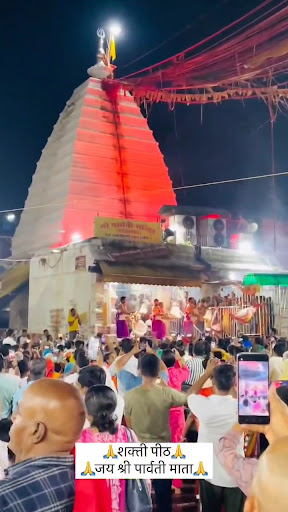
World famous pilgrimage Baidyanath Dham is situated in the district headquarter of Deoghar in the state of Jharkhand. Of the revered twelve Joytirlingas it stands at the fifth position. In ancient time this land was very pious and picturesque. It is inscripted in Shiv Purana as Haritaki or Ketaki wood. A prevalent story goes on to state, that heart of Sati had fallen here. Which was happened as the dead body of Sati was dissected by God Vishnu with his Sudarshan Chakra. In this way Shiva and Shakti are conjugally immanent in this Joytirlinga.
The Matsyapuran narrates the place as Arogya Baidyanathitee, the holy place where Shakti lives and assists Shiva in freeing people from incurable diseases. This whole area of Deoghar was under the rule of the Kings of Gidhaur who were much attached with this temple.
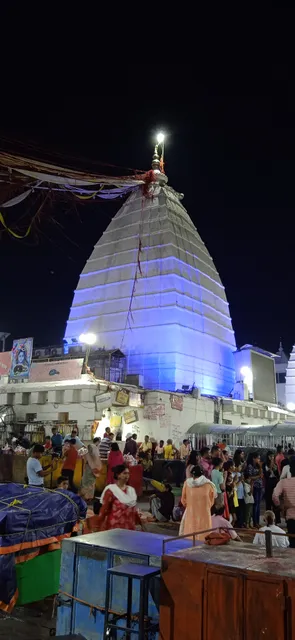
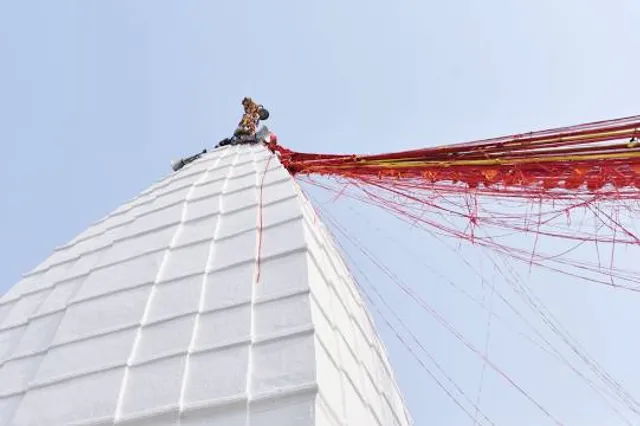
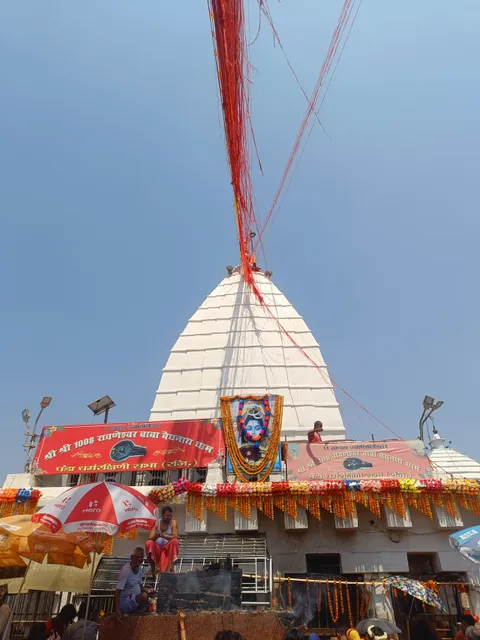
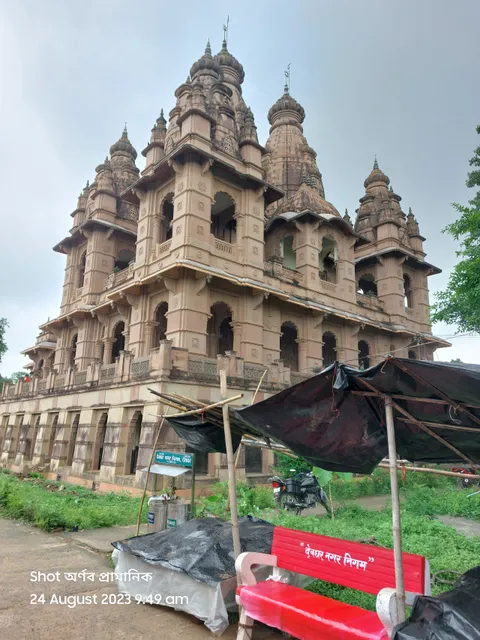
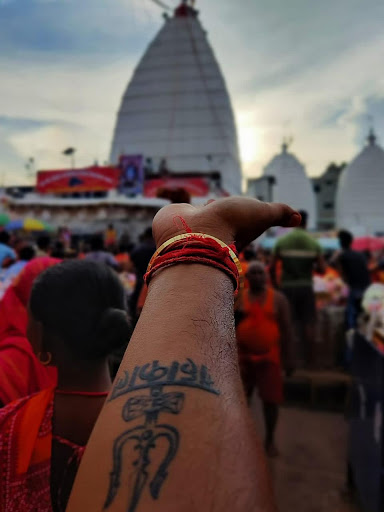
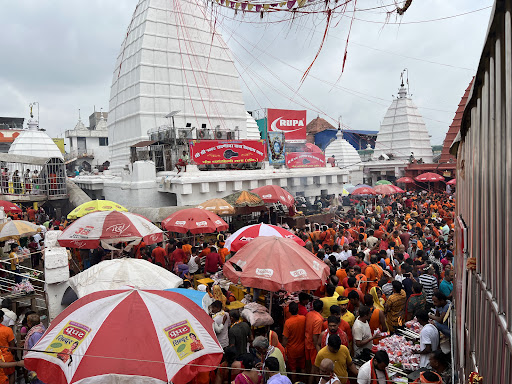
While there are several such legends associated with this sacred land, history too proves its importance. A mention of the temple can be found from 8th century AD, during the rule of the last king of the Gupta dynasty, Adityasena Gupta. During the Mughal period, Raja Man Singh, the ruler of Amber, is said to have built a pond here, which is known as Mansarovar. The temple faces the east and is a plain stone structure with a pyramidal tower, which is 72 ft high. Atop it are three compactly set gold vessels, along with a Panchshula (five knives in a trident shape). There is also an eight-petaled lotus called Chandrakanta Mani.
Mythology: According to mythology during Baidyanath Joytirlinga transportation by demon king Ravana to Lanka, mid way on his route was this holy land. As depicted Ravana had got this Shivalinga as boon by offering extreme meditation and had he installed this Joytirlinga in Lanka no would have been succeed in killing him. Due to Ravana’s cruelty lord Shiva handed over the Joytirlinga to him on the condition that if he would ever put the Jyotirlinga on the ground, it would not be possible to lift it again. During the course of his journey, with the intent to create hurdles, deities got water and lord Barun entered into Ravana’s belly and with its effect Ravana felt pee experience and was compelled to land for being free from natural call. He landed down his Puspak Vimana and gave the Joytirlinga to a nearby herd boy who was lord Vishnu in disguise. After having been freed from natural call as Ravana came to take Joytirlinga, he was astonished to see that herd boy had disappeared and the Joytirlinga was put on ground. As per conditions Ravana could not lift the Joytirlinga after making so many attempt. Consequently with extreme anger he thrusted the linga with his thumb and went away. In original Joytirlinga the mid part of it was warped.
How to Reach: Baidyanathdham is located between 24.4852 degree north and 86.6948 degree east. From Jasidih junction, it is 06 km away; which is on under Howrah-Delhi broad gauge line. To reach by Air, the nearest airports are Kolkata, Patna & Ranchi, those are respectively 280 km, 350 km & 300 km away from Deoghar, from where pilgrims can avail train, bus & taxi services.
Nearby Places: In the surrounding of Baidyanathdham there are so many religious and tourist places namely Harilajori. Tirkut Parvat, Nandan Pahar. Nawalakha Mandir. Rekhiya Asharam, Tapowan, Satsang Nagar, etc. These places are gifted with natural glory by the God and pilgrims can have heavenly reminiscence by on...
Read moreIn the cosmic tapestry of spiritual odysseys, there are journeys that transcend the physical realm, awakening the soul and igniting a connection to the divine that is beyond words. Such was the voyage undertaken by Baba Baidyanath Dham, riding astride a humble motorbike, as he embarked on a profound pilgrimage to the twelve sacred Jyotirlingas across India. This extraordinary expedition from Belagavi was not just a physical feat; it was a spiritual sojourn that resonated with the vibrations of devotion, resilience, and unwavering faith.
As Baba Baidyanath Dham embarked on his journey, his bike became a vessel of transcendence, carrying him through the diverse landscapes of India, from bustling cities to serene countryside, from arid terrains to lush valleys. Each twist of the road mirrored the twists of life itself, and every turn of the wheel represented the ebb and flow of our spiritual quests. The motorbike was no longer a mere machine; it transformed into a partner in the pilgrimage, echoing the rhythm of Baba Baidyanath Dham's heartbeat and the yearning of his soul.
The twelve Jyotirlingas, each representing a manifestation of Lord Shiva, stood as beacons of divine energy, drawing Baba Baidyanath Dham closer to the ultimate truth. At every sacred site, his devotion resounded like a hymn, his unwavering faith a testament to the profound connection he shared with the cosmos. The Jyotirlingas were not just stones; they were conduits of celestial energy that intertwined with Baba Baidyanath Dham's own energy, creating a symphony that resonated throughout the universe.
The pilgrimage was not without its challenges. Baba Baidyanath Dham encountered physical exhaustion, adverse weather, and the trials of the open road. Yet, in these trials, he found lessons that mirrored the challenges of life itself—tests that polished his spirit and fortified his resolve. The bike became a metaphor for the human body, vulnerable and resilient, fragile yet capable of great strength. Through every setback and triumph, Baba Baidyanath Dham's spirit blazed like a steadfast flame, undeterred by the external world.
The journey held lessons beyond the mere act of visiting the Jyotirlingas. It taught the significance of patience, the beauty of surrender, and the power of embracing the unknown. The open road became a metaphor for the uncharted territories of the soul, and the bike, a vessel that carried him through his inner landscape, where he confronted his own fears, desires, and aspirations.
Baba Baidyanath Dham's journey was not just a ride; it was a revelation. It was a reminder that the path to enlightenment is not a destination but a journey—a journey that embraces both the sacred and the mundane, the highs and the lows, the challenges and the blessings. And as he returned to Belagavi, the echoes of his journey continued to resonate, an eternal flame that kindled the souls of those who heard his tale—a tale of a spiritual ride that united man, machine,...
Read moreVisiting Shree Baba Baidyanath Jyotirlinga was a deeply spiritual and unforgettable experience. As one of the twelve Jyotirlingas, this temple holds immense significance, and I was eager to seek the blessings of Baba Baidyanath. However, I had heard about the massive crowds, and experiencing it firsthand was something else entirely.
Despite having a VIP pass, we still had to wait 2-3 hours for darshan. The crowd was overwhelming, with thousands of devotees gathered, chanting “Har Har Mahadev” in devotion. The atmosphere was filled with energy, faith, and devotion. Standing in such a long queue for hours was exhausting, but seeing the dedication of so many people made it feel like a part of the journey rather than an inconvenience.
After patiently waiting and making our way through the temple premises, the moment we finally reached the sanctum for Sparsh Darshan was beyond words. Unlike many other Jyotirlingas where darshan is from a distance, here, we were blessed to touch the Jyotirlinga and perform Jalabhishek with our own hands. The opportunity to pour water directly on the sacred Shivling was truly divine. In that moment, all the fatigue and waiting felt insignificant. It was just pure devotion, an overwhelming sense of peace, and a connection to Lord Shiva like never before.
One of the unique aspects of the Baba Baidyanath temple complex is the presence of several smaller temples surrounding the main sanctum. These temples are dedicated to various deities, including Lord Ganesha, Lord Vishnu, Lord Kal Bhairav, and Lord Hanuman. Among them, the Maa Parvati Temple holds special importance because it is also revered as a Shakti Peeth.
According to legend, Maa Sati’s heart fell at this very place when Lord Vishnu used his Sudarshan Chakra to cut her body into pieces to end Lord Shiva’s grief after her self-immolation. Because of this, the Baidyanath Dham is one of the rare places in India where a Jyotirlinga and a Shakti Peeth exist together, signifying the divine union of Lord Shiva and Goddess Shakti. Devotees believe that worshipping here grants immense spiritual power and fulfillment of wishes.
However, one noticeable issue was the cleanliness of the temple premises. Given the number of devotees visiting daily, the area could be maintained better. The management should focus more on keeping the surroundings clean, ensuring a more pleasant experience for visitors.
Coming out after the darshan, I felt a sense of fulfillment and positivity. The long wait and the crowded environment were completely worth it for that one divine moment. The experience of Sparsh Darshan and Jalabhishek is something I will cherish forever. If you’re planning to visit, be prepared for a long wait, but trust me, in the end, it’s all worth it. The blessings and spiritual energy you receive here stay with you long...
Read more