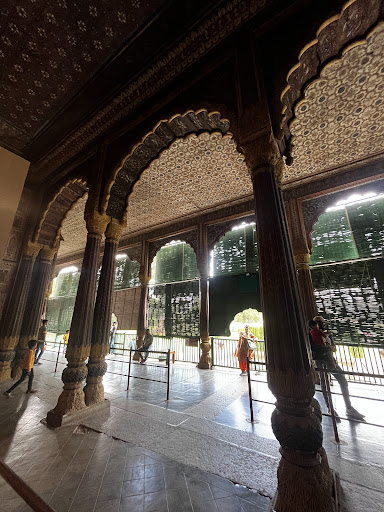
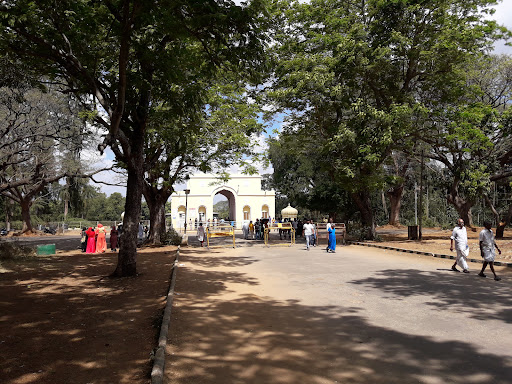
‘Daria Daulat Bagh’ is the name of garden. It means ‘Garden of Wealth'. It is surrounding the palace, which is built out of Rose and Teakwood. The palace is identified as Dariya Daulat Palace, or ‘Summer Palace’ of Tippu Sultan. ‘Indo-Sarcenic style’ is the method in which it is built using wood, on rectangular plan, on raised platform. The qualitative quantity of wood used in constructions to its ceilings, walls, pillars, canopies and arches are remarkably wonderful and worth, because they are very brightly and artistically painted. The interesting aspect to observe is that there are open corridors along the four sides of the platform where wooden pillars are seen at the edges of the Plinth. The walls connect western and eastern wings while other two wings have recessed bays with pillars supporting the roof. Curiously its staircases are not immediately visible. They are built in the four partition walls dividing audience hall into four rooms at four corners. The central hall connects eastern and western corridors. The wonderful rosewood arches above stone pillars as well as the paintings on the ceilings and walls of the palace are beautiful. As I have keenly observed the outer walls are dedicated to war scenes, portrait paintings and its inner walls have elegance flowery outline in geometric designs. The Mysore paintings in colorful style on all the space available on walls, pillars, canopies and arches have eye-catching effect on viewers. Added to the lush green garden and open space around would tell the personification of Tippu Sultan. He used this palace as a retreat from the strenuous life of a king. The lively colour used and arabesque work gives the palace a distinctive and gorgeous facet. But the 'Zenana' or 'Harem' is in destroyed condition. The battle scenes and portraits on outer walls of the palace and inner walls decoration with scrolls of thin plants and flower are attractive. Though ceilings of palace are wooden they are pasted with canvas paintings with flowery model. The celebrated victory achieved by Haider Ali and Tippu Sultan over the English led by Col. Bailee in the battle of Pollilur near Kanchipuram in 1780 are well depicted on western wall. French soldiers led by Lally, looking through a telescope are painted on the extreme top. The armies led by Haider Ali and Tippu Sultan going to battle and on the right are seen on panels on left wing while Tippu’s army has covered up Col. Bailee seated in palanquin along with his English army are special attraction among the paintings. Nizam of Hyderabad with his army of horsemen and elephants has arrived late to help his English allies, (probably deliberately and intentionally to help Tippu indirectly) are painted on top panels. The grand sceneries of Darbars of different contemporaries of Tippu Sultan, Rani of Chittor, King of Tanjore, Raja Benares, Balaji Rao II Peshwa, Magadi Kempegowda, Madakari Nayaka of Chitradurga and Krishnaraja Wadeyar II are painted in Mysore style of paintings on eastern wall conspicuously in five rows. On one spot the painting depicts Tippu's soldiers giving tuff fight to British army. We can clearly see many British officers in the painting. However it was the fatal final Mysore battle when Srirangapatana fell in the hands of British and killing of Tippu on 4.5.1799. Fort walls, portion of Palace and minarets of mosque are painted in the background. I am sure the splendid work of art provides you the most pleasant and historically enriching pleasure trip. Your journey from Mysore to Daria Daulat Bagh will be easy as there are many public and privates buses, cabs, vans to reach the...
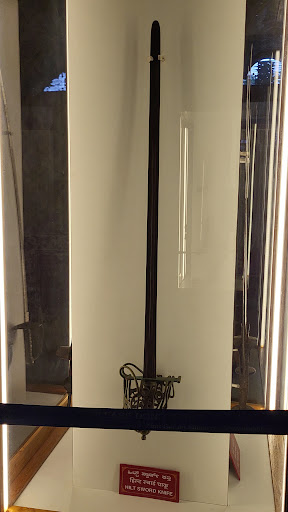
Read moreHistorical palace of Tippu Sultan popularly known as the "Tiger of Mysore", built this palace in 1784 and ruled Mysore from here for a short time after his father Hyder Ali wrested power from the Wodeyars in the middle of the 18th century. The palace is built in the Indo-Sarcenic style in mostly made of teakwood. The palace has a rectangular plan and is built on a raised platform. There are open corridors along the four sides of the platform with wooden pillars at the edges of the Plinth. The western and eastern wings have walls the other two wings have recessed bays with pillars supporting the roof. The four staircases are inconspicuous, built in the four partition walls that divide the audience hall into four rooms at four corners with a central hall connecting the eastern and western corridors. The most stunning feature of the palace is that all the space available on the walls, pillars, canopies and arches have colorful frescoes in the style of Mysore paintings. The outer walls of the palace have frescoes of the battle scenes and portraits. The inner walls are decorated with scrolls of thin foliage and floral patterns. The wooden ceilings of the palace are pasted with canvas painted with floral patterns.On the western wall are painting that depict the celebrated victory achieved by Haider Ali and Tippu Sultan over the English led by Col. Bailee in the battle of Pollilur near Kanchipuram in 1780. The panels on the left wing depict he armies led by Haider Ali and Tippu Sultan going to battle and on the right wing Col. Bailee is shown seated in a palanquin troubled, with the English army surrounding him, besieged by the army of Tippu Sultan. There is a painting at the extreme top right, of French soldiers led by Lally, who are looking through a telescope. The top panels shows the Nizam of Hyderabad and his army of horsemen and elephants arriving a little too late to help his allies, the English. The eastern wall has paintings in five rows representing the scenes of Darbars of different contemporaries of Tippu Sultan including the Hindu Rani of Chitor, the Raja of Tanjore, the Raja Benares, Balaji Rao II Peshwa, Magadi Kepegowda and Madakari Nayaka of Chitradurga and Krishnaraja Wodeyar II.On the top floor of the Daria Daulat Palace is the Tippu Sultan Museum. It has a collection of Tippu memorabilia, European paintings and Persian manuscripts. The museum has the famous painting "Storming of Srirangapattanam" an oil painting by Sir Robert Ker Porter made in 1800. This historical painting depicts the final fall of Srirangapatana on 4 May 1799. Tippu's men are seen giving stiff resistance to the British army and many British officers are clearly visible in...
Read moreDaria Daulat Bagh: A Glimpse into Regal History
Nestled within the heart of Mysore, the Daria Daulat Bagh stands as an exquisite testament to the opulent history of the region. This regal monument, constructed in the 18th century by Tipu Sultan, mirrors the grandeur and cultural richness of that era. Stepping into its sprawling premises is akin to traversing through a time portal into the annals of South Indian history.
The architectural finesse of the Daria Daulat Bagh is nothing short of awe-inspiring. Its symmetrical layout, adorned with ornate arches and delicately carved pillars, reflects the Indo-Islamic architectural style, a harmonious blend of Mughal and Hindu influences. The ivory-white facade, embellished with colorful frescoes depicting Tipu Sultan's triumphs and the region's vibrant heritage, breathes life into the structure.
The allure of this monument extends beyond its external beauty. As one wanders through its corridors, the museum housed within offers a captivating glimpse into Tipu Sultan's life. Manuscripts, artefacts, royal memorabilia, and paintings that chronicle the ruler's reign are on display, unraveling the stories of valor and cultural patronage that defined his legacy.
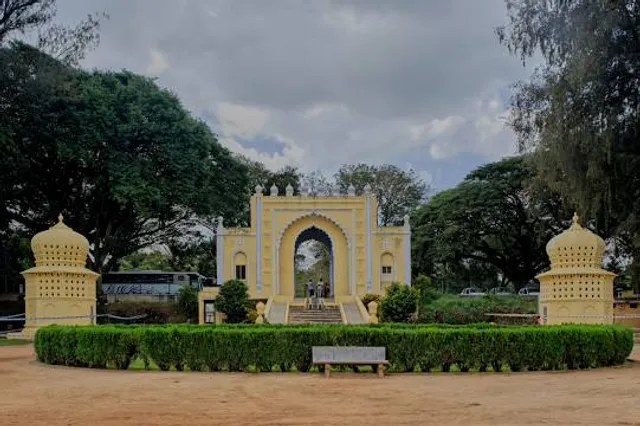
The picturesque gardens surrounding the palace are a serene retreat, inviting visitors to revel in tranquility while marveling at the strategic placement of ornamental structures amidst lush greenery. The symphony of chirping birds and rustling leaves provides a melodic backdrop to the historical narrative woven within the premises.
However, the passage of time hasn’t been entirely kind to this architectural marvel. Preservation efforts are apparent, yet some areas bear signs of weathering, requiring meticulous restoration to maintain its splendor for generations to come.
In conclusion, the Daria Daulat Bagh stands as an emblem of cultural heritage, offering visitors an enriching experience steeped in history and architectural grandeur. It's a must-visit for history enthusiasts and anyone seeking to immerse themselves in the opulence of bygone eras, despite the need for ongoing conservation efforts to uphold its timeless...
Read more