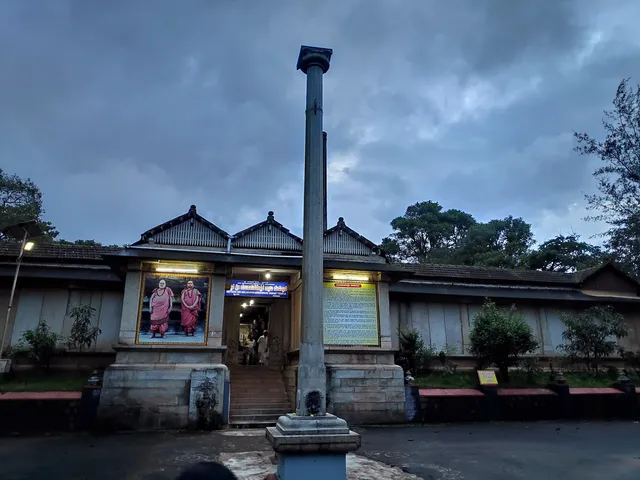
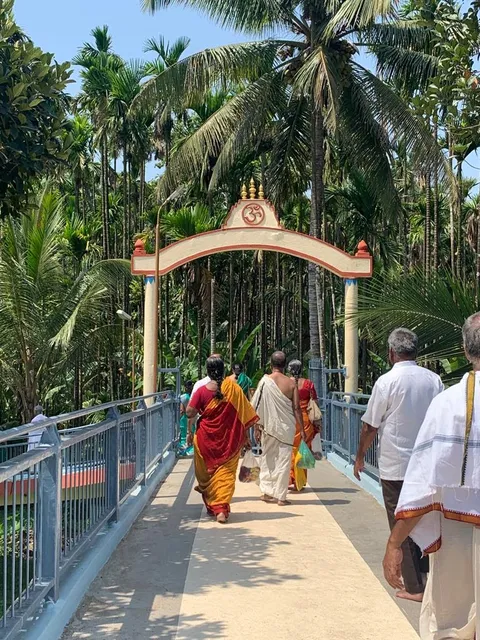
Shri Jagadguru Shankaracharya Mahasamsthana Dakshinamnaya Shri Sharada Peetha, located in the sacred town of Sringeri in Karnataka’s Chikkamagaluru district, is one of the four original Peethas (spiritual centers) established by Adi Shankaracharya in the 8th century to preserve and propagate Sanatana Dharma and Advaita Vedanta across India. Nestled on the banks of the holy Tunga River and set against the serene backdrop of the Western Ghats, this revered Peetha is not only a center of deep spiritual wisdom but also a living tradition of Vedic learning and cultural heritage that continues to flourish to this day.
Founded by Adi Shankara himself, the Dakshinamnaya Sharada Peetha represents the southern direction among the four mathas and is dedicated to the goddess Sharadamba, the divine embodiment of knowledge and learning. Legend has it that Adi Shankara, upon witnessing a cobra providing shade to a pregnant frog during labor on the riverbank, recognized the land’s spiritual potency and decided to establish the Peetha here. Since then, Sringeri has been a beacon of spiritual light and philosophical inquiry, with an unbroken lineage of Jagadgurus (spiritual pontiffs) guiding devotees and scholars.
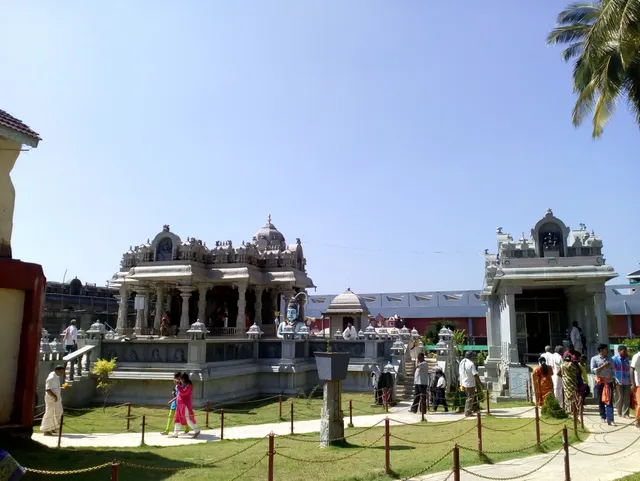
The presiding deity, Goddess Sharadamba, was originally worshipped in the form of a sandalwood idol installed by Adi Shankara. Later, in the 14th century, a golden idol in seated posture was installed by Sri Vidyaranya, the 12th Jagadguru and spiritual guide of the Vijayanagara Empire. The temple of Sharadamba, with its rich architecture, intricate carvings, and divine aura, draws thousands of pilgrims, especially during Navaratri when the goddess is adorned with grandeur and special rituals are performed.
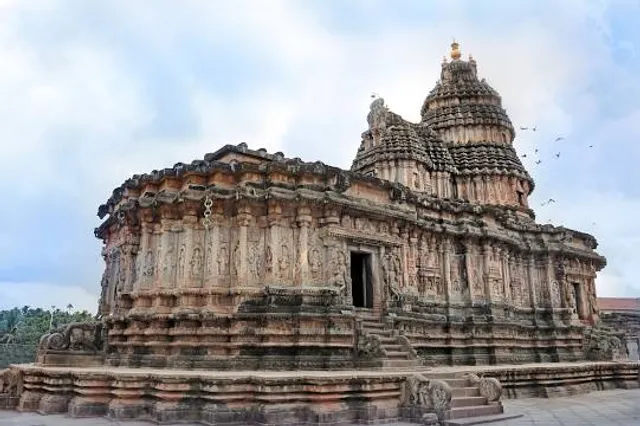
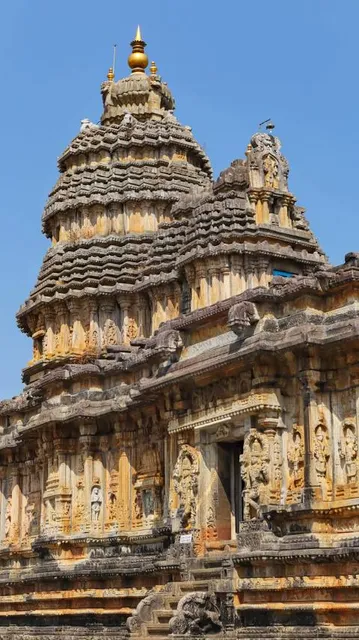
The Sharada Peetha is also home to the Vidyashankara Temple, an architectural marvel built in the 14th century in memory of Jagadguru Vidyashankara. The temple seamlessly blends Hoysala, Vijayanagara, and Dravidian styles and is known for its twelve zodiac pillars, which align with the sun’s rays during different months of the year—an outstanding blend of spiritual symbolism and astronomical precision.
Sringeri is not just a pilgrimage center but also a thriving hub of Vedic education and Sanskrit learning. The Peetha runs several Veda Pathashalas, promotes Shastra studies, and supports dharmic activities across India. Devotees visiting the Peetha can seek darshan of the current Shankaracharya, participate in spiritual discourses, attend Vedic rituals, and enjoy the divine ambiance of the temple town. Daily rituals, Chandramouleeshwara Puja, and special events like Guru Purnima and Sharada Navaratri offer rare spiritual experiences.
The best time to visit the Sharada Peetha is between October and March when the climate is pleasant and conducive for travel and temple visits. Pilgrims are encouraged to dress traditionally, maintain silence within temple premises, and follow temple customs. The Peetha provides annadanam (free meals), accommodations, and guidance for devotees and students alike, making every visitor feel at home in this timeless seat of wisdom.
A journey to Shri Jagadguru Shankaracharya Mahasamsthana Dakshinamnaya Shri Sharada Peetha—ಶ್ರೀ ಜಗದ್ಗುರು ಶಂಕರಾಚಾರ್ಯ ಮಹಾಸಂಸ್ಥಾನ—is not just a pilgrimage but a profound spiritual experience, where divine grace, ancient wisdom, and the peaceful rhythm of the Tunga River unite to awaken the seeker’s inner light...
Read moreHoly place sringeri sharadha peeta. Popularly know for Akshara Abyasa for the children's to start their studies with the blessings of Goddess Sharadbamba.
This place is surrounded with the lake.
Sringeri Sharada Peetam is one of the four Advaita Vedanta monastery established by Adi Shankara around 800 AD in Sringeri, the others being Dwaraka, Govardhana and Jyotirmath. The Sringeri matha is on the banks of the Tunga River in Chikkamagalur district located in the Western Ghats, India. Vidyashankara TempleEdit
The Vidyashankara temple was built in commemoration of the pontiff Vidyashankara, around 1357-58 C.E.. It was built by Vidyaranya, patron-saint of Harihara and Bukka, the brothers who founded the Vijayanagara empire. The niches in the temple have a number of sculptures from Hindu mythology. Inscriptions in the temple record contributions made by several Vijayanagara emperors but the temple was probably built on an earlier Hoysala site as it combines Hoysala and Vijayanagara architectural features. The temple architecture is also an exhibition of the astronomical expertise of medieval south Indian temple builders. The main temple hall features 12 pillars designated for the 12 signs of the zodiac. Windows and doors along the temple walls are arranged such that equinoxes sunrise views reach the deity. The northern and southern gates enable the sunrise view from the hall during solstices. The Vidyashankara Temple was built in the year 1338 A.D. It is a unique monument built entirely of stone combining both Hoysala (Chalukya) and Dravidian architectural styles. The structure stands on a high plinth and commands an extensive view from the hills and their slopes all round. It is more or less a rectangle with apisidal east-west ends. On the western side is the Garbhagriha, with Vidya Ganapati on one side and Durga on the other side of the entrance. On the other three sides of the Garbhagriha are shrines to Brahma, Vishnuand Maheshwara with their consorts. In the eastern half of the structure is a mantapa with twelve pillars, huge monoliths carrying large figures and carrying heavy projecting corbels on top. These twelve pillars are marked by the twelve signs of the zodiac in their regular order, and arranged in such a manner that the rays of the sun fall on each of them in the order of the twelve solar months. On the floor is a large circle, marked with converging lines to indicate the direction of the shadows. The central ceiling is an exquisite piece of workmanship with lotus and pecking parrots. The vimana over the Garbhagriha rises with shikhara, mahapadma and stupa. The rest of the roof is made up of sloping channelled slab. The basement is elaborately sculpted with animals, puranic stories, Shiva, Vishnu, Dashavatara, Kali, Shanmukha and so on. From the caves of the corners of the central hall chains of stone rings hang which is a common feature of the Vijayanagar period.
To the student of Hindu iconography, this temple is a veritable store house of sculpture. The meditation of the Linga (Vidya Shankara Linga) in the sanctum and other Murtis will lead to Divine...
Read moreMy recent visit to Sringeri Sharada Peetham in Sringeri, Karnataka, was nothing short of a divine and soul-enriching experience. Nestled in the serene lap of the Western Ghats, this sacred site is not just a temple, but a spiritual haven where peace, tradition, and devotion blend seamlessly.
The moment I stepped into the temple premises, a deep sense of calm washed over me. The atmosphere was filled with a gentle silence, broken only by the rhythmic chanting of mantras and the sound of temple bells. It felt like stepping into a different realm — one untouched by the chaos of the outside world. My mind, which had been clouded by everyday stress, slowly started to clear, replaced by a feeling of stillness and inner peace.
The temple itself is a marvel of traditional South Indian architecture. The intricate carvings on the walls and pillars reflect centuries of craftsmanship and devotion. The main deity, Goddess Sharadamba, seated gracefully on a Sri Chakra, radiates a sense of wisdom and compassion. Her presence is incredibly powerful yet comforting. Offering my prayers in front of her idol was a deeply moving experience — I felt a strong connection that words can barely describe.
What made the experience even more special was the sense of order and sanctity maintained throughout the temple. The devotees were respectful, the priests humble and knowledgeable, and the entire environment felt sacred.
Another highlight of the visit was the peaceful walk along the banks of the Tunga River, which flows gently beside the temple complex. Sitting quietly by the river, listening to its soothing sound, I felt completely at peace — as if time had momentarily stopped. The surroundings are lush and green, making it the perfect place for meditation and self-reflection.
The entire Sringeri town seems to carry a spiritual energy. It's not just the temple, but the air, the people, and even the silence that exudes a kind of divine grace. I came back with a peaceful mind and a heart full of gratitude. It’s not just a place to visit — it's a place to experience.
I would highly recommend Sringeri Sharada Peetham to anyone seeking spiritual nourishment, inner peace, or even just a break from the fast-paced life. Whether you are religious or simply curious, this temple offers an experience that stays with you long after you leave. my experience was excellent — deeply peaceful, emotionally fulfilling, and...
Read more