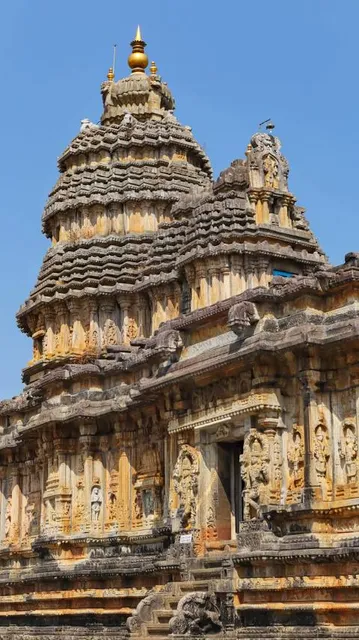
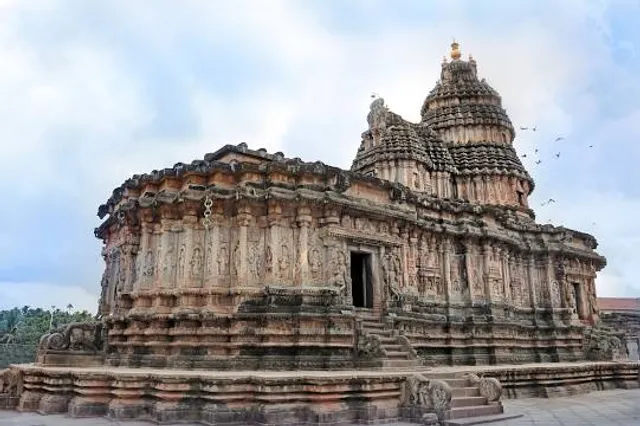
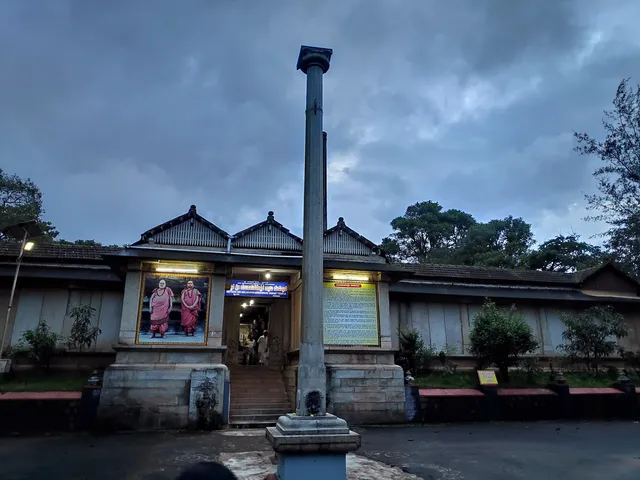
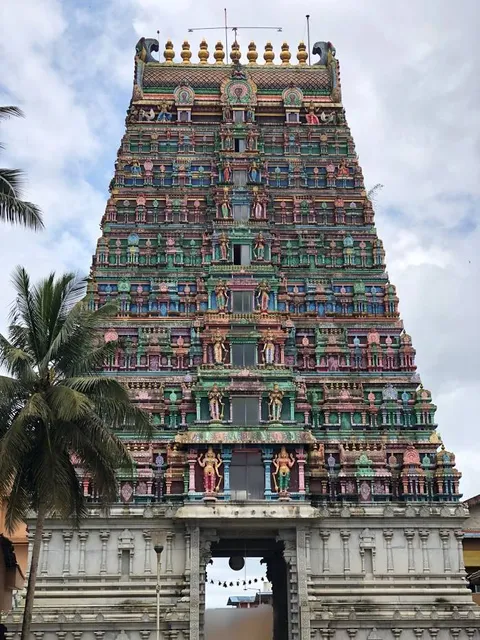
The Sri Vidyashankara Temple in Sringeri, Karnataka, is a stunning blend of architectural brilliance and spiritual significance. Located on the banks of the sacred Tunga River, the temple was built in the 14th century in honor of Sri Vidyatirtha, a revered saint and philosopher of the Sringeri Sharada Peetham. Commissioned by the Vijayanagara kings, the temple commemorates the deep spiritual legacy of Sri Vidyatirtha, who was believed to be an incarnation of Lord Shiva. The temple’s unique architecture showcases a harmonious fusion of Hoysala, Vijayanagara, and Dravidian styles, featuring intricate carvings, stone sculptures, and a circular sanctum supported by 12 finely carved zodiac pillars. These pillars are not only artistically exquisite but also astronomically aligned, ensuring that the sun's rays fall on the appropriate zodiac pillar based on the time of the year. This reflects the advanced astronomical knowledge of the temple’s creators.
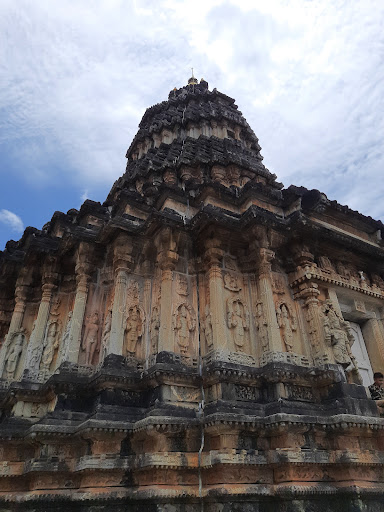
The granite structure of the temple is a visual masterpiece, with elaborately carved stone pillars in the central hall, depicting motifs from both Shaivism and Vaishnavism, reflecting the temple’s philosophical synthesis. The temple is adorned with sculptures of deities, animals, and mythical figures, representing stories from Hindu mythology and serving both decorative and symbolic purposes. Inside, the sanctum houses a Shiva linga believed to have been established by Adi Shankaracharya, further deepening the temple’s connection to Advaita Vedanta and the rich spiritual heritage of Sringeri. The temple's most remarkable feature is its zodiac pillars, which align with the sun's movement, symbolizing the cosmic order and the passage of time, demonstrating the builders' profound understanding of astronomy and geometry.
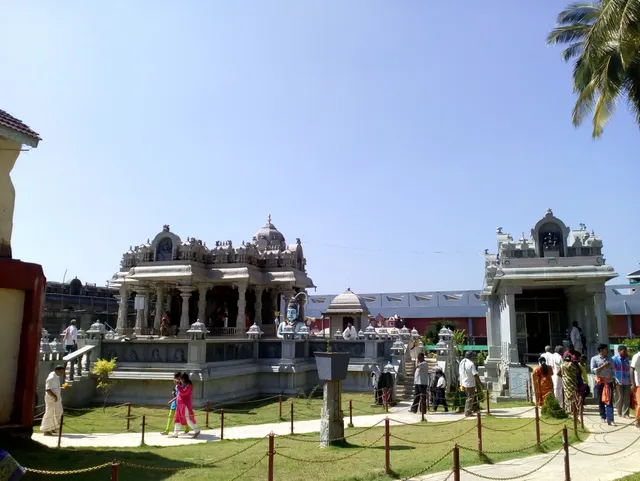
As an active place of worship, the Vidyashankara Temple conducts daily Vedic rituals and prayers, with devotees flocking to offer their respects to the Shiva linga and other deities enshrined within the temple. The temple plays a crucial role in the spiritual life of Sringeri, closely associated with the Sringeri Sharada Peetham and its current Shankaracharya, who oversees religious ceremonies and guides the spiritual community. The temple hosts significant festivals such as Maha Shivaratri and the Vidyatirtha Rathotsava, attracting thousands of devotees who participate in grand processions and offer their prayers to Lord Shiva and Sri Vidyatirtha.
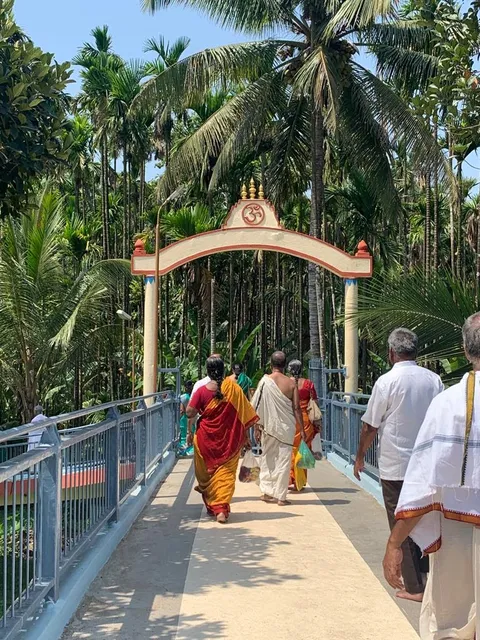
Set in the tranquil surroundings of Sringeri, the temple’s location by the Tunga River enhances its spiritual ambiance. Devotees often take a ritual bath in the river before entering the temple, and the lush greenery surrounding the area adds to the peace and serenity. The Sri Vidyashankara Temple is not just a religious site but a beacon of India’s cultural, spiritual, and architectural heritage. Its unique blend of styles, intricate artistry, and cosmic alignment make it a destination of immense importance for pilgrims, history enthusiasts, and seekers of spiritual...
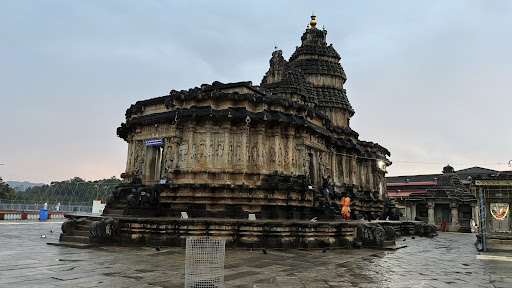
Read moreThe Vidyashankara Temple was built in the year 1338 A.D. It is a unique monument built entirely of stone combining both Hoysala (Chalukya) and Dravidian architectural styles. The structure stands on a high plinth and commands a magnificent view from the hills and their slopes all round. It is more or less a rectangle with apisidal east-west ends. On the western side is the Garbhagriha, with Vidya Ganapati on one side and Durga on the other side of the entrance. On the other three sides of the Garbhagriha are shrines to Brahma, Vishnu and Maheshwara with their consorts. In the eastern half of the structure is a mandapa with twelve pillars, huge monoliths carrying large figures and carrying heavy projecting corbels on top. These twelve pillars are marked by the twelve signs of the zodiac in their regular order. The central ceiling is an exquisite piece of workmanship with lotus and pecking parrots.
The vimana over the Garbhagriha rises magnificiently with sikhara, mahapadama and stupi. The rest of the roof is made up of sloping channelled slab. The basement is elaborately sculpted with animals, puranic stories, Siva, Vishnu, Dasavatara, Kali, Shanmukha and so on. From the caves of the corners of the central hall chains of stone rings hang which is a common feature of the Vijayanagar period.
Darshan Timings Morning – 7:00 AM to 1:00 PM Evening – 5:00...
Read moreVidyashankara Temple – Architecture
The Vidyashankara temple was constructed in 1338 AD. Built around the Samadhi of Vidyathirtha, this is a beautiful and interesting temple that bears a slight resemblance to an old Chariot. It combines the general the features of Dravidian style with the Vijayanagara style. Standing on a richly sculpted plinth, this temple has six doorways.
Twelve pillars surround the mandapa with figures of the twelve signs of the zodiac. They are constructed in such an ingenious way that the rays of the sun fall on each pillar in the chronological order of the twelve months of the Hindu calendar. Each column is topped by a Yali with a rolling stone ball in its mouth.
Inside the temple, on the floor, a circle is drawn with lines corresponding to the shadows cast by each pillar. There are five shrines here. The main shrine has a Shiva Linga over the Samadhi of Sri Vidyashankara and it is known as Vidya Shankara Linga. The other shrines are for Brahma, Vishnu, Shiva and Durga. The Garbhagraha is topped by a majestic square vimana.
This temple also houses a broken sandalwood idol of Sharadamba, believed to have been installed in the Sharadamba temple by Adi Shankara Himself. This idol, it is believed, was damaged during the Muslim invasion, and Sri Vidyaranya had the current Gold statue of Sharadamba installed...
Read more