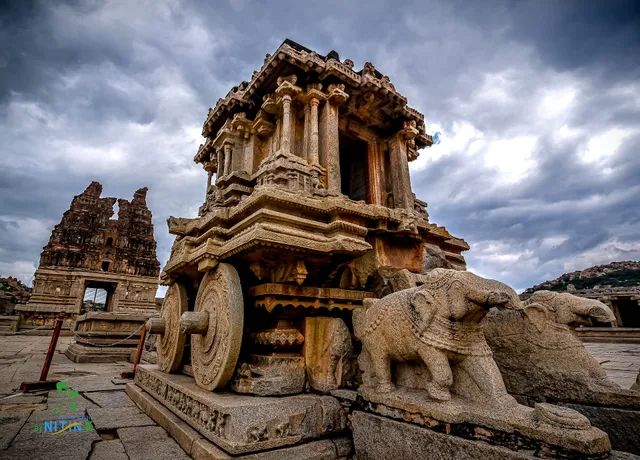
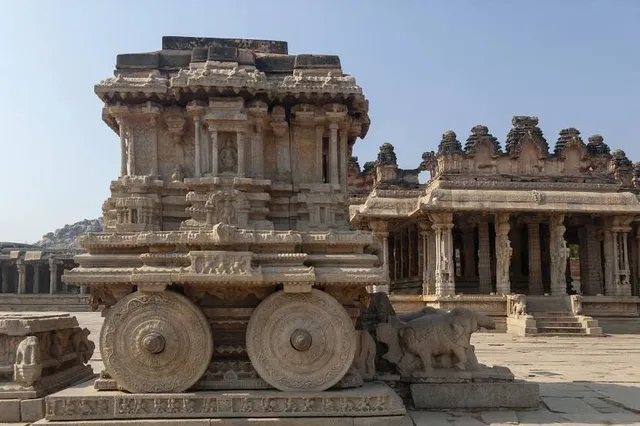
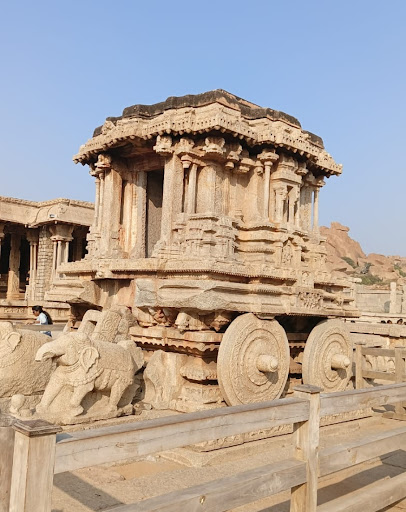
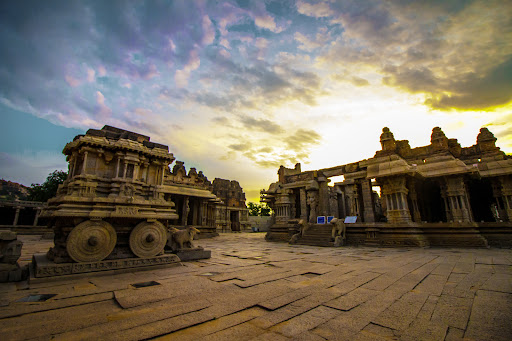
The Stone Chariot in Hampi, an awe-inspiring structure located in the UNESCO World Heritage site of Hampi, stands as a symbol of the architectural brilliance of the Vijayanagara Empire. It holds immense archaeological, historical, cultural, and spiritual significance, capturing the grandeur of the empire during its peak. Crafted from solid granite, the Stone Chariot is a prime example of the monolithic stone architecture of the Vijayanagara period. Located within the Vittala Temple complex, this intricately carved chariot is designed in the shape of a ceremonial chariot, though it was never meant for actual use. The chariot features detailed carvings of horses, wheels, and various divine and mythological figures, showcasing the advanced craftsmanship and artistic prowess of the time. The chariot's wheels are particularly notable, each one meticulously carved with intricate designs that resemble the wheels of a real chariot. Its purpose was more symbolic than functional, meant to represent a divine vehicle for Lord Vishnu, signifying the empire's connection with the divine. The Stone Chariot was built during the reign of Krishnadevaraya, one of the most illustrious rulers of the Vijayanagara Empire (16th century). Krishnadevaraya was known for his patronage of the arts, literature, and religion. The chariot, located within the Vittala Temple, was designed to honor Lord Vishnu and symbolized the divine power of the ruler. It is believed that the chariot was part of the grand processions held at the temple, where it was used in religious rituals. The design reflects the empire’s political strength and spiritual devotion, with the chariot serving as a representation of both imperial grandeur and the divine presence. Accounts from travelers such as Fernao Nunes, a Portuguese missionary who visited Hampi in the 16th century, describe the chariot as one of the most captivating and grand structures of the empire. Nunes mentioned how the chariot symbolized the majesty of the Vijayanagara rulers and the divine connection between the king and the gods. The Stone Chariot holds profound cultural and religious importance, particularly in the context of the temple’s rituals. The Vittala Temple, dedicated to Lord Vishnu, was one of the most prominent religious centers in the region. The chariot was part of the temple's ceremonial processions, during which it was believed to carry the divine image of Lord Vishnu. The chariot, despite being stationary, symbolized the journey of the soul toward liberation, a concept rooted in Hindu cosmology. It also mirrored the divine chariots mentioned in Hindu epics like the Mahabharata, where Lord Krishna’s chariot played a pivotal role in guiding Arjuna on his spiritual journey. The chariot, with its detailed carvings, was a source of inspiration for the people of the empire, reminding them of the divine order and the emperor’s connection to the gods. Its presence at the Vittala Temple reaffirmed the sacred role of the king as the earthly representative of divine will. The grandeur of the Stone Chariot is not just rooted in its architecture but in the stories surrounding it. An anecdote from the Mughal Emperor Aurangzeb’s invasion of Hampi in the late 17th century mentions the destruction of many parts of the Vijayanagara Empire, yet the Stone Chariot was left mostly intact, standing as a testament to the resilience of the empire’s artistic and spiritual heritage. However, the chariot's wheels were severely damaged, symbolizing the end of an era of prosperity and devotion. This is not just an architectural marvel but a symbol of the Vijayanagara Empire’s religious, political, and cultural zenith. Its purpose was to honor Lord Vishnu and reflect the divine power of the empire. Through its intricate carvings and symbolic representation, the chariot remains a lasting tribute to the spiritual and artistic legacy of the...
Read more🪨✨ The Majestic Stone Chariot of Hampi: A Journey Through Time 🚩
Hidden in the mystical ruins of Hampi, amidst scattered boulders and grand temples, stands one of India’s most iconic and breathtaking monuments — The Stone Chariot 🛕🪨. My recent visit to this UNESCO World Heritage Site was nothing short of a dream come true, and the Stone Chariot left me mesmerized, awestruck, and deeply connected to the ancient soul of our country 🇮🇳.
🌅 First Glimpse: A Monument That Stops You in Your Tracks
As I stepped into the Vittala Temple Complex, the soft morning light touched the centuries-old stones with a golden hue 🌞. My eyes instantly caught the silhouette of the Stone Chariot, standing silent yet powerful — like a guardian of time.
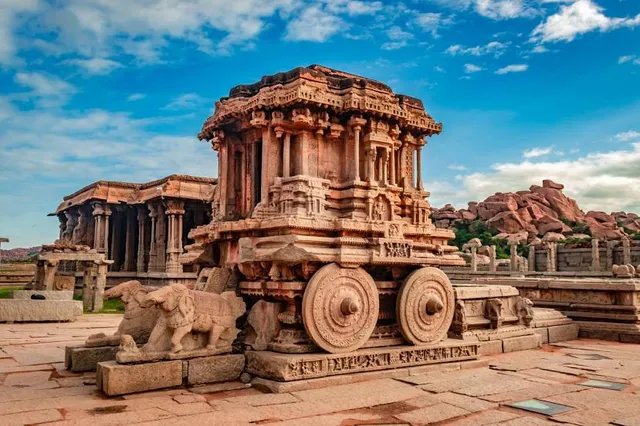
From a distance, it looks like a real wooden chariot, ready to be rolled across the temple grounds. But as you move closer, you realize that every intricate detail has been carved out of solid granite. Yes — it’s not wood at all! It’s pure stone! 😲🪨
The craftsmanship is truly jaw-dropping. It’s hard to believe that this was sculpted in the 16th century during the reign of King Krishnadevaraya of the Vijayanagara Empire. The precision, the beauty, and the vision behind this creation speaks volumes about the brilliance of Indian architecture and artisanship. 🛠️🎨
🔍 Details That Speak of Divinity and Dedication
The chariot is not just a sculpture — it is a symbol of spiritual movement, said to be inspired by the temple chariots used in Hindu festivals.
🐘 Elephants Instead of Horses: Two beautifully carved elephants stand in front of the chariot, as if pulling it forward. Interestingly, these elephants were added later, replacing the original horses whose remains are still visible behind the elephants. This small detail tells a lot about the temple’s evolving history.
🎨 Wheel Design: The wheels of the chariot are intricately detailed, with floral motifs and divine symbols. Though they seem ready to roll, they are fixed — frozen in motion, just like the stories that lie beneath them.
🛕 Garuda Shrine: Inside the chariot is believed to be a shrine dedicated to Garuda, the vehicle of Lord Vishnu. Since the Vittala Temple is dedicated to Lord Vishnu, the chariot perfectly complements the temple's divine narrative.
📸 A Photographer’s Paradise
Whether you're a travel blogger, history buff, or just a curious soul — this monument is a visual treat. I took countless pictures from every angle, and each shot looked like a frame from a movie 🎥. The way the light plays with the carvings, casting gentle shadows and highlighting the minute details, is pure magic. ✨📷
Tip: Visit during early morning or golden hour (sunset) to witness the true charm of the Stone Chariot without the tourist rush 🌄📸.
📖 Echoes of History
Standing before the chariot, I could almost hear the echo of ancient drums, the chants of priests, and the bustling life of a vibrant empire that once thrived here 🕉️🥁.
The chariot is not just a monument — it’s a story in stone. It whispers the glory of Vijayanagara, once one of the richest cities in the world 🌍. The artisans who created it didn’t just build something — they poured devotion into every corner, every carving.
To think this chariot has survived wars, invasions, and centuries of weather — and still stands tall — gave me goosebumps. 🥹
🧭 Practical Travel Tips for Visitors
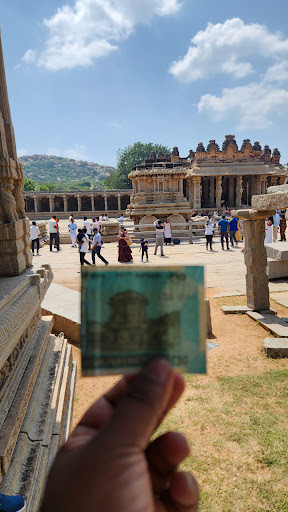
📍 Location: Inside the Vittala Temple Complex, Hampi, Karnataka. 🕰️ Best Time to Visit: October to February — cool weather and clear skies. 👜 Carry: Water bottle, sunglasses, hat, and a good camera. 🎟️ Entry Fee: Around ₹40 for Indians and ₹600 for foreign nationals (includes access to other monuments). 👟 Footwear: You’ll need to remove shoes before entering temple areas, so wear easy slip-ons.
👉 Guided tours are available and highly...
Read moreStone Chariot - Hampi's Timeless Sculptural Wonder
The Stone Chariot in Hampi stands as a remarkable testament to the artistic genius and architectural brilliance of the Vijayanagara Empire. Carved from a single massive boulder, this iconic monument captivates visitors with its intricate details, symbolic significance, and timeless beauty. Here's a closer look at Hampi's legendary Stone Chariot:
Artistic Masterpiece: The Stone Chariot, located within the Vittala Temple complex, is a masterpiece of sculptural artistry. Carved in the shape of a chariot, complete with wheels, horses, and intricate ornamentation, it is a stunning example of the Vijayanagara style of architecture. Every detail, from the delicate filigree work to the lifelike depiction of the horses, reflects the skilled craftsmanship and meticulous attention to detail of the artisans who created it.
Symbolism and Significance: Beyond its aesthetic beauty, the Stone Chariot holds deep symbolic significance in Hindu mythology. It is believed to represent the divine chariot of Garuda, the mythical bird and vehicle of Lord Vishnu. As such, the chariot is considered a sacred symbol of divine protection and auspiciousness, attracting devotees and pilgrims from far and wide who seek blessings and divine grace.
Engineering Marvel: The Stone Chariot's architectural ingenuity is equally impressive. Despite its appearance of being made from multiple pieces, the entire structure is carved from a single block of granite, a testament to the advanced engineering skills of the Vijayanagara craftsmen. The precision with which the chariot's components were carved and assembled speaks volumes about the empire's mastery of stone craftsmanship.
Timeless Legacy: For centuries, the Stone Chariot has stood as an enduring symbol of Hampi's rich cultural heritage and architectural legacy. Despite the passage of time and the ravages of nature, it remains remarkably well-preserved, a testament to the enduring strength and resilience of ancient stone architecture. Its timeless beauty continues to inspire awe and admiration among visitors, drawing art enthusiasts, historians, and spiritual seekers alike to marvel at its splendor.
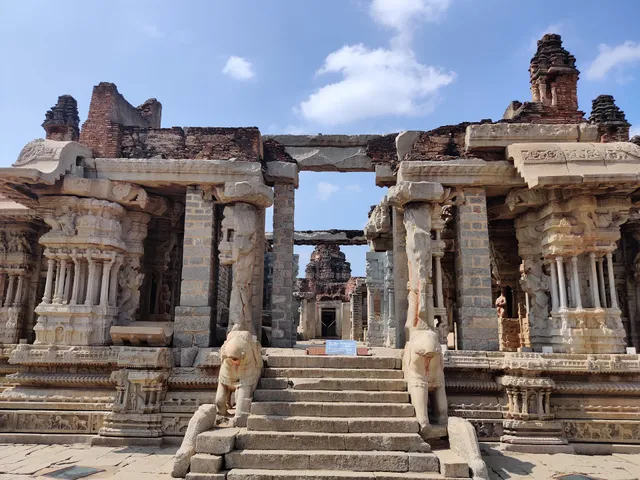
Visitor Experience: Visiting the Stone Chariot is a truly immersive experience, as visitors marvel at its exquisite craftsmanship and ponder its mystical significance. The serene ambiance of the Vittala Temple complex adds to the allure, creating a sense of reverence and wonder as visitors explore the surrounding temples, pavilions, and courtyards. Whether admiring the chariot's intricate carvings up close or capturing its majestic silhouette against the backdrop of the setting sun, every moment spent in its presence is filled with awe and wonder.
In conclusion, the Stone Chariot in Hampi stands as a timeless symbol of artistic excellence, cultural pride, and spiritual significance. Its exquisite craftsmanship and profound symbolism continue to captivate the hearts and minds of all who behold it, serving as a poignant reminder of Hampi's glorious past and enduring legacy. A visit to this iconic monument is not just a journey through history but a profound spiritual experience that transcends time and space, leaving an indelible mark...
Read more