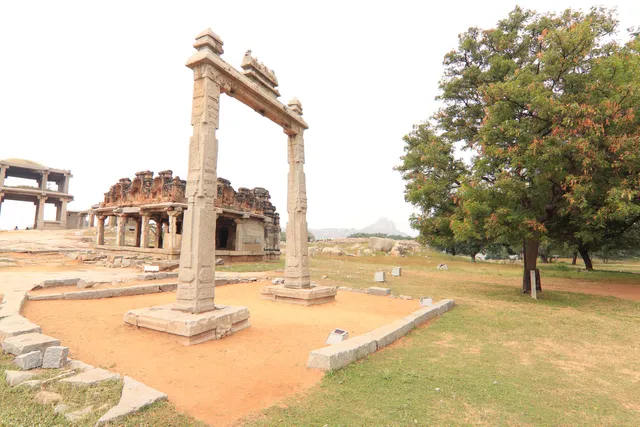
Visiting the Vijaya Vittala Temple in Hampi was a truly immersive experience that transported me back to the glorious days of the Vijayanagar Empire. As I stepped into this majestic temple complex, I was instantly struck by the intricate architecture and rich cultural significance of the site, which has earned its place as a UNESCO World Heritage Site.
The Vijayanagar Empire and Mayan Influence
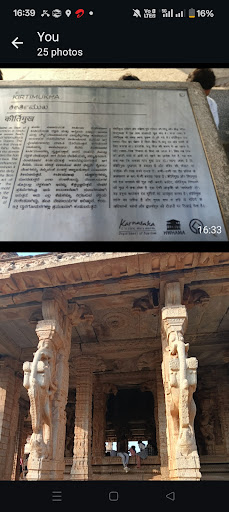
The Vijayanagar Empire, flourishing between the 14th and 17th centuries, was known for its cultural richness and architectural splendor. What intrigued me the most was how this empire, though geographically distant and separated by time from the Mayan civilization, shared certain artistic expressions. While there is no concrete historical evidence linking the two cultures, I couldn't help but notice the remarkable similarities in the ornate carvings and motifs adorning the pillars of the Vittala Temple.
Among the stunning array of sculptures, I found images of figures that bore a striking resemblance to those seen in Mayan art. These intricate depictions reminded me of the spiritual vibrancy of the Mayans, known for their elaborate stone carvings and grand temples. Although it's fascinating to speculate about potential influences or parallels between these two once-great cultures, the truth remains that the presence of these motifs adds an air of mystery and wonder to the temple's artistic narrative.
Vishnu Avataras Sculptures
As I wandered through the temple, I marveled at the numerous sculptures representing the avataras of Vishnu. Each depiction told a story, portraying the different incarnations of Vishnu, from the noble Rama and the playful Krishna to the ferocious Narasimha. The intricate carvings, full of life and detail, brought these divine characters to life, showcasing not only the skill of the artisans but also the importance of these narratives in Hindu mythology. The Vijayanagar architects and sculptors had a profound understanding of their faith, and this is reflected in the way they designed the temple to be a visual representation of their spiritual beliefs.
The Marvelous Musical Pillars
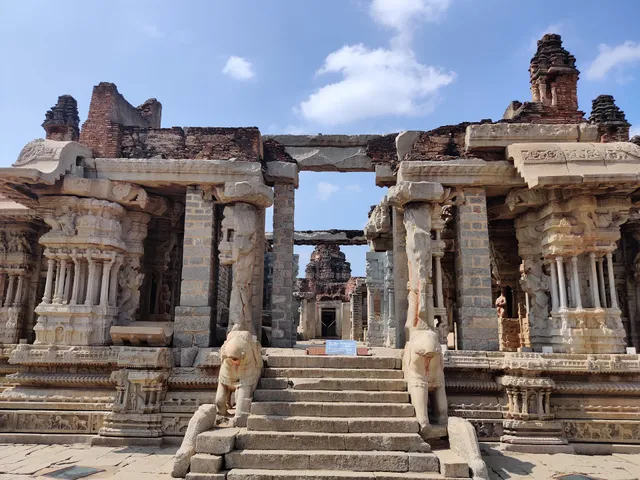
One of the most captivating features of the Vijaya Vittala Temple is undoubtedly the musical pillars. As I approached the hall, the excitement was palpable. Each of the pillars produces a different musical note when tapped, creating a symphony of sound that is both enchanting and ethereal. The engineering marvel behind these pillars amazed me, as the artisans managed to create musicality from stone, a feat that speaks volumes about their technical prowess and innovative spirit. Standing in that hall, I could easily imagine the temple coming alive with the sounds of music and dance, celebrating the divine presence of the deities.
UNESCO World Heritage Status
The recognition of the Vijaya Vittala Temple as a UNESCO World Heritage Site is a testament to its outstanding universal value. This designation highlights the significance of Hampi as a cultural landscape that reflects the grandeur of the Vijayanagar Empire. As I took in the surroundings, I felt a profound connection to history, a sense of belonging to a narrative that transcends time. The efforts to preserve this temple and its stunning architecture are crucial in ensuring that future generations can appreciate the artistry and heritage of this remarkable civilization.
Conclusion
My visit to the Vijaya Vittala Temple was not just an exploration of ancient architecture; it was a journey through time, connecting me to the Vijayanagar Empire and the echoes of the Mayan civilization. The intricate sculptures, the musical pillars, and the vibrant narratives of Vishnu's avataras enveloped me in a world where art and spirituality coalesce. As I left the temple grounds, I carried with me a deep appreciation for the legacies of these cultures, both of which continue to inspire awe and curiosity long after...
Read moreThe Vitthala Temple in Hampi is one of the most celebrated and architecturally significant monuments of the Vijayanagara Empire. Dedicated to Lord Vitthala, an incarnation of Lord Vishnu, this temple stands as a symbol of religious devotion, artistic excellence, and the empire’s imperial power. Built in the 16th century, during the reign of King Krishnadevaraya, the temple showcases the zenith of Vijayanagara architecture and remains a testament to the grandeur and prosperity of the empire.
The historical importance of the Vitthala Temple is vast, not only for its religious significance but also for its role in highlighting the empire's wealth and cultural sophistication. The temple, located in the heart of Hampi, was a major center of worship, attracting both pilgrims and traders from all over. The patronage of the Vijayanagara rulers reflects the syncretic nature of the empire's religious practices, where local deities were often incorporated into mainstream Hindu worship. This temple dedicated to Lord Vitthala became a hub for religious activities, influencing the cultural landscape of the region.
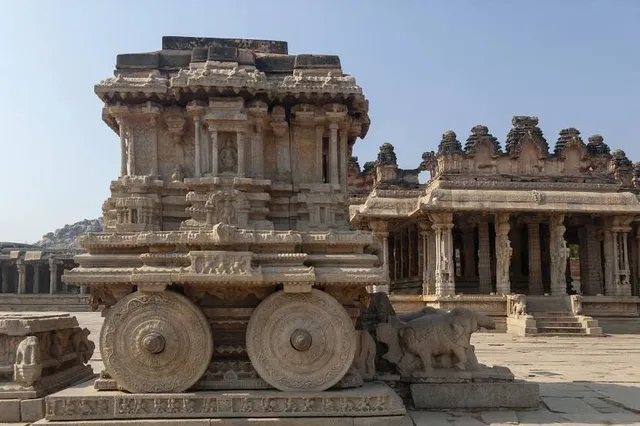
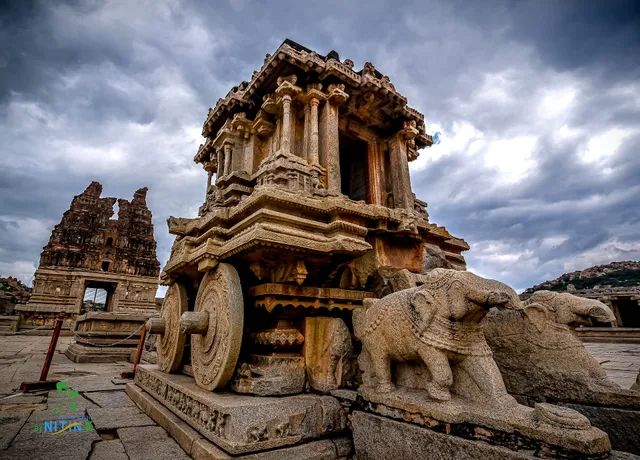
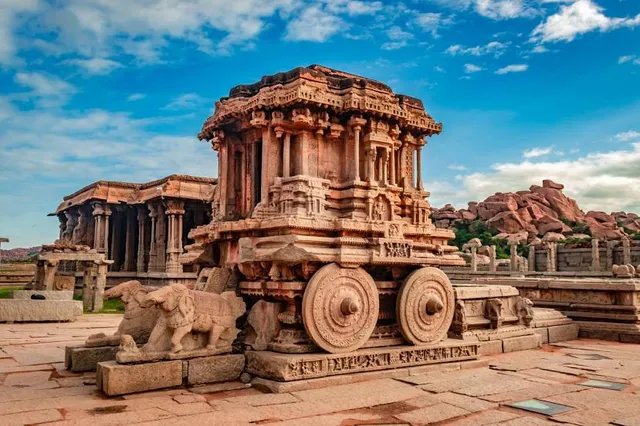
Architecturally, the Vitthala Temple is a masterpiece, renowned for its exquisite craftsmanship. The Stone Chariot, one of the most iconic structures in the temple complex, is a prime example of the empire’s architectural brilliance. This intricately carved chariot, made entirely of stone, was once used to house the idol of Lord Vitthala. The chariot’s design features detailed carvings of wheels, horses, and mythological motifs, symbolizing the divine journey of the deity. It stands as an outstanding example of how the Vijayanagara architects merged art with religious symbolism, representing the celestial chariot of the gods.
Equally impressive are the musical pillars of the temple, which produce distinct musical notes when struck. These pillars, an example of remarkable acoustical engineering, were designed to create a symphony of sounds, each representing a different note. This acoustic feature was not only an artistic achievement but also had spiritual significance, as the sounds were believed to invoke divine blessings. The musical pillars are an extraordinary feat of engineering and remain one of the most captivating elements of the temple.
The Vitthala Temple’s role in the cultural life of the Vijayanagara Empire extended beyond its religious functions. It became a center for artistic and intellectual activity, attracting musicians, dancers, and scholars who were drawn to its vibrant spiritual and cultural atmosphere. The Stone Chariot and musical pillars were not only focal points for religious rituals but also served as stages for performances, highlighting the integration of art, culture, and religion in the empire.
The temple’s prominence is also evident in the historical accounts written by travelers like Domingos Paes and Fernao Nunes, who visited the Vijayanagara Empire in the 16th century. These chroniclers described the Vitthala Temple as a magnificent structure, underscoring its significance as a symbol of the empire's prosperity and cultural richness. Their descriptions provide insight into the religious and cultural importance of the temple, highlighting its role in both the spiritual and daily lives of the people of the empire.
Visiting the Vitthala Temple today offers a glimpse into the grandeur of the Vijayanagara Empire. Despite centuries of neglect and damage, the temple’s intricate carvings, the Stone Chariot, and the musical pillars continue to captivate visitors, offering a connection to the empire’s glorious past. The temple serves as a reminder of the empire’s architectural achievements and cultural vibrancy, leaving visitors in awe of the skill and creativity that went into its...
Read moreVijaya Vittala Temple Complex is the most beautiful Tempe Complex, in the Heritage site of Hampi. The Hampi Heritage site of Hampi - the old Vijayanagar city, built by the Vijayanagara Dynasty, mainly by KIng Krishnadevaraya is a huge site.This place is found in Hampi Village Area of Bellary District. The ruins are found in the surrounding area of this place. Probably it was a pretty big village, and there is a lot to see here. The excavations are still going on and they are finding more things. Vijaya Vittala Temple has a lot of beautifully carved Pillars and halls. The Stone structures here are eye catching and are very gorgeous. The Stone chariot, right infront is a very beautiful structure and so is the musical pillar! But the stone strucutures are not intact and had been ruined by muslims in olden days. So, the idols here are not worshipped anymore since Hindus do not worship the idols which are partially destroyed. But that does not make any one not to visit this place. This is one of the most important temples and one should visit this place without fail. The temple complex is a sprawling area that is surrounded by high compound walls and three towering gateways. The temple complex has many halls, shrines and pavilions located inside it. Each of these structures is made of stone and each structure is a beauty in itself.
A religious, grandiose monument is the fifteenth, the Vijayanagar rulers period - Krishna Deva and Achyuta Raya! Vitthal Temple; It is a spectacular temple with his Vimana highlight or pyramidal tower, which rises so the sanctuary. With "Stone Chariot" a chariot facing the temple Vitthal, the incarnation of Vishn, which is itself a sanctuary dedicated to Garuda the eagle god, your vehicle! Built with giant granite blocks on a rectangular platform decorated with scenes of battles matka, tres parrots flying celestial nymphs. Its four huge wheels, air est giving sensation of movement along their axes, radios and brakes. So well done as in reality and decorated with beautiful floral motifs. This chariot pulled two elephants placed forward, it seems that at first were horses pulling the chariot remains of them even after the elephants! Rooms with carved columns in a masterful way, its pillars carved granite sculptures of horsemen, with matka beasts of lions, called "Yals" where prunes even see remnants of pastels. The grand salon "Maha - Mantapa" with carved elephant railings, leads us to rooms with rails of lions Yalis, who fight with elephants. The entire set is on a platform carved floral motifs, chains horses, coaches and traders Your details amaze us! Also remember a different room, in it, the pillars were of sculptures of musicians, dancers and drummers. Resounded to the touch as if they were musical notes, very original. Different corridors, as a cardinal estn decorated pillars, themed Yalis - giants, incarnations and lotus buds. The temple is Vittahala itself, the artistic summit is full of mticas figures! Each column is a size of either a lion, a rider on a rearing horse, elephant fights or mticos monsters. A temple full of fantasy and sensations. A journey through the beauty of its valuable sculptures in stone, of a past splendor that still can be admired.
The Vittala Temple timings are from 8:30 AM to 6 PM for all days of the week. It is preferable to visit as early as it opens in the morning to capture the religiousness without any crowd. They have parking available and buggy service available too, buggy is 20rs per head for two way and it will take you near to the main temple. It is a fair way for the price. Entrance ticket is 40rs which can be used for lotus mahal as well. We have purchased our ticked at lotus mahal which have been used for...
Read more