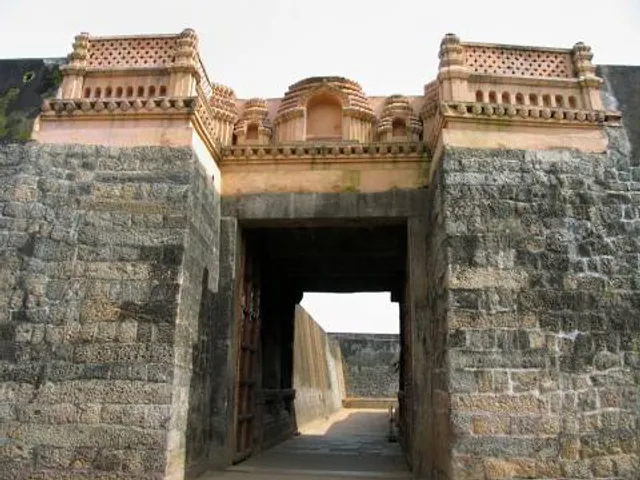
The Tipu Sultan Summer Palace in Bangalore is one of two palaces with the same name, so it’s easy to get confused. I know I did. The palace in Bangalore is part of Bangalore (Tipu’s) Fort and lies across from the city market. Whilst the physical location and original fort date back to the early 1500’s, it was Tipu himself who built this palace.
This palace was spectacular, being built completely from teak. To see a two-storey building such as this built entirely from wood and so demonstratively decorated and carved was truly something else.

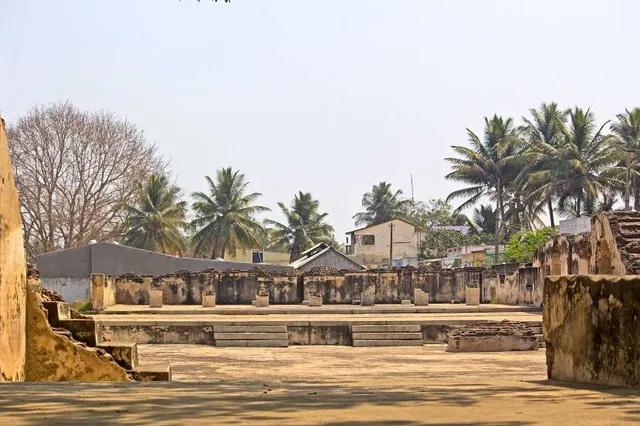
Whilst most of the fort is in a state of ruin, the palace has been quite well preserved. The columns are plentiful and sit under such beautiful carved archways. Stone staircases lead upstairs to a central open area, used as the durbar by the Sultan to receive his special guests.

Walking inside the Durbar Hall. Photo by Jinson Abraham.


The durbar is flanked by four rooms on each corner. These were the rooms for the women.

A balcony on each side of the central hall was used for the Sultan to address his people.


On the lower ground, a museum now displays artefacts (portraits, clothing, trinkets) from the days of the ruler and associated royalty.
WATCH OUR TRAVEL VIDEOS
WATCH THE VIDEO: Life aboard the Spirit of Scotland luxury barge - Caledonian Canal Scotland
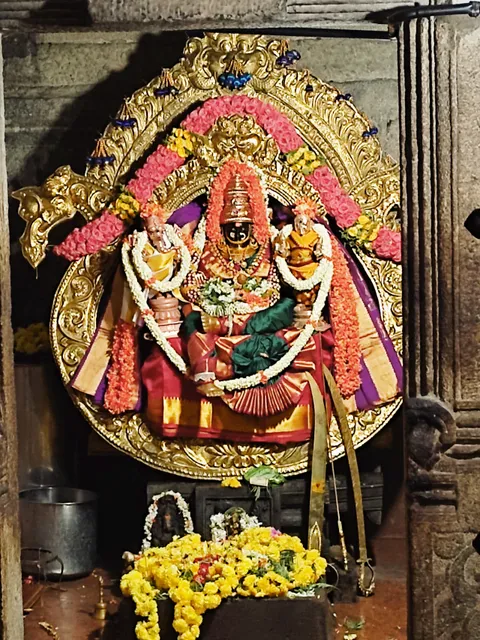
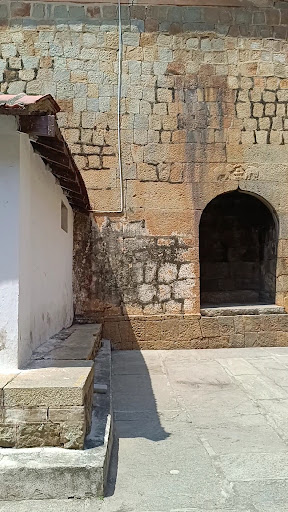
The Venkataramana Temple is located next to the Summer Palace. Built long before Tipu built his palace, he used to visit here regularly.


WHERE IS TIPU SUMMER PALACE BENGALURU
The palace can be found at New Tharagupet, Bengaluru, Karnataka 560002, just opposite the city market. The closest bus stop is Kempe Gowda (approximately 2.7 km) or the Kempe Gowda Railway Station, just over three km away.
OPENING TIMES TIPU SUMMER PALACE BENGALURU
The palace is open every day from 8.30 am until 5.30 pm.
Note: It is forbidden to take photos or videos inside the palace without special permission. As a guest of the Ministry of Tourism, India, I had special permission to do so.
TIPU SULTAN SUMMER PALACE MYSORE
The other Tipu Sultan Summer Palace can be found in Mysore, home to the beautiful Mysore Palace also.

This palace is also known as Daria Daulat and is located in Sriangapatna, the location of Tipu’s fort and the place of his ultimate death. The palace, now a museum, is located inside the Daria Daulat Bagh garden and grounds.
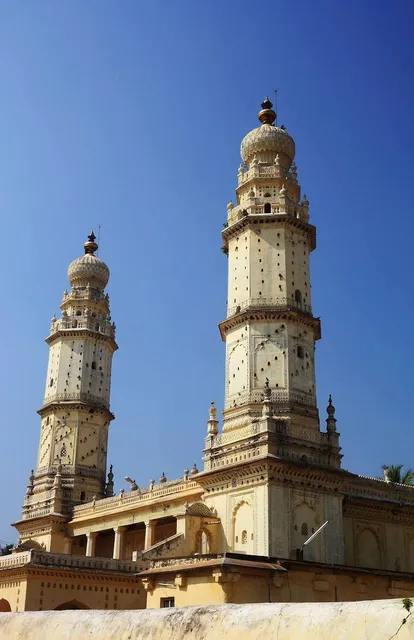
Located 22 km north of Mysore, the town of Srirangapatna is one of significant historical, cultural and religious importance. The name is derived from the Ranganathaswamy Temple, which is integral to this town.
Built in 1784, this summer palace holds a strong architectural similarity to his summer palace in Bengaluru. Built on a raised concrete base, there is a strong use of teak. Balconies, impressive curved archways, carvings and paintings adorn every part of this building.


It is the frescoes that I am most drawn to. Covering every bit of available space, as I walked around the external corridors. All is undercover to protect the paintings from the harsh Indian sun.

In the centre of the palace, there is a museum once again containing artefacts from Tipu Sultan’s time here including clothing and weapons.


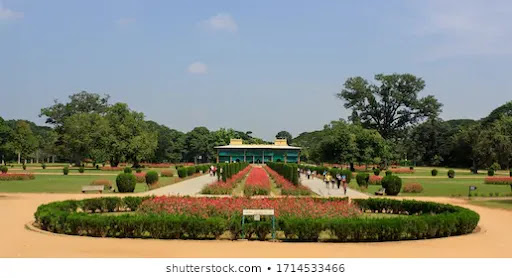
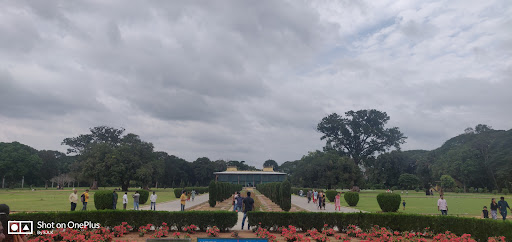
The gardens outside are equally beautiful, and in the surrounding environment where there is generally dirt, the gardens provide quite the oasis.

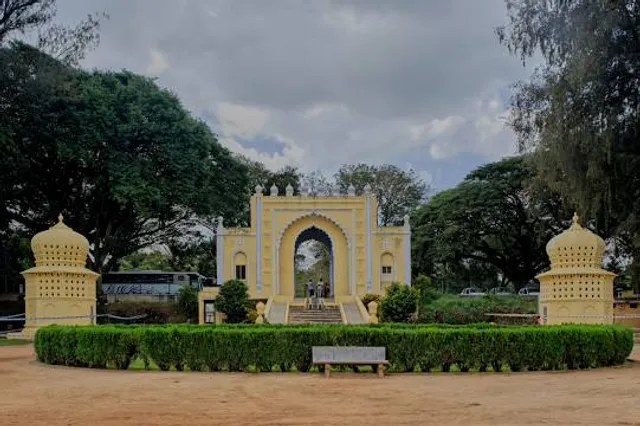
Looking towards the gate of Daria Daulat Bagh
Both of Tipu Sultan’s Summer Palaces are equally interesting, although you might consider one more beautiful than the other. They highlight the interesting architectural styles evident at the time and showcase the rich history of the area and those who lived here. Visit...
Read moreThe fort is believed to have been built by Timmanna Nayaka, a ruler of Vijayanagar Empire in 1454 CE. The fort was in the hands of the Empire till 1495 when the Wodeyars overpowered the Vijayanagar rulers. The fort was subsequently changing hands between Nawab of Arcot, Peshwas and the Marathas.1] The Wodeyars moved their capital from Mysore to Srirangapatna and established the fort as the seat of the empire. The region and the fort made progressive changes during the rule of Chikka Devaraja Wodeyar during the years 1673 to 1704, but the three subsequent rulers had no impact. During the rule of Krishnaraja Wodeyar (1734–66), the kingdom became a strong military force and came under the control of the military general Hyder Ali.[2] Hyder Ali, had to cede the fort to the invading Marathas for 32 lakh rupees during 1757, but he came back strongly to gain it back. During 1782, Tipu Sultan, the son of Hyder Ali took the reign of the fort and built fortifications. Tipu was invaded many times by the British forces. Tipu had agreements with the French and even had letters sent to Napoleon. After several unsuccessful attempts, British forces under the command of Colonel Wellesly, made an attack on 4 May 1799 under the covers. The forces had 2,494 British soldiers and 1,882 Indian troops. The soldiers were asked to wait in trenches and started the advancement across the river during the mid day when the watchmen of the fort used to rest. The account of the offensive is found in the accounts of Colonel Beatson.[2] Tipu was killed in the battle and the English had a treaty with the Wodeyar queen.[1 Lord Mornington commanded the forces and the battle is considered one of the turning point in the colonization strategy of the East...
Read moreTipu's summer palace is a nice reminder of a bygone era. Now almost 250 years old, the building is remarkably sturdy with elegant pillars and wood work. The walls are replete with arch shaped niches (presumably for lamps) with rectangular niches above (for books?). There is also reasonably intricate wood carvings all around the palace, from the pillars, to the ceilings, the balconies - in fact there isn't a view that isn't pleasing to the eye with wood work. The carvings and designs are beautiful relics of Islamic architectural styles used by the Tipu and his father Haider Ali who began the construction of the palace, which was completed by his son.
There are also informative sections/descriptive wall hangings in several rooms describing various aspects of Tipu Sultan's life ranging from his pioneering use of rocket technology in war, his throne and even his dreams which he used to document.
There was a nice flow of visitors which keeps the place lively without it being overcrowded. The very economically entry price for adults (Rs 25 per person) and free entry for children makes this easy on the pocket as well.
The only gripe is that there are cobwebs on some parts of the ceilings and there are aspects of the building in need of repair. It would be great if the appropriate authorities to touch up these aspects which will improve it's appearance and...
Read more