HTML SitemapExplore
logo
Find Things to DoFind The Best Restaurants

Cheraman Juma Masjid — Attraction in Kerala

Name
Cheraman Juma Masjid
Description
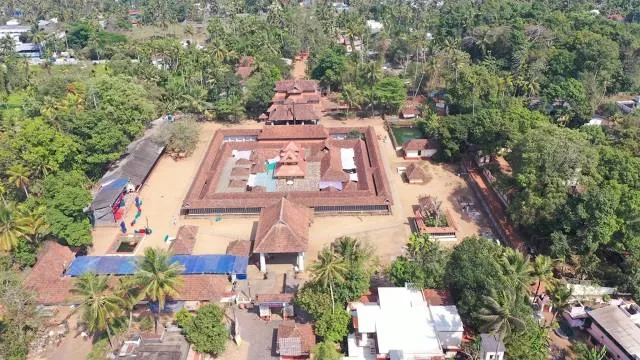
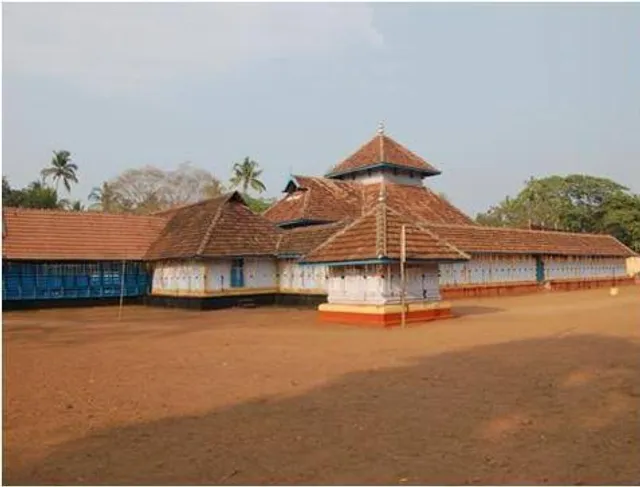
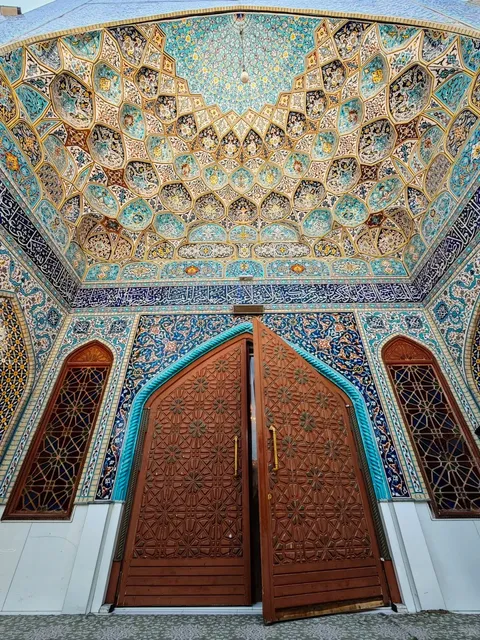
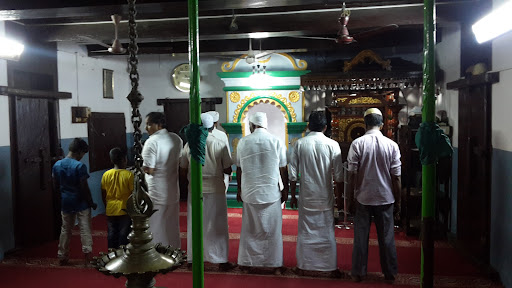
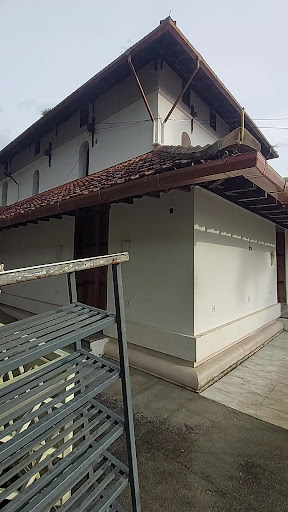
The Cheraman Juma Mosque is a mosque in Methala, Kodungallur, Thrissur in the Indian state of Kerala. A legend claims that it was built in 643 CE, which makes it the oldest mosque in the Indian subcontinent which is still in use.
Nearby attractions
Thiruvanchikulam Mahadeva Temple
6664+4GQ, Kodungallur- Ernakulam, Highway, Kottapuram, Kodungallur, Kerala 680664, India
Sringapuram Mahadeva Temple
6692+6FC, Sringapuram, Kodungallur, Kerala 680664, India
Nearby restaurants
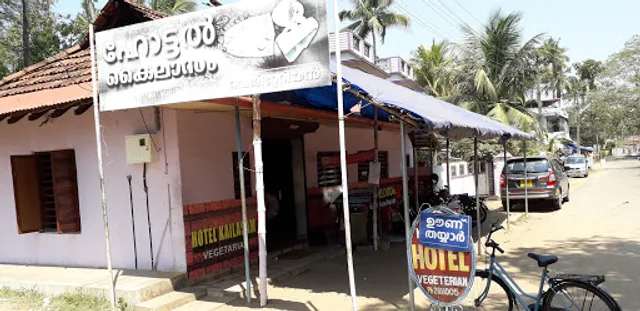
Kailasam Vegeterian Cafe
6663+6Q7, Thiruvanchikulam Rd, Thiruvanchikkulam, Kodungallur, Kerala 680664, India
Nearby hotels
PALACE EN PARADISE
Arakulam Rd, Sringapuram, Kodungallur, Kerala 680664, India
Hotel Kairali
Near Medicare Hospital, Keetholi, Kodungallur, Kerala 680667, India
Related posts
Dubai's Largest Jumeirah Mosque 🕌(1)Dubai's Largest Jumeirah Mosque 🕌(2)
Keywords
Cheraman Juma Masjid tourism.Cheraman Juma Masjid hotels.Cheraman Juma Masjid bed and breakfast. flights to Cheraman Juma Masjid.Cheraman Juma Masjid attractions.Cheraman Juma Masjid restaurants.Cheraman Juma Masjid travel.Cheraman Juma Masjid travel guide.Cheraman Juma Masjid travel blog.Cheraman Juma Masjid pictures.Cheraman Juma Masjid photos.Cheraman Juma Masjid travel tips.Cheraman Juma Masjid maps.Cheraman Juma Masjid things to do.
Cheraman Juma Masjid things to do, attractions, restaurants, events info and trip planning
Cheraman Juma Masjid
IndiaKeralaCheraman Juma Masjid

Basic Info

Cheraman Juma Masjid

Kodungallur - Shornur Road, Arakulam Rd, Kodungallur, Kerala 680664, India
4.7(2K)
Closed
Save
spot

Ratings & Description

Info

The Cheraman Juma Mosque is a mosque in Methala, Kodungallur, Thrissur in the Indian state of Kerala. A legend claims that it was built in 643 CE, which makes it the oldest mosque in the Indian subcontinent which is still in use.

Cultural
Family friendly
attractions: Thiruvanchikulam Mahadeva Temple, Sringapuram Mahadeva Temple, restaurants: Kailasam Vegeterian Cafe
logoLearn more insights from Wanderboat AI.
Phone
+91 480 280 3170
Website
cheramanjumamasjid.com
Open hoursSee all hours
Mon5 AM - 8:30 PMClosed

Plan your stay

hotel
Pet-friendly Hotels in Kerala
Find a cozy hotel nearby and make it a full experience.

hotel
Affordable Hotels in Kerala
Find a cozy hotel nearby and make it a full experience.

hotel
The Coolest Hotels You Haven't Heard Of (Yet)
Find a cozy hotel nearby and make it a full experience.

hotel
Trending Stays Worth the Hype in Kerala
Find a cozy hotel nearby and make it a full experience.

Reviews

Nearby attractions of Cheraman Juma Masjid

Thiruvanchikulam Mahadeva Temple

Sringapuram Mahadeva Temple

Thiruvanchikulam Mahadeva Temple

Thiruvanchikulam Mahadeva Temple

4.7

(1.1K)

Open 24 hours
Click for details
Sringapuram Mahadeva Temple

Sringapuram Mahadeva Temple

4.6

(153)

Open 24 hours
Click for details

Things to do nearby

Experience hidden gems
Mon, Dec 8 • 10:30 AM
Kochi, Kerala, 682001, India
View details
Kochi Tuk-Tuk Tour with Pickup From Cruise Ships
Mon, Dec 8 • 12:00 AM
X789+HFM, Willingdon Island, Kochi, 682003
View details
Half-Day Private Taxi Tour in Kochi
Mon, Dec 8 • 12:00 AM
Willingdon Island, Kochi, 682003
View details

Nearby restaurants of Cheraman Juma Masjid

Kailasam Vegeterian Cafe

Kailasam Vegeterian Cafe

Kailasam Vegeterian Cafe

4.1

(859)

$

Click for details
Get the Appoverlay
Get the AppOne tap to find yournext favorite spots!
Wanderboat LogoWanderboat

Your everyday Al companion for getaway ideas

CompanyAbout Us
InformationAI Trip PlannerSitemap
SocialXInstagramTiktokLinkedin
LegalTerms of ServicePrivacy Policy

Get the app

© 2025 Wanderboat. All rights reserved.
logo

Reviews of Cheraman Juma Masjid

4.7
(2,035)
avatar
5.0
9y

Believed to be the first mosque to be built in India.It is believed that,the local ruler of Kodungallur handed over a defunct Buddhist vihara,east of the Arakulam tank for the use of the Islamic missionary team led by Malik ibn Dinar.An undated, ancient sanskrit play 'Vita nidra bhāna' mentions about a 'mundadharina palli'(Place of worship of those with tonsured heads) just north of Thiruvanchikulam Mahadeva Temple. Historian Kesavan Veluthat argues that mosques in Malayalam are called 'Palli' and that until recently Keralite Muslims used to go around with shaven heads.He identifies this 'mundadharina palli' with the Cheraman mosque. The date of establishment of this mosque is controversial.The Arabi-Malayalam inscription on the marble panel at the entrance of the mosque proclaims the establishment of the mosque in AH 5/626 C.E.According to oral traditions, the mosque was erected on AH 8/ 628-629 C.E.Tuhfat al-Mujahideen by Sheikh Zainuddin Makhdoom II(d.1563 C.E) gives the establishment date of this mosque as Monday, 11 th Rajab, A.H 21(15 th June,642 C.E). Historian M.G.S Narayanan notes that the original mosque has a temple like foundation exhibiting 11th-12 th century architectural style.He supports the tradition that the mosque could have been constructed during the reign of the last Chera king or immediately after this period(12 th century C.E). According to oral traditions,this mosque was first renovated in the 11th century and in the 14 th century C.E.In 1504 C.E, Kodungallur town was set on fire by the Portuguese under Lopo Soares de Albergaria.It is possible that the mosque would have been damaged by this attack and then subsequently rebuilt. The present structure probably dates back to mid 16 th century or early 17 th century C.E.The mosque was further renovated in 1974 ,1994 and in 2001 C.E The mosque was a two storeyed building with tiled sloping roofs.Minarets were added to the ancient structure only in 1984 C.E. The sanctum sanctorum of the mosque with its timber roofing has been left undisturbed during all these renovations. The rosewood minbar (pulpit) of the mosque has 3 steps and is covered by wooden canopy.It has several intricate carvings with lotus motifs.The ornate mihrab(prayer niche) of the mosque has a semi-circular arch and the qibla wall has a rectangular projection on the outside. The mosque has a 500 year old,traditional brass lamp hanging from the ceiling.It has inscriptions in old Malayalam script and Arabic.In the past,the oil for this lamp used to be brought from the royal palace.On auspicious occasions,people of all religions bring oil or make offerings of money to buy oil for the lamp -as a time honoured custom.Oil from this lamp used to be given as 'baraka' (blessing)to the visitors .Hindus and Muslims alike initiate their children into the world of letters in this mosque. To the south west of the mosque is a mausoleum housing three graves. Two of these belong to Malik ibn Habib(d. A.H 24/644 C.E) and his wife Qamariyya.Some believe that the third one belongs to Malik's son, Muhammad-the first Qadi of the mosque.The mortal remains of Mammali Marakkar and his two sons,martyred in the fight with the Portuguese are believed to be interred in the graveyard located to the right side of the mosque.Behind the mosque is a pond (hawdh) which was used for making ablutions before prayers. During Ramadan,the non-muslims of Kodungallur make offerings towards the fast breaking ceremony conducted in this mosque.In the past,during Sivarathri festival at the Thiruvanchikulam Temple ,caparisoned elephants en route to the Arakulam area used to stop by the mosque-remniscent of the cordial relationship that existed between the two houses of worship. Prominent visitors of this mosque include former President Dr.A.P.J.Abdul Kalam and Kerala governer Arif Mohammad Khan.On April 2016,Prime Minister Narendra Modi gifted a gold-plated replica of the Cheraman Juma Masjid to the Saudi King Salmān ibn ‘Abd...

   Read more
avatar
5.0
6y

Cheraman Jumah Masjid in Kodungallur was built in AD629 by Malik Bin Dinar, Kodungallur, Kerala: One will find nothing unusual about this place of worship for Muslims as one drives past this town in central Kerala, just 30km north of Kochi. But it’s when you go in and chat up with the volunteers and office-bearers that the enormity of its legacy actually hits you. For Cheraman Jumah Masjid in this town, also known by its anglicised name Cranganore, is not just the oldest in India and the subcontinent but one built during the lifetime of Prophet Mohammad (PBUH) in AD629 by an Arab propagator of Islam, Malik Bin Dinar. It is also testimony to two facts. One, Islam came to India long before the Mughals came in from the northwest. Two, the entry of Islam was smooth and Muslims enjoyed the full patronage of the locals irrespective of their religions — a facet that is still visible and cherished here. This mosque stands proud with two other landmarks of Kodungallur, also known as Muziris. The first is the Saint Thomas Church, also said to be among the first in India built by the Apostle himself around 52AD. He had arrived here in India and the church has some holy relics from the olden days. The second is the Bhagavathy Temple of Cheran ruler Chenguttavan, also known as Vel Kelu Kuttuvan, around 150AD. In fact, in a manifestation of India’s cultural syncretism, many non-Muslims are its devotees and hold “Vidhyarambham”, or the commencement of education ceremony for their children at this mosque. During Ramadan, iftar offerings are often made by the non-Muslim communities in the area. There are several legends surrounding the Cheraman Jumah mosque. As one goes: It was built under the patronage of the last Chera king, Cheraman Perumal, who is also believed to have abdicated his throne and embraced Islam upon meeting the Prophet at Makkah. But before he died at Dhofar in Oman due to some illness on the way back to India, he wrote some letters asking the local rulers, to whom he had handed over his empire, to extend all help they could to some Arab merchants who were planning to visit India. One such merchant, Malik Bin Dinar, was given permission by local chieftains to build Islamic places of worship around the area. The mosque accordingly is called the Cheraman Mosque in recognition of the help extended by the last Chera ruler. This apart, Malik Bin Dinar, who was also a “sahaba” or a companion of the Prophet, was the mosque’s first Gazi, succeeded by his nephew Habib Bin Malek. Both Habib Bin Malek and his wife are entombed at the Cheraman Juma Masjid. The original mosque itself has undergone several renovations. The oral traditions have it that the first such refurbishment took place in the 11th century and again some 300 years later. In the modern era a revamp was done in 1974, after which a reconstruction happened in 2001. But all along, the sanctum sanctorum has been preserved. Minarets and a dome are also modern-day additions. Yet, despite the renovations, a striking amalgam of different cultures and religions is in full play at the grand old mosque. From some angles, it can even pass off as a temple. At the centre of this striking blend of several architectural styles and practices is a traditional Kerala-style lamp hanging from the ceiling. This lamp also has inscriptions in old Malayalam script Vattezhuthu. In true style of temples in the south, the mosque also has a pond. Then the minber, or the pulpit from where the Imam delivers sermons, has some intricate carvings and lacquer work, which is again unique to southern India. The mosque also has a small museum. At the centre, inside a glass casing, is a miniature replica of the mosque as it stood around 350 years ago. There are also some other artefacts from the times gone by, such as the redstones that were used to as building material in sizes...

   Read more
avatar
5.0
46w

Cheraman Juma Masjid is a historic mosque located in Kodungallur, Thrissur district, in the Indian state of Kerala. It holds the distinction of being the first mosque in India and one of the oldest mosques in the world, built in 629 CE. The mosque stands as a symbol of the spread of Islam in India and represents a unique blend of cultural, historical, and architectural significance.

Key Details About Cheraman Juma Masjid

Historical Significance

The mosque was constructed during the lifetime of Prophet Muhammad (PBUH) by Malik Ibn Dinar, a disciple of the Prophet.

It is believed to have been built under the instructions of Cheraman Perumal, the last Chera king of Kerala, who is said to have embraced Islam after learning about Prophet Muhammad (PBUH).

According to legend, Cheraman Perumal traveled to Mecca and converted to Islam. Before his death, he instructed his followers to build a mosque in his kingdom upon their return.

Architectural Style

The mosque's original structure was built in Kerala’s traditional architectural style, featuring woodwork and a sloping tiled roof, which is quite different from typical Islamic architecture.

It incorporates local elements such as the prayer oil lamps, which are still used in the mosque and resemble Hindu temple rituals.

Over time, renovations have added modern features, but the mosque retains its historical charm and cultural importance.

Religious and Cultural Harmony

Cheraman Juma Masjid is not just a place of worship but also a symbol of religious harmony. The blending of Hindu and Islamic traditions reflects the peaceful coexistence of different communities in the region.

Non-Muslims are also allowed to visit and explore the mosque, making it a popular tourist attraction.

Rituals and Traditions

The mosque still follows some traditions that are unique to Kerala, such as the use of oil lamps for worship, which is not commonly seen in other mosques.

Friday prayers (Juma) are held regularly, and the mosque attracts worshippers from across the region.

Tourism and Legacy

As a significant historical and spiritual site, Cheraman Juma Masjid is a major tourist destination in Kerala.

The mosque attracts visitors not only for its religious importance but also for its rich history and unique architecture.

It is one of the most important stops for those interested in the early history of Islam in India.

Interesting Facts

The mosque’s Qibla (direction of prayer) was originally aligned towards Jerusalem but was later changed to Mecca after the Islamic practice was standardized.

Cheraman Juma Masjid is often seen as a testament to the early trade relations between Arabia and India, as Kerala was a key trading hub for spices and other goods.

How to Visit

Location: Kodungallur, about 35 km from Thrissur and 50 km from Kochi.

Accessibility: It is well-connected by road, and the nearest railway station is Irinjalakuda, about 20 km away.

Best Time to Visit: Visitors can explore the mosque throughout the year, but winters (November to February) are ideal for comfortable travel.

Cheraman Juma Masjid stands as an enduring symbol of India’s multicultural heritage and offers a glimpse into the historical beginnings of Islam in...

   Read more
Page 1 of 7
Previous
Next

Posts

Dubai's Largest Jumeirah Mosque 🕌(1)
Ava SmithAva Smith
Dubai's Largest Jumeirah Mosque 🕌(1)
Dubai's Largest Jumeirah Mosque 🕌(2)
Ava SmithAva Smith
Dubai's Largest Jumeirah Mosque 🕌(2)
sabu a nsabu a n
Believed to be the first mosque to be built in India.It is believed that,the local ruler of Kodungallur handed over a defunct Buddhist vihara,east of the Arakulam tank for the use of the Islamic missionary team led by Malik ibn Dinar.An undated, ancient sanskrit play 'Vita nidra bhāna' mentions about a 'mundadharina palli'(Place of worship of those with tonsured heads) just north of Thiruvanchikulam Mahadeva Temple. Historian Kesavan Veluthat argues that mosques in Malayalam are called 'Palli' and that until recently Keralite Muslims used to go around with shaven heads.He identifies this 'mundadharina palli' with the Cheraman mosque. The date of establishment of this mosque is controversial.The Arabi-Malayalam inscription on the marble panel at the entrance of the mosque proclaims the establishment of the mosque in AH 5/626 C.E.According to oral traditions, the mosque was erected on AH 8/ 628-629 C.E.Tuhfat al-Mujahideen by Sheikh Zainuddin Makhdoom II(d.1563 C.E) gives the establishment date of this mosque as Monday, 11 th Rajab, A.H 21(15 th June,642 C.E). Historian M.G.S Narayanan notes that the original mosque has a temple like foundation exhibiting 11th-12 th century architectural style.He supports the tradition that the mosque could have been constructed during the reign of the last Chera king or immediately after this period(12 th century C.E). According to oral traditions,this mosque was first renovated in the 11th century and in the 14 th century C.E.In 1504 C.E, Kodungallur town was set on fire by the Portuguese under Lopo Soares de Albergaria.It is possible that the mosque would have been damaged by this attack and then subsequently rebuilt. The present structure probably dates back to mid 16 th century or early 17 th century C.E.The mosque was further renovated in 1974 ,1994 and in 2001 C.E The mosque was a two storeyed building with tiled sloping roofs.Minarets were added to the ancient structure only in 1984 C.E. The sanctum sanctorum of the mosque with its timber roofing has been left undisturbed during all these renovations. The rosewood minbar (pulpit) of the mosque has 3 steps and is covered by wooden canopy.It has several intricate carvings with lotus motifs.The ornate mihrab(prayer niche) of the mosque has a semi-circular arch and the qibla wall has a rectangular projection on the outside. The mosque has a 500 year old,traditional brass lamp hanging from the ceiling.It has inscriptions in old Malayalam script and Arabic.In the past,the oil for this lamp used to be brought from the royal palace.On auspicious occasions,people of all religions bring oil or make offerings of money to buy oil for the lamp -as a time honoured custom.Oil from this lamp used to be given as 'baraka' (blessing)to the visitors .Hindus and Muslims alike initiate their children into the world of letters in this mosque. To the south west of the mosque is a mausoleum housing three graves. Two of these belong to Malik ibn Habib(d. A.H 24/644 C.E) and his wife Qamariyya.Some believe that the third one belongs to Malik's son, Muhammad-the first Qadi of the mosque.The mortal remains of Mammali Marakkar and his two sons,martyred in the fight with the Portuguese are believed to be interred in the graveyard located to the right side of the mosque.Behind the mosque is a pond (hawdh) which was used for making ablutions before prayers. During Ramadan,the non-muslims of Kodungallur make offerings towards the fast breaking ceremony conducted in this mosque.In the past,during Sivarathri festival at the Thiruvanchikulam Temple ,caparisoned elephants en route to the Arakulam area used to stop by the mosque-remniscent of the cordial relationship that existed between the two houses of worship. Prominent visitors of this mosque include former President Dr.A.P.J.Abdul Kalam and Kerala governer Arif Mohammad Khan.On April 2016,Prime Minister Narendra Modi gifted a gold-plated replica of the Cheraman Juma Masjid to the Saudi King Salmān ibn ‘Abd al-‘Azīz Āl Sa‘ūd.
See more posts
See more posts
hotel
Find your stay

Pet-friendly Hotels in Kerala

Find a cozy hotel nearby and make it a full experience.

Dubai's Largest Jumeirah Mosque 🕌(1)
Ava Smith

Ava Smith

hotel
Find your stay

Affordable Hotels in Kerala

Find a cozy hotel nearby and make it a full experience.

Get the Appoverlay
Get the AppOne tap to find yournext favorite spots!
Dubai's Largest Jumeirah Mosque 🕌(2)
Ava Smith

Ava Smith

hotel
Find your stay

The Coolest Hotels You Haven't Heard Of (Yet)

Find a cozy hotel nearby and make it a full experience.

hotel
Find your stay

Trending Stays Worth the Hype in Kerala

Find a cozy hotel nearby and make it a full experience.

Believed to be the first mosque to be built in India.It is believed that,the local ruler of Kodungallur handed over a defunct Buddhist vihara,east of the Arakulam tank for the use of the Islamic missionary team led by Malik ibn Dinar.An undated, ancient sanskrit play 'Vita nidra bhāna' mentions about a 'mundadharina palli'(Place of worship of those with tonsured heads) just north of Thiruvanchikulam Mahadeva Temple. Historian Kesavan Veluthat argues that mosques in Malayalam are called 'Palli' and that until recently Keralite Muslims used to go around with shaven heads.He identifies this 'mundadharina palli' with the Cheraman mosque. The date of establishment of this mosque is controversial.The Arabi-Malayalam inscription on the marble panel at the entrance of the mosque proclaims the establishment of the mosque in AH 5/626 C.E.According to oral traditions, the mosque was erected on AH 8/ 628-629 C.E.Tuhfat al-Mujahideen by Sheikh Zainuddin Makhdoom II(d.1563 C.E) gives the establishment date of this mosque as Monday, 11 th Rajab, A.H 21(15 th June,642 C.E). Historian M.G.S Narayanan notes that the original mosque has a temple like foundation exhibiting 11th-12 th century architectural style.He supports the tradition that the mosque could have been constructed during the reign of the last Chera king or immediately after this period(12 th century C.E). According to oral traditions,this mosque was first renovated in the 11th century and in the 14 th century C.E.In 1504 C.E, Kodungallur town was set on fire by the Portuguese under Lopo Soares de Albergaria.It is possible that the mosque would have been damaged by this attack and then subsequently rebuilt. The present structure probably dates back to mid 16 th century or early 17 th century C.E.The mosque was further renovated in 1974 ,1994 and in 2001 C.E The mosque was a two storeyed building with tiled sloping roofs.Minarets were added to the ancient structure only in 1984 C.E. The sanctum sanctorum of the mosque with its timber roofing has been left undisturbed during all these renovations. The rosewood minbar (pulpit) of the mosque has 3 steps and is covered by wooden canopy.It has several intricate carvings with lotus motifs.The ornate mihrab(prayer niche) of the mosque has a semi-circular arch and the qibla wall has a rectangular projection on the outside. The mosque has a 500 year old,traditional brass lamp hanging from the ceiling.It has inscriptions in old Malayalam script and Arabic.In the past,the oil for this lamp used to be brought from the royal palace.On auspicious occasions,people of all religions bring oil or make offerings of money to buy oil for the lamp -as a time honoured custom.Oil from this lamp used to be given as 'baraka' (blessing)to the visitors .Hindus and Muslims alike initiate their children into the world of letters in this mosque. To the south west of the mosque is a mausoleum housing three graves. Two of these belong to Malik ibn Habib(d. A.H 24/644 C.E) and his wife Qamariyya.Some believe that the third one belongs to Malik's son, Muhammad-the first Qadi of the mosque.The mortal remains of Mammali Marakkar and his two sons,martyred in the fight with the Portuguese are believed to be interred in the graveyard located to the right side of the mosque.Behind the mosque is a pond (hawdh) which was used for making ablutions before prayers. During Ramadan,the non-muslims of Kodungallur make offerings towards the fast breaking ceremony conducted in this mosque.In the past,during Sivarathri festival at the Thiruvanchikulam Temple ,caparisoned elephants en route to the Arakulam area used to stop by the mosque-remniscent of the cordial relationship that existed between the two houses of worship. Prominent visitors of this mosque include former President Dr.A.P.J.Abdul Kalam and Kerala governer Arif Mohammad Khan.On April 2016,Prime Minister Narendra Modi gifted a gold-plated replica of the Cheraman Juma Masjid to the Saudi King Salmān ibn ‘Abd al-‘Azīz Āl Sa‘ūd.
sabu a n

sabu a n

See more posts
See more posts