Ettumanoor Mahadeva Temple.
Ettumanoor Mahadeva Temple is a renowned Hindu temple located in Ettumanoor, a town in the Kottayam district of Kerala, India. This temple is dedicated to Lord Shiva, one of the principal deities in the Hindu pantheon.
Key features and significance of Ettumanoor Mahadeva Temple:
Architectural Splendor: The temple is celebrated for its exceptional architectural beauty, with a striking double-storeyed gopuram (tower) that showcases intricate woodwork and exquisite carvings. The temple's impressive gopuram is one of the prime attractions for visitors.
Idol of Lord Shiva: The main deity enshrined in the temple is Lord Shiva, in the form of a Shiva Lingam. The idol is adorned with unique offerings and is believed to be swayambhu (self-manifested).
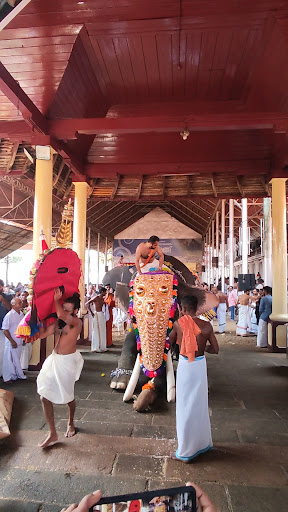
Arattu Festival: Ettumanoor Mahadeva Temple is famous for its annual Arattu festival, which is a grand procession featuring caparisoned elephants, traditional music, and cultural performances. This festival is a major highlight and attracts a large number of devotees and tourists.
Mural Paintings: The temple is also known for its exquisite mural paintings, which adorn the walls of the Sreekovil (sanctum sanctorum). These murals depict various episodes from Hindu mythology and are a visual treat for art enthusiasts.
Rituals and Offerings: Devotees can participate in various rituals and offerings at the temple, including Abhishekam (ritual bath), Ganapathi Homam (fire ritual), and Navagraha Pooja (worship of the nine celestial bodies).
Cultural Heritage: Ettumanoor Mahadeva Temple is not only a place of worship but also a repository of Kerala's rich cultural and artistic heritage. It reflects the architectural and artistic excellence of the region.
Pilgrimage Site: The temple is an important pilgrimage site for Shiva devotees and is an integral part of the spiritual and cultural fabric of Kerala.
Overall, Ettumanoor Mahadeva Temple is not just a religious site but also a cultural treasure that showcases the beauty of Kerala's traditional architecture and art. It continues to be a source of spiritual solace and cultural appreciation for people from all walks of life.
Legend has it that the roots of Ettumanoor Mahadeva Temple were intertwined with the epic tale of the Pandavas from the Mahabharata. During their years of exile, the Pandavas found themselves in the serene environs of Ettumanoor. The eldest Pandava, Yudhishthira, was deeply devoted to Lord Shiva and wished to perform daily rituals in His honor.
In his quest to create a sacred abode for Lord Shiva, Yudhishthira made an earnest plea to the divine. He asked that the temple be constructed in a way that the Lord could witness the daily rituals performed in not one, but eight neighboring villages. And so, the temple came to be known as Ettumanoor, signifying the fulfillment of Yudhishthira's sacred wish. ("Ettu" means eight, and "Manoor" means villages.)
Over time, the temple thrived and became a center of religious devotion and cultural heritage. It was said that Lord Shiva himself blessed this place with his divine presence. Pilgrims from far and wide came to seek solace and blessings in the peaceful sanctuary of Ettumanoor Mahadeva Temple.
Another tale tells of a devoted Brahmin named Ettumanoor, who, upon receiving a divine vision, embarked on a sacred mission. He journeyed to the Tungabhadra River, where he found a sacred Shiva Lingam. He brought this divine idol back to Ettumanoor and installed it in the temple, further enriching its spiritual heritage.
And then, there was the sage Vilwamangalam, who, through years of penance, discovered a divine idol of Lord Shiva in a secluded forest. With reverence and devotion, he placed this sacred idol in the temple, deepening the temple's connection to the divine.
These stories, filled with devotion, mythology, and ancient wisdom, became the foundation of Ettumanoor Mahadeva Temple's rich history. Today, the temple stands as a symbol of faith, tradition, and the enduring spiritual essence of Kerala, welcoming pilgrims and...
Read moreEttumanoor Mahadeva temple is one among the most famous Siva temple in Kerala at Ettumanoor, Kottayam Dist. It belongs to one among the great 108 Siva temples in India.
Main deity: Mahadevan in the form of Akhoramoorthy facing west. Deity is worshipped for three identities of Lord Siva based on his unique characters during Morning Noon time and Evening as Ardhanareeswaran, Kirathamoorthi and Akhoramoorthy respectively. South nada of the same shrine is for deities Dakshinamoorthy and Ganapathy. Other Subdeities are Sasthavu and Bhagavathi. A separate Sreekrishna temple also is there in the North-west corner of the temple compound.
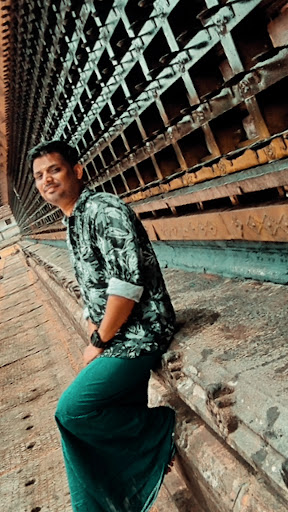
Temple: Ettumanoor temple is a big temple similar to Vaikom but compound area is comparativly less. Temple structure is typical to kerala style Architecture with copper sheets roofing. Sreekovil is very large, round in shape having doors to west (for main deity Siva), south (Dakshinamoorthy and Ganapathy) and east (Devi Parvathy not opened for darsan). Outer wall of the shrine is decorated with beautiful wooden sculptures of different Hindu Gods.
Golden flag mast at the entrance to Balickalpura.
Festival: 10 days festival with Aarattu on Thiruvathira of month Kumbham. Eventhough the Aarattu is on 10th day, the 8th day of the festival is very special with the darsan of deity along with Ezhara ponnana (seven and half golden elephants) in the north-west side of the temple called Aasthana mandapam. Subseqent to this darsan, Valiya kanikka and Valiya vilakku procession are there. Thiruvathira on month Dhanu, Sivarathri and Pradosha days also are important in this temple as usual to all other Siva temples.
History/Mythology: A great Sage, Khara maharshi had brought three Sivalingas from Chidambaram and placed one at Ettumanoor. The other two sivalingas were placed at Kaduthuruthi and Vaikom to build-up temples there also respectively. Hence it is considered visiting of these three temples in a single stretch within a day is a unique and special way of worshipping Lord Siva by the devotees. It is more special if it is on Sivaratri day.
It is believed that Lord Parasurama also involed for building up of this temple and finalizing its rituals, systems and festivals.
As per another mythology, Sree Villuvamangalam Swamiyar, a great scholar and spiritual leader had initiated the renovation of the temple once it was abandoned in earlier periods and he placed the Krishna temple also in the North-west corner of the temple compound. It may be a spiritual intervention to unite and establish better alliance between Saiva-Vaishnava spiritual streams of Hindu religion existed during earlier periods.
Other important points: Ettumanoor Valiya vilakku near to the Balickalpura is put by around ME 720 and then onwards it is continuously being lighted without any break.
Wall pictures of Akhoramoorthy, Pradosha thandavam and Ananthasayanam on the south and North walls inside the west gopuram.
Ezhara ponnana darsanam on 8th and Aarattu days during the festival. Seven elephants of 2 feet height plated with 10kg of gold and a small elephant of 1feet height plated with 5kg gold together are called as Ezhara ponnana of Ettumanoor temple. These seven and a half golden elephants were donated to the temple by the Travencore Kings Anizham Thirunal Marthandavarma maharaja and Karthika Thirunal maharaja.
Two vrishabha vahanas (idol of bull, the Vahana of Siva) in the Namaskara mandapam against one Vahana in all other Siva temples normally.
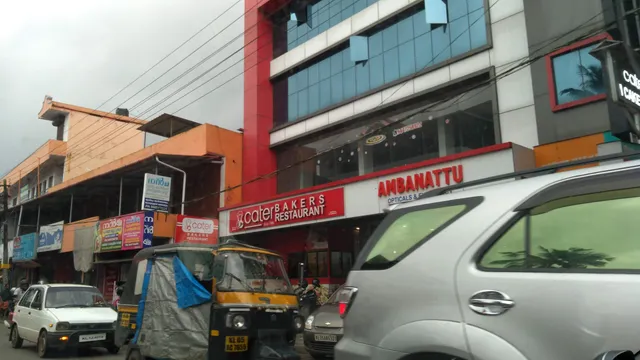
Travel: Ettumanoor is a small town centered to this famous temple in Kottayam district. It is by the side of Kottayam-Ernakulam State Highway, around 12kms from Kottayam. South side of the temple is Kottayam-poonjar state highway. Public transport facilty is available mainly with Private and KSRTC buses. A small Railway station for Passenger Trains is available near to Ettumanoor town.
Facility: Devaswom Vehicle parking facility and washrooms are available near the main entrance at west side. Good vegetarian hotels are also available near the...
Read moreThis temple is situated in Ettumanoor, a small town near Vaikom. It is believed that an Asura called Khara got three Shivalingas from Lord Shiva himself. He brought them to Kerala, holding one by his teeth and one each in his left and right hand. While the Lingam held by his teeth was consecrated in Kaduthuruthi, the one held in his right hand was consecrated in Vaikom and the one held in his left hand was consecrated in Ettumanoor. After consecrating all these three temples in the same day, Khara is believed to have become a deer and was doing service to the Gods. It is believed that the God in Ettumanoor took the deer in his hand and held it there, Because of that, this place was called Udhruthaina Puram, which translated to Malayalam became Ettumanoor (The place where the deer was lifted).
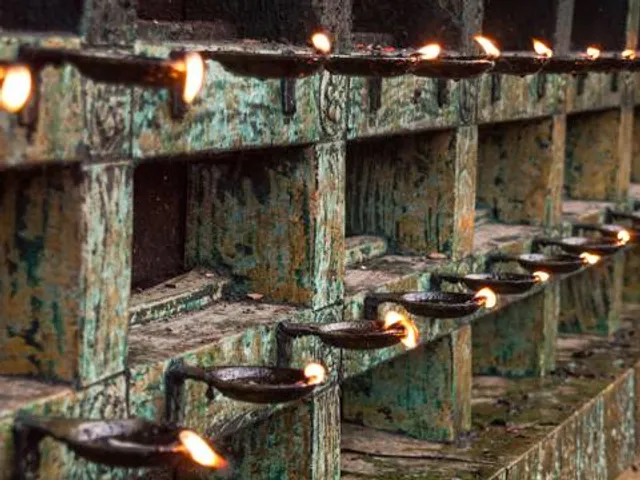
The major worship in this temple is lighting of lamps. An ever glowing, very big lamp can be seen as soon as you enter the temple. The devotees pour oil on to this lamp. Lately, since the oil is being received more than needed for the lamp, a vessel has been kept near by where if the lamp is full, devotees can pour the oil they have brought into it. There is apparently, a story behind this. It appears a brass metal worker once made a huge bronze lamp, brought it to this temple and pleaded with its management to buy it from him. They simply laughed at him and informed him that the temple had no necessity to buy a lamp since they already had sufficient lamps. Crest fallen, the metal worker pleaded with the Lord consecrated there and lo ! suddenly a big storm started around the temple. The temple management realized that God was angry at their behaviour and bought the lamp and installed it there. From that time the lamp has been constantly burning in front of the deity.
Though the uthsava idol of Shiva is an eight handed figure and is in a 'roudra bhava' (appearing in a very angry posture). the devotees only see Him as a merciful form.
The temple is very artistically constructed and has a copper roof. Several wooden sculptures can be found around the temple. There are also statues of two bulls in this temple. There are also temples for Dakshinamurthy (very rare in Kerala), Ganapathi and Sastha in this temple. There is an engraving in the temple which indicates that it was constructed about 400 years ago.
The festival in this temple is celebrated in the month of Kumbham (February-March), and lasts for ten days. The Thiruvadira festival and Shivarathri are also celebrated in this temple. The eighteen part worship for Shivarathri is famous. People refer the God in this temple as...
Read more