Latur has an ancient history, which probably dates to the Rashtrakuta period. It was home to a branch of Rashtrakutas which ruled the Deccan from 753 to 973 AD. The first Rashtrakuta king, Dantidurga, was from Lattalur (Kannada: ಲಟ್ಟಲೂರು), probably the ancient name for Latur. Ratnapur is also mentioned as an historic name for Latur.[4]
The King Amoghavarsha of Rashtrakutas developed the Latur city, originally the native place of the Rashtrakutas. The Rashtrakutas who succeeded the Chalukyas of Badami in 753 AD called themselves the residents of Lattalut.
It was, over the centuries, variously ruled by the Satavahanas, the Sakas, the Chalukyas, the Yadavas of Deogiri, the Delhi Sultans, the Bahamani rulers of South India, Adilshahi, and the Mughals.
Later in the 19th century, Latur became part of the Princely state of Hyderabad. In 1905 it was merged with surrounding areas and renamed Latur tehsil, becoming part of Osmanabad district. Before 1948, Latur was a part of Hyderabad State under Nizam. The chief of Nizam's Razakar army, Qasim Rizwi, was from Latur.
After Indian independence and the merger of Hyderabad with the Indian Union, Osmanabad became part of Bombay Province. In 1960, with the creation of Maharashtra, Latur became one of its districts. On August 16, 1982, a separate Latur district was carved out of...
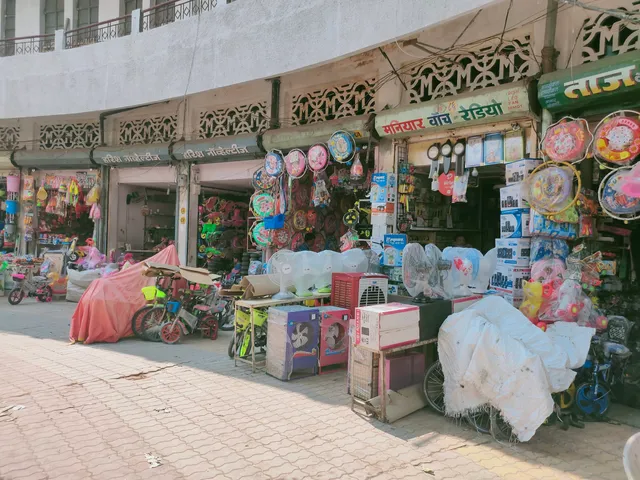
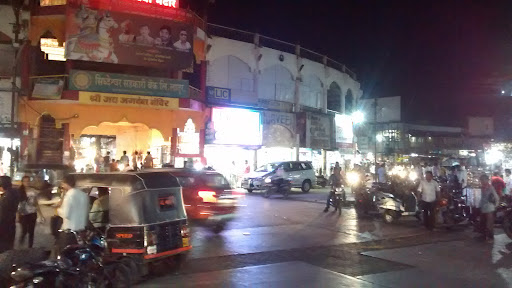
Read morePerhaps the only lively place in Latur I could find in little time that I spent there. This place is full of shops selling agricultural produce to clothes and about everything a person may need in everyday life and on special occasions.
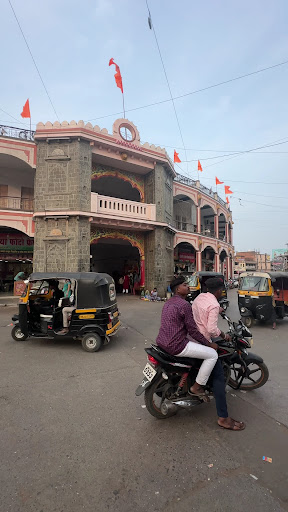
This place is fondly called "Golai" derived from Hindi term "gol" which is "Round" when translated and it is called so as map shows this place as mesh of rounds and radial roads through those rounds.
Big temple exist in the middle with uniformed govt. security personnel deployed there.
Traffic, sea of people, garbage strewn all over, small merchants selling literally on street occupying space meant for pedestrians & vehicles give it a peculiar Indian bazaar look which is the story all over India. Lack of proper public transport has resulted in extremely high number of two wheel bikes which are noisy and contribute to the air pollution.
It's a place one can walk around to get a glimpse of what life is like here and for that experience. Nothing great here and surely not a place for extended vacation or to live for longer in Latur !!
This place was extremely hot & uncomfortable in the day time when I visited in May of 2017.
People mostly converse in local language Marathi though I was able to converse in Hindi with no language problem. English is understood by...
Read moreShopping area, all things available. The prominent Ganj Golai is present and constructed in a central place of the Latur city. The urban organizer and developer Shri Faiyajuddin had prepared the blueprint for the Ganj Golai. The focal structure of the Ganj Golai is a mammoth two-storied construction which was erected in the year 1917.
GETTING THERE
You can avail from smooth transport from the major cities like Mumbai, Pune, Nagpur, Kolhapur, Sangli and Aurangabad to visit Ganj Golai, Latur. It has its own railway station from where you can avail rickshaws, bus or taxicabs to reach Ganj Golai.
THINGS TO DO IN AND AROUND
Ganj Golai is a wonderful place to both marvel at the position of the monument and architecture and also ask for blessings from Goddess Jagdamba.Other than that, you can always do some souvenir shopping for people back home. You can get great traditional local materials which are unique and are only available in Latur.
BEST TIME TO VISIT
The weather and climate around Ganj Golai is the most comfortable during the months between October and February. Temperature ranges between 13°C to 41°C. However, the best season to visit the Ganj Golai would be winter season when the temperatures and humidity levels are pleasant and you can venture out without heavy...
Read more