HTML SitemapExplore
logo
Find Things to DoFind The Best Restaurants

Sangameshwar Mandir — Attraction in Maharashtra

Name
Sangameshwar Mandir
Description
Nearby attractions
Sardar Purandare Wada
82RH+QG5, Diwale-Narayanpur Rd, Sidhheshwar Colony, Saswad, Maharashtra 412301, India
Sopan Dev Samadhi Mandir
82RG+W49, Sidhheshwar Colony, Saswad, Maharashtra 412301, India
Nearby restaurants
Aabacha Dhaba
82QP+PV7, Pune, Maharashtra 412301, India
Nearby hotels
SPOT ON New Surekh Lodge
near PMT Bus Stop, Shri Swami Samarth Society, Saswad, Maharashtra 412301, India
OYO Yashraj Lodge
Plot No 1, Jay Prakash Narayan Chowk, Sidhheshwar Colony, Saswad, Maharashtra 412301, India
Related posts
Keywords
Sangameshwar Mandir tourism.Sangameshwar Mandir hotels.Sangameshwar Mandir bed and breakfast. flights to Sangameshwar Mandir.Sangameshwar Mandir attractions.Sangameshwar Mandir restaurants.Sangameshwar Mandir travel.Sangameshwar Mandir travel guide.Sangameshwar Mandir travel blog.Sangameshwar Mandir pictures.Sangameshwar Mandir photos.Sangameshwar Mandir travel tips.Sangameshwar Mandir maps.Sangameshwar Mandir things to do.
Sangameshwar Mandir things to do, attractions, restaurants, events info and trip planning
Sangameshwar Mandir
IndiaMaharashtraSangameshwar Mandir

Basic Info

Sangameshwar Mandir

82RH+25J, Sidhheshwar Colony, Saswad, Maharashtra 412301, India
4.7(1.3K)
Open until 7:00 PM
Save
spot

Ratings & Description

Info

Cultural
Accessibility
attractions: Sardar Purandare Wada, Sopan Dev Samadhi Mandir, restaurants: Aabacha Dhaba
logoLearn more insights from Wanderboat AI.
Open hoursSee all hours
Wed7 AM - 7 PMOpen

Plan your stay

hotel
Pet-friendly Hotels in Maharashtra
Find a cozy hotel nearby and make it a full experience.
hotel
Affordable Hotels in Maharashtra
Find a cozy hotel nearby and make it a full experience.
hotel
The Coolest Hotels You Haven't Heard Of (Yet)
Find a cozy hotel nearby and make it a full experience.
hotel
Trending Stays Worth the Hype in Maharashtra
Find a cozy hotel nearby and make it a full experience.

Reviews

Nearby attractions of Sangameshwar Mandir

Sardar Purandare Wada

Sopan Dev Samadhi Mandir

Sardar Purandare Wada

Sardar Purandare Wada

4.3

(294)

Open 24 hours
Click for details
Sopan Dev Samadhi Mandir

Sopan Dev Samadhi Mandir

4.6

(266)

Open until 10:00 PM
Click for details

Things to do nearby

Pune Walking Tour with a Punekar
Wed, Dec 10 • 9:00 AM
Shaniwar Peth, Pune, 411030
View details
Pune Food & Snack Tasting Walking Tour
Wed, Dec 10 • 1:00 PM
near Goodluck Chowk, Fergusson College Road, Deccan Gymkhana, Pune, 411004
View details
Learn conversational Hindi in a cozy café
Thu, Dec 11 • 4:30 PM
Pune, Maharashtra, 411001, India
View details

Nearby restaurants of Sangameshwar Mandir

Aabacha Dhaba

Aabacha Dhaba

Aabacha Dhaba

5.0

(2)

Click for details
Get the Appoverlay
Get the AppOne tap to find yournext favorite spots!
Wanderboat LogoWanderboat

Your everyday Al companion for getaway ideas

CompanyAbout Us
InformationAI Trip PlannerSitemap
SocialXInstagramTiktokLinkedin
LegalTerms of ServicePrivacy Policy

Get the app

© 2025 Wanderboat. All rights reserved.
logo

Reviews of Sangameshwar Mandir

4.7
(1,319)
avatar
5.0
2y

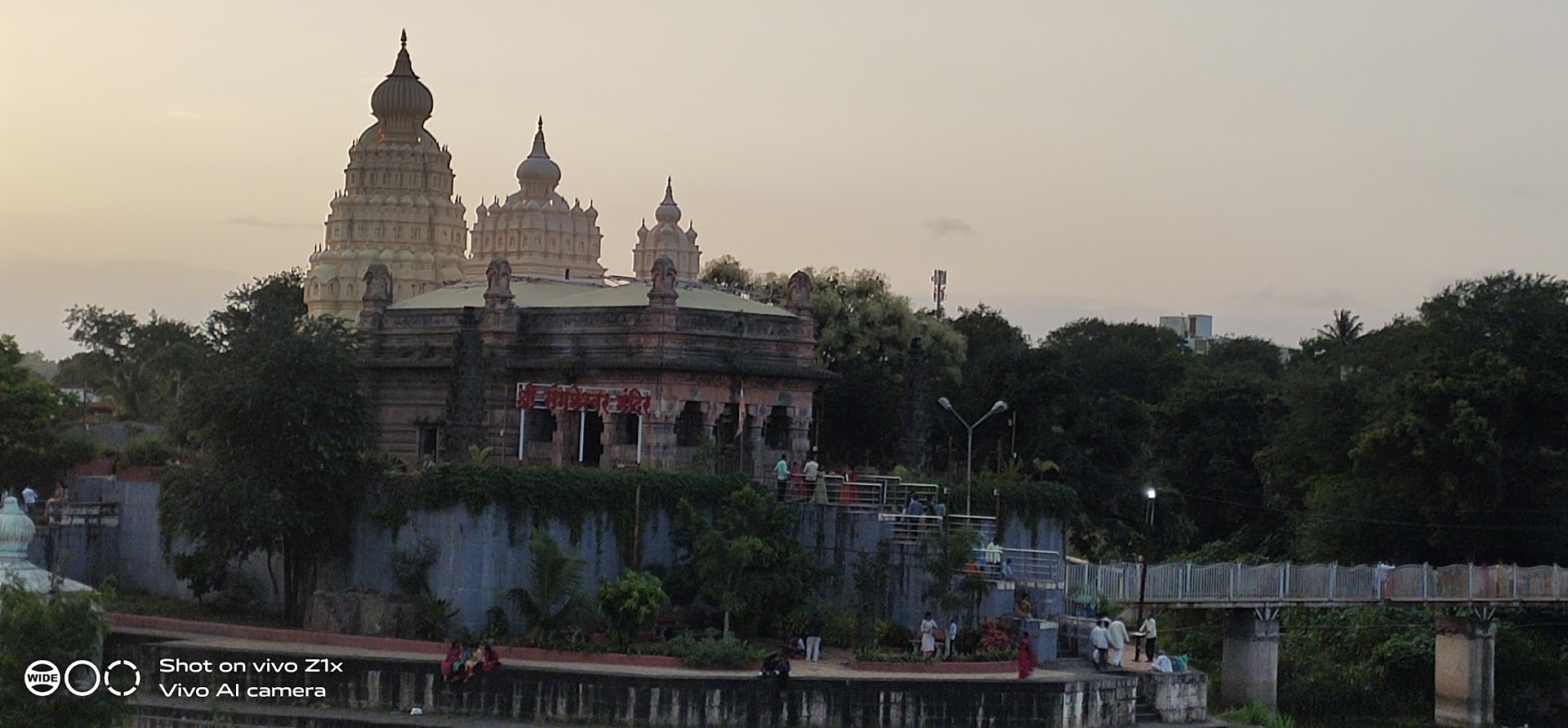
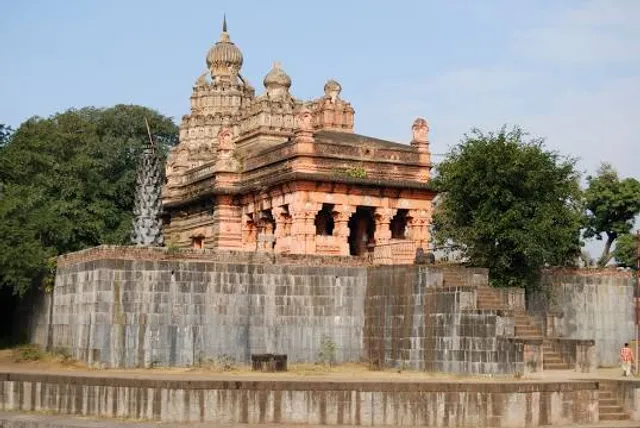
The ancient Sangameshwar temple of Swayambhu Mahadev at the confluence of two rivers namely Karha and Chambali (Bhogwati) is situated in the historically significant city of Saswad in the state of Maharashtra. Saswad is known to be deeply entrenched in history, spirituality, religion, culture and architecture from time immemorial. It is believed that the origin of this ancient Sangameshwar temple can be traced back to the Pandavas. Historical and religious references are conclusive that the Pandavas resided in this place in their exile. During their stay here, it was observed that there was a severe water crisis in this region. Lord Krishna who had accompanied the Pandavas noticed Lord Brahma sitting nearby deep in meditation having a kamandalu that was full of water. Lord Krishna quickly asked Bheema to bring that kamandalu and suggested that a river can be made to flow from the water flowing out of the kamandalu. Bheema enthusiastically went up to Lord Brahma to request him to part with the water in the kamandalu but Lord Brahma was blissfully unaware of the surroundings. Bheema in an effort to get his attention poured cold water on his head. Lord Brahma quick to anger at this impertinence of Bheema chased him and, it was during this flight of Bheema that the Shiva Lingas were created in five spots to appease Lord Brahma and seek the blessings of Lord Shiva and the birth of the river Karha named after the kamandalu of Lord Brahma called Kara occurred. The temple that one sees today is probably been built between the 10th and 13th century in the typical Hemadpanti style of architecture (style incorporating black stone and lime without using any mortar using the technique of mortise and tenon joint). As one climbs the stone steps, one’s attention rests on the stunning architecture, the temple’s shikara that has hundreds of intricate sculptures and the majestic Nandi. The entrance mandapam has beautifully weathered stone pillars with two deepamalas (row of lamps) on either side, a gaily painted Nandi and a detailed carving of a tortoise with a lotus on its back on the floor. There is also a very interesting design of Tulasi Vrindavan that holds a Shiva Linga in the middle with a solid base below and so, when water falls on the sacred tulasi, it falls on the pindi or Shakti peetam of the Linga. The entrance mandapam leads to the maha mandapam where Lord Ganesha, Lord Hanuman and others are worshipped in the niches of the thick walls. The garbha griha (sanctum sanctorum) oozes of calm, serenity and peace. There is a lone old lamp over the Shiva Linga and in that dim illumination, you can see Goddess Parvati and Lord Ganesha in the background with a picture of Saint Sopandev painted on the sidewall. Perhaps, it is the legendary stories associated with this temple or perhaps it is the energy of this place that is very comforting, but whatever the reason maybe, it renders you silent and...

   Read more
avatar
5.0
5y

Believed to have been built sometime between the 10th and 13th century, Sangameshwar temple stands guard over the confluence of the Chamli and Karha rivers, just south of Saswad. Dedicated to Lord Shiva, the temple is about 35km south-east of Pune, and takes just over an hour to reach there from Pune. Dedicated to lord Shiva, the temple holds a commanding position, and must be quite an impressive sight during the monsoons when the rivers are filled with fresh new rains. As it’s located right on the edge of Saswad, it has the feel of being more isolated than it actually is. The temple is a mix of old architecture, one assumes possibly original, plus later modifications and renovations. The temple’s Shikhara (dome) has literally hundreds of small sculptures of deities carved in consecutive layers. Although now badly weathered, you can still make out these figures on both the main temple and other peripheral buildings. From the temple platform it’s possible to walk down to the river on both sides, where the are smaller shrines, but I wasn’t able to find any path extending along the river bank going away from the temple. The main temple has two deepmalas on either side, and an unexpectedly large and colourfully painted Nandi in the middle of the temple hall. I love the way the Nandi is positioned in the temple hall, peering into the interior of the temple. Further within the temple, just outside the sanctum sanctorum sits Lord Ganesh and other guardian deities carved in the niches of the sustantial walls. The sanctum room is far from silent, a chant is playing in a repetitive loop with accompanying sounds of small bells chiming. It’s an atmospheric space, a sense that time has momentarily stood still and you’re awash with a sense of inner peace. A smaller partially damaged but life size Nandi carved out of black stone lies immediately in front of the temple. I confess my expectations prior to visiting this temple were a little low, but what I found was quite surprising. I think my next trip to Pune in 2019 will have to include a little further exploration in and around Saswad, there seems to be a few more locations I should check out.

Visiting the Sangameshwar Temple in Saswad would be the perfect stop-off if you were intending to visit the Khandoba Temple in Jejuri from Pune. You’d need about an hour to see the temple and explore its...

   Read more
avatar
5.0
48w

Believed to have been built sometime between the 10th and 13th century, Sangameshwar temple stands guard over the confluence of the Chamli and Karha rivers, just south of Saswad. Dedicated to Lord Shiva, the temple is about 35km south-east of Pune, and takes just over an hour to reach there from Pune.

Dedicated to lord Shiva, the temple holds a commanding position, and must be quite an impressive sight during the monsoons when the rivers are filled with fresh new rains. As it’s located right on the edge of Saswad, it has the feel of being more isolated than it actually is.

The temple is a mix of old architecture, one assumes possibly original, plus later modifications and renovations. The temple’s Shikhara (dome) has literally hundreds of small sculptures of deities carved in consecutive layers. Although now badly weathered, you can still make out these figures on both the main temple and other peripheral buildings.

From the temple platform it’s possible to walk down to the river on both sides, where the are smaller shrines, but I wasn’t able to find any path extending along the river bank going away from the temple.

The main temple has two deepmalas on either side, and an unexpectedly large and colourfully painted Nandi in the middle of the temple hall. I love the way the Nandi is positioned in the temple hall, peering into the interior of the temple.

Further within the temple, just outside the sanctum sanctorum sits Lord Ganesh and other guardian deities carved in the niches of the sustantial walls.

The garbhagriha is a somewhat dark roomed cellar, with a lone diya over the Shivling. You can see Goddess Parvati and Lord Ganesha in the background with a picture of Saint Sopandev painted on the sidewall.

The sanctum room is far from silent, a chant is playing in a repetitive loop with accompanying sounds of small bells chiming. It’s an atmospheric space, a sense that time has momentarily stood still and you’re awash with a sense of inner peace.

A smaller partially damaged but life size Nandi carved out of black stone lies immediately in front...

   Read more
Page 1 of 7
Previous
Next

Posts

ANIMESH SHUKLAANIMESH SHUKLA
The ancient Sangameshwar temple of Swayambhu Mahadev at the confluence of two rivers namely Karha and Chambali (Bhogwati) is situated in the historically significant city of Saswad in the state of Maharashtra. Saswad is known to be deeply entrenched in history, spirituality, religion, culture and architecture from time immemorial. It is believed that the origin of this ancient Sangameshwar temple can be traced back to the Pandavas. Historical and religious references are conclusive that the Pandavas resided in this place in their exile. During their stay here, it was observed that there was a severe water crisis in this region. Lord Krishna who had accompanied the Pandavas noticed Lord Brahma sitting nearby deep in meditation having a kamandalu that was full of water. Lord Krishna quickly asked Bheema to bring that kamandalu and suggested that a river can be made to flow from the water flowing out of the kamandalu. Bheema enthusiastically went up to Lord Brahma to request him to part with the water in the kamandalu but Lord Brahma was blissfully unaware of the surroundings. Bheema in an effort to get his attention poured cold water on his head. Lord Brahma quick to anger at this impertinence of Bheema chased him and, it was during this flight of Bheema that the Shiva Lingas were created in five spots to appease Lord Brahma and seek the blessings of Lord Shiva and the birth of the river Karha named after the kamandalu of Lord Brahma called Kara occurred. The temple that one sees today is probably been built between the 10th and 13th century in the typical Hemadpanti style of architecture (style incorporating black stone and lime without using any mortar using the technique of mortise and tenon joint). As one climbs the stone steps, one’s attention rests on the stunning architecture, the temple’s shikara that has hundreds of intricate sculptures and the majestic Nandi. The entrance mandapam has beautifully weathered stone pillars with two deepamalas (row of lamps) on either side, a gaily painted Nandi and a detailed carving of a tortoise with a lotus on its back on the floor. There is also a very interesting design of Tulasi Vrindavan that holds a Shiva Linga in the middle with a solid base below and so, when water falls on the sacred tulasi, it falls on the pindi or Shakti peetam of the Linga. The entrance mandapam leads to the maha mandapam where Lord Ganesha, Lord Hanuman and others are worshipped in the niches of the thick walls. The garbha griha (sanctum sanctorum) oozes of calm, serenity and peace. There is a lone old lamp over the Shiva Linga and in that dim illumination, you can see Goddess Parvati and Lord Ganesha in the background with a picture of Saint Sopandev painted on the sidewall. Perhaps, it is the legendary stories associated with this temple or perhaps it is the energy of this place that is very comforting, but whatever the reason maybe, it renders you silent and introspective.
Aniruddh GadadeAniruddh Gadade
Sangameshwar Temple, Saswad: A Sacred Confluence Nestled amidst the serene landscapes of Saswad, the Sangameshwar Temple stands as a testament to both spiritual devotion and natural beauty. This ancient shrine is a haven of tranquility, where the sacred confluence of the Karha and Chamli rivers creates a mesmerizing spectacle. As the name suggests, Sangameshwar is dedicated to Lord Shiva, whose divine presence is believed to permeate the entire area. The temple's architecture, a harmonious blend of ancient and rustic charm, is a visual delight. Intricate carvings adorn the stone walls, narrating tales of mythology and spirituality. The main sanctum, dedicated to the Shiva linga, is a space of profound peace and spiritual resonance. The gentle murmur of the rivers, coupled with the rhythmic chants of devotees, creates an atmosphere of divine bliss. Beyond its religious significance, Sangameshwar is a picturesque picnic spot. The sprawling lawns, shaded by sprawling trees, offer an ideal setting for relaxation and recreation. Families and friends can enjoy leisurely picnics, while nature enthusiasts can embark on short treks along the riverbanks. The monsoon season transforms the surroundings into a verdant paradise, with the rivers in full spate and the air filled with the refreshing fragrance of wet earth. As the sun begins its descent, casting a golden hue over the landscape, Sangameshwar unveils its most enchanting aspect. The sky mirrors the colors of the setting sun, and the waters of the confluence shimmer with reflected light. It is a moment of unparalleled beauty, a time to connect with nature and find solace in the grandeur of creation. Sangameshwar Temple, thus, is more than just a place of worship; it is a sanctuary for the soul, a confluence of spirituality, nature, and human experience.
Prasad BarhatePrasad Barhate
🏛️ Historical & Religious Site | Pune District ⭐⭐⭐ ⭐ ☆— 4/5 🛕 Architectural Beauty – ⭐⭐⭐⭐⭐/5 📜 Historical Significance – ⭐⭐⭐⭐⭐/5 🧹 Cleanliness & Maintenance – ⭐⭐☆☆☆/5 🪧 Information & Signage – ⭐☆☆☆☆/5 💰 Fund Utilization – ⭐☆☆☆☆/5 📝 Review Highlights: 📍 Located in Saswad, this temple is situated at the confluence (Sangam) of two rivers—Karha and Chamli—hence the name Sangameshwar. 📖 Rich Historical Background: The temple is associated with Peshwa Bajirao I, and it’s believed that he often visited here during his early years in Saswad. 🗡️ Historical Event: Near this very location, Chhatrapati Sambhaji Maharaj was arrested by Aurangzeb's forces in 1689. A site of deep Maratha history. 🏛️ The Yadava-era Hemadpanthi architecture is magnificent and still intact—stone carvings, shikhara, and sabhamandap are impressive. 🏛️ The Rivers - the two rivers meet and that's the reason it's called Sangameshwar based on "Sangam" which means meeting of two Rivers 🧘‍♂️ Peaceful, spiritual atmosphere ideal for quiet visits, photography, and history exploration. ⚠️ Cons / Suggestions: 🧹 Cleanliness needs major improvement—the surrounding areas and temple base are not well maintained. 🪧 No information boards explaining the temple’s historical and cultural value. This should be added for tourists and devotees. 💰 Despite significant funds and temple donations, there’s little sign of proper implementation for preservation and development. 🚮 Waste disposal and public facilities (like drinking water) are either missing or inadequate.
See more posts
See more posts
hotel
Find your stay

Pet-friendly Hotels in Maharashtra

Find a cozy hotel nearby and make it a full experience.

The ancient Sangameshwar temple of Swayambhu Mahadev at the confluence of two rivers namely Karha and Chambali (Bhogwati) is situated in the historically significant city of Saswad in the state of Maharashtra. Saswad is known to be deeply entrenched in history, spirituality, religion, culture and architecture from time immemorial. It is believed that the origin of this ancient Sangameshwar temple can be traced back to the Pandavas. Historical and religious references are conclusive that the Pandavas resided in this place in their exile. During their stay here, it was observed that there was a severe water crisis in this region. Lord Krishna who had accompanied the Pandavas noticed Lord Brahma sitting nearby deep in meditation having a kamandalu that was full of water. Lord Krishna quickly asked Bheema to bring that kamandalu and suggested that a river can be made to flow from the water flowing out of the kamandalu. Bheema enthusiastically went up to Lord Brahma to request him to part with the water in the kamandalu but Lord Brahma was blissfully unaware of the surroundings. Bheema in an effort to get his attention poured cold water on his head. Lord Brahma quick to anger at this impertinence of Bheema chased him and, it was during this flight of Bheema that the Shiva Lingas were created in five spots to appease Lord Brahma and seek the blessings of Lord Shiva and the birth of the river Karha named after the kamandalu of Lord Brahma called Kara occurred. The temple that one sees today is probably been built between the 10th and 13th century in the typical Hemadpanti style of architecture (style incorporating black stone and lime without using any mortar using the technique of mortise and tenon joint). As one climbs the stone steps, one’s attention rests on the stunning architecture, the temple’s shikara that has hundreds of intricate sculptures and the majestic Nandi. The entrance mandapam has beautifully weathered stone pillars with two deepamalas (row of lamps) on either side, a gaily painted Nandi and a detailed carving of a tortoise with a lotus on its back on the floor. There is also a very interesting design of Tulasi Vrindavan that holds a Shiva Linga in the middle with a solid base below and so, when water falls on the sacred tulasi, it falls on the pindi or Shakti peetam of the Linga. The entrance mandapam leads to the maha mandapam where Lord Ganesha, Lord Hanuman and others are worshipped in the niches of the thick walls. The garbha griha (sanctum sanctorum) oozes of calm, serenity and peace. There is a lone old lamp over the Shiva Linga and in that dim illumination, you can see Goddess Parvati and Lord Ganesha in the background with a picture of Saint Sopandev painted on the sidewall. Perhaps, it is the legendary stories associated with this temple or perhaps it is the energy of this place that is very comforting, but whatever the reason maybe, it renders you silent and introspective.
ANIMESH SHUKLA

ANIMESH SHUKLA

hotel
Find your stay

Affordable Hotels in Maharashtra

Find a cozy hotel nearby and make it a full experience.

Get the Appoverlay
Get the AppOne tap to find yournext favorite spots!
Sangameshwar Temple, Saswad: A Sacred Confluence Nestled amidst the serene landscapes of Saswad, the Sangameshwar Temple stands as a testament to both spiritual devotion and natural beauty. This ancient shrine is a haven of tranquility, where the sacred confluence of the Karha and Chamli rivers creates a mesmerizing spectacle. As the name suggests, Sangameshwar is dedicated to Lord Shiva, whose divine presence is believed to permeate the entire area. The temple's architecture, a harmonious blend of ancient and rustic charm, is a visual delight. Intricate carvings adorn the stone walls, narrating tales of mythology and spirituality. The main sanctum, dedicated to the Shiva linga, is a space of profound peace and spiritual resonance. The gentle murmur of the rivers, coupled with the rhythmic chants of devotees, creates an atmosphere of divine bliss. Beyond its religious significance, Sangameshwar is a picturesque picnic spot. The sprawling lawns, shaded by sprawling trees, offer an ideal setting for relaxation and recreation. Families and friends can enjoy leisurely picnics, while nature enthusiasts can embark on short treks along the riverbanks. The monsoon season transforms the surroundings into a verdant paradise, with the rivers in full spate and the air filled with the refreshing fragrance of wet earth. As the sun begins its descent, casting a golden hue over the landscape, Sangameshwar unveils its most enchanting aspect. The sky mirrors the colors of the setting sun, and the waters of the confluence shimmer with reflected light. It is a moment of unparalleled beauty, a time to connect with nature and find solace in the grandeur of creation. Sangameshwar Temple, thus, is more than just a place of worship; it is a sanctuary for the soul, a confluence of spirituality, nature, and human experience.
Aniruddh Gadade

Aniruddh Gadade

hotel
Find your stay

The Coolest Hotels You Haven't Heard Of (Yet)

Find a cozy hotel nearby and make it a full experience.

hotel
Find your stay

Trending Stays Worth the Hype in Maharashtra

Find a cozy hotel nearby and make it a full experience.

🏛️ Historical & Religious Site | Pune District ⭐⭐⭐ ⭐ ☆— 4/5 🛕 Architectural Beauty – ⭐⭐⭐⭐⭐/5 📜 Historical Significance – ⭐⭐⭐⭐⭐/5 🧹 Cleanliness & Maintenance – ⭐⭐☆☆☆/5 🪧 Information & Signage – ⭐☆☆☆☆/5 💰 Fund Utilization – ⭐☆☆☆☆/5 📝 Review Highlights: 📍 Located in Saswad, this temple is situated at the confluence (Sangam) of two rivers—Karha and Chamli—hence the name Sangameshwar. 📖 Rich Historical Background: The temple is associated with Peshwa Bajirao I, and it’s believed that he often visited here during his early years in Saswad. 🗡️ Historical Event: Near this very location, Chhatrapati Sambhaji Maharaj was arrested by Aurangzeb's forces in 1689. A site of deep Maratha history. 🏛️ The Yadava-era Hemadpanthi architecture is magnificent and still intact—stone carvings, shikhara, and sabhamandap are impressive. 🏛️ The Rivers - the two rivers meet and that's the reason it's called Sangameshwar based on "Sangam" which means meeting of two Rivers 🧘‍♂️ Peaceful, spiritual atmosphere ideal for quiet visits, photography, and history exploration. ⚠️ Cons / Suggestions: 🧹 Cleanliness needs major improvement—the surrounding areas and temple base are not well maintained. 🪧 No information boards explaining the temple’s historical and cultural value. This should be added for tourists and devotees. 💰 Despite significant funds and temple donations, there’s little sign of proper implementation for preservation and development. 🚮 Waste disposal and public facilities (like drinking water) are either missing or inadequate.
Prasad Barhate

Prasad Barhate

See more posts
See more posts