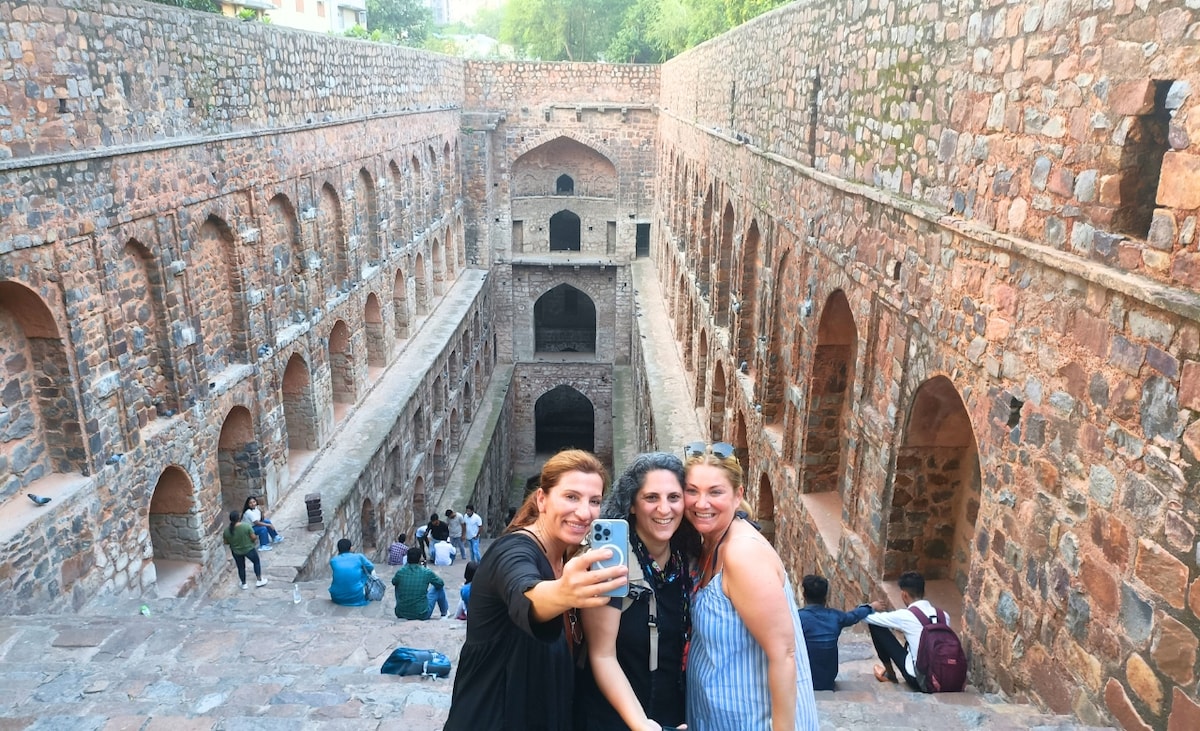
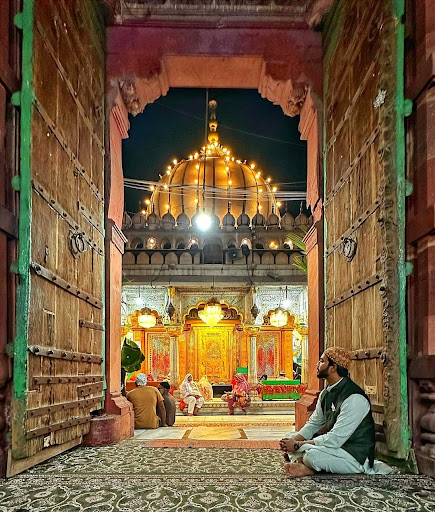
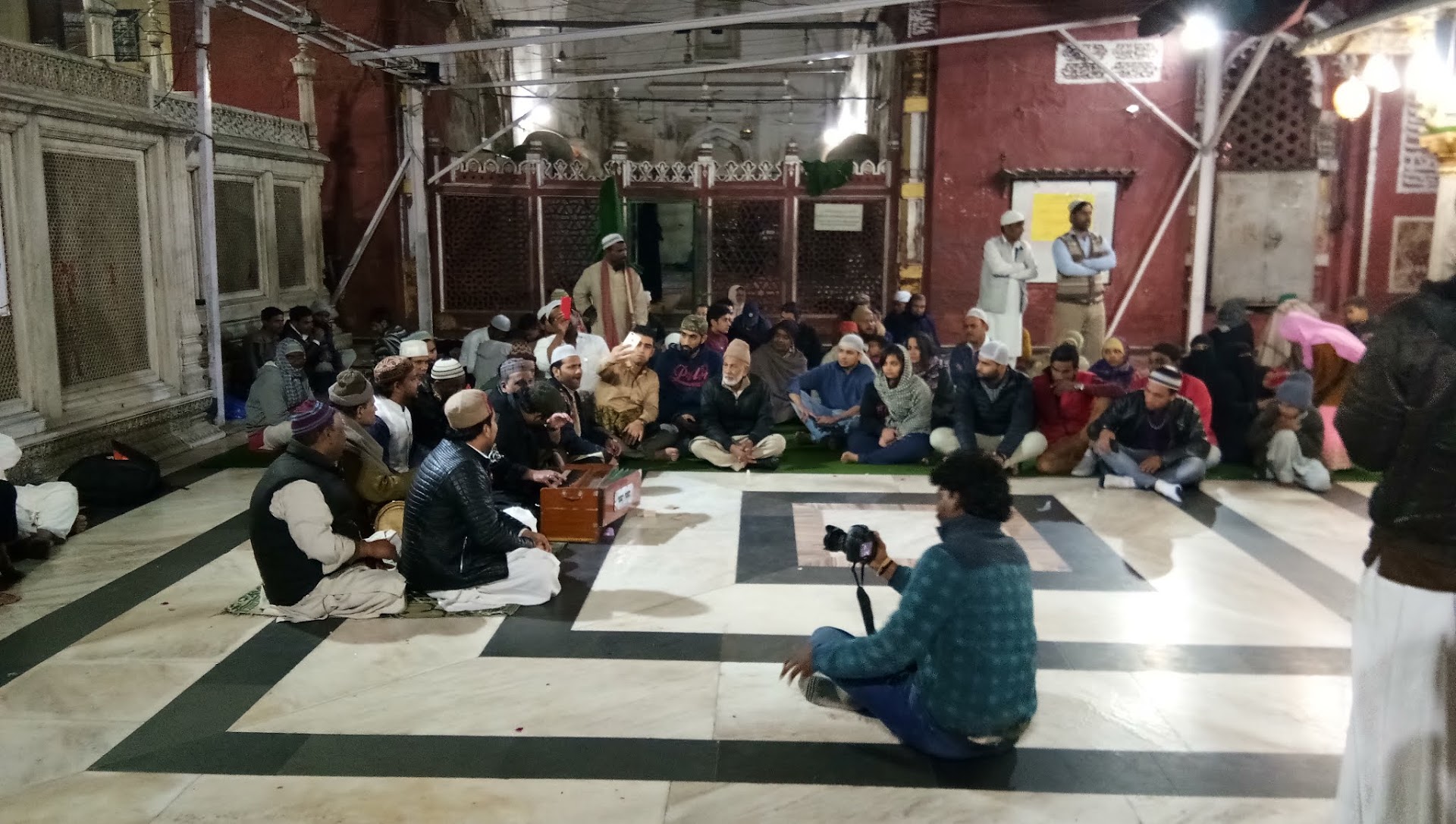
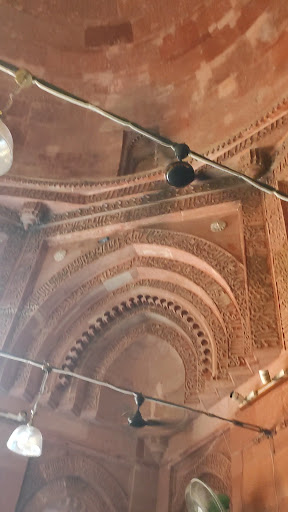
Nizamuddin Dargah is the dargah (mausoleum) of the Sufi saint Khwaja Nizamuddin Auliya (1238–1325 CE). Situated in the Nizamuddin West area of Delhi, the dargah is visited by thousands of pilgrims every week. The site is also known for its evening qawwali devotional music sessions. The descendants of Nizamuddin Auliya look after the whole management of dargah Sharif.The main structure was built by Muhammad bin Tughluq in 1325, following Nizamuddin's death. Firuz Shah Tughlaq later repaired the structure and suspended four golden cups from the dome's recesses. Nawab Khurshid Jah of Hyderabad’s legendary Paigah Family gifted the marble balustrade that surrounds the grave. The present dome was built by Faridun Khan in 1562. The structure underwent many additions over the years. The dome is about six metres in diameter.Next to the dargah is the Jamat Khana Masjid. This mosque is built of red sandstone and has three bays. Its stone walls are carved with inscriptions of texts from the Quran. The mosque has arches that have been embellished with lotus buds, in addition to the facade of its dome having ornamental medallions. The structure was built during the reign of Alauddin Khalji by his son Khizr Khan. Completed between 1312 and 1313, Khizr was responsible for the central dome and hall, and was a follower of Nizamuddin. Around 1325, when Muhammad bin Tughlaq took over the reign, he constructed the two adjoining halls, each of which has two domes. The southern hall, chhoti masjid (transl. small mosque) is restricted to women and features a wooden door. The large dome of the mosque features a golden bowl that is suspended from the centre.At the back entrance of the complex is a baoli (transl. stepwell), commissioned by Nizamuddin himself[5] and completed in 1321. It is close to the Yamuna river and is always filled. People believe that its waters have magical powers and bathe in it.[8] According to legend, Ghiyasuddin Tughlaq had commissioned the Tughlaqabad Fort at the same time the baoli was being built. Because he forbade all workers from working on the baoli, they would work on it at night. Upon discovering this, the supply of oil was restricted. The masons then lit their lamps with the water of the baoli, after a blessing.The evening prayers in which lamps are lit, called the Dua-e-Roshni, is an important ritual. Pilgrims gather around the khadim, the caretaker, who prays for the wishes of all those gathered to be granted.Death is celebrated in most Sufi orders. As part of the urs, the dargah complex and the tombs are lit up in the tradition of charaghan. Lakhs of people from different religions come from across the world and recite verses in the tradition of fateha. Plates of rose petals and sweets are offered to the tombs and fragrant chaddars (transl. sheets) are draped on them. People tie colourful threads on the jaalis and make vows (mannat) to the saints. Each thread symbolizes a wish.The festival of Basant Panchami is also celebrated at the dargah. According to legend, Nizamuddin was deeply attached to his nephew, Khwaja Taqiuddin Nuh, who died due to an illness. Nizamuddin grieved over him for a long time. Khusrau, his disciple, wanted to see him smile and dressed up in yellow and began celebrating the onset of Basant, after spotting some women do the same. This caused Auliya to smile, an occasion that is commemorated to this day.The area is referred to as the "nerve centre of Sufi culture in India". On the 17th and 18th day of the Islamic month of Rabi' al-awwal, thousands gather to observe the birth anniversary and urs (death anniversary) of the saint. Besides this, thousands also visit on the birth and death anniversaries of Amir Khusrau, Nizamuddin's disciple. Hundreds visit the dargah everyday throughout the year to pray and pay their respects. The dargah has a tradition of qawwali, especially the one on every Thursday night attracting about 1500 visitors.The regular qawwalis occur every evening after the Maghrib prayer. The dargah has multiple intergenerational darbari qawwals. And...
Read more"Is duniya mein agar jannat hai to bas yahi hai"
One of the best shrine I have ever visit. The moment you enter into this premise, you will experience calmness all around.
Dargah Hazrat Nizamuddin To escape from the frenetic city life, people from all walks of life to seek solace and blessing of God visit the Nizamuddin Dargah. Situated in the Delhi, Hazrat Nizamuddin is the dargah (mausoleum) of one of the world's most famous Sufi saints, Nizamuddin Auliya (1238 - 1325 CE). Inside the dargah complex, one can find the tombs of poet Amir Khusro, Mughal princess Jehan Ara Begum, and Inayat Khan.
dargah-hazrat-nizamuddin History Dargah is sacred to the world famous Sufi saint of the Chisti Order, Nizamuddin Auliya, who was born in 1238 in Badayun, Uttar Pradesh. He traveled to Delhi to preach the Order of Chisti and then finally settled in Ghiyaspur. Nizamuddin Auliya taught people that love and peace can help them get closer to the God; also one should keep on serving people irrespective of their cast, creed, and religion. During his life, he had many followers like Hazrat Nasiruddin Mahmud Chiragh Dehlavi and Amir Khusro. On 3rd April 1325, he passed away, and his Dargah was constructed by Muhammad Bin Tughlaq of the Tughlaq Dynasty, who was also his avid follower.
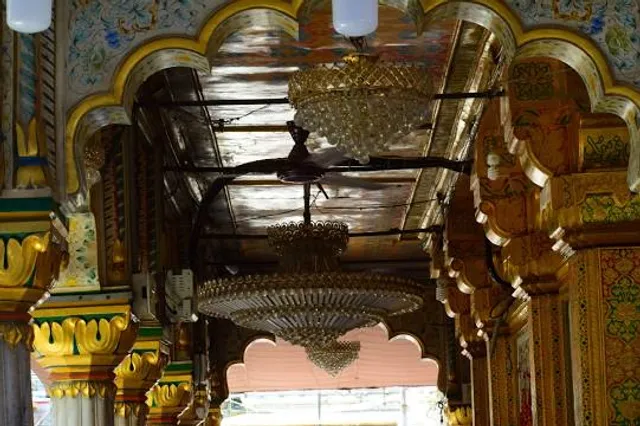
Interiors of the Dargah dargah-hazrat-nizamuddin A street bustling with shops selling chadars, polychrome clocks and prints of Mecca and flowers leads to the Dargah Hazrat Nizamuddin. In the inlaid marble pavilion, one can see devotees singing qawwali in the honor of celebrated Persian poet and devotee of Nizamuddin Auliya - Amir Khusrau (1253-1325). Women are not allowed to go beyond the outer verandah, but they can peek through jali ( lattice screen) to see the dark chamber where the grave of the great saint lies draped with chadar and rose petals. Locals say that tying a thread on the latticed screen serves as a constant reminder to the saint of their wishes. Apart from the main shrine, here, one can see the tomb of Nizamuddin Auliya's saints - Jahanara Begum, Shah Jahan’s favorite daughter, and Amir Khusru.
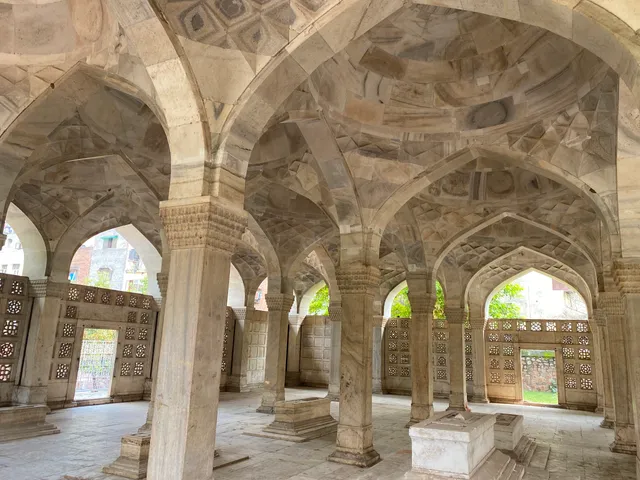
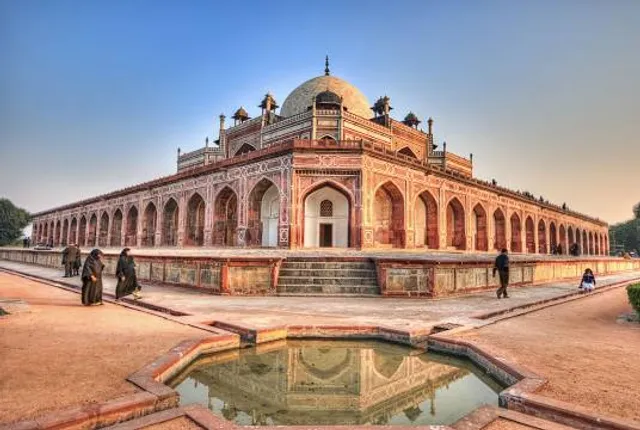
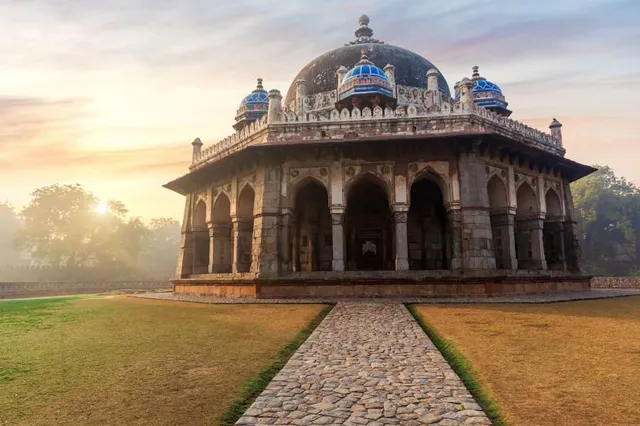
Across the western side of the open courtyard, one can see the Jama’t Khana Mosque, which was built, was back in 1325 AD. Towards the north side of Dargah, there is a stepwell. Locals say that the stepwell was built in secret as the Tughluqabad was in making process, and all the building activities were banned. Successors of Nizamuddin Auliya made it with the help of water lit lamps. On the north-eastern side, there is a 16th-century tomb of Atgah Khan, who was a powerful minister in Emperor Akbar’s court. In the open marble pillar, Chaunsath Khamba (“64 pillars”), one can find the grave of Mirza Ghalib, preeminent Urdu, and Persian-language poet during the last years of the Mughal Empire. Other important tombs located in the NIzzamudin heritage area are the Lal-Mahal, Chini Ka Burj, Kalan-Masjid, Ataga Khan's Tomb, Khan-I-Jahan Tilangani's Tomb, Barapula, Chaunsath Khamba, and Khan-I-Khanan's Tomb.
Best Time to Visit Dargah Throughout the year; specially on Thursday because of evening qawwali session.
To see the dargah in its full gleam, one should visit here during the Urs Festival death anniversary of the Sufi saint,...
Read moreThe Hazrat Nizamuddin Dargah is not merely a historical monument or a religious site; it is the vibrant, beating heart of Sufi culture in India. Dedicated to the revered 14th-century Sufi saint, Hazrat Nizamuddin Auliya (Mahbub-e-Ilahi - Beloved of God), a visit here is a deeply immersive spiritual and cultural experience that transcends religious boundaries. The Atmosphere: An Oasis of Devotion Stepping into the narrow, bustling lanes of the Nizamuddin West neighborhood is the first part of the experience. These alleys, filled with the aroma of incense (ittar), freshly bloomed roses, and local delicacies, create a sensory prelude to the sanctity of the shrine. Unity in Faith: The most moving aspect of the Dargah is the palpable sense of unity. People from all faiths and walks of life visit to offer prayers, tie threads on the lattice jalis (screens) with a wish, or simply sit in quiet contemplation. The saint’s teaching of "love as a means of realising God" is truly alive here. A World of Marble and Stone: The architecture is a beautiful mix of Mughal design, featuring intricate marble work, stunning arches, and a simple yet profound white-domed mausoleum over the saint's tomb. The entire complex is a beautiful reminder of Delhi's rich historical layers. The Highlight: Soul-Stirring Qawwali The experience is incomplete without attending the Qawwali (Sufi devotional music) sessions. Best Time to Visit: Thursday evenings are when the Dargah truly comes alive. The regular Qawwali session (typically around 6:00 PM to 7:30 PM and later, around 9:00 PM to 10:30 PM) features some of the finest traditional singers. The rhythmic chants, soulful melodies, and devotional verses create an utterly transcendent and peaceful atmosphere that is the essence of Sufism. The Experience: Sitting in the courtyard, surrounded by hundreds of entranced devotees as the music swells and echoes off the marble structures, is a unique, powerful, and unforgettable cultural encounter. Key Attractions Within the Complex Beyond the main tomb of Hazrat Nizamuddin Auliya, the Dargah complex holds several other important sites: Tomb of Amir Khusro: Situated near the main mausoleum, this is the resting place of the great Sufi poet, musician, and the saint's most beloved disciple. His presence here highlights the significant role of music and poetry in the Chishti Order of Sufism. Jahanara Begum's Grave: The tomb of Shah Jahan's daughter, a Mughal princess, is notable for its humble, open-to-sky marble design, as per her wish. The Baoli (Stepwell): Located at the back of the complex, this ancient stepwell was commissioned by the saint himself and adds to the historical charm of the area. Jama't Khana Masjid: An early mosque built during the reign of Alauddin Khalji, showcasing beautiful Islamic architecture. Visitor Information and Practical Tips
The Hazrat Nizamuddin Dargah is a truly magical spot that offers a powerful journey into the heart of India's spiritual and cultural heritage. It is a necessary pilgrimage for anyone seeking a moment of peace amidst the bustle of Delhi, a connection to history, or simply to witness the mesmerizing tradition of Qawwali music. It is an essential Delhi experience, best enjoyed on a...
Read more