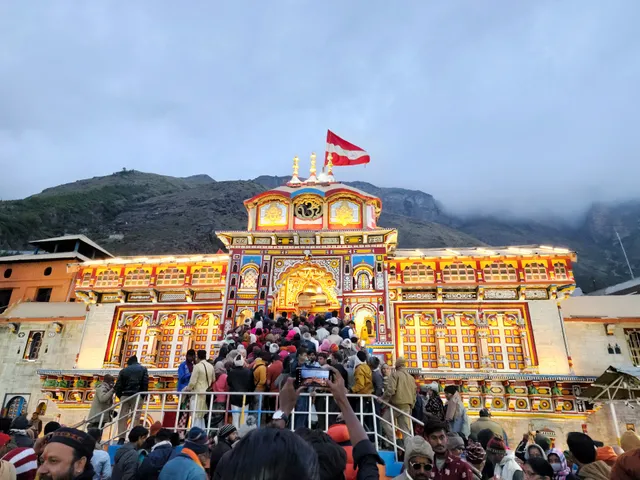
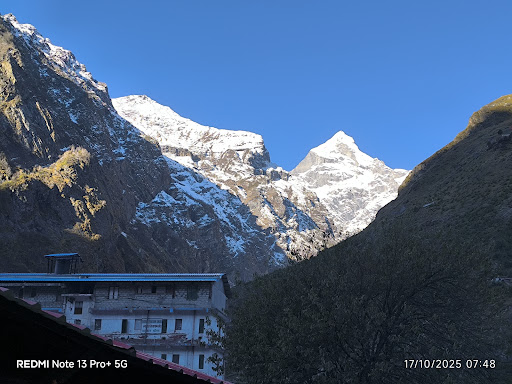
Shri Badrinath ji temple is located in Chamoli district in Uttarakhand at the height of 3133 meters, one of the four main destinations of the Chota Char Dham Yatra, which was established by Adi Guru Shankaracharya. We planned to our visit in August month to have peaceful Darshan and due to God grace we had very nice and wonderful Darshan. We reached to Temple by 05:45 and took Evening Aarthi ticket, and attended Aarthi. After Aarti we spend good time in temple and then next day morning we had Bath in Tapta Kund and went to temple for Darshan in the morning @ 04:00 am. At that time Abhishekam was going on and we had Nijarup Darshan.
Interesting Facts about Badrinath ji temple. This temple town has a long history and is shaded by Nilkanta peak, between the Nar Narayana mountain ranges. Badrinath temple is one of the 108 Divyadesam for Vishnu Followers. This temple exact origin is unknown but it is believed that it has been a site of worship for more than 1000 years. The most important gods in the Garbhagriha are revered by their order. Kubera, Garuda, Badrivihsal, Uddhava, Narada, Narayan and Nar. 5.This temple remain closed for six months every year during winter season. To ensure continuous worship , the Idol of Lord Badrinaryan shifted to Joshimath Narsingh temple during winter season. Uttarakhand is famous for Pancha Kedar, Pancha Prayag and Pancha Badri. Badrinath temple is also the part of Pancha Badri temples including Adi Badri, Yoga Badri, Vriddha Badri and Bavishya Badri. It is believed that at the end of the Kaliyuga both Nar and Narayana mountains comes to close and this Badrinath temple will be closed in between and hence Badrinath ji will give Darshan at Bavishya Badri when this main temple get covered by Nar Narayana Mountains. Based on the formula of Swami Shankaracharya's The Badrinath temple is by brahmins from the Kerala, who belongs to Namboodiri caste of South India and is referred to as Rawal. Dandi Sanyasi Mahant used to perform a ritual at Badrinath Prior to Rawal's. Badrinath is one of the Char Dham pilgrimages in India which represents Satya Yuga, Rameshwar represents Treta yuga, Dwarka represents Dvapara yuga and Puri represents Kaliyuga.
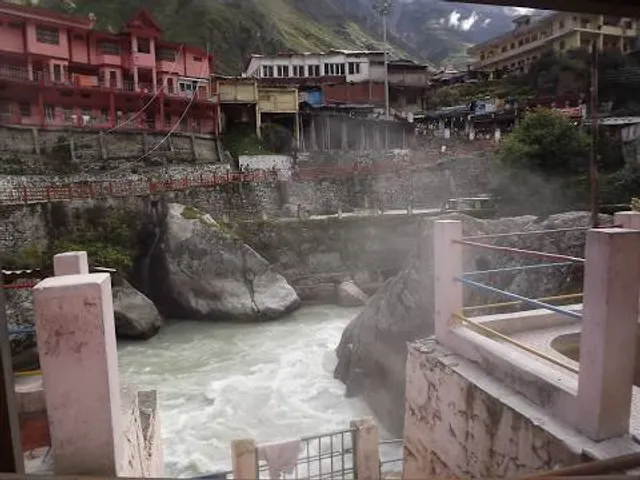
Near By attractions: Who all are visiting Badrinath please visit below mentioned historical and Spiritual paces also. Tapta Kund which is just adjacent to the temple on the banks of Alakananda River. Throughout year this Kund has Hot water in it irrespective weather condition. Brahma Kapalam which is also on the bank of Alakananda river just 200 meters away to Tapta Kund. it is believed that this is the area where Shiva ji was cut Brahma's 5th Head and its believes by devotees that same is there now in stone formation. It is believed that performing funeral rites here can help in attaining salvation for the departed souls. sentiment that we should visit this temple after Sunset and before Sunrise. 3.Mata Murti temple which is dedicated to the mother of Lord Badrinath and is located on the right bank of Alakananda River. Charan Paduka which is back side to the main temple located on hill. One has to trek 3 km further above to reach to this place. it is believed that this is the place where lord Badrinath put his foot prints on earth and same foot print is there where devottess do prayers. Neelkanth Peak which is visible clearly from Charan Paduka with Glory Silver Shining. Gupta Ganga which is located on the way to Charan Paduka. One has to go inside deep cave to see the Gupta ganga. Mana Village which is known as First village of India where one can visit Vyas Gufa, Ganesh Gufa, Saraswathi Janmasthal, Bhima Phool and Swargarohan Marg. If further trek to 5 km then there is Vasudhara falls which is very beautiful location to visit.
Temple timings: Morning 04:30 to 13:00 hours Evening 16:00 to...
Read moreShri Badarinath Dham Temple - A Divine Experience Beyond Word
I had the incredible opportunity to visit Shri Badarinath Dham Temple, one of the most revered pilgrimage sites in India. Located in the Chamoli district of Uttarakhand, this temple is part of the Char Dham Yatra and holds immense spiritual significance. The journey, the divine atmosphere, and the breathtaking natural beauty surrounding the temple make it an unforgettable experience.
Location & Accessibility
The temple is located on the Badri to Mata Murti Road in Badrinath, at an altitude of 3,133 meters (10,279 feet) above sea level. The nearest major town is Joshimath, which is around 45 km away.
By Road: Buses and taxis are available from Haridwar, Rishikesh, and Dehradun. The roads are well-maintained but can be steep and winding.
By Train: The nearest railway station is Haridwar (approx. 315 km). From there, buses or private taxis can be hired.
By Air: The nearest airport is Jolly Grant Airport, Dehradun (about 310 km away). Helicopter services are also available from Dehradun to Badrinath.
Temple Timings & Best Time to Visit
Temple Timings: The temple opens in April/May (depending on Akshaya Tritiya) and remains open until October/November (before Diwali). It is closed during winter due to heavy snowfall.
Best Time to Visit: May to June & September to October (Pleasant weather, less crowd). Avoid monsoon season due to landslides.
Spiritual & Architectural Beauty
The temple is dedicated to Lord Vishnu and is believed to be over 1,200 years old. It has a striking black stone idol of Lord Badrinarayan, which is one meter tall and sits in a meditation posture.
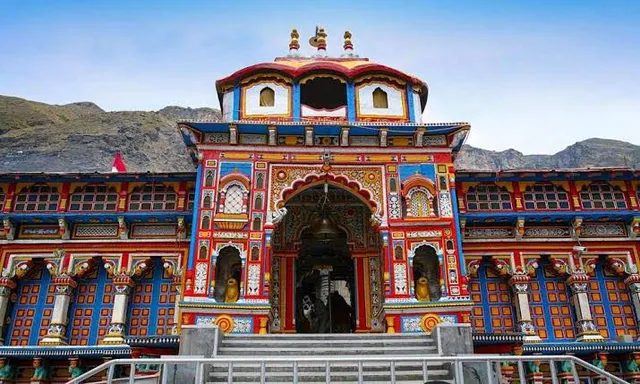
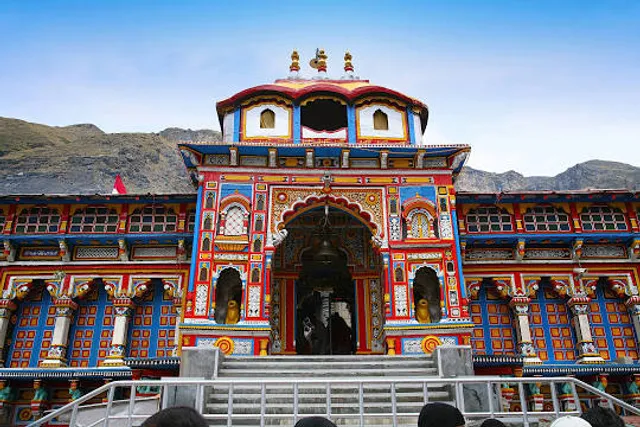
The architecture of the temple is stunning, with a golden dome, intricate carvings, and vibrant colors that reflect ancient Indian heritage.
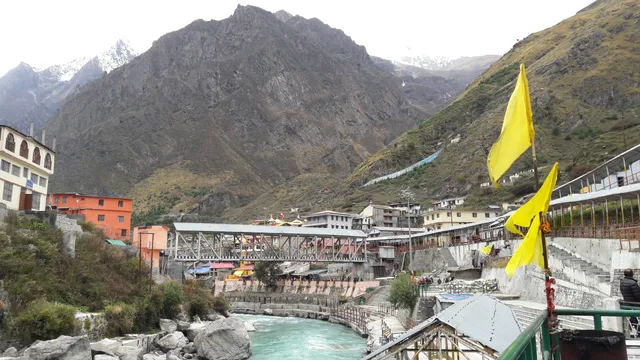
The Alaknanda River flows nearby, adding to the serene and divine atmosphere.
Darshan & Pooja Experience
General Darshan: The queue system is well-managed, and the darshan usually takes 30 minutes to 2 hours (depending on the crowd).
Special Poojas: Visitors can book Abhishek Pooja, Vishnu Sahasranamam Path, and Maha Abhishek for an enhanced spiritual experience.
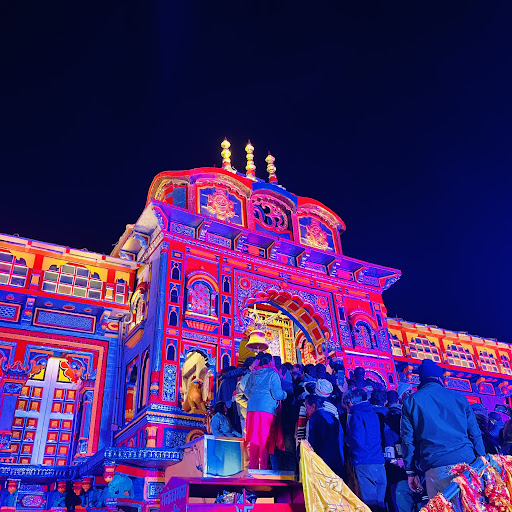
Aarti Timings: The temple conducts morning and evening aartis, which are mesmerizing and must be attended.
Nearby Attractions
Tapt Kund: A natural hot water spring where devotees take a holy dip before darshan.
Mana Village: The last Indian village before the Indo-Tibet border, famous for its mythological connection.
Vasudhara Falls: A beautiful waterfall located 9 km from the temple, known for its peaceful surroundings.
Charan Paduka: A sacred rock with Lord Vishnu’s footprints, located 3 km from the temple.
Travel Tips
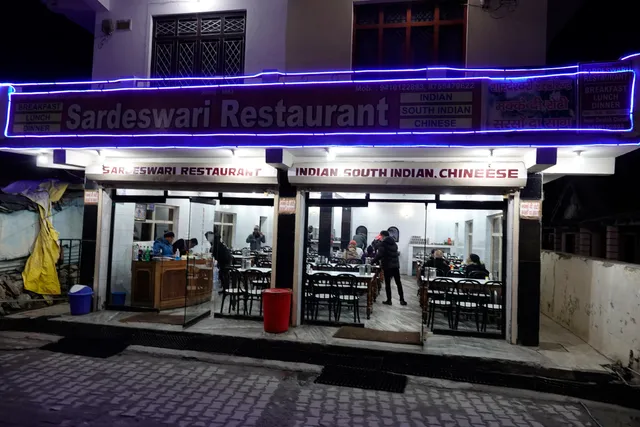
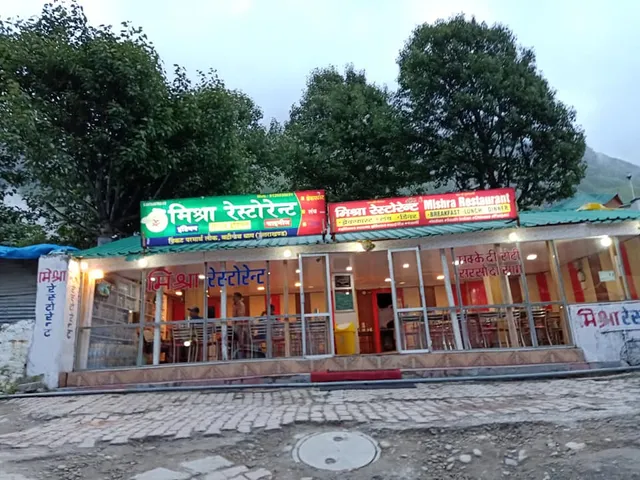
✔️ Clothing: Due to the cold weather, always carry warm clothes, woolen caps, gloves, and raincoats. ✔️ Accommodation: There are many dharmshalas, hotels, and GMVN guesthouses available for different budgets. ✔️ Food: Several restaurants serve pure vegetarian food (no onion, no garlic). Try the local Kichdi and Mandua Roti. ✔️ Health Precautions: Due to high altitude, some visitors may experience breathlessness or altitude sickness. Carry necessary medicines.
Final Thoughts
Visiting Shri Badarinath Dham Temple is a life-changing spiritual journey. The peaceful vibes, the divine energy, and the breathtaking Himalayan beauty make it a must-visit for every devotee. Whether you are religious or a nature lover, this place offers a soulful retreat from the modern world.
Would highly recommend visiting at least once...
Read moreNestled in the Garhwal Himalayas of Uttarakhand at an elevation of over 10,000 feet, Badrinath is not just a pilgrimage; it is an experience that touches the deepest chords of your soul. Dedicated to Lord Vishnu, who is worshipped here as Badri Narayan, this sacred site is one of the four Char Dham and Chota Char Dham pilgrimage sites in India. For centuries, devotees, sages, and seekers have trekked through rugged mountains and braved unpredictable weather, drawn by the promise of spiritual awakening and salvation.
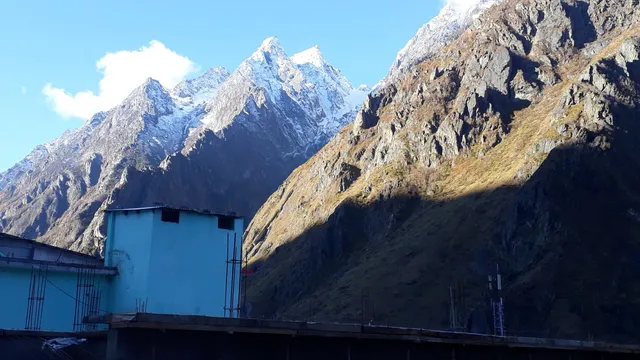
From the moment you enter the Badrinath valley, the air feels different—charged with centuries of devotion and chants that still echo in the snow-capped peaks. The sight of the colorful Badrinath Temple, with the mighty Neelkanth peak towering behind, is awe-inspiring. The Alaknanda River flows right beside the temple, its icy waters considered to carry away sins accumulated over lifetimes.
The temple architecture is modest yet vibrant, with its distinct bright façade and golden rooftop shining even in the harshest weather. Inside, the serene black stone idol of Lord Badrinarayan, seated in Padmasana posture beneath a golden canopy, exudes an energy that words cannot capture. For a few minutes inside the sanctum, you feel the mind quieten and the heart swell with a strange warmth—a sense that the divine is not a distant force, but something deeply present within you.
The spiritual experience is amplified by rituals that have remained unchanged for centuries. The Maha Abhishek, the sacred bath of the deity at dawn, and the evening Shayan Aarti, when the deity is put to rest, are performed with such devotion that even the most skeptical mind feels humbled. Pilgrims gather in the temple courtyard wrapped in woolens and blankets, chanting Vishnu Sahasranama as the cold Himalayan wind blows around them.
Just a few steps from the temple is Tapt Kund, a natural hot spring where pilgrims bathe before darshan. Standing in the steaming pool, surrounded by the icy landscape, you sense the perfect balance of nature and divinity. It’s a reminder that spiritual cleansing is as much about surrender as it is about ritual.
Outside the temple, the town itself feels like an ashram scattered among the mountains. Monks, sadhus, and families live side by side, and stories of Adi Shankaracharya, who revived this shrine in the 8th century, are whispered at every corner. The aura of penance and faith is almost tangible here.
While the road to Badrinath can be arduous, with landslides and unpredictable weather testing your endurance, each step feels like a part of a larger, sacred penance. You come face to face with your limitations and your faith. The snow, the roaring Alaknanda, the chanting pilgrims—it all comes together like a hymn, reminding you that spirituality is not about renouncing the world but seeing the divine in every stone, every breath.
Badrinath leaves you transformed. You arrive seeking blessings but return with something far greater—a sense that you have glimpsed the eternal. For those who yearn to stand at the doorway of the divine, Badrinath is not just a temple in the Himalayas; it is a timeless bridge between the mortal and...
Read more